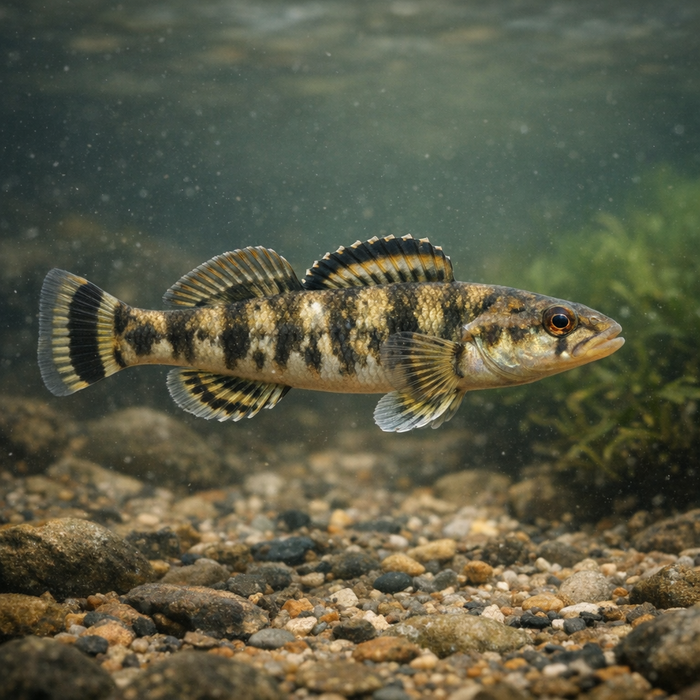
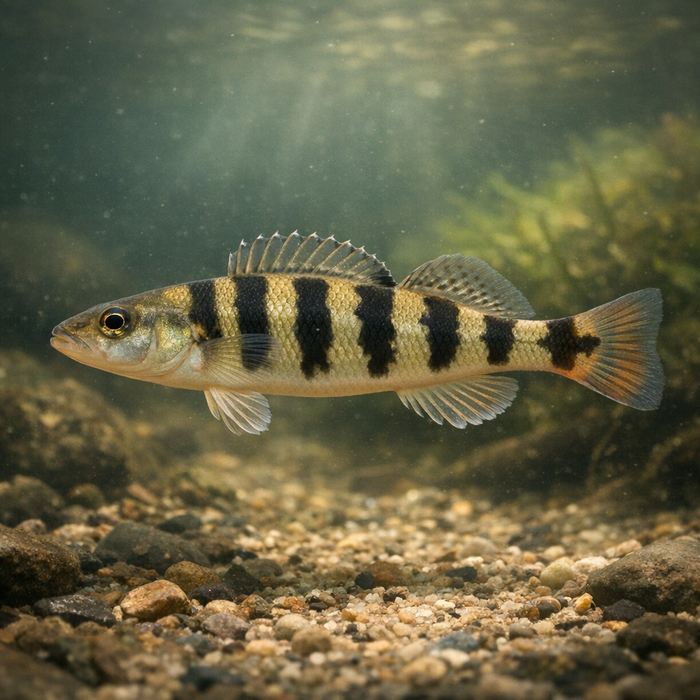
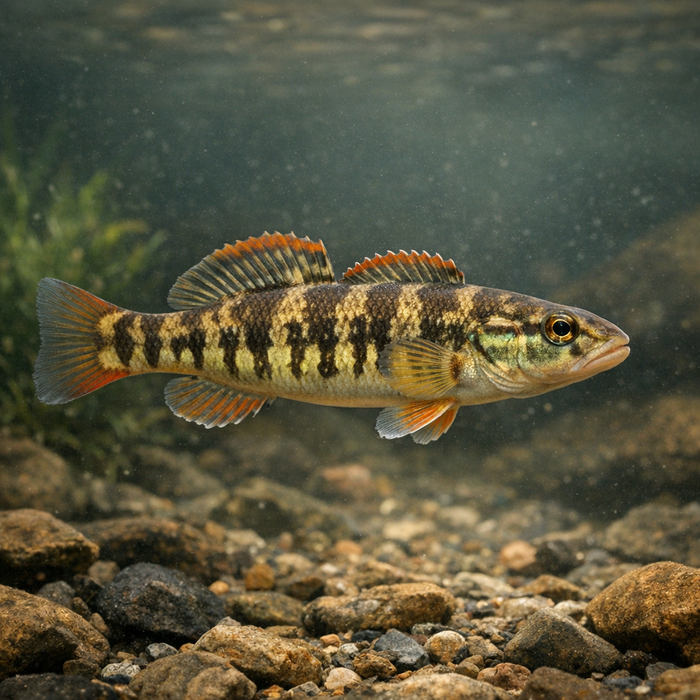
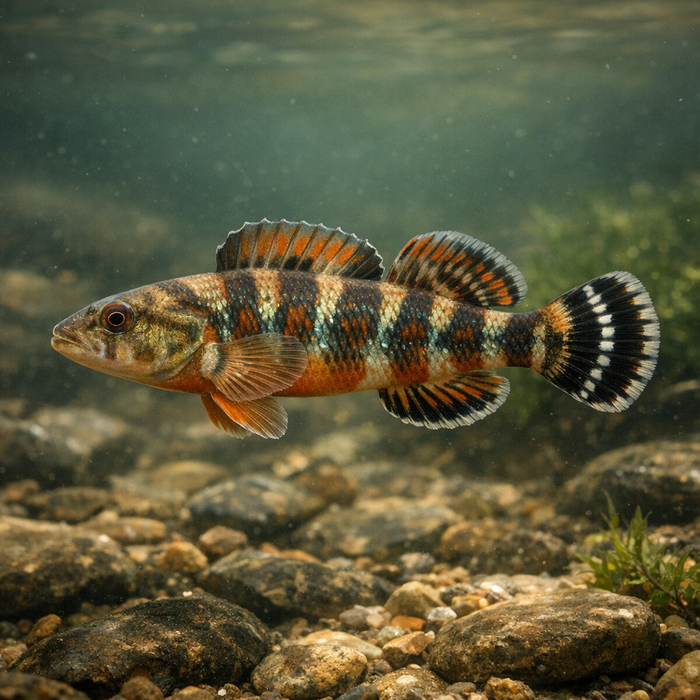
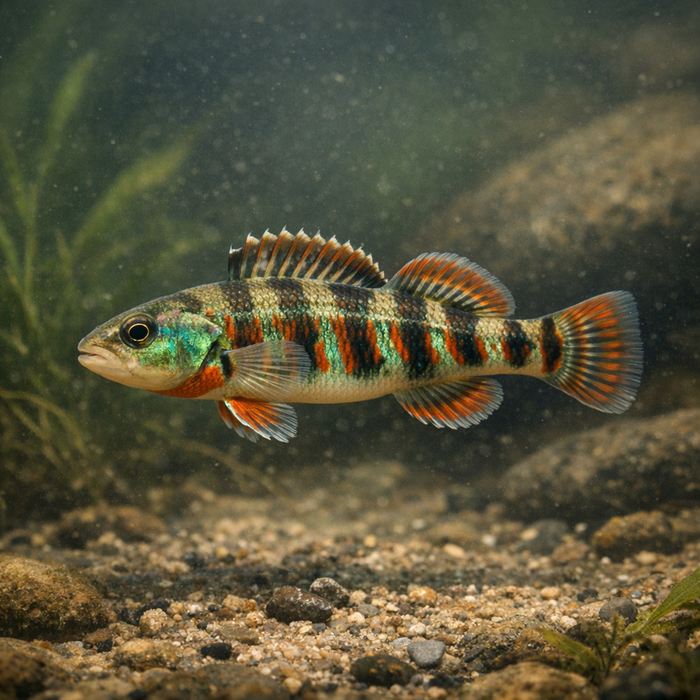
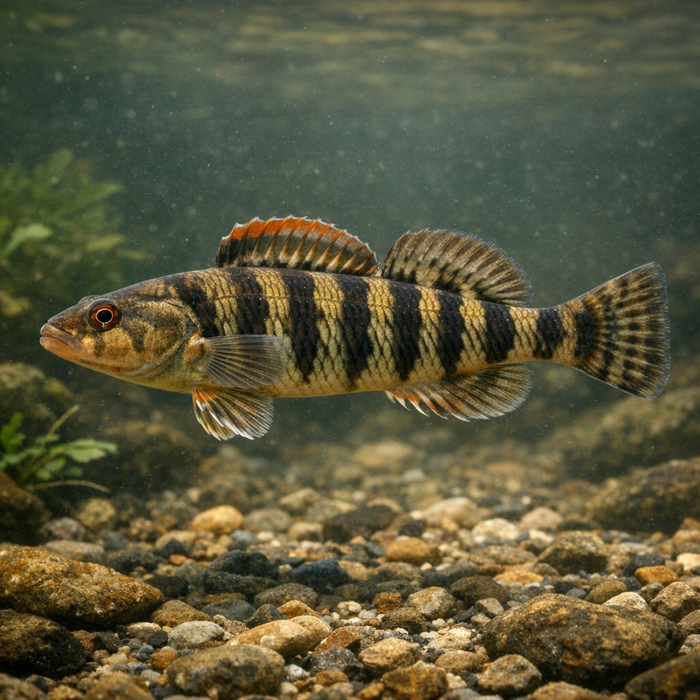
Banded darter (Etheostoma zonale): Green-striped sprinter of the rifflesIntroductionThe banded darter is the stream's little hot rod: loud paint job, low stance, and all business in fast water. It won't spool your drag or crash a topwater, but it will make you crawl a riffle on your knees and celebrate a two-inch fish like you won a derby. For anglers who appreciate microfishing challenges and perfectly tuned stream craft, the banded darter delivers.What Makes the Banded darter Unique?First, the look. Those bold vertical bars over green-olive sides aren't subtle; males glow emerald during breeding season like tiny neon billboards. Second, the build. This fish is a bottom-hugging specialist with reduced buoyancy and wide pelvic fins that act like kickstands, letting it lock onto cobble while current screams by. Third, the attitude. The banded darter darts fast, rules small territories, and hits drifting morsels with surgical precision. It's a specialist done right.Habitat & Global RangeIf you're scouting Banded darter habitat, think cool, clear streams with firm gravel, cobble, or pebbled runs. Picture knee-deep or shallower riffles with defined current lanes, often in the Midwest and into parts of the Southeast, including tributaries to major systems like the Ohio and Mississippi. You'll also find it in select Great Lakes drainages where suitable flow and substrate persist. They prefer oxygen-rich stretches, stable flows, and minimal silt. Pool tailouts that transition into riffles are prime, especially where submerged boulders break current into multiple micro-seams. When water levels drop, they tuck tighter to bottom structure; when levels bump, they reposition to the edges where energy costs drop. That's Banded darter habitat in one tight package: clean stones, honest current, clear water.Behavior & TemperamentThe banded darter is built for bursts. It sits stone-still, then rockets a short distance to pin down drifting invertebrates. Schooling isn't really its thing; you'll see loose clusters across a riffle, each fish running a tiny turf. They're cautious but not ghosts. Precise presentations matter because they won't leave the bottom to chase far. Spawning typically cues off spring warming and stable flows, which is when the colors pop and micro-territories get defended with more gusto. Despite the small size, they telegraph mood clearly: flare the first dorsal, darken those bars, crank the posture, and everything about their body language says step off my rock.Ecological ImportanceBanded darters clock in as streamlined insect control units. They convert mayflies, midges, caddis, and small crustaceans into fish protein that larger predators can use. Because they're picky about clean gravel and consistent current, their presence signals good stream health. Lose the riffles to silt, or cloud the water with runoff, and darter diversity nosedives. In short, they're tiny sentinels. When banded darters thrive, the stream is usually running right.Conservation & Environmental PressuresOfficially, the species sits comfortably as Least Concern in many assessments, but that's not a license to trash riffles. The threats are familiar: sedimentation from poor land use, low dissolved oxygen from nutrient loading, and fragmented habitats from culverts or small dams. These fish don't have much patience for soft substrate or murky water. Keep the stones clean and the flows honest, and populations hold up. Let the silt creep in, and they blink out of reaches that used to hum with life.The FishyAF TakeThe banded darter is the perfect gateway drug to microfishing. It demands stealth, precision, and a good eye for structure without requiring a plane ticket or a thousand-dollar rod. It won't headline a grip-and-grin, but it will teach you more about current seams, drift control, and fish body language than a dozen lazy pool fish. Chase them for the craft, the colors, and the bragging rights that only other riffle rats will truly get. If you want Banded darter facts that matter on the water, here they are: respect the current, read the stones, and keep your offering tiny. Master that, and the stream's green-striped sprinters will make your day.