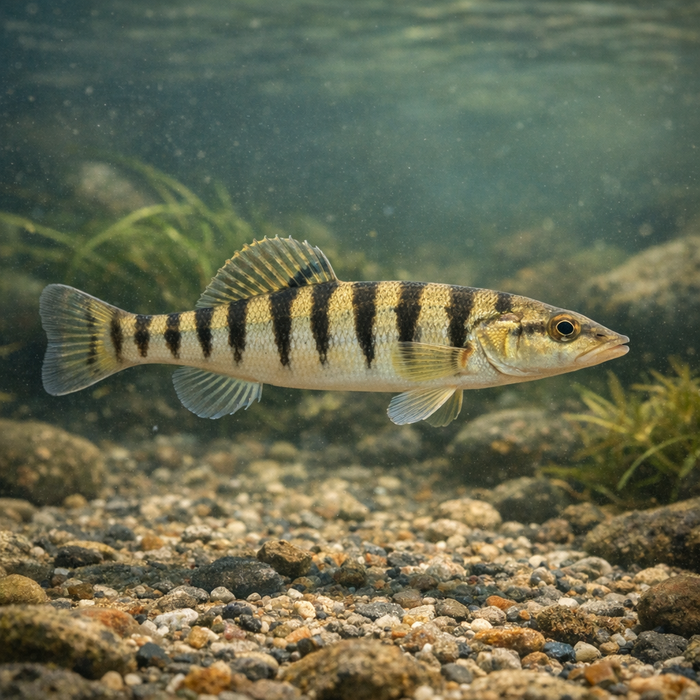
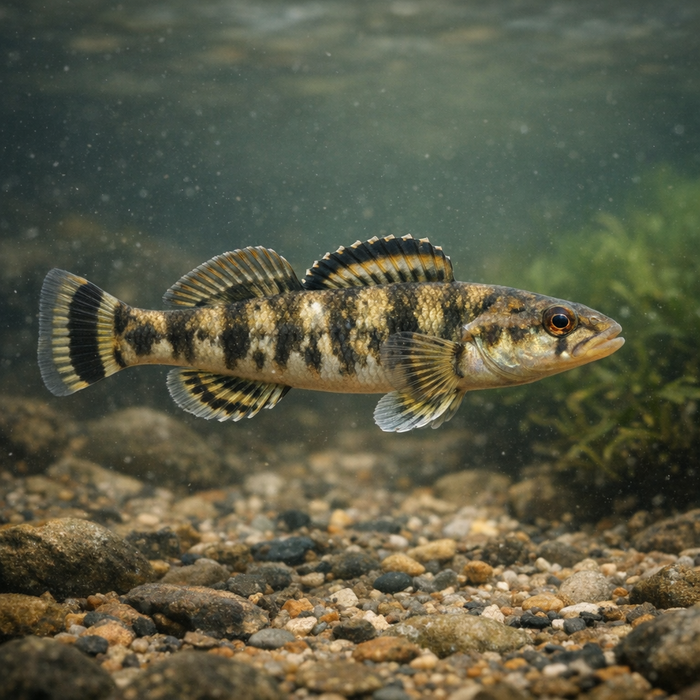
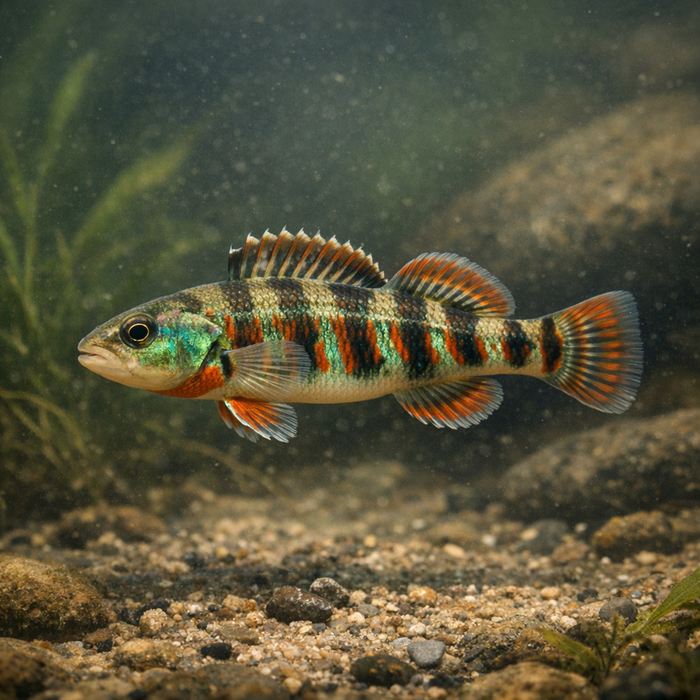
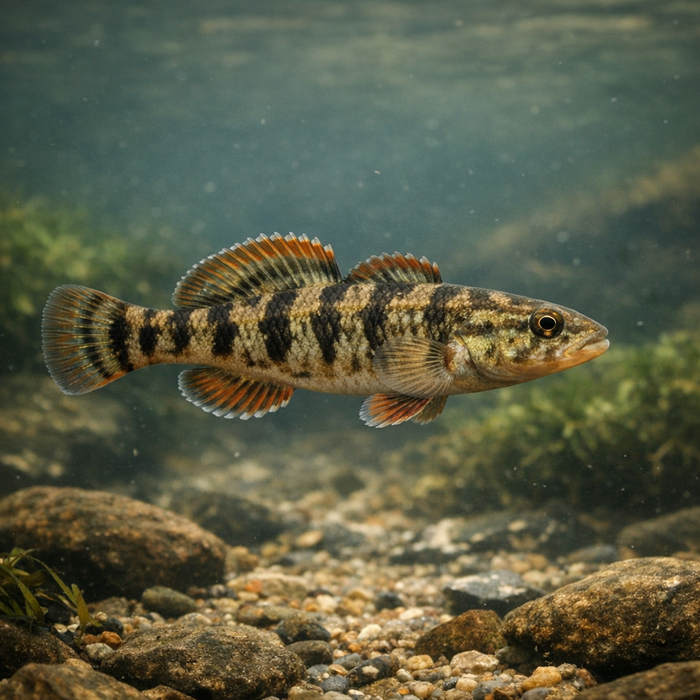
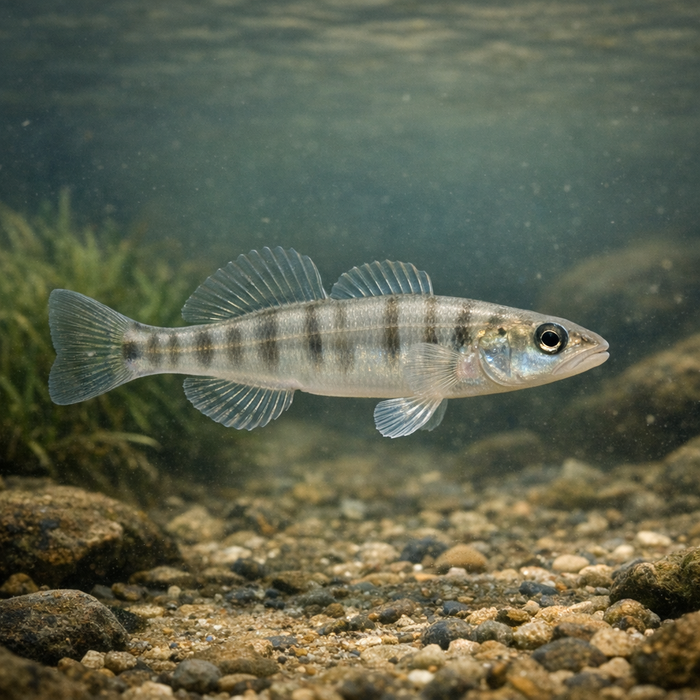
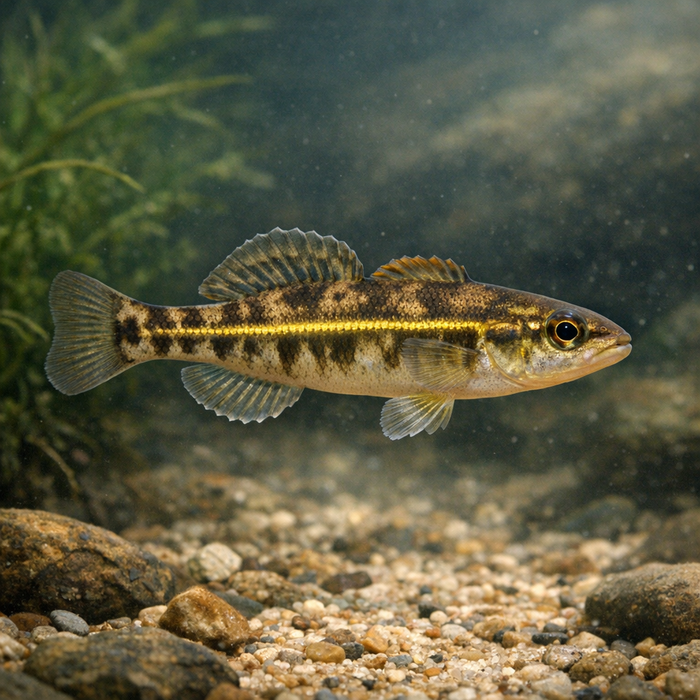
Blackbanded Darter (Percina nigrofasciata): Pint-Sized Stripes With Big Riffle AttitudeIntroductionThe blackbanded darter is proof that small fish can have loud personalities. You won't troll for it, and it won't peel drag, but slide into a sandy riffle with a tiny hook and you'll meet a bottom-hugging sprinter that punches way above its weight. If you're chasing Blackbanded darter facts, this one's the gateway drug to microfishing: common enough to find, distinct enough to ID, and sassy enough to keep you kneeling on the bank longer than you planned.What Makes the Blackbanded darter Unique?Start with the paint job. Those crisp, jet-black vertical bars don't whisper; they shout. Add a torpedo body scaled for shallow current and oversized pectorals that work like brakes, and you've got a fish designed for life where water gets loud and pushy. Many darters have reduced swim bladders, and the blackbanded leans into that design, staying glued to the bottom and launching in quick, surgical bursts. It's the sprinter in track spikes while others jog in sneakers.Habitat & Global RangeThe blackbanded darter is a Southeastern specialty, particularly across coastal plain drainages where sand, gravel, and steady current set the table. Think tea-stained creeks, clear riffles below sandbars, and the thin, busy seams that most anglers step over on the way to deeper pools. Browse any Blackbanded darter habitat discussion and you'll hear the same refrain: find clean substrate and a touch of flow, then look small. They're homebodies, working short beats along gentle runs, rootwads, and the downstream lips of shoals.Behavior & TemperamentThis fish lives the sit-and-dart lifestyle. It hunkers down in small eddies, eyes up, waiting for a mayfly nymph or drifting speck of protein to hit the conveyor belt. When it moves, it's a blur, and then it's right back to stone mode. Territorial dustups are more posturing than warfare, especially in spring when bands intensify and everybody's feeling feisty. Schooling isn't really their thing. You'll find loose clusters where habitat stacks up, but it's usually a solo act with respectable personal space.Ecological ImportanceThe blackbanded darter is a tiny cog that keeps the riffle machine humming. It trades insect calories up the food web, turning bugs into bite-sized protein for bigger fish like sunfish and juvenile bass. Because it's sensitive to silt and habitat smothering, stable blackbanded populations often hint at decent watershed health. They're canaries in the creek: if the riffles choke with sediment or flow swings wildly from drought to flood, their numbers tell the story faster than a spreadsheet.Conservation & Environmental PressuresOn paper, the species trends stable, but that's not a license to slack. Channelization, bank blowouts, and chronic sediment are the classic villains. Pull the gravel out of a stream or bulldoze a floodplain and you don't just lose structure; you sandblast the nursery. Add rising water demand and flashier storms, and small creeks pay the price first. The blackbanded darter doesn't need untouched wilderness, but it does need honest flows, clean substrate, and riffles that haven't been paved in silt.The FishyAF TakeIf you're a big-fish-or-bust purist, fine, keep walking. But microfishing the blackbanded darter is like switching a camera lens to macro; the creek gets bigger the closer you look. It rewards stealth, accuracy, and an attention span honed by tiny hooks and tiny windows. You learn current seams measured in inches, not yards. You learn patience. And you learn that a fish you could balance on a nickel can still make you grin like you stuck a five-pounder. That's the Blackbanded darter charm, and we're here for it.