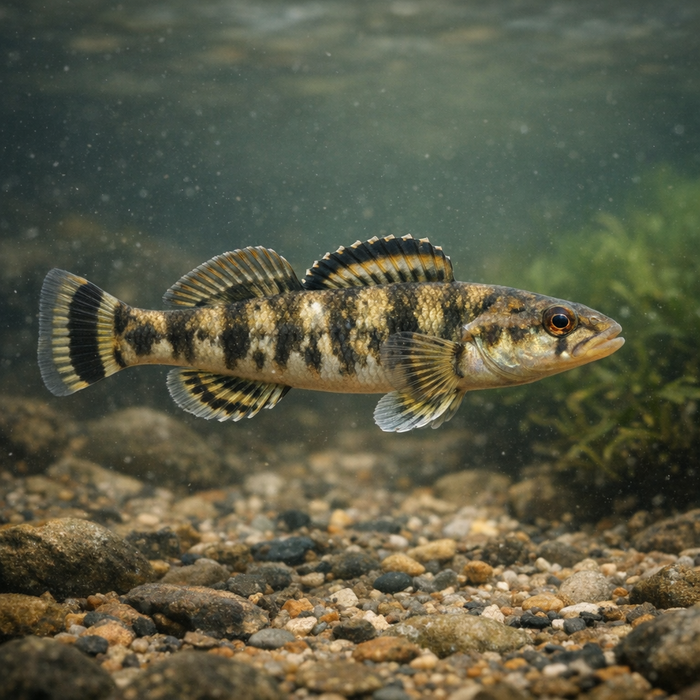
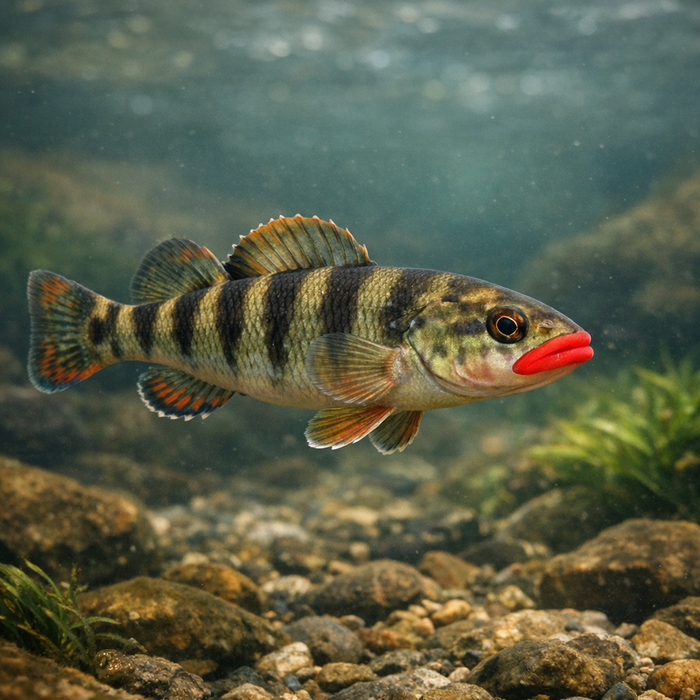
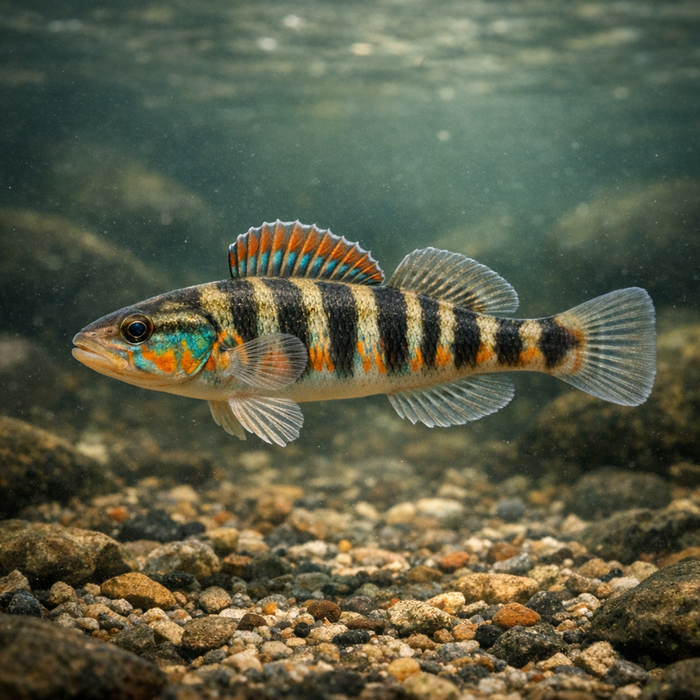
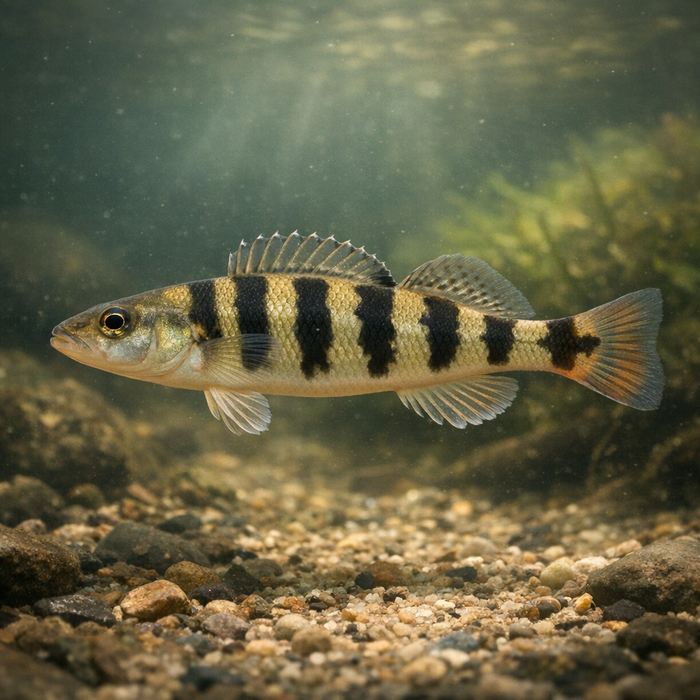
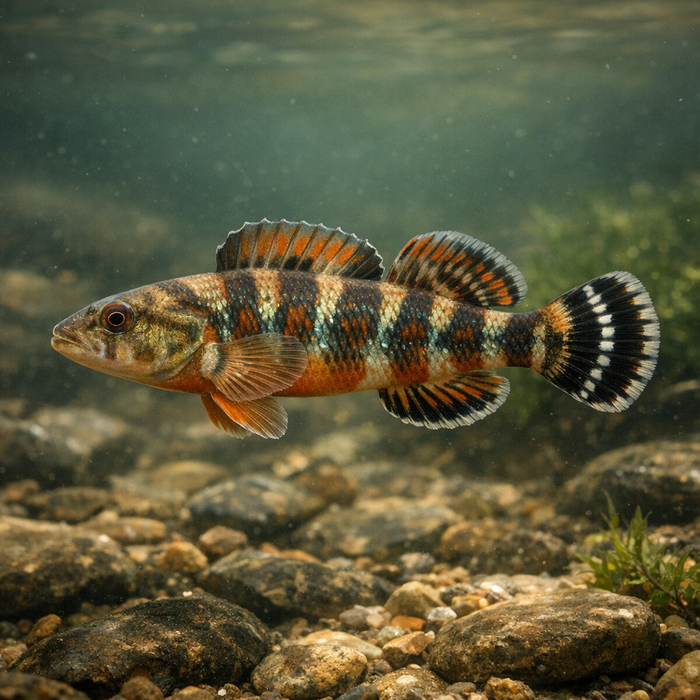
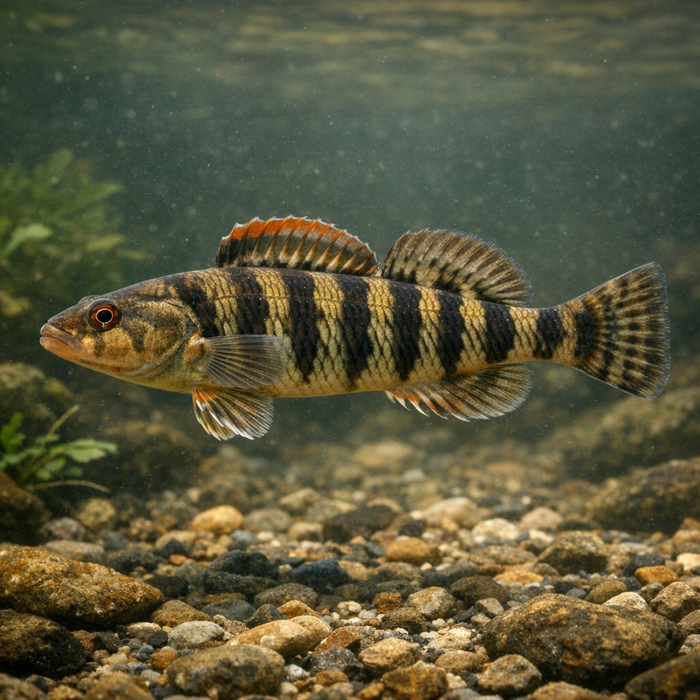
Swannanoa darter (Etheostoma swannanoa): Small fish, big attitude in pocket-water chaosIntroductionMeet the riffle's tiniest troublemaker. The Swannanoa darter is a stone-hugging sprint car built for whitewater lanes. It's the fish you don't notice until you slow down and actually look into the current seams. Then it's everywhere the water chatters over clean gravel. For microfishing nuts, the Swannanoa darter is a rite of passage: precise presentations, tiny hooks, and a quick photo before it rockets back under a rock. If you wanted a crash course in current mechanics at ankle depth, this fish will gladly teach it.What Makes the Swannanoa darter Unique?Two things set the Swannanoa darter apart. First, it's a true substrate athlete. With a reduced swim bladder and outsized pectorals, it sits hard on the bottom, using cobble like cover without wasting energy. Second, breeding season is a neon flex. Males fire up with orange-tipped fins and sharpened side bars, then guard eggs tucked beneath flat stones. As Swannanoa darter facts go, here's the punchline: this fish is wildly specialized for the exact habitat most anglers wade past without a second thought.Habitat & Global RangeIf you're Googling Swannanoa darter habitat, think small to medium Appalachian streams with clear flow, well-oxygenated riffles, and gravel to cobble bottoms. Most records place it in the upper Tennessee River drainage, especially the French Broad system, including the namesake Swannanoa River in western North Carolina and nearby tributaries reaching into eastern Tennessee. It prefers the fast-lane parts of streams: knee-deep riffles, shallow runs, and pocket water beside boulders where current breaks form tiny feeding alleys. When water rises or turns cloudy, they slide to softer edges, but they're rarely far from rock and flow.Behavior & TemperamentThe Swannanoa darter is a bottom ambush specialist that moves in quick, darting bursts. It posts up behind stones, snaps at drifting invertebrates, and disappears like a magic trick if you step heavy. They're not heavy schoolers, more like loose clusters where habitat is prime. Spring brings nesting behavior: males claim real estate beneath flat rocks, court, and then defend eggs with surprising intensity for something under three inches long. Activity pulses around light and flow changes. Stable, clear water makes them bolder; heavy footsteps turn them into ghosts.Ecological ImportanceThis darter is a riffle report card. It needs clean, well-sorted gravel and strong oxygen, so its presence signals stream health. It trims back aquatic insect populations, feeds larger fish and stream herps, and stitches energy from the insect drift into the broader food web. Pull riffles apart with sediment or junk runoff and the species thins fast. Keep cobbles clean and the fish hums along, quietly fueling the stream's engine.Conservation & Environmental PressuresThe usual suspects are the biggest threats: siltation from poor land use, flashy stormwater that scours then smothers rock, and projects that flatten riffle-run habitat. Pollution can hit hard because these fish don't have the luxury of roaming to deeper refuges. While broad conservation status may read as not evaluated or not of concern at global scale, local vulnerability is real when a watershed slips. Handle with wet hands, keep them submerged for photos when possible, and let them go fast. For collectors, always verify legal take and consider a photo-only approach.The FishyAF TakeThe Swannanoa darter is the perfect antidote to big-gear bravado. You don't outmuscle this fish; you out-sneak it. Learn to read cobble seams, think in inches, and get comfortable fishing hooks you can barely see. The payoff isn't a grip-and-grin. It's a deeper understanding of current, a clean shot of stream zen, and a species with more personality per ounce than most trophy fish. You'll never look at a riffle the same way again, and that's the whole point.