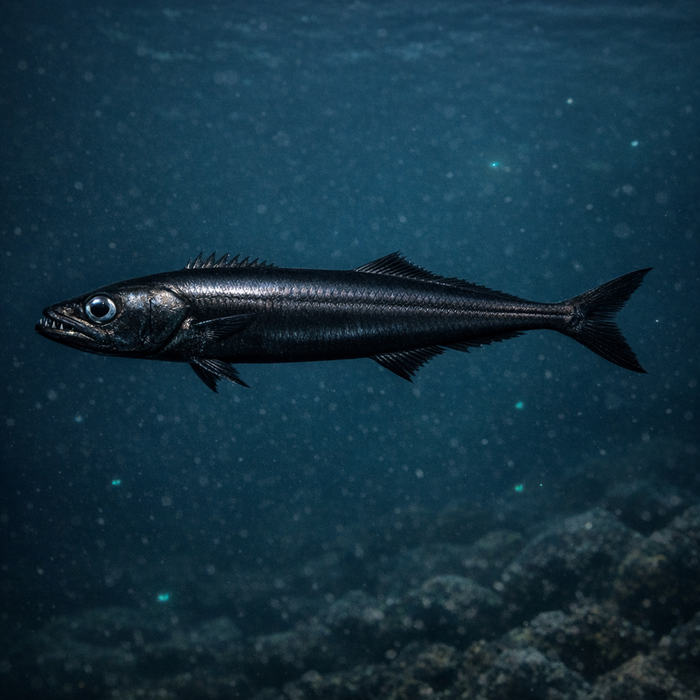
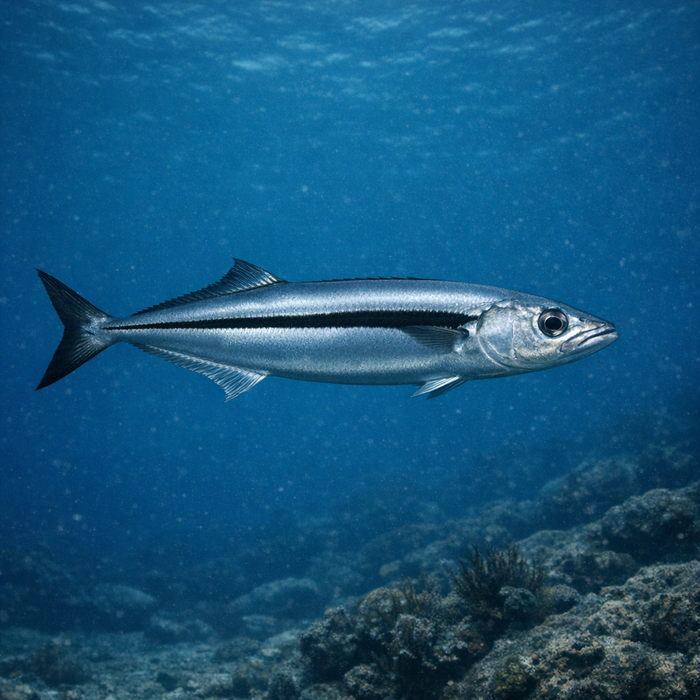
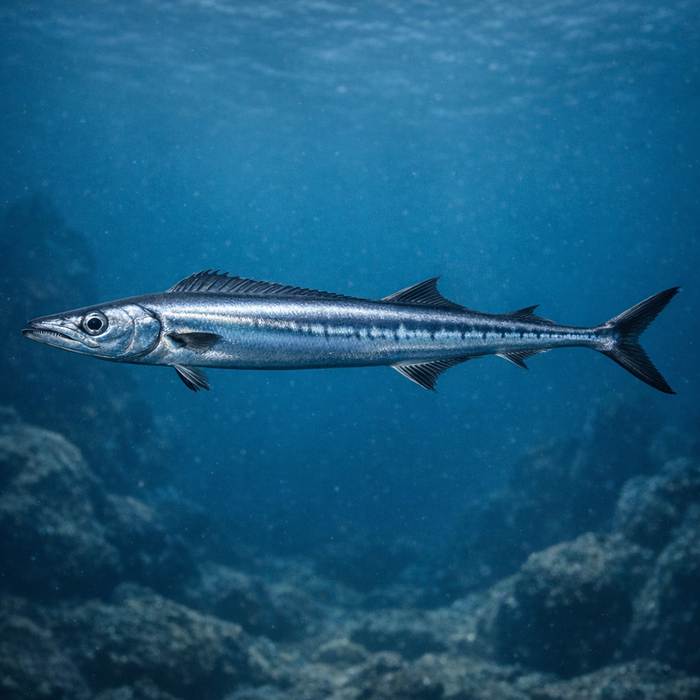
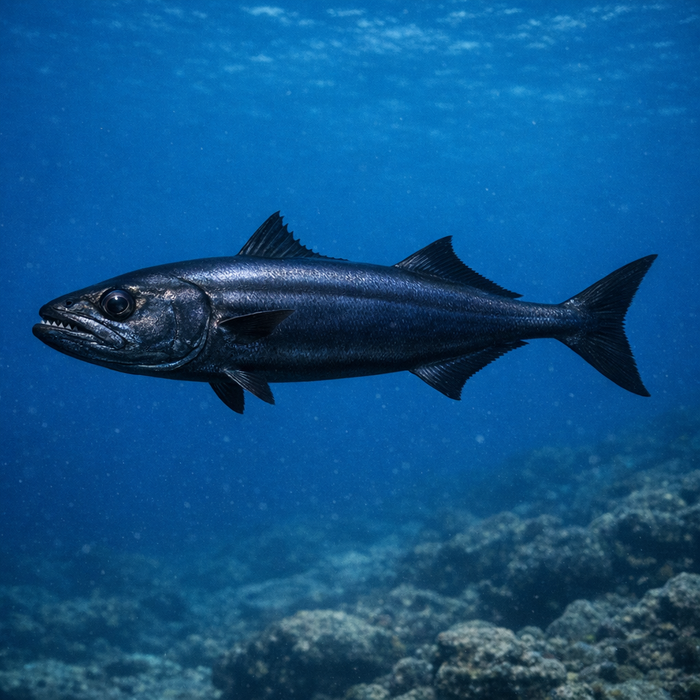
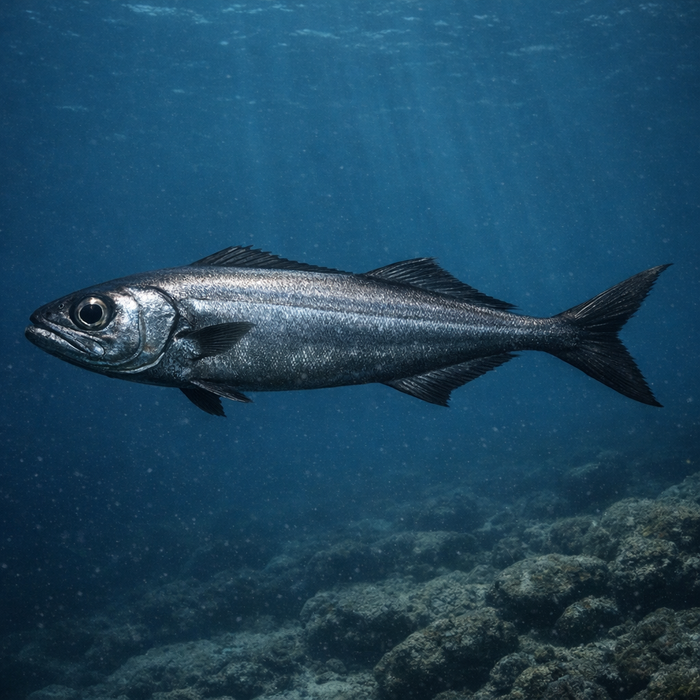
Snoek (Thyrsites atun): A Silver Needle With A Mean StreakIntroductionLean, toothy, and always moving, the snoek is the silver needle that stitches together bait balls and bird workups across temperate oceans. It's a fish that doesn't waste time or motion, and when it hits, you'll know. If you want a pelagic that rewards hustle and punishes laziness, the snoek obliges in spades.What Makes the Snoek Unique?First, that build. The snoek is all business: elongated, hydrodynamic, and geared for speed bursts through midwater. Pair that with hinged razor teeth and a powerful jaw, and you get a fish that dices monofilament and anchovies with equal contempt. Second, its schooling behavior is intense. Snoek move in roving packs that can stretch for astonishing distances, switching entire patches of ocean from quiet to chaos. Third, they're a cultural icon, especially around the Cape. From boat decks slick with scales to braais perfumed with smoky fillets, snoek straddles sport and staple like few species.Habitat & Global RangeSnoek roam the cool temperate shelves of the southern hemisphere, especially southern Africa, New Zealand, and southern Australia, with satellite action off South America. Think coastal to offshore shelf edges, current seams, and bait highways rather than coral or structure hugging. They run midwater, often 20 to 150 meters down, sliding upward when anchovy, sardine, or saury stacks compress near the surface. If you're mapping Snoek habitat, start with cool currents, working birds, and tight bait marks, then adjust for season and local temperature breaks.Behavior & TemperamentSnoek are opportunistic pack hunters with a high cruising speed and violent strike window. They slash, shake, and twist like angry rebar, and their schools often sort by size so your bites come in batches of near clones. They can be fickle when bait is thick, then instantly suicidal when the feed switch flips. Wire or heavy fluoro is smart insurance; they don't always require it, but their teeth are unforgiving. Once hooked, expect hard lateral runs, brutal head shakes, and a thrash at the rail that keeps gaff hands honest.Ecological ImportanceAs mid-trophic predators, snoek turn dense balls of small pelagics into protein for bigger players. They're a critical conduit linking forage fish with sharks, tuna, and marine mammals. Their fast growth and schooling lifestyle help stabilize energy transfer on the shelf, and their seasonal movements mirror the health and distribution of bait species. When snoek are off the bite or off the map, it often says something about the small-fish pipeline.Conservation & Environmental PressuresThyrsites atun is currently considered Least Concern, supported by wide distribution and robust, if variable, numbers. But that doesn't mean autopilot. Commercial effort, localized depletion, and environmental swings that shuffle bait around can all squeeze snoek availability. Post-capture handling matters too. Like many dark-meat pelagics, snoek can develop histamine issues if not chilled fast, which isn't a conservation problem but does affect public perception and market value. Sensible catch limits, clean handling, and regional monitoring keep this fishery sharp.The FishyAF TakeThe snoek is the blue-collar pelagic: plentiful when conditions align, nasty in the best way, and flat-out fun. It's not a long-range trophy badge, but it's a master class in reading birds, currents, and bait. Learn to anticipate a workup and you'll connect. Ignore the teeth and you'll donate gear all day. If you came for hard evidence and practical Snoek facts, here's the headline: find bait, move fast, rig smart, and ice quicker. Do that and the snoek will make you look good, smell like victory, and taste like dinner. For anglers chasing action and authentic chaos, this is your fish. Consider this your quick guide to Snoek habitat and habit: midwater, mobile, and merciless.