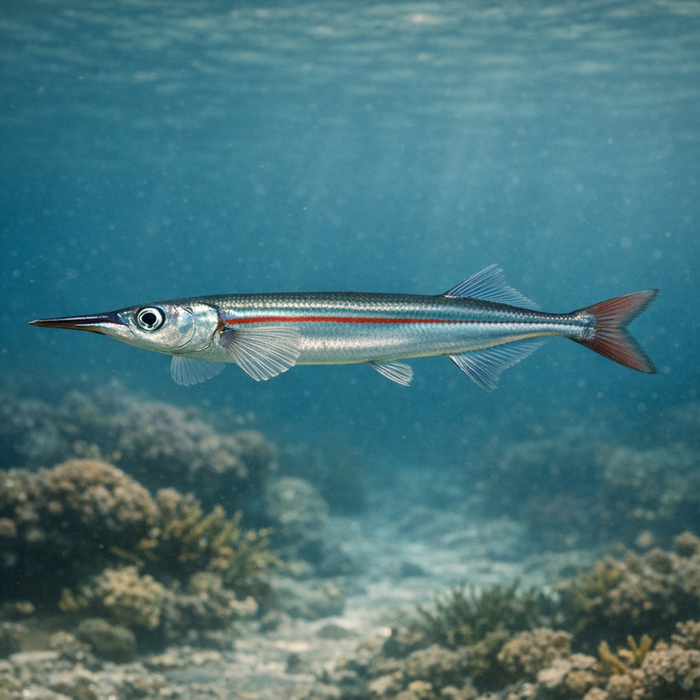
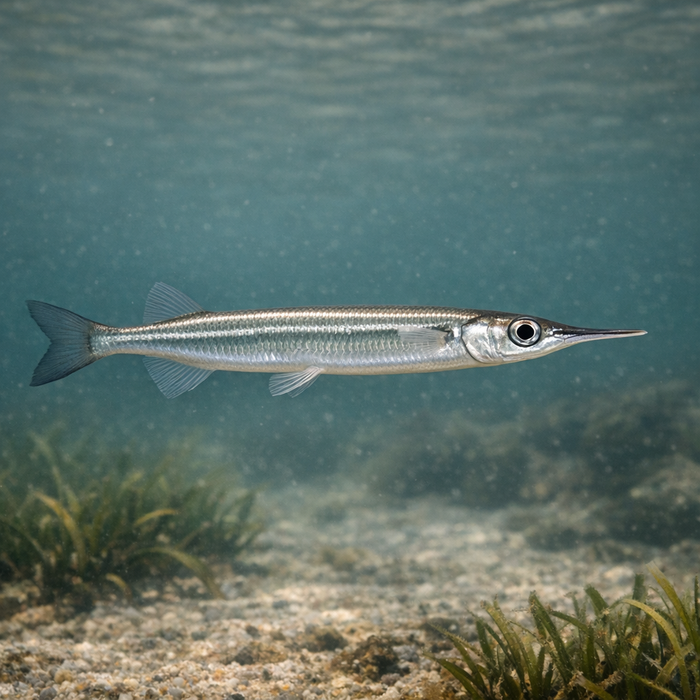
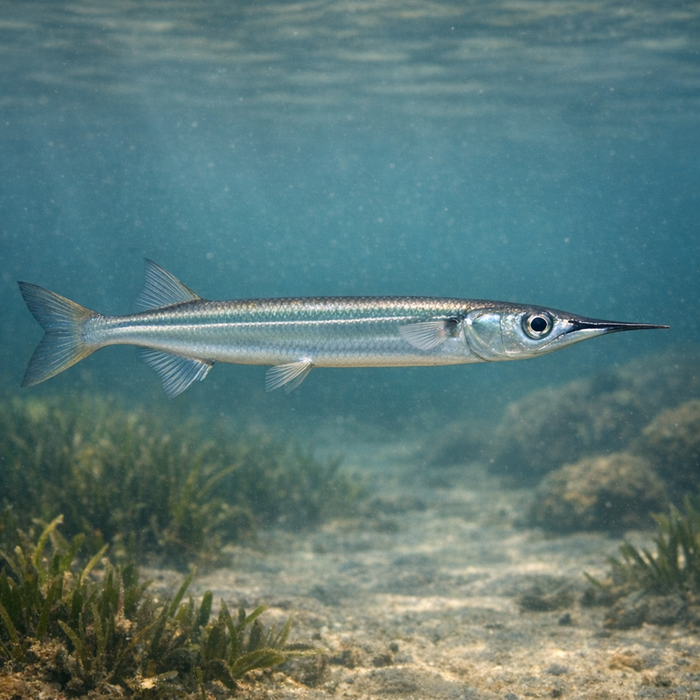
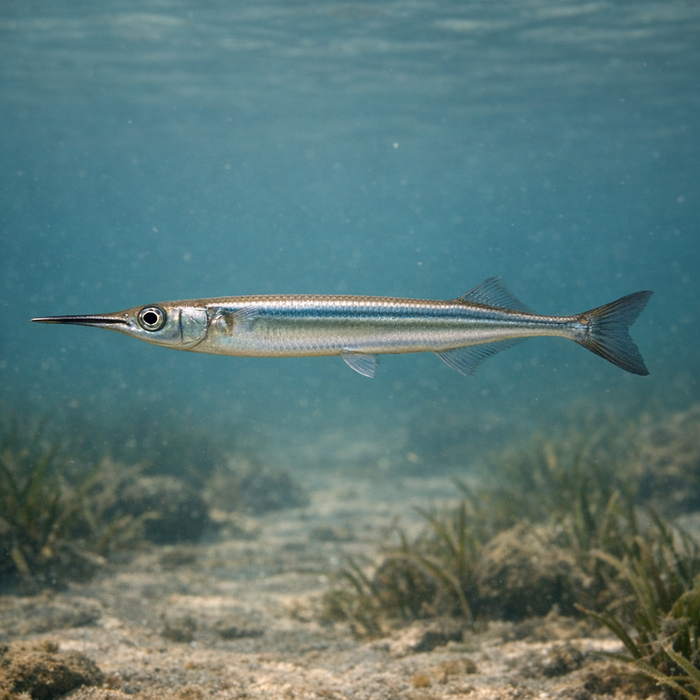
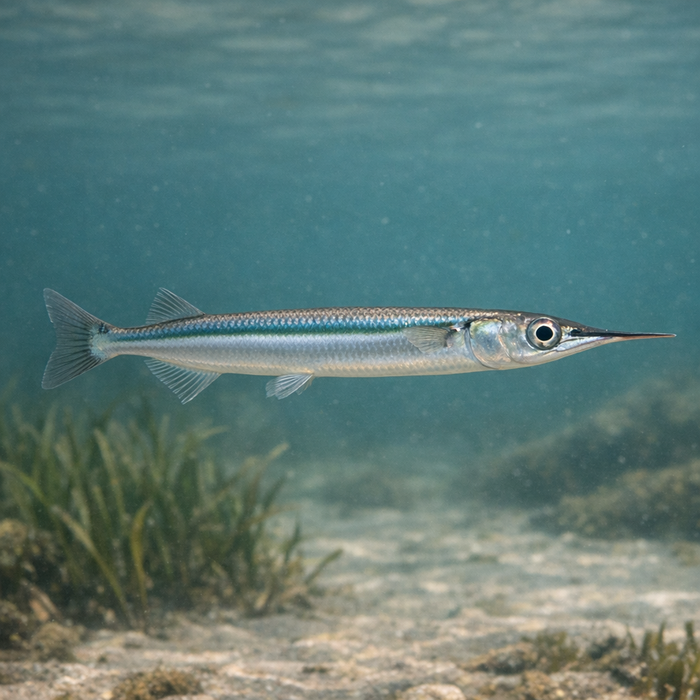
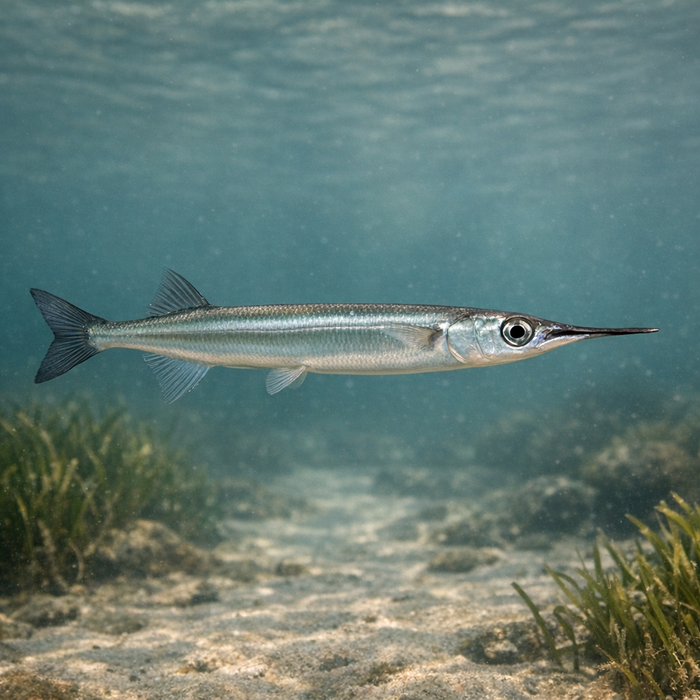
Flying halfbeak (Euleptorhamphus velox): A surf-rocket with a built-in blade and a habit of skywalking.IntroductionIf you fish warm oceans long enough, something skinny, shiny, and ridiculously fast will slash past your bow and then skip like a smooth stone. That would be the flying halfbeak. It's part baitfish, part acrobat, and 100 percent surface chaos. Anglers don't exactly plan dream trips around it, but anyone who chases billfish, tuna, or wahoo knows the flying halfbeak is the unsung MVP of the livewell and a star of docklight mayhem. Consider this your crash course in Flying halfbeak facts, behavior, and attitude.What Makes the Flying halfbeak Unique?Start with the face. The lower jaw is stretched into a narrow spear that can be a third of the fish's length. That beak works like a skimmer, slicing the surface while the upper jaw snaps micro-prey. Then add oversized pectoral fins and a tail with a pumped-up lower lobe. When spooked, the flying halfbeak blasts forward and skitters into short glides. It's not a true flying fish, but it certainly fakes it with style. The fins are set far aft, concentrating thrust for punchy sprints. For predators, it's a frustrating target; for anglers, it's a specialty catch that rewards finesse.Habitat & Global RangeThe flying halfbeak lives where air meets ocean. Think tropical and subtropical bluewater edges, current lines, and coastal rips, often sliding right up to beaches, reef rims, and harbor mouths. By day, schools hover near the surface in open water; at night they're magnetized by light. If you're hunting Flying halfbeak habitat, watch calm slicks, tide convergences, and the glow of pier and boat lights. The species is Indo-Pacific in flavor, widely distributed around islands and continental shelves of the Indian Ocean, Southeast Asia, and across the Pacific island arcs.Behavior & TemperamentNervous and lightning quick, the flying halfbeak is the definition of skittish. It schools tight, darts at the first hint of pressure, and jumps clean out of the game if your approach is sloppy. Small hooks, thin leaders, and soft hands are the price of admission. They feed right in the film, pivoting between zooplankton and tiny fishes, and will crash small prey on top with surprising aggression during low light. Under bright dock lights, they pinwheel in sudden bursts, then reset just outside the cone. The flying halfbeak is fragile, so gentle handling matters if you plan a quick release or need pristine bait.Ecological ImportanceHere's the big secret: this little fish is big currency. The flying halfbeak converts plankton and micro-bait into fuel for apex predators. Marlin, sailfish, mahi, and wahoo all spend time patrolling halfbeak highways. In turn, the halfbeak's gliding escapades are an evolutionary chess move that forces predators to waste energy, miss swings, and sometimes leap right past the meal. For reefs and nearshore systems, schools connecting open water to the coast help move energy across boundaries. If you troll blue water, you already understand that a lively halfbeak on a bridle can be the most convincing sales pitch in the spread.Conservation & Environmental PressuresThe species isn't a headline conservation case, but it lives on the razor's edge of the surface where heat, pollution, and light all matter. Warming seas shuffle distribution. Oil sheen and plastic bits pollute the exact film they use and where their sticky eggs latch to floating debris. Intense coastal lighting can scramble nocturnal behavior. Netting pressure for bait varies regionally. None of this is doom, but it's a reminder that the high-gloss surface layer isn't as bulletproof as it looks.The FishyAF TakeThe flying halfbeak is the ocean's stunt double: cheap to hire, impossible to replace, and always stealing scenes. Targeting them isn't about bragging rights, it's about timing, finesse, and a masochistic love of tiny hooks. If you want to level up your saltwater game, learn the rhythm of this species. Read the slicks, work the lights, keep it delicate, and you'll suddenly understand why your offshore heroes obsess over bait quality. Chase the flashy stuff if you want. But the anglers who truly get the flying halfbeak end up catching everything else that eats them. That's the quiet power move.