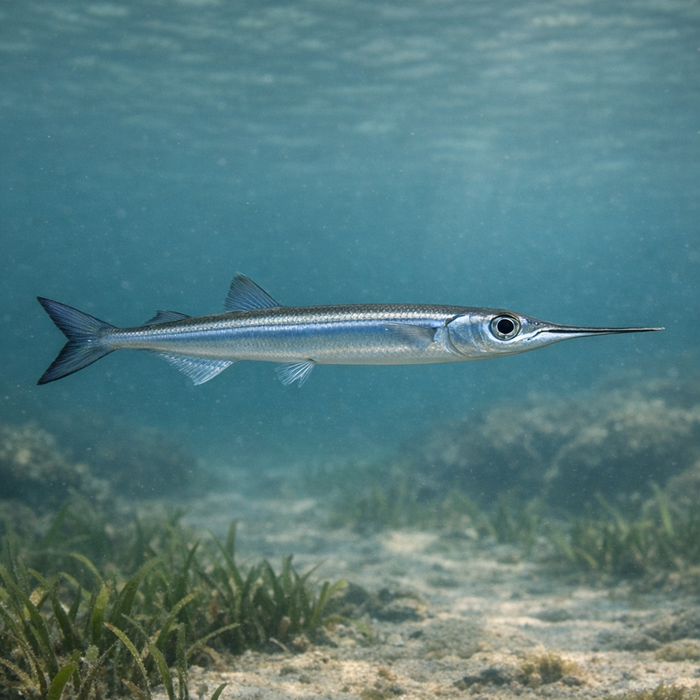
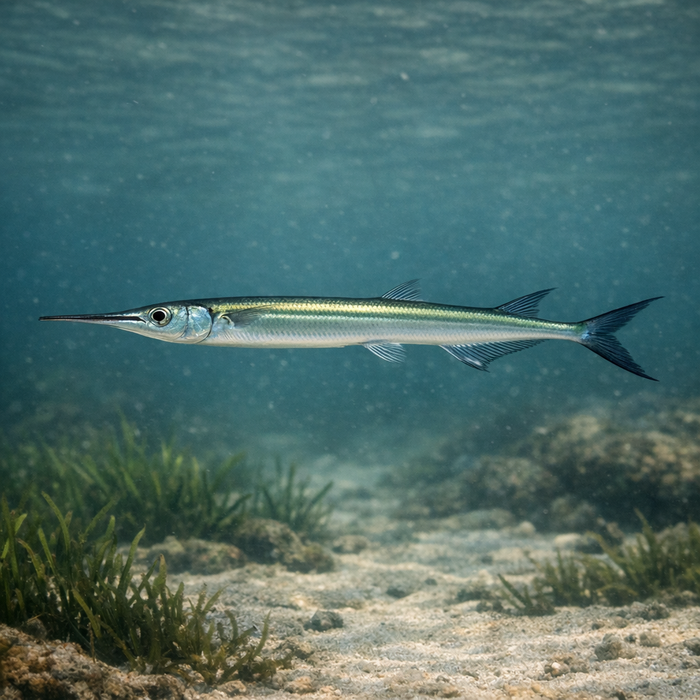
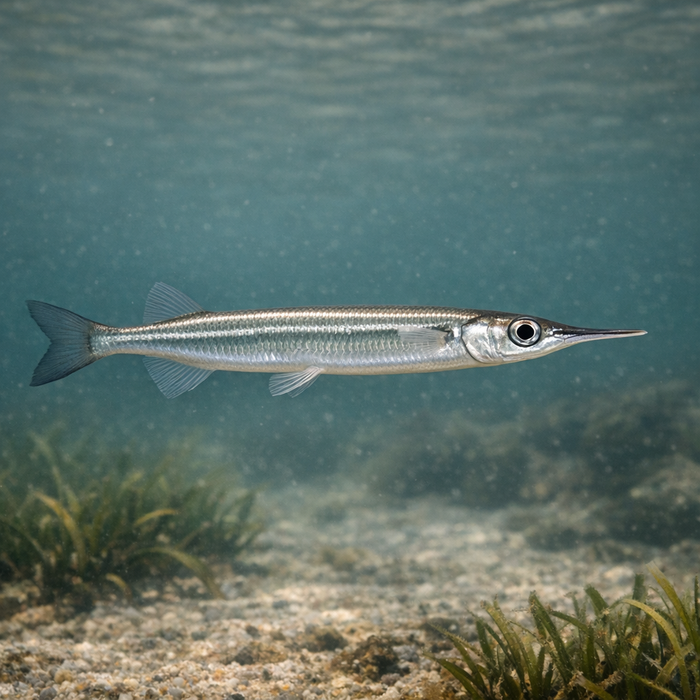
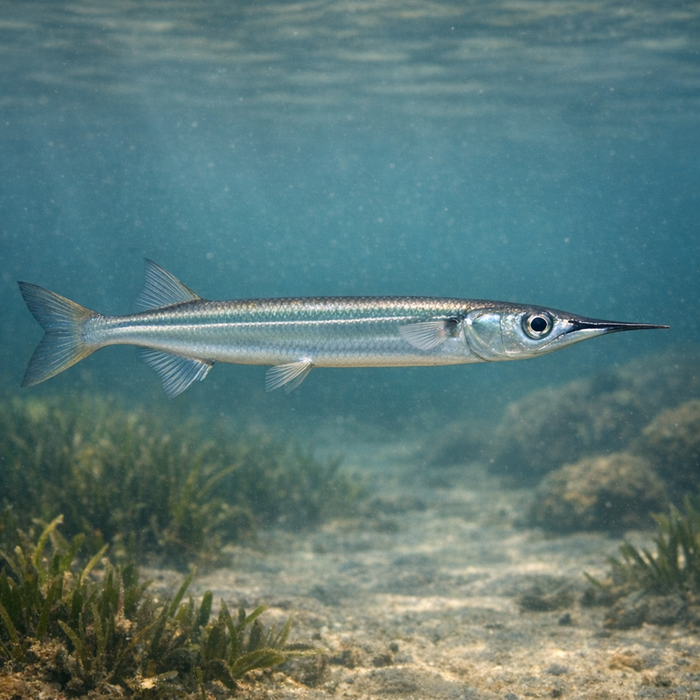
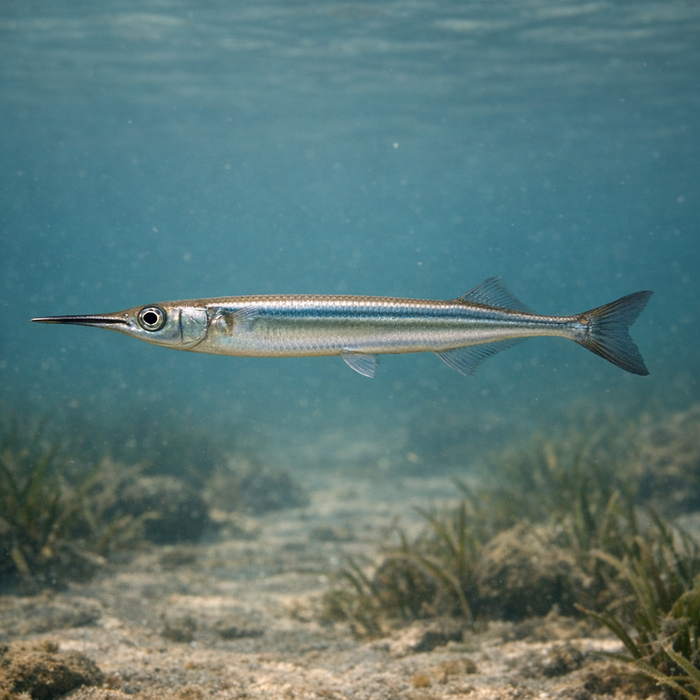
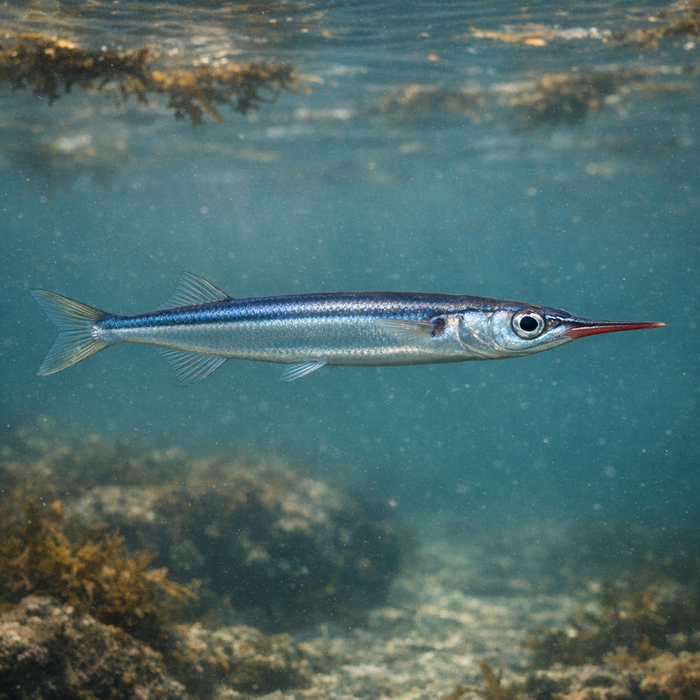
Bigwing Halfbeak (Oxyporhamphus micropterus): The surface skimmer every predator wants for dinner.IntroductionSleek, chrome-bright, and turbocharged for the top foot of the ocean, the bigwing halfbeak is the definition of small fish, big attitude. It skitters, glides, and ricochets across chop like a skipping stone, and when predators crash the party, it turns the surface into a glittering stampede. If you want a masterclass in controlled chaos, watch a school of bigwing halfbeak part the seas in front of a charging mahi. Bigwing halfbeak facts quickly snowball into angler tactics because understanding this baitfish is how you find the hunters.What Makes the Bigwing Halfbeak Unique?Three things. First, the halfbeak look: a stretched lower jaw that forms a built-in skimmer for surface feeding. Second, the oversized pectoral fins that let it pop clear of the water and glide short distances, a budget flyingfish move that fools plenty of sharks and billfish. Third, it's pure pelagic hustle. The bigwing halfbeak lives on the edge, literally at the skin of the ocean, where speed and timing are survival. That package makes it irresistible to everything with teeth and an outboard strapped to it.Habitat & Global RangeThink warm, blue, and moving. Bigwing halfbeak habitat is the tropical and subtropical surface layer near current lines, rips, weed mats, and bait-rich edges. They'll stack around floating structure from sargassum to flotsam and take full tactical advantage of harbors and anchored lights at night. Globally, they ride highways of current through the Atlantic, Pacific, and Indian Oceans, slipping between coastal drop-offs and true open water with the tide and the groceries. Where bait gathers and the water's alive, the bigwing halfbeak is in the mix.Behavior & TemperamentThese fish are nervous system with fins. Schooling keeps them alive, and they use synchronized darting, mirror-flash bodies, and quick air time to break predator aim. They feed in quick windows, often at dusk and after dark, plucking crustaceans and tiny fish right at the meniscus. Spawning is pelagic; eggs sport sticky filaments that cling to drifting weed and debris, distributing future halfbeaks along the current. Hook one and it buzzes, skips, and tries aerial evasion. Small mouth, soft face, big leverage from that beak means missed strikes and thrown hooks if your gear's clumsy.Ecological ImportanceThe bigwing halfbeak is the spark plug of pelagic food webs. Tuna, mahi, wahoo, sails, and nearshore bruisers like Spanish mackerel all cash checks written by these little rockets. When you find halfbeaks stacked under a mat, you're really scouting for apex action. They also move energy from plankton-rich edges up into larger predators anglers chase. Lose the halfbeaks and a lot of offshore fishing goes dark, fast.Conservation & Environmental PressuresThey're not poster children for conservation campaigns, but what hits them hits everything offshore: plastics, degraded floating habitat, light pollution around key feeding sites, and the general mayhem of warming seas shifting currents. Because they're small and short-lived, populations can rebound if conditions stay favorable, but chronic pressure on sargassum and persistent debris entanglement of eggs can ding recruitment. Add heavy predator harvest, and the knock-on effects ripple through the water column.The FishyAF TakeThe bigwing halfbeak isn't a headline trophy; it's the headline clue. Spot a nervous sheen of halfbeaks at the surface and you're reading tomorrow's highlight reel. For pure sport, they'll eat micro offerings and make light line sing, but their true magic is intel. They tell you where the ocean's feeding, how fast, and which direction the fireworks are headed. If you're chasing pelagics and you ignore the halfbeaks, you're playing offshore with the captions turned off. File this under practical Bigwing halfbeak facts: respect the bait, and the predators will find you.