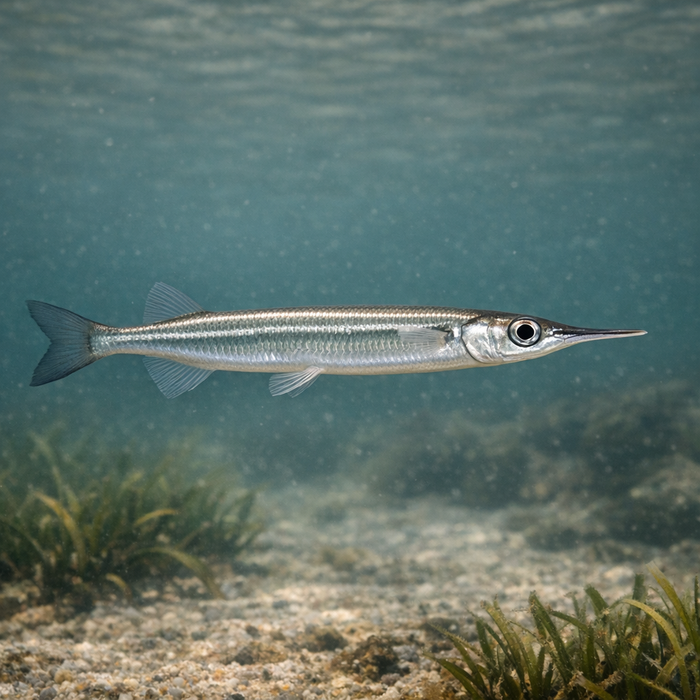
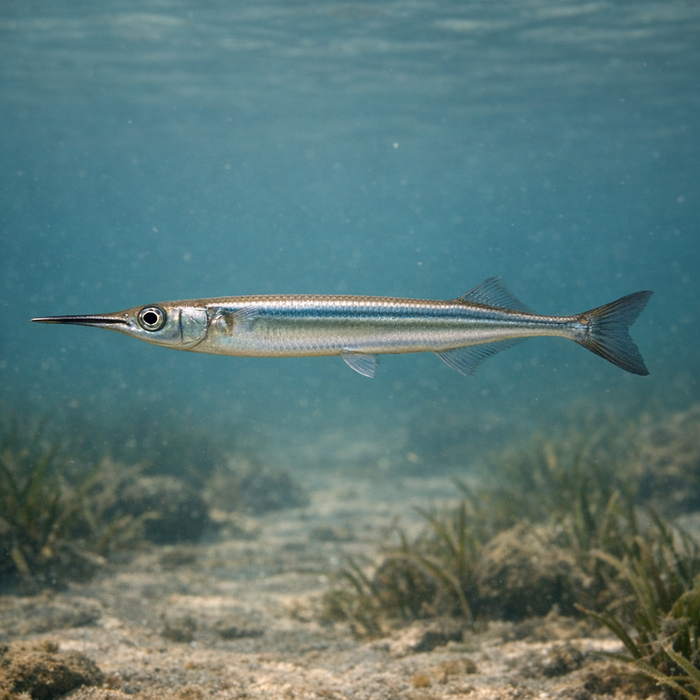
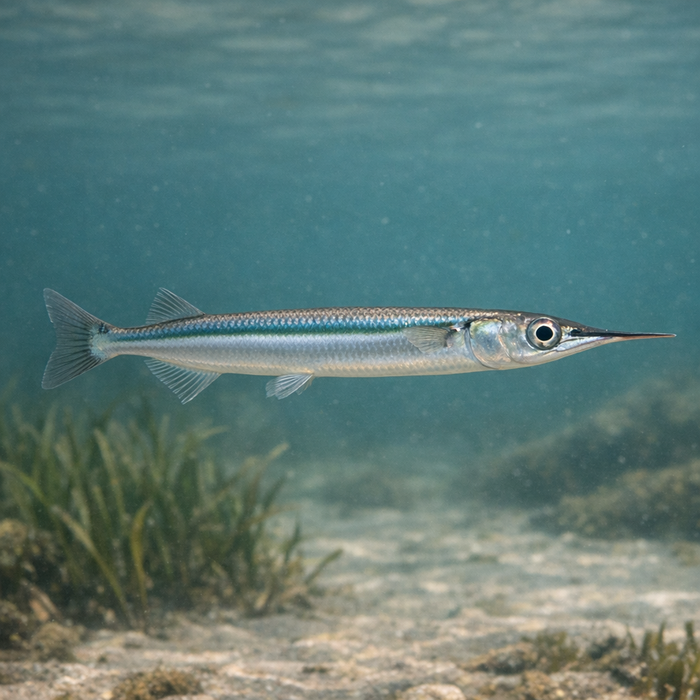
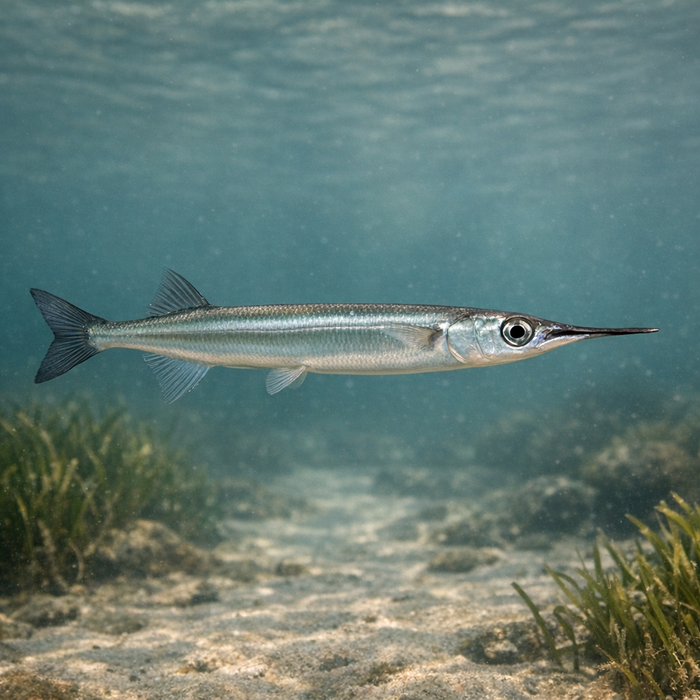
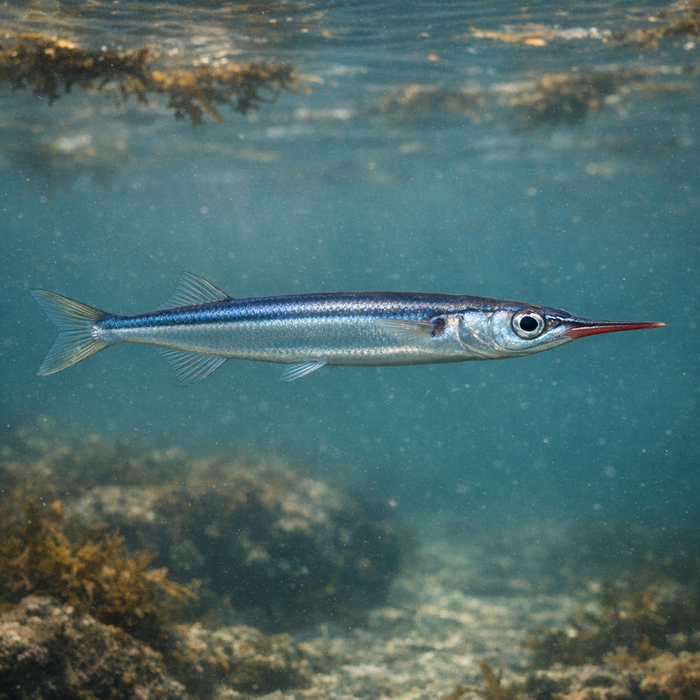
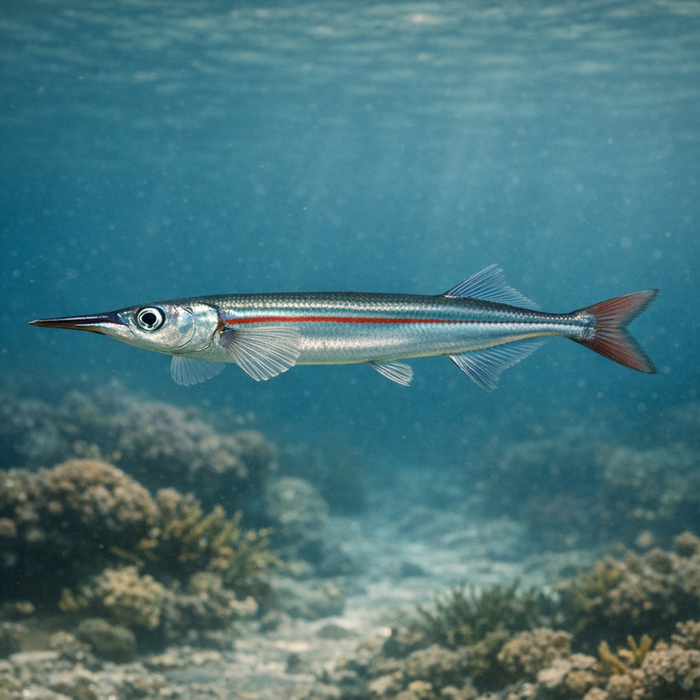
Longfin Halfbeak (Hemiramphus saltator): A Bold, Memorable Hook LineIntroductionThe longfin halfbeak is that twitchy silver needle skimming the top inch of tropical water, always half a heartbeat from launching into a spray of panic. Anglers notice them first as live-bait gold-nervy, speedy, and irresistible to bigger bullies. But look closer and you'll find a crafty little specialist with a weird jaw, a love for wind lanes, and a lifestyle pinned to the skin of the sea. If you came here for Longfin halfbeak facts or to decode Longfin halfbeak habitat, pull up a bucket. This is surface-life by design.What Makes the Longfin halfbeak Unique?Start with the face. That lower jaw isn't a fashion statement; it's a tool. The beak lets the fish probe the surface film, nip tiny crustaceans, and sheer off minuscule plant pieces while barely breaking tension. Add in those longer pectoral fins and you get a fish that can brake hard, pivot mid-dash, and skitter across chop like a skipped stone when trouble looms. The longfin halfbeak is built for the boundary layer-everything about it screams stay shallow, move fast.Habitat & Global RangeYou'll meet the longfin halfbeak throughout the Indian Ocean and adjacent seas, from East Africa and the Red Sea across Arabia to the subcontinent and island arcs beyond. Think sunlit harbors, calm leeward reef edges, seagrass shallows, and open lagoons. They ride current seams, loaf under pier lights, and track windrows where plankton and flotsam collect. If glassy water meets bait-rich edges, expect a silver picket line. Longfin halfbeak habitat is wonderfully simple: clear water, moving food, quick exits. They aren't deep thinkers or deep divers; they're up top nearly all the time.Behavior & TemperamentHalfbeaks school tight and think like herd animals. The whole ball twitches as one, surging forward at the first hint of shadow. They feed visually, with quick nips and sips, and they're suckers for a trickle of chum that keeps them in the neighborhood. Spooked fish rocket forward and leave V-wakes you can track like handwriting on the surface. Their aggression is modest, but their curiosity around lights is legendary. Find a calm night, flip on some glow, and they'll condense into a shining ribbon. Hook one, and the fight is all speed and jitters, more dash than dogfight.Ecological ImportanceThe longfin halfbeak is the candy aisle for serious predators. Sailfish, wahoo, dorado, trevallies, and coastal mackerels treat them like protein pills. That forage role turns them into an angler's best friend. Rig one live and legal, and your odds for a big strike jump. Ecologically, they translate plankton and small bits into high-octane calories that move up the food chain fast. Their eggs come with sticky tendrils that latch onto seagrass and floating debris, a spawn strategy that keeps the next generation right in the productivity lanes. Short lifespans and fast turnover mean they respond quickly to conditions, for better or worse.Conservation & Environmental PressuresThis species isn't typically in the conservation spotlight, but it's not bulletproof. Coastal water clarity, seagrass health, and light pollution all matter. Heavy nearshore netting can flatten local schools, and chronic marina lights can reshape nightly patterns. Oil slicks and plastics ride the same surface corridors halfbeaks prefer, so habitat quality at the skin of the sea is the deal-breaker. The good news: they're prolific and adaptable within their shallow niche. The caution: degrade that niche, and you erase both forage and the fast-paced fishing built on it.The FishyAF TakeThe longfin halfbeak is small fish, big consequences. If you fish in the Indian Ocean neighborhood and ignore them, you're leaving bites on the table. As targets, they reward finesse-tiny hooks, delicate leaders, and a breadcrumb of patience. As bait, they're jet fuel. They also scratch that weird-fish itch: asymmetric jaw, panic-glide sprints, and schooling behavior that turns a quiet slipway into a silver storm under lights. File this one under pay-attention species. Learn the patterns, keep them lively, and you'll turn little flashes into big runs. Longfin halfbeak nine times out of ten means your day just got more interesting.