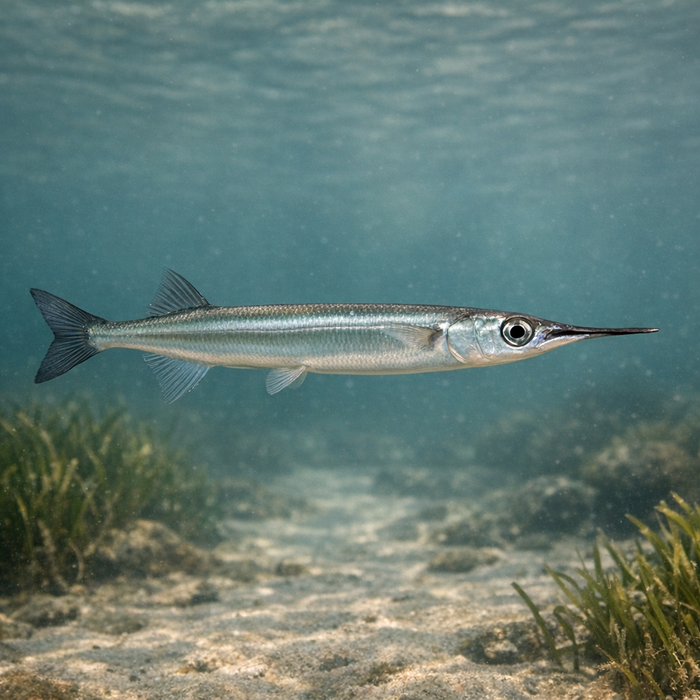
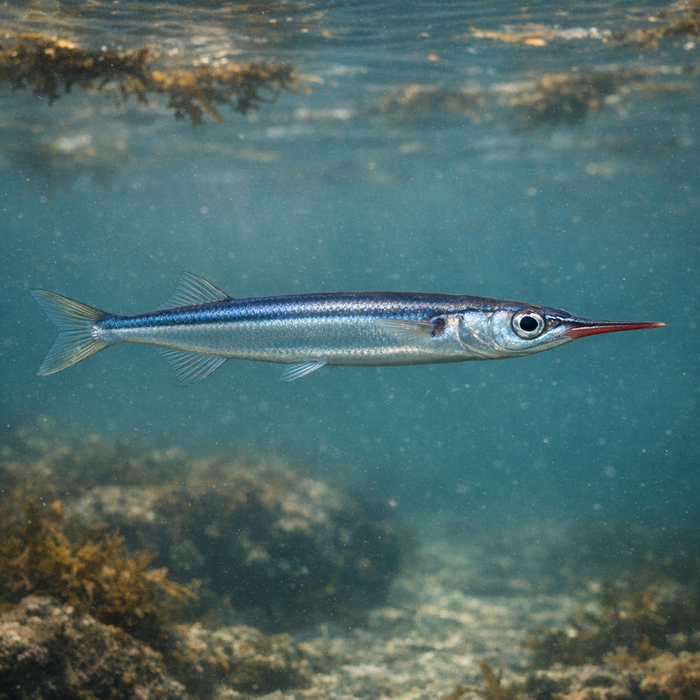
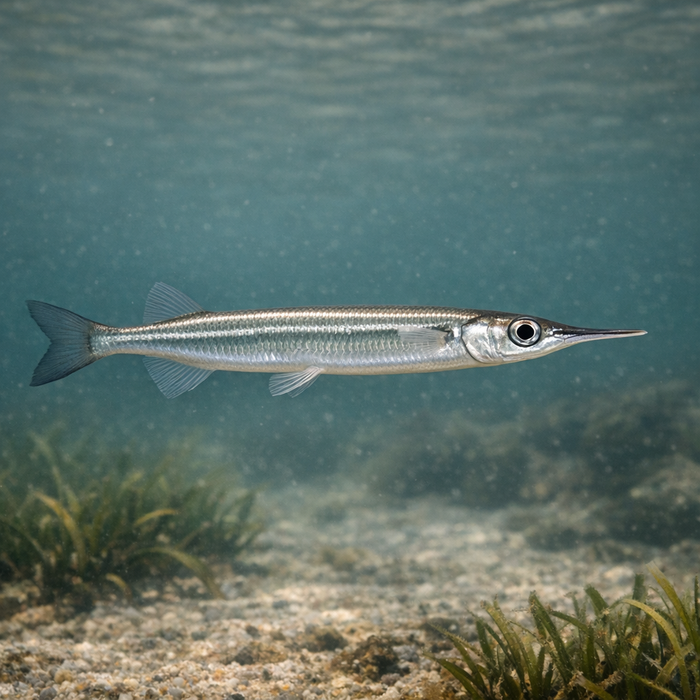
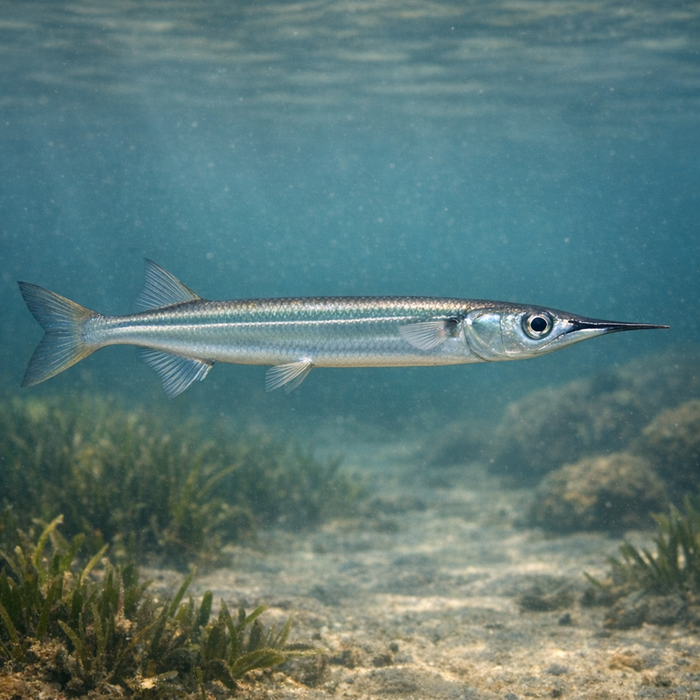
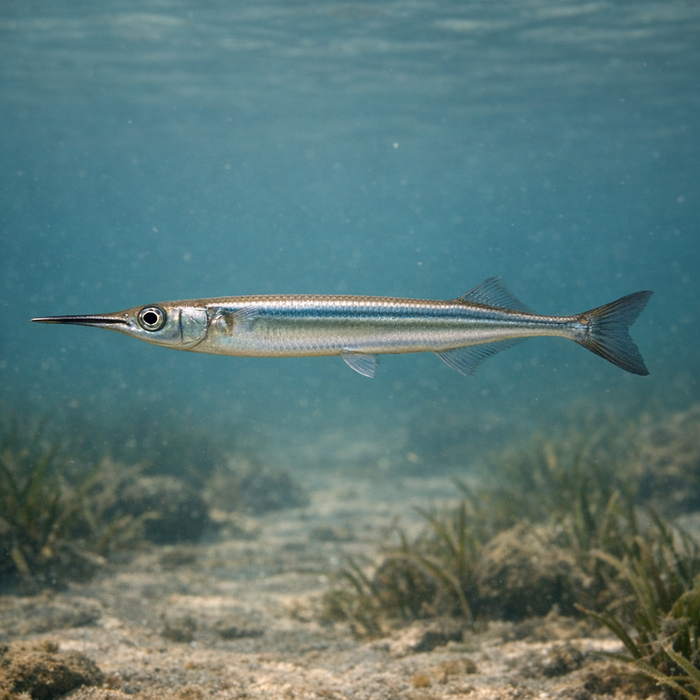
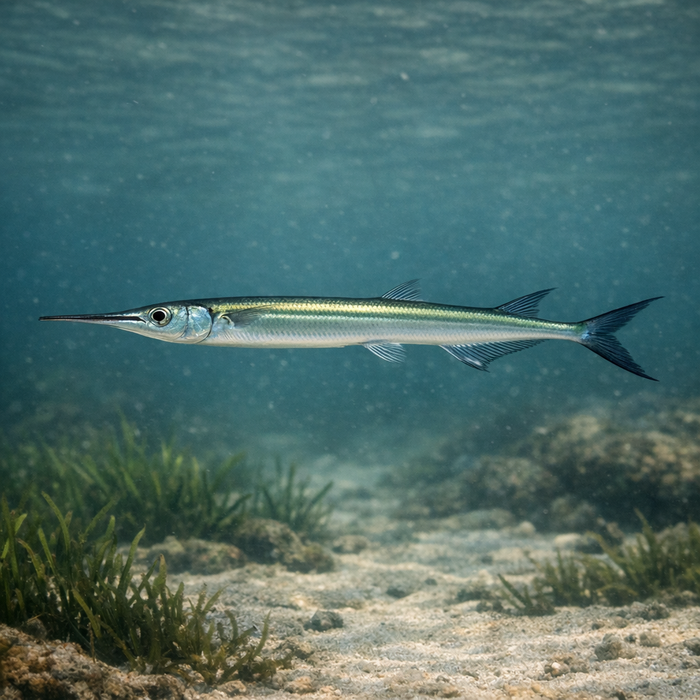
American Halfbeak (Hyporhamphus meeki): The jittery silver razor at the surfaceIntroductionThe American halfbeak is the dart you see streaking under dock lights and around mangrove edges, slicing the slick with that ridiculous underbite. It is small, sure, but it is pure motion. For anglers, the American halfbeak is both a riddle and a resource: fun on tiny tackle, and absolute A-list live bait when you need to feed something with teeth.What Makes the American halfbeak Unique?Two words: asymmetrical jaw. That cartoonish lower jaw is not a gimmick. It is a hydrodynamic probe and a feeding tool, letting the fish skim the surface layer, graze fine material, and nip tiny prey with surprising accuracy. Add a translucent body with a chrome stripe and you get an almost invisible missile in the glare. They also lay adhesive eggs that stick to seagrass and drifting debris, a genius move that keeps the next generation anchored in a chaotic, wave-sheared neighborhood. Those traits are the heart of true American halfbeak facts: built for the top inch of water, with hardware to match.Habitat & Global RangeThe American halfbeak is a nearshore specialist across warm western Atlantic waters, especially the Southeast, Gulf Coast, and Caribbean. Think protected bays, mangrove creeks, channels, and calm beaches. It thrives where tides move food into edges and shadow lines. If you are scanning American halfbeak habitat, start with low-energy shorelines, current seams around bridges, and lighted piers at night. They cruise in schools right at the skin of the water, often within rod's length of structure, and shift deeper only when wind chops the surface or predators push them down. Seasonal movements tend to mirror water temperature and bait availability, with stable action in tropical zones and more pronounced swings at the temperate edges of their range.Behavior & TemperamentThis fish lives life at hyperspeed. Schools are jittery, accelerating and stalling as if a switch flips. They feed by slashing the top film and nipping micro-prey, then vanish with a synchronized jump when something spooks them. Their eyesight is dialed for the surface, and they can be picky, preferring tiny offerings presented delicately. Hooked on ultralight, they skip and cartwheel, more acrobat than bulldog. They are also light-oriented; nighttime around dock lights can look like a conveyor belt of silver needles. The American halfbeak is social, sensitive to boat traffic, and keyed to flow. Slow tide and glassy water equals confidence. Wind and turbulence scatter schools and dull the bite.Ecological ImportanceThe American halfbeak is the pivot between primary producers and predators. Halfbeaks will graze filamentous algae and pick off insects, but they also inhale micro-crustaceans and larval fishes. That omnivorous streak turns plant energy into protein that snook, tarpon, mackerel, jacks, and seabirds cash in on. Fast growth, short lifespans, and heavy schooling make them ideal forage, smoothing out boom-bust cycles in coastal food webs. When you see a tarpon lazy-rolling under a pier light, odds are there is a nervous halfbeak pack nearby doing math on survival.Conservation & Environmental PressuresThe species does not headline conservation campaigns, but it feels every coastal insult. Mangrove loss, seagrass decline, nutrient-fueled algae blooms, and poorly managed shoreline lighting all twist the world they rely on. Because they live right at the surface, oil sheen, floating plastics, and low-oxygen events hit them first. They are also heavily netted or captured with sabiki rigs as live bait. None of this means the American halfbeak is on the ropes broadly, but local hits can happen fast when nursery habitat gets trimmed away.The FishyAF TakeThe American halfbeak is proof that big sport can come in small packets. If you want a technical bite, tie on the tiniest hook you own and try to outwit a fish that evolved to eat lint from the sea. If you want a top-tier ticket to bigger things, slide a lively halfbeak into the current and watch your rod talk. It is not a trophy wall fish. It is a utility player with style, a master class in surface living, and a gateway to chaos when predators show. Learn its edges and you unlock real fun and reliable bait. That is the kind of American halfbeak habitat homework that keeps paying off.