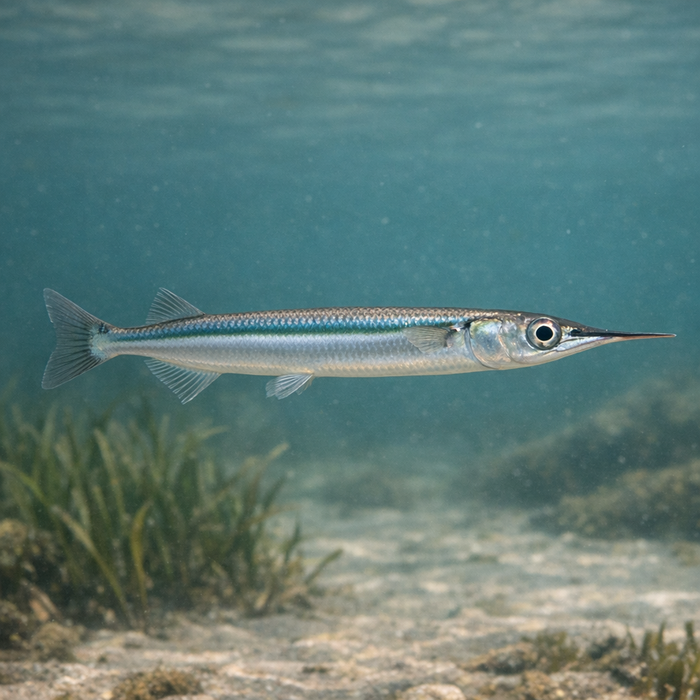
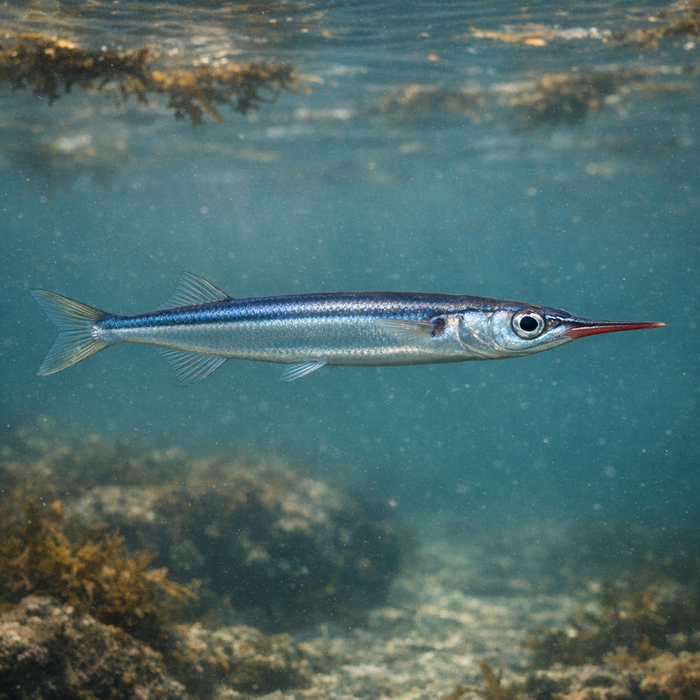
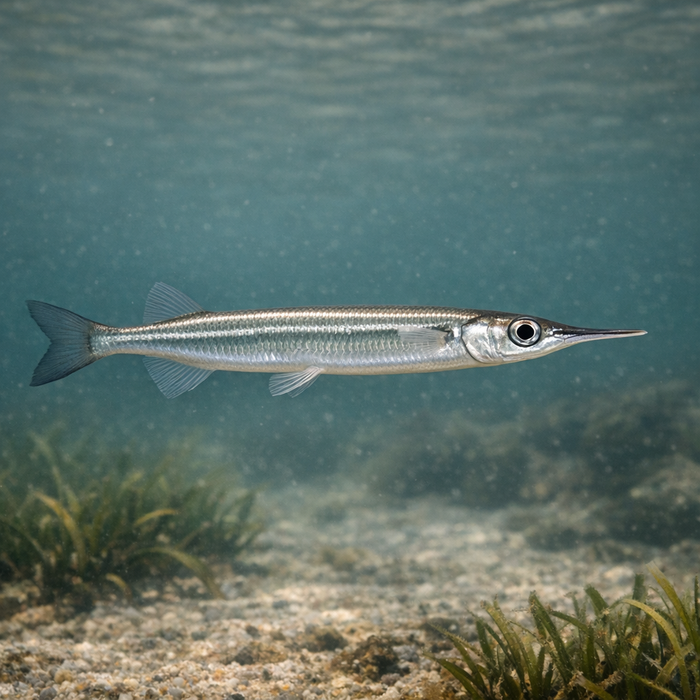
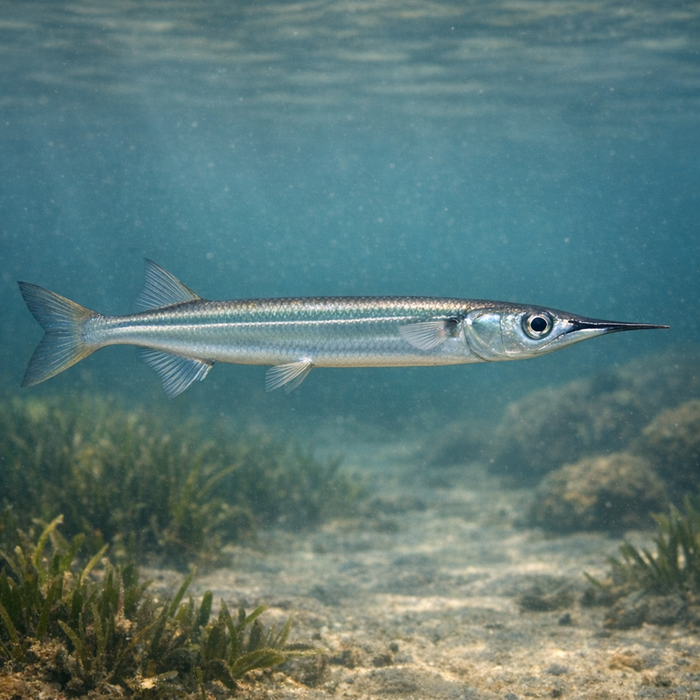
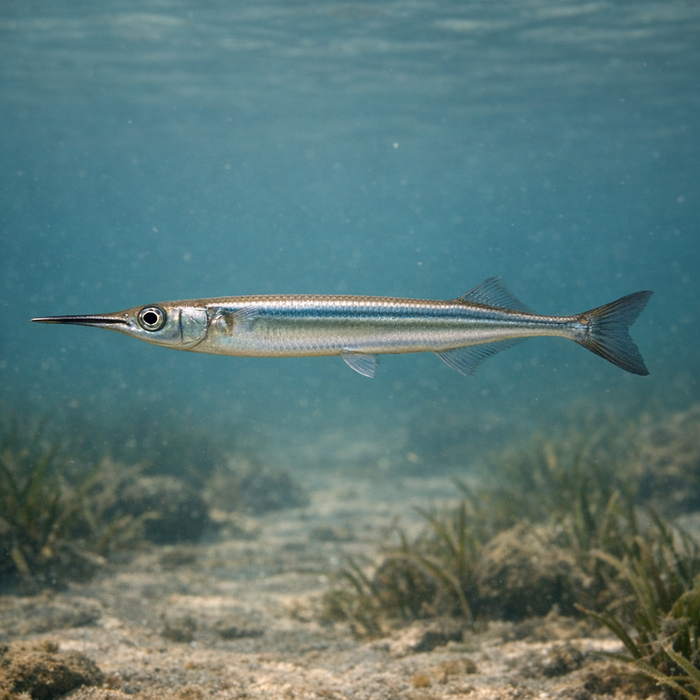
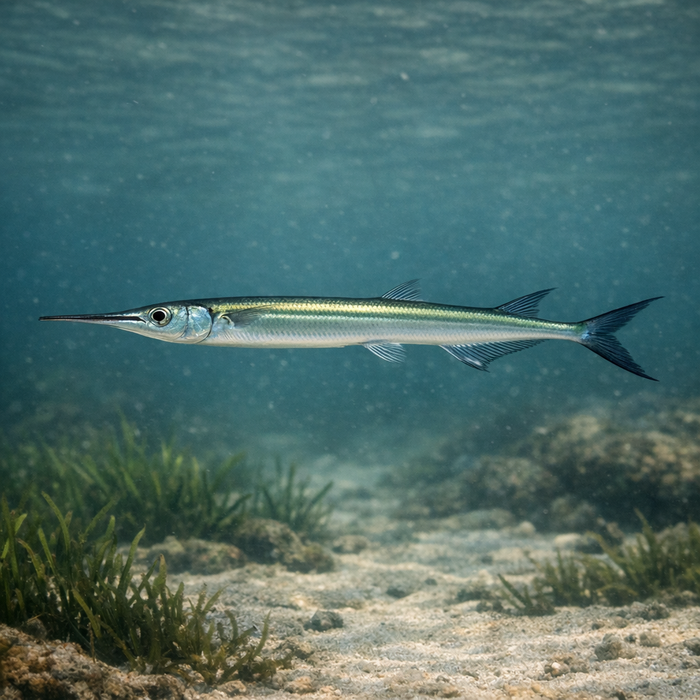
California Halfbeak (Hyporhamphus rosae): A skinny surface sprinter with a built-in skimming straw and big-school energyIntroductionMeet the California halfbeak, the slick little rocket that turns glass-calm mornings into silver lightning shows. It's not a headline gamefish, but if you appreciate finesse, sight fishing, and cool biology, this species punches way above its weight. The California halfbeak darts in wolfpack schools along the skin of the ocean, flashing chrome in bays, harbors, and surf lines. Hook one on ultralight gear and you'll see why this fish steals the spotlight from "real" targets. This is your crash course in California halfbeak facts and why this species deserves a proper entry in your brain-and your logbook.What Makes the California halfbeak Unique?Start with the jaw: that cartoonish lower beak is an elongated blade, nearly a third of the fish's length, designed for skimming the surface film and snatching tiny prey. The dorsal and anal fins sit way back near the tail, a sprint-car configuration that delivers instant acceleration. California halfbeak schools fuse and split in an instant, making synchronized pivots that look like remote-controlled silver sheets. Add in their sticky-filament eggs, which anchor to kelp and eelgrass, and you've got a species with some wild evolutionary tricks.Habitat & Global RangeThe California halfbeak is a nearshore specialist that thrives in calm to lightly choppy water, especially around estuaries, protected bays, harbor mouths, and mellow surf lines. If you're scouting California halfbeak habitat, think edges: eelgrass patches, kelp stringers, pier shadows, and the rips where tidal flows slide past structure. They're West Coast players, extending into Baja, with seasonal pushes influenced by temperature and local bait. While they can roam open water, most of the action happens in the top foot or two, where the glassy surface turns tiny currents into a conveyor belt of food.Behavior & TemperamentCalifornia halfbeak behavior is all about speed, schooling, and surface tension. They hold high in the water column, sip micro-prey, and explode forward when spooked, sometimes skipping across the top like needles. Dawn and dusk are prime windows as light and tidal flow stack bait near shore. Despite their small size, they're twitchy and sharp-eyed, which makes presentation matter: subtle shadows or heavy line can scatter the whole school. Hook one and you'll get jittery, high-speed wriggles-more hummingbird than bulldozer-and a quick bursty fight that's strangely addictive on ultralight tackle.Ecological ImportanceThe California halfbeak is a conveyor belt of calories for bigger things. Bonito, barracuda, mackerel, halibut, and seabirds all cash checks written by halfbeaks. Those sticky eggs tethered to kelp and grass help seed the next generation right where juvenile cover is best. When schools pile into harbors and estuaries, predators follow, tightening the entire local food web. If you spot frantic halfbeaks scattering in the lights, expect something toothier to be close.Conservation & Environmental PressuresThere aren't red-alert headlines attached to the California halfbeak, but nearshore species live and die by local conditions. Eelgrass loss, degraded water quality, and heat spikes can shrink the real estate they use. Oil sheens and runoff foul the surface film they patrol. Harbor lighting changes predator-prey dynamics at night. Even casual netting can dent localized schools. None of this screams collapse, but it all nudges a species that thrives on clean, lively edges. Keep your eyes on habitat health metrics and you'll have a good read on halfbeak prospects.The FishyAF TakeThe California halfbeak is the ultralight gatekeeper of the West Coast's inshore circus. Learn to read halfbeaks and you're learning to read everything that eats them. They're a masterclass in subtlety: tiny baits, quiet presentations, and quick hands. They're also flat-out fun, the kind of fish that turns a slow pier session into a clinic. Whether you're chasing them for sport or scouting sign for bigger predators, the California halfbeak will sharpen your game. That's the real win-more than a grip-and-grin, it's a skill upgrade wrapped in chrome.