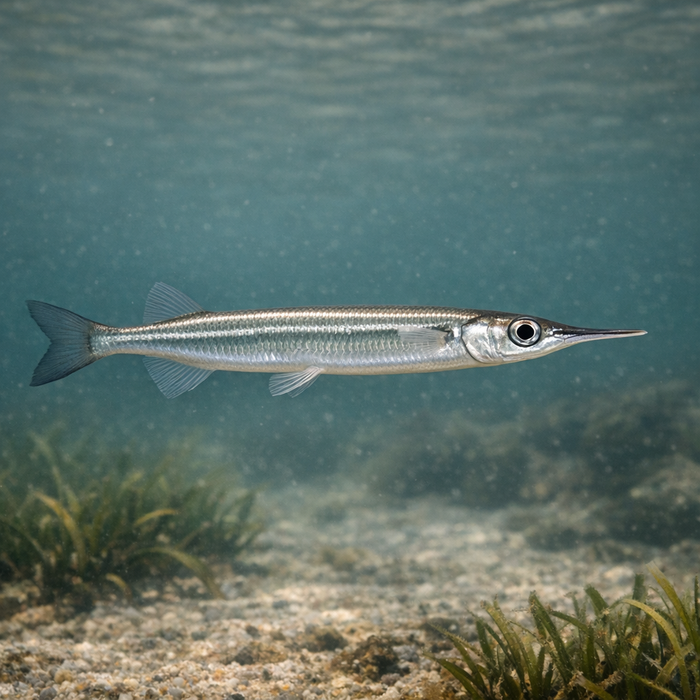
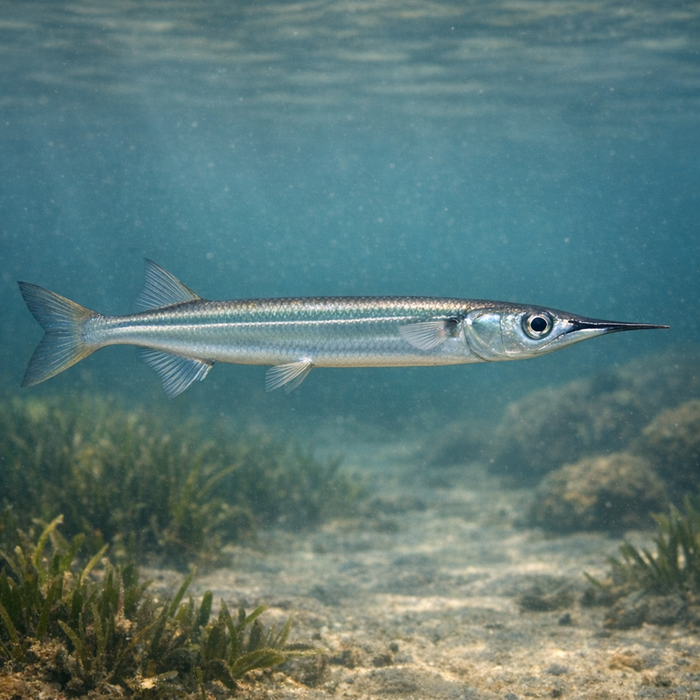
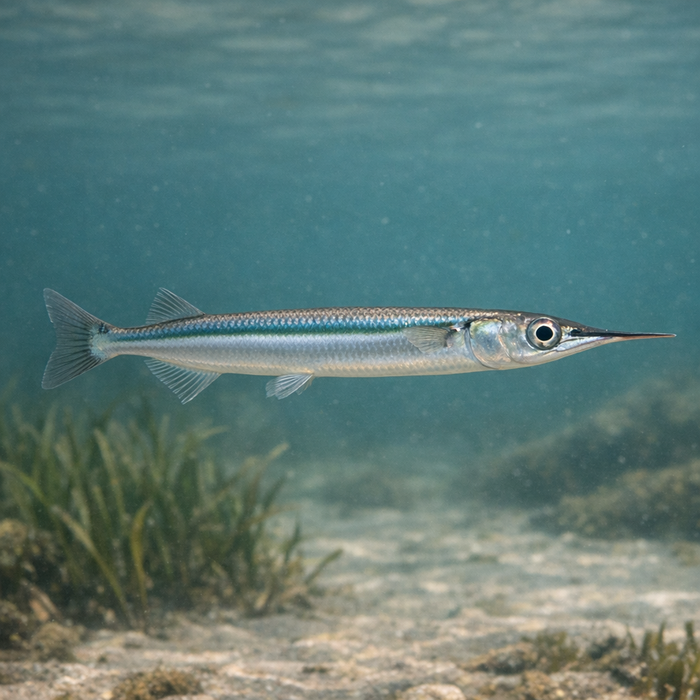
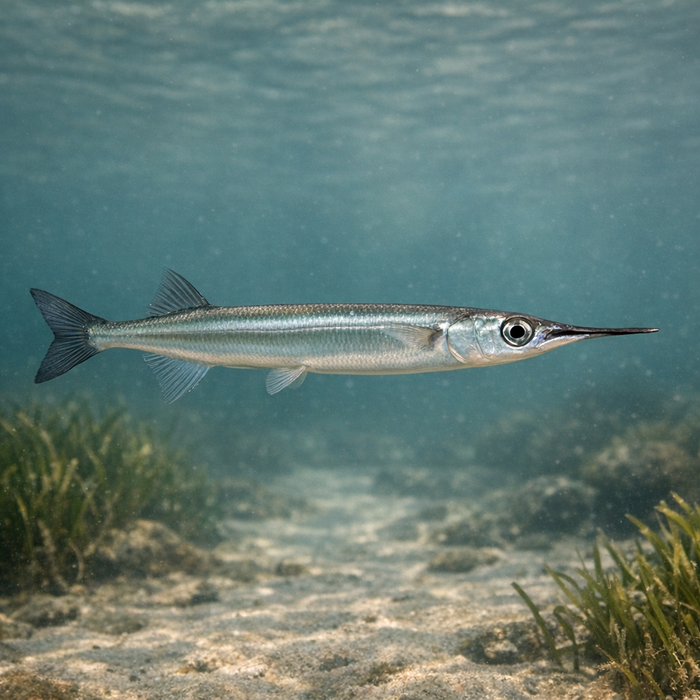
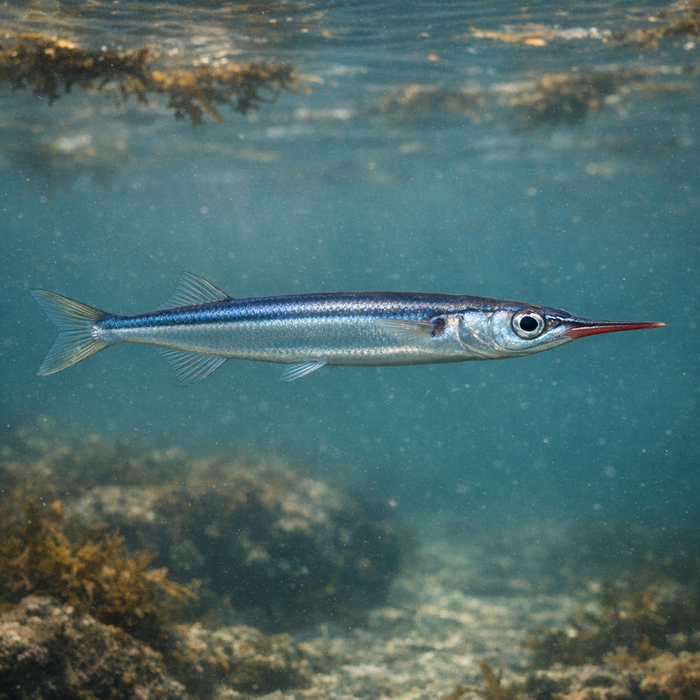
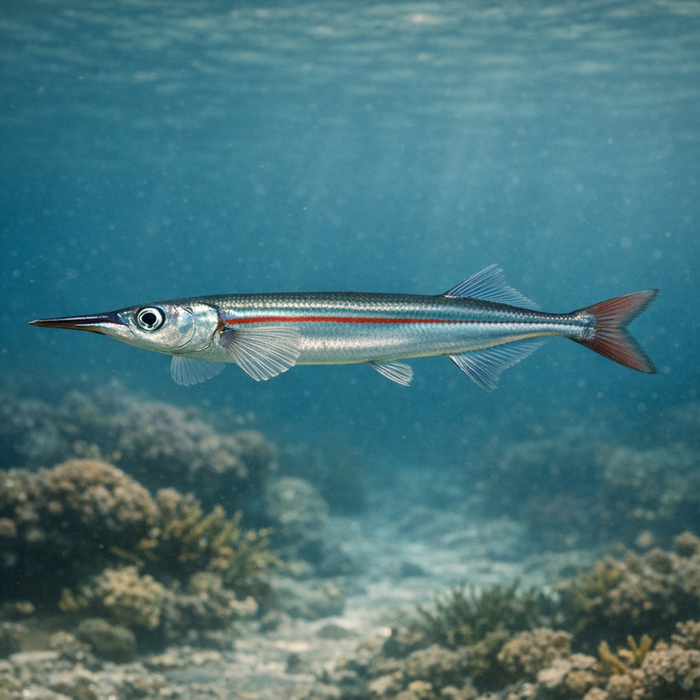
Slender Halfbeak (Hyporhamphus roberti): Needle-nosed surface sprinter, bait-maker, and master of the glassy shallows.IntroductionIf you hang around warm piers after sunset, you've probably watched streaks of silver working the top inch of water like sewing needles. That commotion often belongs to the slender halfbeak, a small but charismatic player in tropical inshore scenes. It's not a glory fish. It's a utility fish with style, a surface grazer that turns into the perfect live offering for predators with bigger reputations. But underestimate it and you'll miss one of the most entertaining light-tackle bites in town.What Makes the Slender halfbeak Unique?The slender halfbeak is basically a hydrodynamic exclamation point. That exaggerated lower jaw isn't for show; it's a feeding tool that skims the surface film where micro-critters and algae stack up. Pair that with high-set eyes designed to watch the world above and you've got a specialized topwater resident. Unlike many baitfish, a hooked slender halfbeak won't bulldog straight down. It zips, skips, and shakes sideways, frequently leaping like a thrown dart. It's the darting, glittery chaos that makes tiny hooks and light line feel way more alive than they should.Habitat & Global RangeSlender halfbeak habitat is the sunlit skin of the ocean. Think calm coves, grass flats, mangrove edges, and marinas where the water is warm and the surface is slick. Hyporhamphus roberti thrives in tropical Western Atlantic waters, especially around the Caribbean and adjacent coasts. You'll see them stack under dock lights, nose into seagrass for cover, and cruise the quiet side of points where tide and current gather micro-food. They tolerate brackish water and shift between open sand patches, fringe reefs, and sheltered harbors. If you're thinking Slender halfbeak habitat, think skinny water, gentle flow, and structure that breaks the wind.Behavior & TemperamentSchooling is the halfbeak's superpower. Tight pods move in synchronized lanes, turning as one when a shadow glides over. They're skittish in bright sun and boat wakes, but flip on at dawn, dusk, and under lights. Their bite isn't a smash; it's a nibble-first investigation that punishes oversized hooks and clumsy leaders. When pressed, the school will compress into a silver ribbon at the surface, then explode into skips and splashes. They feed opportunistically, taking advantage of any slick that corrals plankton. For anglers, the rhythm is simple: find calm, find light, and find edges.Ecological ImportanceThe slender halfbeak is a keystone snack. Snappers, groupers, mackerel, jacks, and barracuda all cash in on halfbeak schools. Those needle-noses convert plankton and algae into pure predator fuel, ferrying energy from the microscopic world to the pointy end of the food web. Their eggs are adhesive, sticking to seagrass and algae with tendrils that keep them off the bottom in oxygen-rich, sunlit nursery zones. Protect the grass and you protect the pipeline. Lose the grass and you'll feel it all the way up the chain when the flats go strangely quiet.Conservation & Environmental PressuresNobody's posting petitions for the slender halfbeak, but they're not bulletproof. Seagrass loss, marina pollution, and chronic turbidity are lousy for surface feeders that rely on sight and clean nursery cover. Hyporhamphus roberti isn't typically managed as a sport species, so trends can slip under the radar. Localized netting for bait can pressure schools if grass beds are already stressed. The good news: give them clean, warm, gently moving water and they rebound quickly. The better news: restoring mangroves and seagrass helps everything, including your halfbeak supply for a dawn live-bait mission.The FishyAF TakeIf you're chasing tarpon, snook, reef jacks, or hungry mackerel, the slender halfbeak is your spark plug. It's a bite-sized ignition switch that turns predators from maybe to absolutely. On ultralight gear, the fish itself is pure fun: fussy, fast, and hilariously overcaffeinated when the hook lands. Want Slender halfbeak facts that actually matter? Use tiny hooks, stealthy leaders, and a float or fly that sits in the film without spooking the school. Respect the flats, baby the grass, and treat these silver pencils like the currency of inshore chaos. They might be small, but they pay big dividends for anglers who know how to spend them.