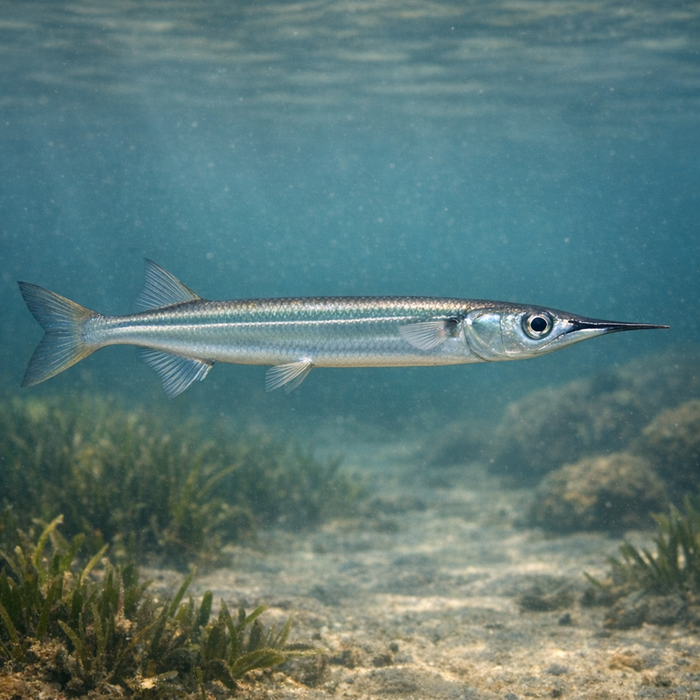
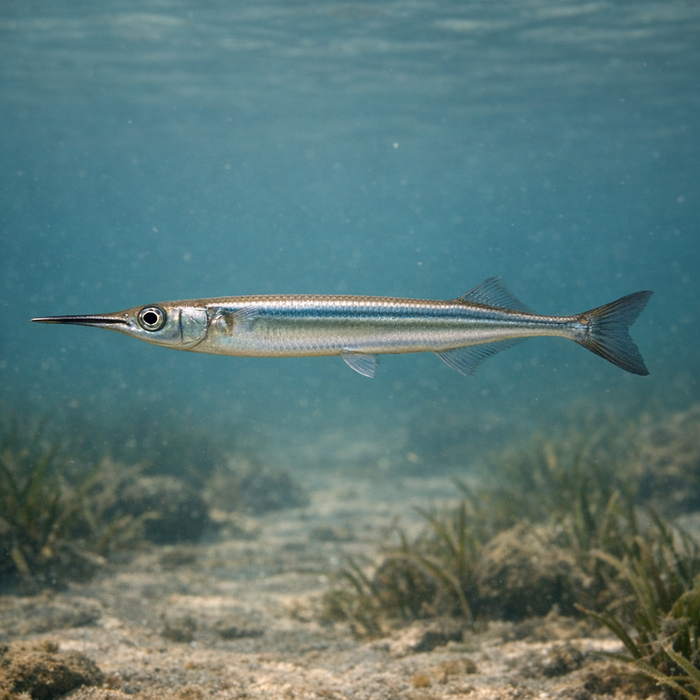
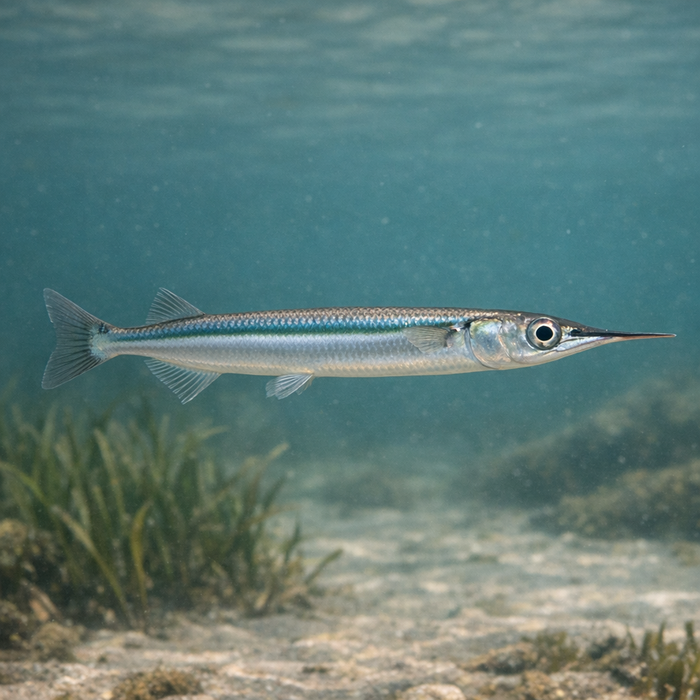
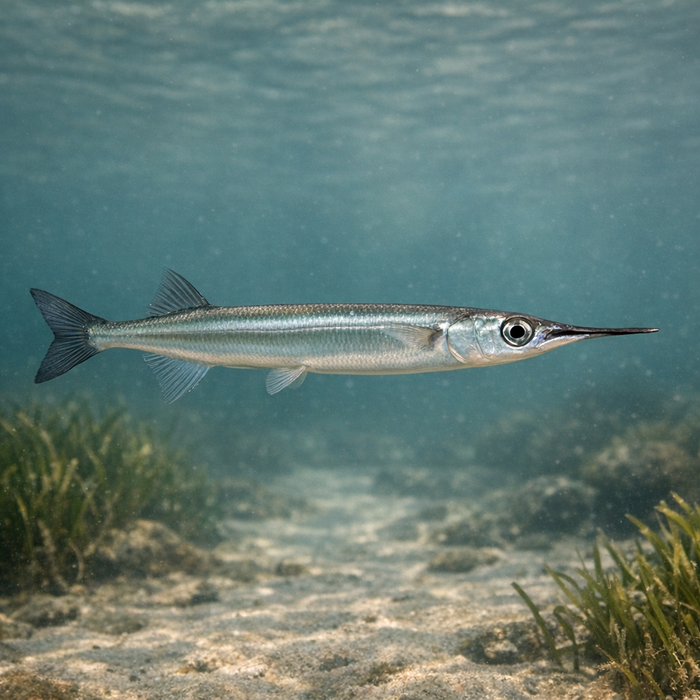
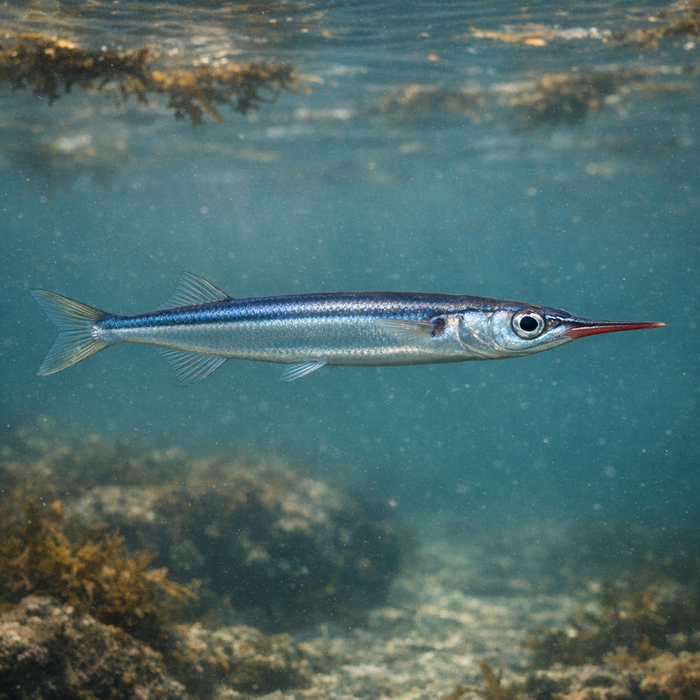
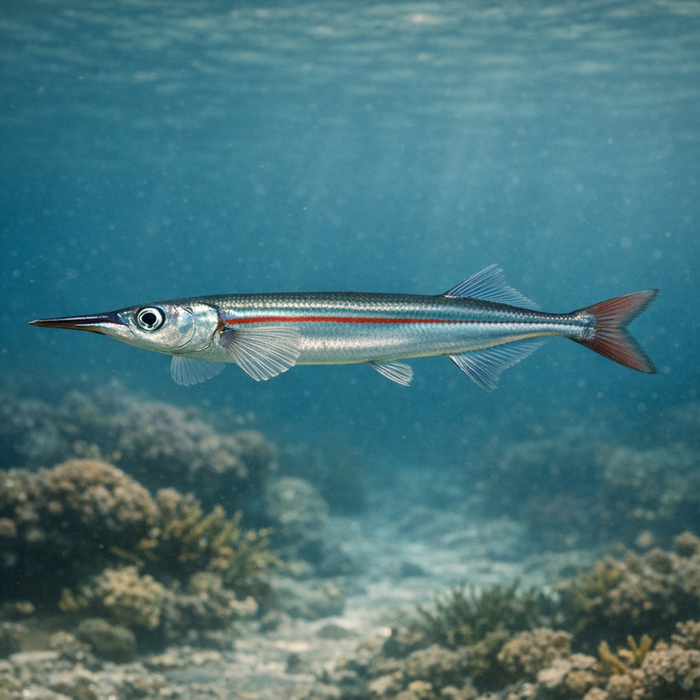
Hardhead Halfbeak (Chriodorus atherinoides): A surface skimmer with a beak, speed, and serious bait credIntroductionIf you've ever watched a silver ribbon of fish slicing the surface like tiny speedboats, you've met the hardhead halfbeak. It's small, fast, and built like a maritime letter opener. Anglers don't chase it for glory pics; they chase it because the hardhead halfbeak turns big predators reckless. Still, this little surf-slicer has its own personality worth knowing, and Hardhead halfbeak facts go way beyond "good bait."What Makes the Hardhead halfbeak Unique?Start with the jaw. The hardhead halfbeak wears a dramatic underbite: a stiff, elongated lower jaw and a much shorter upper jaw. That beak isn't just for looks. It lets the fish skim the surface film for micro-prey and plant bits with minimal drag. The second standout is the fish's surface obsession. Many species flirt with the top; the hardhead halfbeak practically lives there, cruising, skipping, and vanishing in a blink when spooked. Finally, this species forms tight, responsive schools that can corkscrew under a dock light or abruptly scatter like raindrops, making them irresistible to predators and oddly fun to watch.Habitat & Global RangeWhen anglers ask about Hardhead halfbeak habitat, think shallow, salty, and sunlit. You'll meet them in warm estuaries, mangrove edges, and grass flats across the tropical and subtropical western Atlantic. Bridges, pier lights, and calm leeward shorelines concentrate halfbeaks by the bucketful. They favor clear, low-chop water where the surface film stays intact, often working along tide lines or the shadows of skiffs and pilings. Brackish marsh mouths and seagrass meadows are prime nurseries and feeding lanes, and they sometimes drift along sargassum slicks.Behavior & TemperamentHardhead halfbeaks are nervous by design. Their defense is speed and confusion, not armor. Spook a school and it detonates into staccato skips, each fish hurling forward in micro-leaps that blur across the skin of the water. They're visual feeders, keyed to light and contrast, and they'll line up under dock lights like teenagers at a taco truck. Despite the skittish vibe, they're opportunistic nibblers and will dart at tiny morsels: a sliver of shrimp or a midge-sized fly is all it takes. Hooking them is trickier than tempting them, thanks to that long, hard beak and postage-stamp mouth.Ecological ImportanceThe hardhead halfbeak might be small, but it's a hinge species between the salad bar and the shark buffet. Omnivory lets it graze algae, sip plankton, and opportunistically nab tiny crustaceans, then package all that low-level energy into a streamlined snack for snook, tarpon, jacks, mackerel, and anything else with teeth and bad intentions. They're also egg-slingers with sticky, filamented eggs that cling to seagrass, which means healthy grass beds equal healthy halfbeak recruitment. Remove the grass, and the whole conveyor belt of coastal energy sputters.Conservation & Environmental PressuresHardhead halfbeaks aren't poster children for crisis, but they ride shotgun with habitats that are. Seagrass loss, mangrove clearing, chronic turbidity, and nutrient spikes all kneecap the places these fish rely on. Because they school tight near the surface, they're also sensitive to oily films and poor water quality. They're not hammered by directed commercial effort, but they are scooped incidentally and heavily used for live bait. Localized dips can happen where water quality tanks or grass beds collapse. Keeping bait rules sensible and protecting nursery structure matters, even for a fish this common.The FishyAF TakeThe hardhead halfbeak is the ultimate supporting actor in coastal fishing. Want to upgrade your day? Learn where hardhead halfbeaks stack, how they move with light and tide, and how to pluck a few fast without scattering the school. Whether you're geeking out on Hardhead halfbeak facts or just filling a livewell, this species is pure utility with a weirdly elegant design. It's also a walking, er, skipping advertisement for habitat protection: save the grass, save the bait, catch the trophies. That's the chain. Respect the little dudes and your big-fish karma improves immediately.