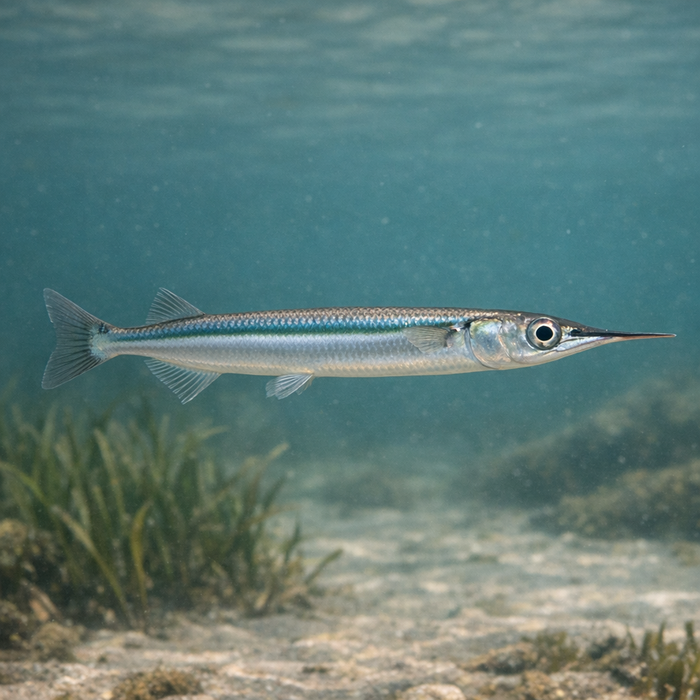
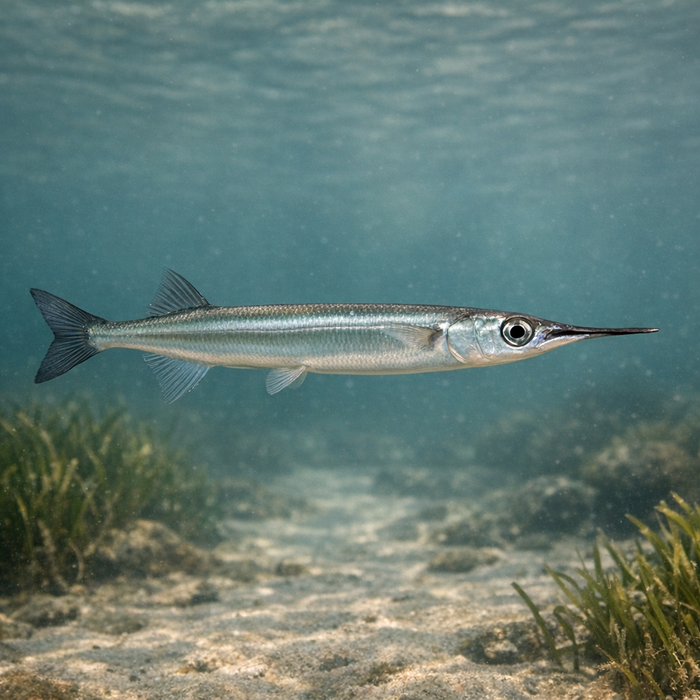
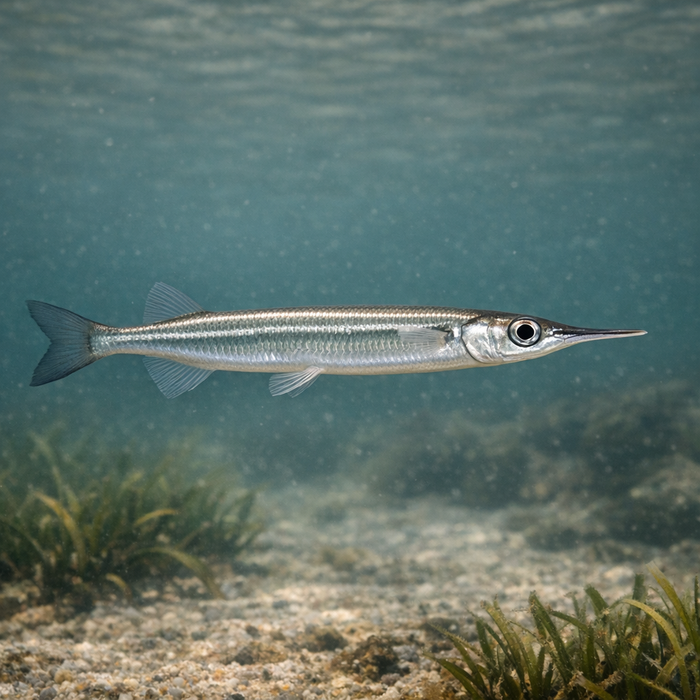
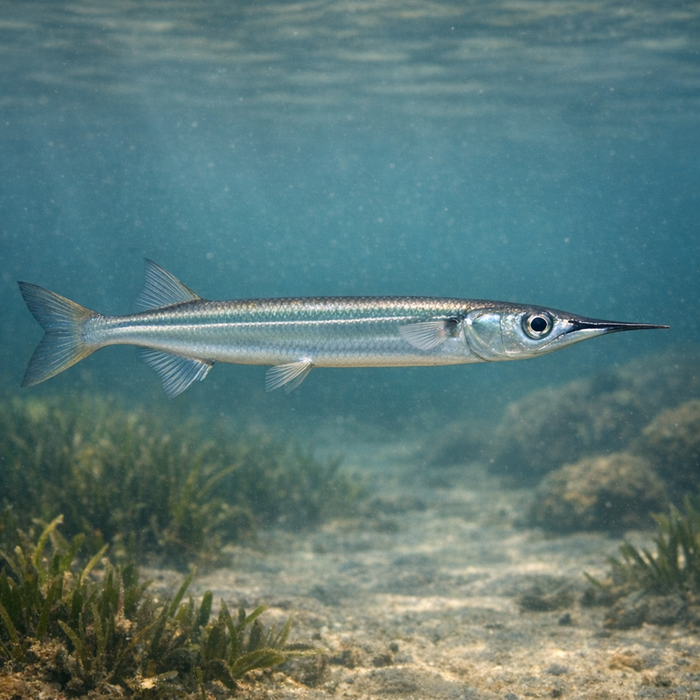
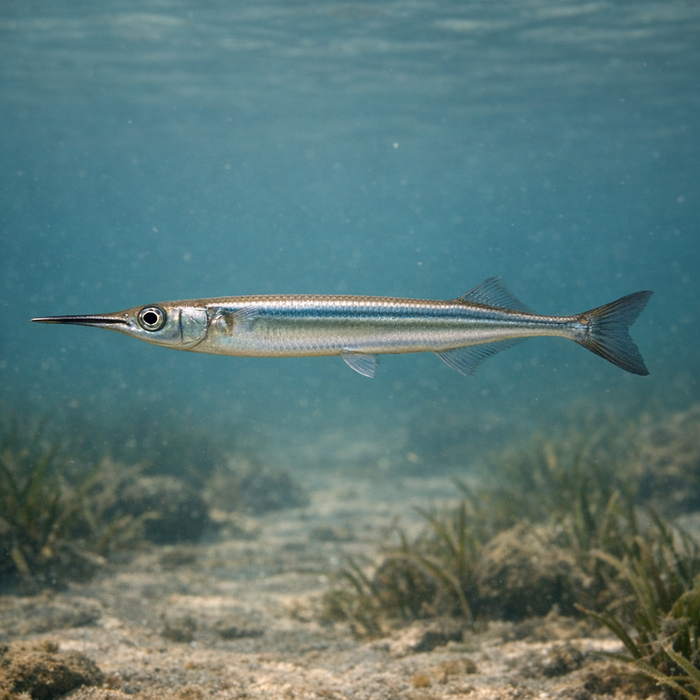
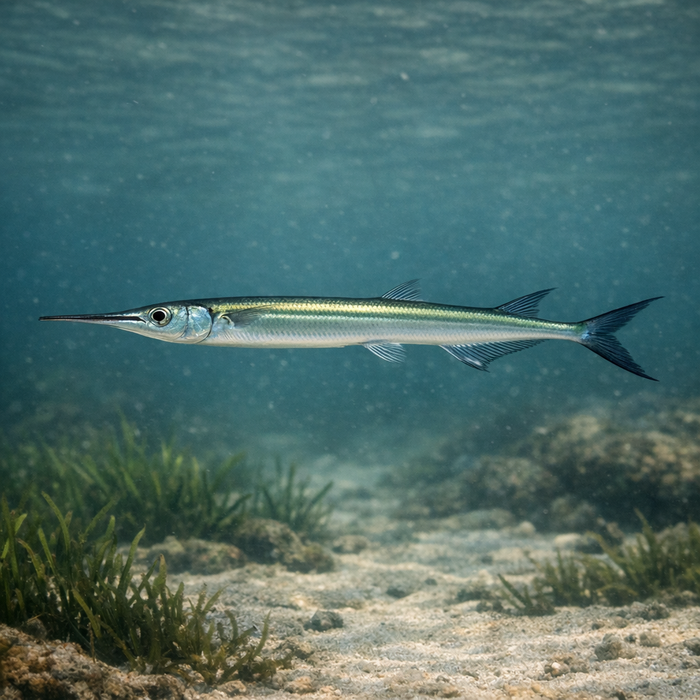
False Halfbeak (Oxyporhamphus similis): A Bold, Memorable Hook LineIntroductionThe false halfbeak is the jittery, chrome sliver you see slicing wakes around pier lights and weedlines. Built like a needle with a motor, it skims the surface, panics in style, and vanishes in a blink. You don't chase it for fillets or bragging boards. You chase it because watching these fish hunt on top is pure fishing candy. If you want quick-hit action and a pocketful of bite-sized bait, the false halfbeak delivers.What Makes the False halfbeak Unique?Two big things. First, that wild jaw. Juveniles start with equal jaws, and as they grow, the lower jaw shoots forward into a proper halfbeak. It's not a fashion statement; it's a hydrofoil that helps them skim and grab micro-prey near the meniscus. Second, the engine placement. With dorsal and anal fins set far back, the false halfbeak is built for instant acceleration and erratic darts. Hook one and it won't bulldog; it zip-lines, skips, and tries to shake free in an aerial shuffle that's way more fun than its size suggests. If you're collecting False halfbeak facts, start with speed, surface antics, and that beak evolution.Habitat & Global RangeThe false halfbeak is a textbook surface specialist, hugging the top foot or two of water in warm seas. You'll see schools working tide lines, hovering under docks and bridges, and drifting along weedlines where tiny bait accumulates. False halfbeak habitat reads like a night-fisher's dream: marina lights, calm coves, harbor mouths, and inshore rips that gather life into a tight buffet lane. While not picky about bottom type, they respond to current, clarity, and small prey availability. In tropical and subtropical regions worldwide, they function as a common thread between quiet bays and open coastal slicks.Behavior & TemperamentSkittish but hungry is the false halfbeak vibe. They're visual feeders, accelerate in bursts, and use that extended lower jaw like a skiing prow. When threatened, they skip across the surface, literally planing on their beak to break pursuit. They school tightly, shift direction on a dime, and love a good chum trickle. At night, bright lights flip the feed switch, gathering scattered fish into compact, catchable bunches. Days with glassy conditions make them spooky; a little ripple hides your approach and boosts confidence.Ecological ImportanceThe false halfbeak is the appetizer that powers the headliners. It converts tiny planktonic life into fuel for mackerel, jacks, dolphinfish, and billfish. That's why offshore crews treat them like currency for live or dead baits. Inshore, they're a crucial surface-link in the food web, transferring energy from micro-prey to predators that anglers prize. Lose the false halfbeak layer, and you starve the show above it.Conservation & Environmental PressuresNo one's writing tearful ballads about dwindling false halfbeak stocks, but that doesn't mean they're bulletproof. Coastal water quality, marina pollution, and light pollution patterns all reshape where and how they feed. Because they concentrate around docks and harbors, they're exposed to runoff, plastics, and fuel slicks more than open-water counterparts. They're also scooped for bait in some regions. Right now, they're generally stable, but healthy shorelines and sensible harvests keep the engine running.The FishyAF TakeThe false halfbeak is the perfect warm-up act. Grab ultralight gear, chum a little, and watch chaos form at the surface. It's part action, part science project, and all about timing: tides, lights, and tiny offerings. If you came looking for False halfbeak habitat tips, here's the cheat code: fish where micro-bait stacks and light cuts the darkness. When the slick is alive and the water looks oily with life, these fish appear like silver punctuation marks. Catch a few for the livewell, smile at the surface circus, and remember that sometimes the best bite of the night is the bait itself.