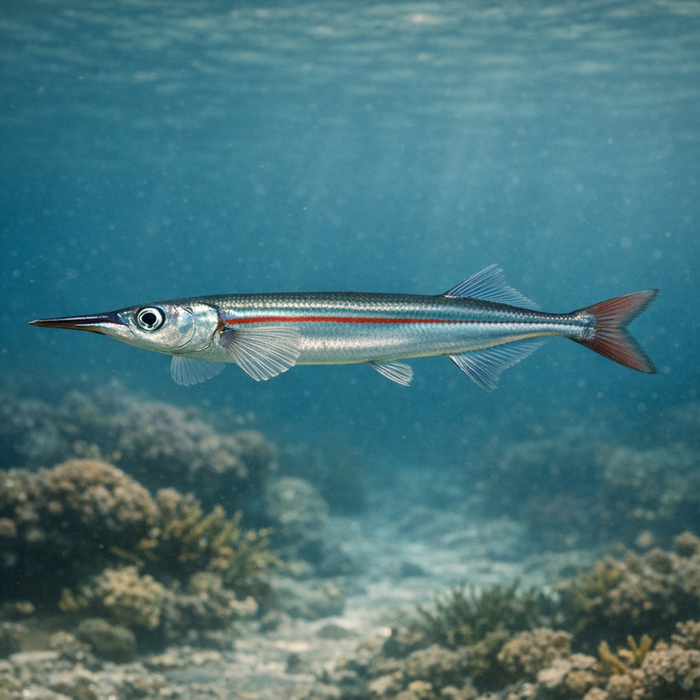
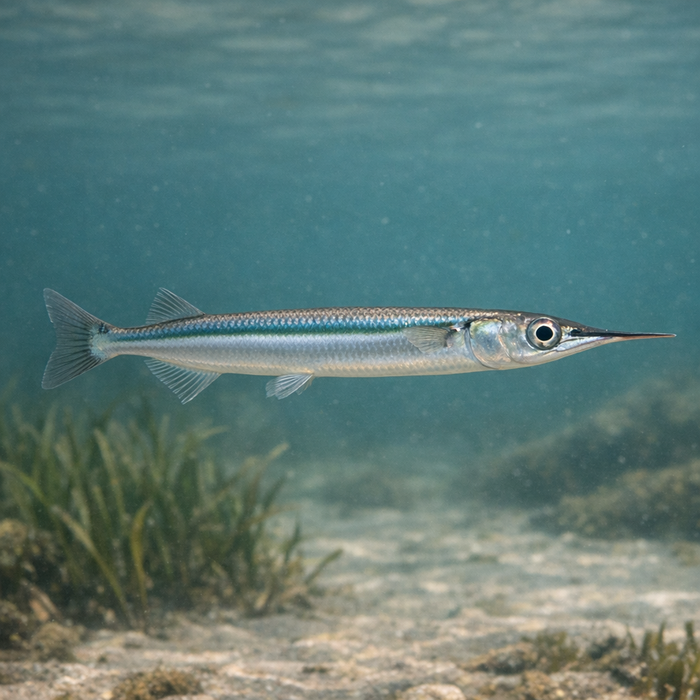
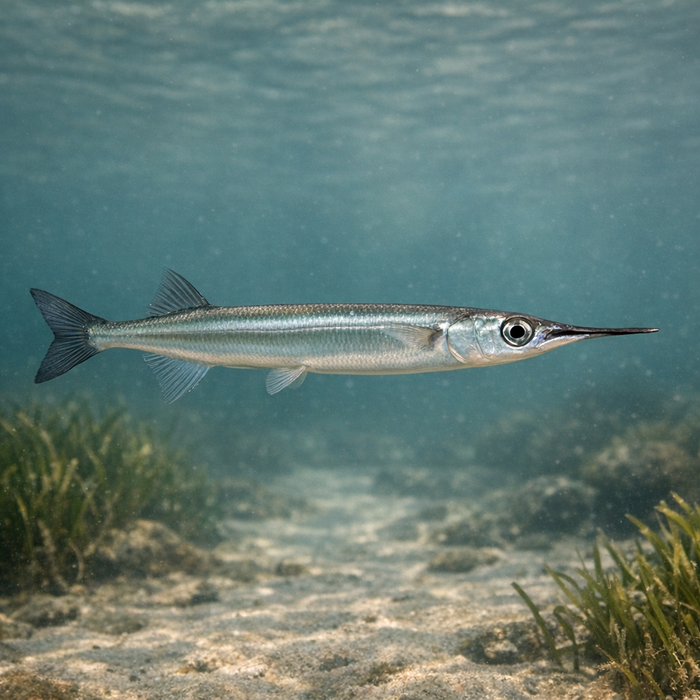
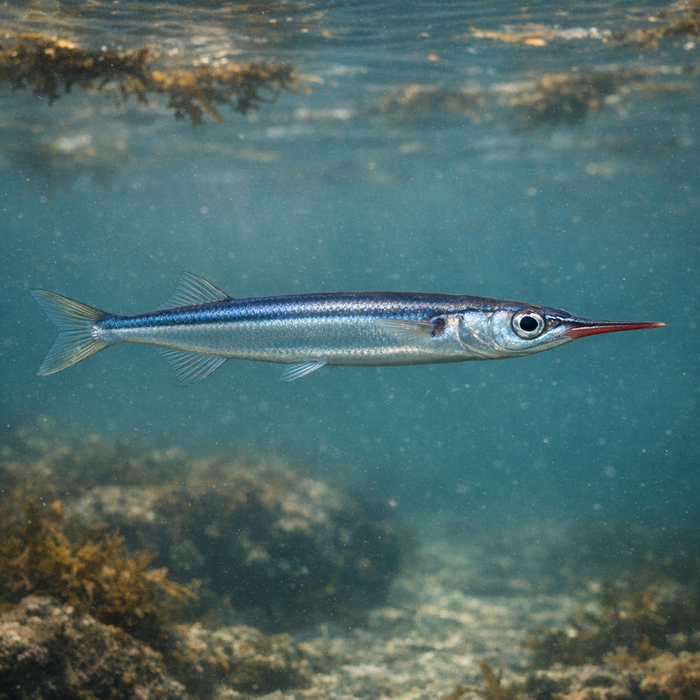
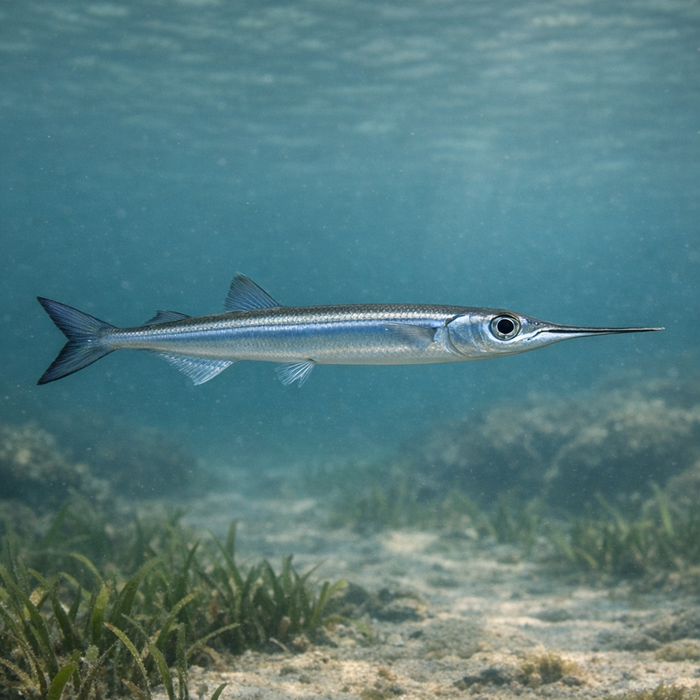
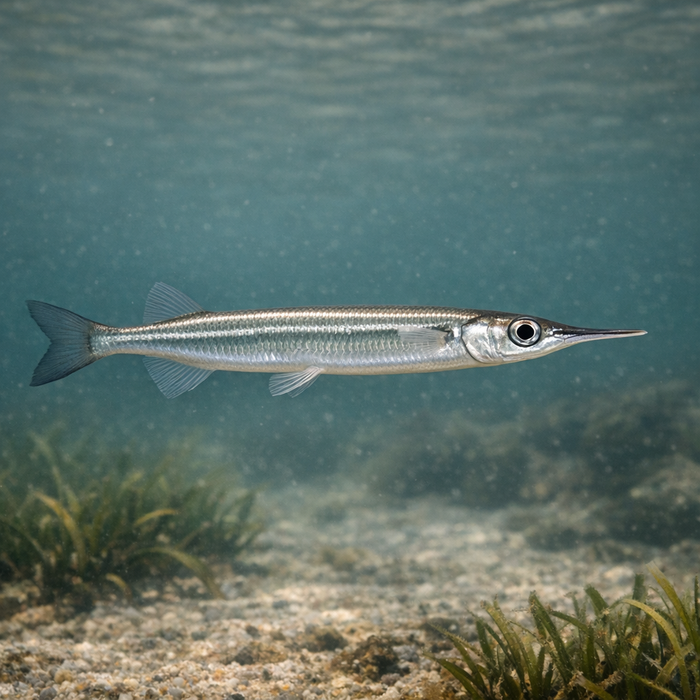
Ribbon Halfbeak (Euleptorhamphus viridis): A green-chrome speedster built like a razor and wired for the surface.IntroductionMeet the ribbon halfbeak, the shimmery baitfish that steals the show under dock lights and current lines. Long, slender, and deceptively fast, this little sprinter sips plankton one second and slashes off like a skipping stone the next. Most anglers meet ribbon halfbeak while gearing up for bigger quarry, but spend five minutes watching them feed and you'll see serious finesse fishing potential. Consider this your cheat sheet for real-deal Ribbon halfbeak facts, not aquarium trivia.What Makes the Ribbon halfbeak Unique?Start with the jaw. Like other halfbeaks, the lower jaw is elongated into a delicate spear, but on the ribbon halfbeak the whole package is stretched and streamlined. The dorsal and anal fins sit far back near the tail, acting like stabilizers so the fish can track perfectly at high speed right on the surface. The body is crazy thin, almost ribbon-like, flashing emerald-green along the back with mirror-bright flanks. Spawning is equally wild: adhesive eggs sprout tendrils that snag onto drifting seaweed or structure so the next generation stays anchored in the nursery. Add it all up and you've got a specialist that owns the skin of the ocean.Habitat & Global RangeIf there's a warm coastline with clean water and drifting weedlines, there's a decent chance ribbon halfbeak are in the neighborhood. They thrive around lagoons, harbor mouths, reef edges, and offshore slicks, especially where current gathers plankton and micro-bait. Night lights are a magnet, pulling schools into easy viewing range for anyone with a bucket and a sabiki. While their distribution centers on the Indo-Pacific, the pattern is consistent across tropical belts: find edges, find flow, and you'll find the halfbeak corridor. For anglers scanning for Ribbon halfbeak habitat, think "surface highways" more than "structure huggers."Behavior & TemperamentRibbon halfbeak are surface junkies. They school tight, hang in the top foot or two of water, and turn jittery at the first shadow. When spooked they don't dive; they blast forward and skip the surface in bursts, like budget flyingfish without the glides. Feeding is a mix of dainty and opportunistic, from plankton nips to micro-crustaceans and tiny fishes when the buffet rolls by. Their mouths are paper-thin, so hook pressure must be gentle. Hook one and you'll get a zippy, splashy run, not a slugfest, with frequent headshakes that sling tiny hooks loose if you bully them.Ecological ImportanceThe ribbon halfbeak is the candy bar of the tropics. Tuna, mahi, wahoo, sailfish, and nearshore predators snack on them whenever they can. Their schooling behavior concentrates energy for bigger fish, making them a key connector between plankton-rich drift zones and apex predators. Those adhesive eggs matter too; by anchoring to floating or shallow structure, the species seeds future bait schools right where the food conveyor belt runs.Conservation & Environmental PressuresYou won't see ribbon halfbeak on many conservation posters, but what happens along the coast hits them first. Turbidity, shoreline hardening, and polluted harbors reduce plankton blooms and safe night-light feeding zones. Light traps and small-mesh nets can take serious local bites out of schools because the fish aggregate so predictably. Climate shifts that scramble current lines and weed mats also shuffle their playbook. While the species isn't headline-level threatened, local declines are easy to cause and hard to notice if you only stare at the marlin spread.The FishyAF TakeThe ribbon halfbeak gets written off as bait. That's a mistake. They're a masterclass in finesse: tiny hooks, whisper drags, surgical pressure. If you're into fly or ultralight, few fish sharpen your timing like a nervous pack of halfbeaks under a pier light. For the big-game set, they're the living link between green water and screaming drags. Learn the rhythms, respect the fragility, and you'll unlock a whole ecosystem. For anglers looking up Ribbon halfbeak facts or scouting Ribbon halfbeak habitat, remember this: catch the bait well, catch everything else better. Simple, true, and wildly overlooked.