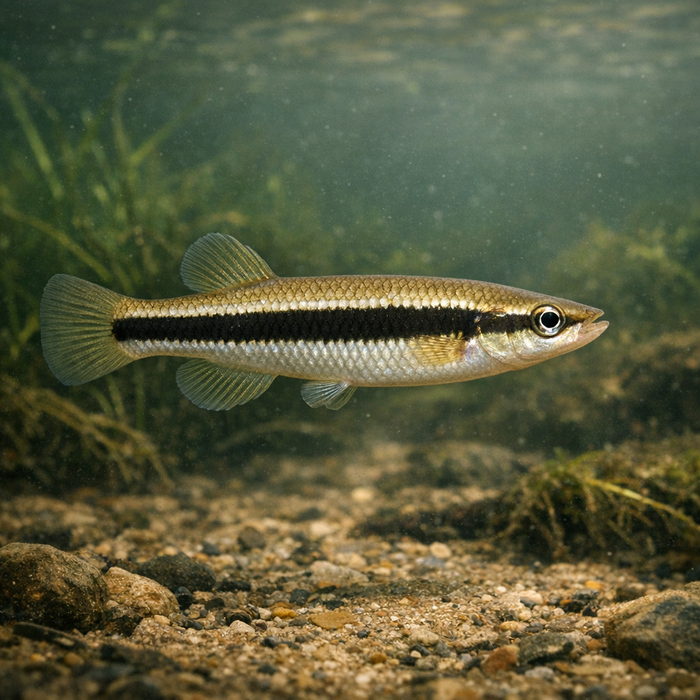
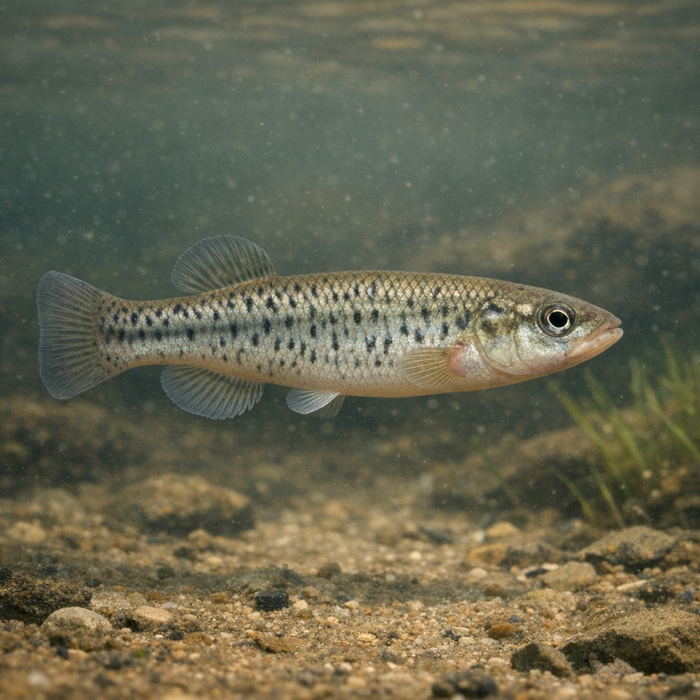
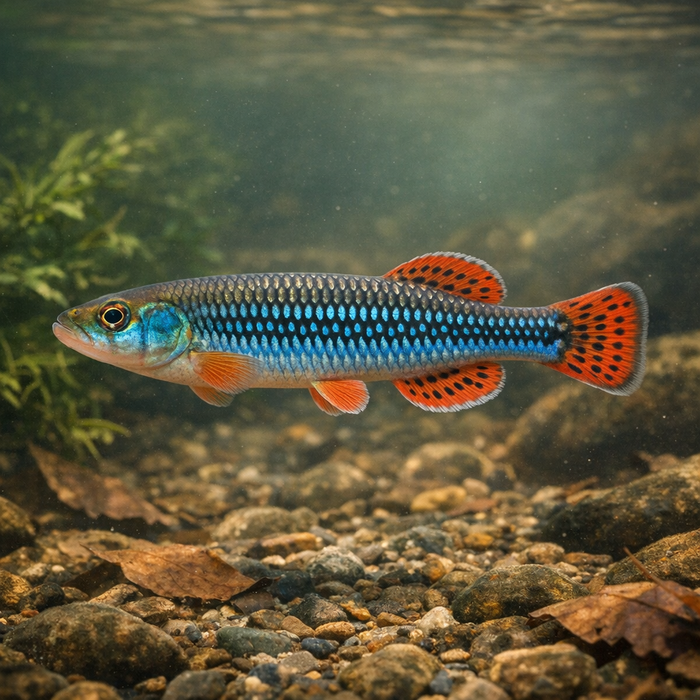
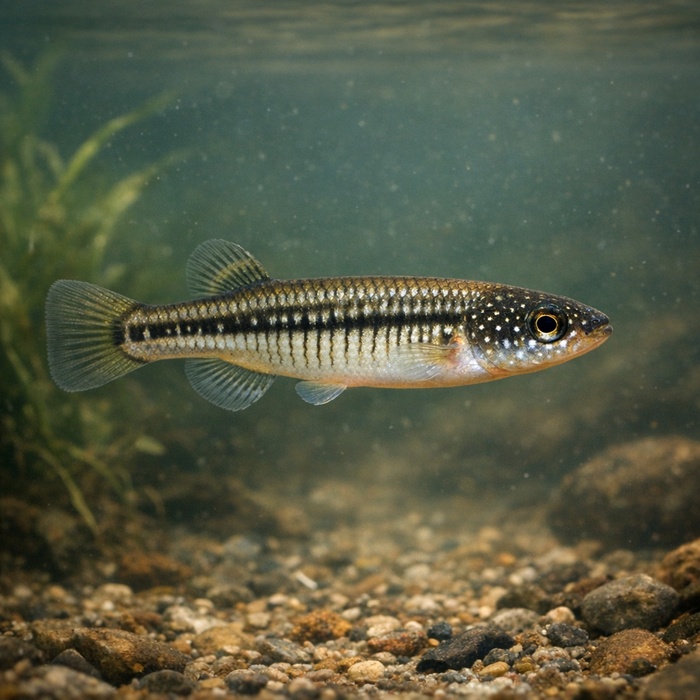
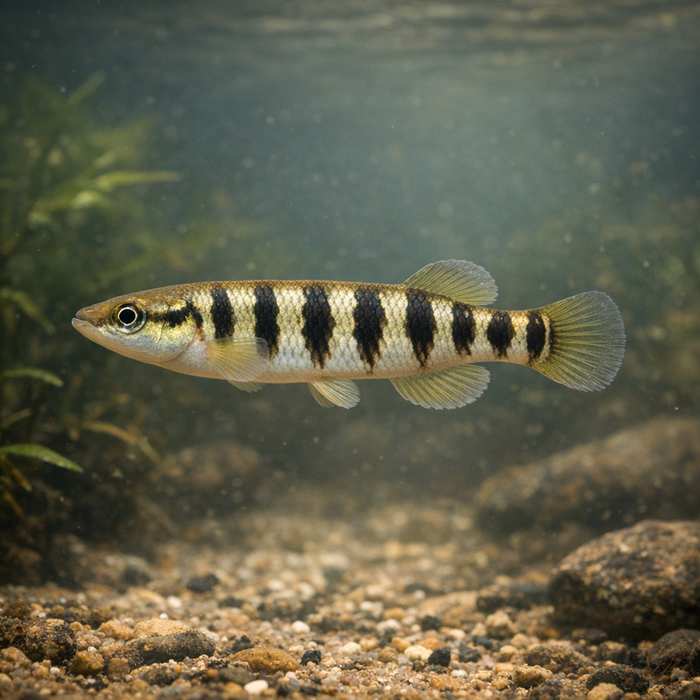
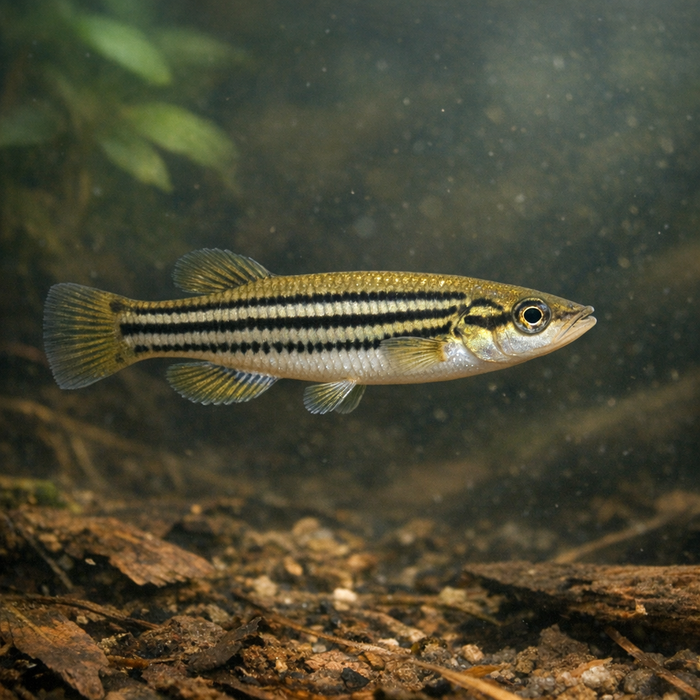
Southern studfish (Fundulus stellifer): A neon torpedo that ambushes bugs right off the surface filmIntroductionThe Southern studfish is proof that small fish can bring big swagger. Flashy, fast, and laser-focused on the surface, this topminnow cruises skinny water like it owns the creek. If you're into microfishing or just appreciate a fish with serious style, the Southern studfish will grab your attention and then mug a bug at your feet. Consider this your quick hit of Southern studfish facts without the textbook hangover.What Makes the Southern studfish Unique?Start with that name. Stellifer means star-bearing, and breeding males absolutely live up to it, lighting up with pinpoint spots and sky-blue fins. Add an upturned, sniper-style mouth and you get a fish that hunts the surface more like a tiny gar than a typical minnow. It's also one of the bigger topminnows in its neighborhood, regularly pushing 7 inches. For a fish this slim, the power-to-attitude ratio is comically high.Habitat & Global RangeSouthern studfish habitat is no mystery once you see it: clear, sandy or gravelly creeks and small rivers across the southeastern Gulf drainages. Think spring-fed runs with pushy current, knee-deep pools, and banks draped with grasses or low limbs dropping free snacks. They work the edges, the tailouts, and the slicks just under the surface, often in water you can step across. They're homebodies, not wanderers, so if a reach looks prime and clean, they're probably there somewhere.Behavior & TemperamentThis fish is a surface addict. It tracks drifting ants, beetles, and mayflies with those high-mounted eyes, then darts up with a snap. Schooling is loose and practical; small clusters form and break around food and flow. They aren't bullies, but they're not pushovers either. In breeding season, males strap on bony head studs and get scrappy, shouldering rivals and showing off like they're on the creek's catwalk. Spawning is a warm-season marathon with multiple small batches of eggs rather than one-and-done.Ecological ImportanceThe Southern studfish converts raindrop-delivered insects into energy for the whole stream network. By vacuuming up terrestrials and drifting larvae, it bridges the forest canopy to the water column. In turn, it's bite-sized fuel for kingfishers, larger fishes, and snakes. Healthy studfish signal clear, well-oxygenated flows with intact banks and decent canopy. You don't get candy-colored topminnows in murky, beat-up water for long.Conservation & Environmental PressuresOverall status sits in the comfort zone, but local stretches can nosedive fast when silt smothers clean gravel or withdrawals sap spring flows. Nutrient spikes, development, and careless in-stream work all hit small-stream fish first. Because the species is tied to clarity and flow, it's a handy litmus test for watershed health. Keep the banks vegetated, the water clear, and the riffles moving, and the Southern studfish will stick around.The FishyAF TakeThe Southern studfish is a microfishing gateway drug. It's visible, picky enough to be interesting, and absolutely gorgeous when lit up. Sneak along a sunny bank, drop a tiny fly or a thread of worm, and watch that upturned mouth do its thing. It's not a grip-and-grin trophy, but it's a master class in reading current, stalking quietly, and appreciating what small, clean water produces. Put simply: catch one and you'll start looking at every little creek as potential prime time.