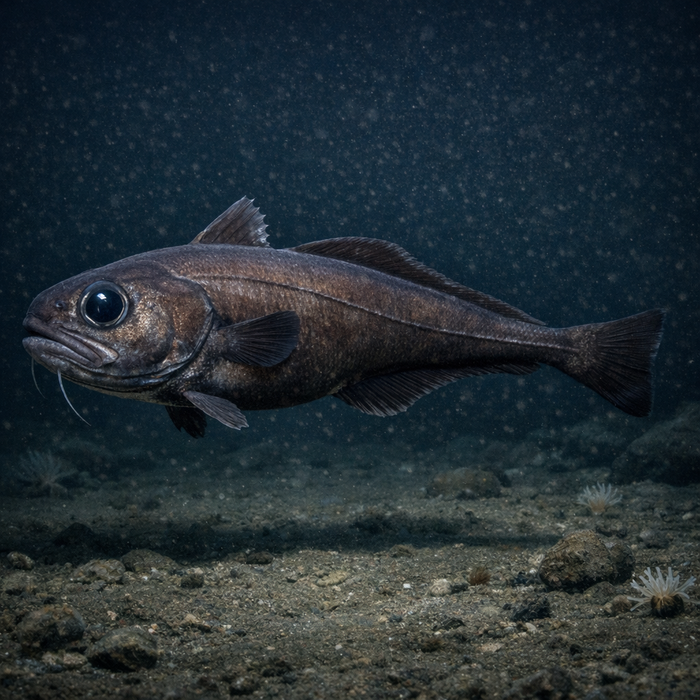
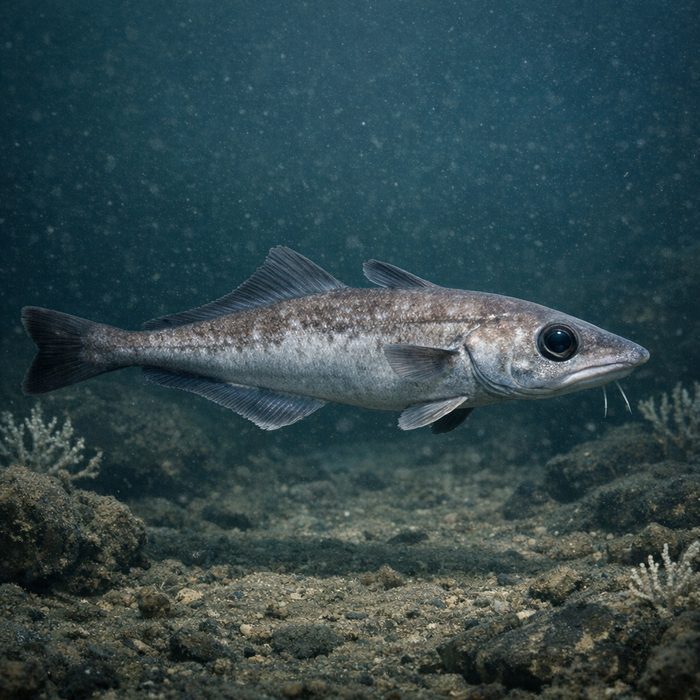
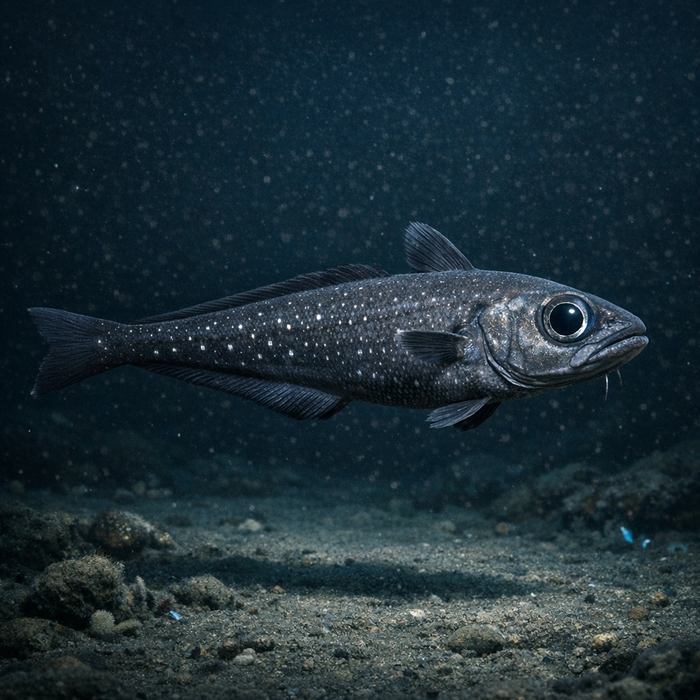
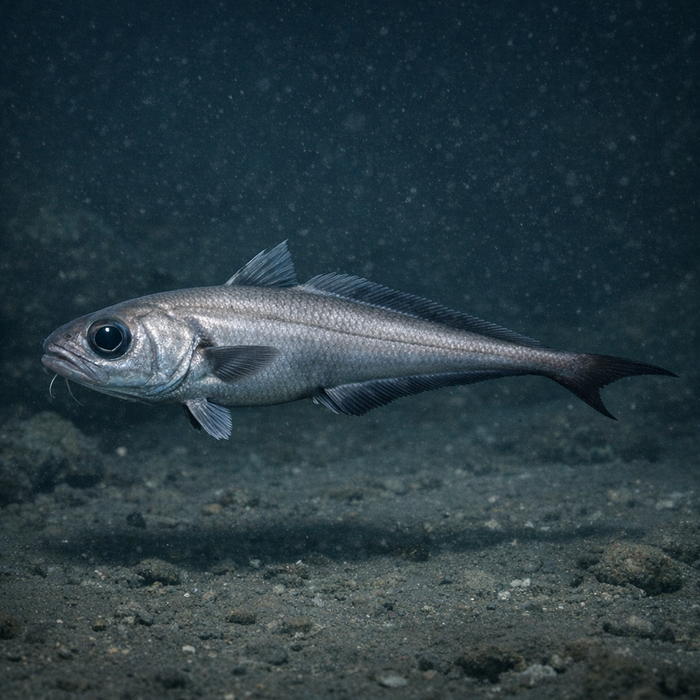
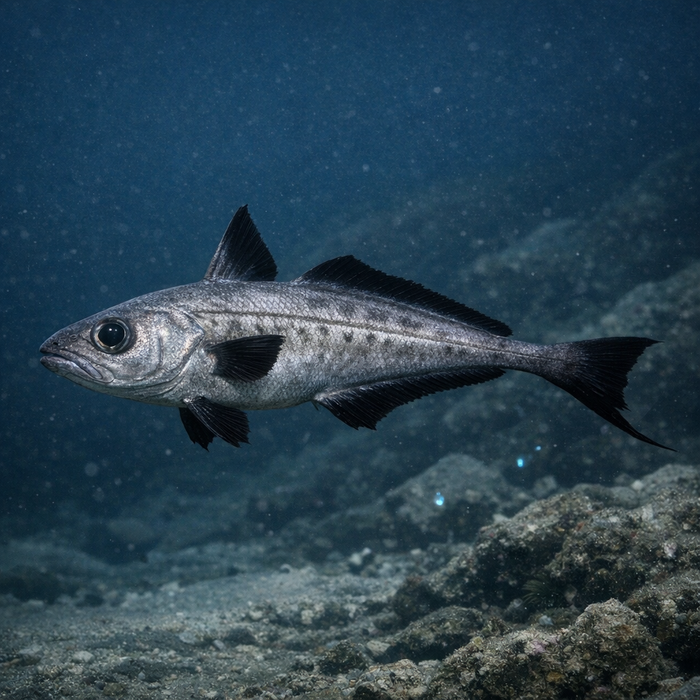
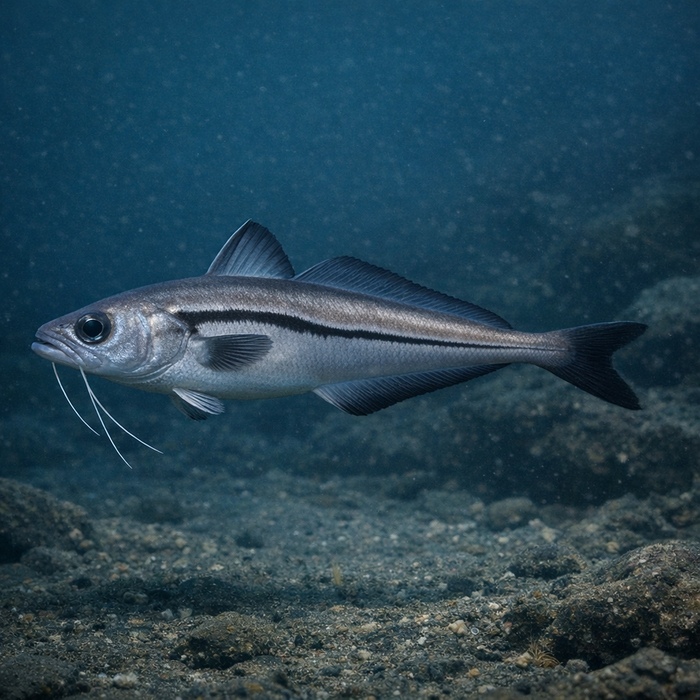
Spectacled Grenadier (Nezumia orbitalis): A Bold, Memorable Hook LineIntroductionThe spectacled grenadier is the deep-sea oddball you never planned on meeting, then can't stop staring at. Big eyes ringed like goggles, a tapering rat-tail body, and a face built for vacuuming the seafloor make it look equal parts scholar and scavenger. Most anglers encounter this species while probing the slope for tiles or groupers, only to reel up a wide-eyed little mystery fish from the abyss.What Makes the Spectacled grenadier Unique?Start with those "spectacles." Nezumia orbitalis wears a pale ring around its oversized eyes, a clear and telling field mark in headlamp glow or deck lights. Add the chin barbel, a tiny sensory whisker that lets the fish taste-test the mud as it cruises. Finally, the body plan screams grenadier: a stout head, then a dramatic taper into a long, whip-like tail that's more steering fin than horsepower. The result is a benthopelagic drifter built to hover a few feet off bottom, spot morsels in the gloom, and dart in with a quick inhale. If you're collecting Spectacled grenadier facts for your next deep-drop run, remember the eye ring and that little barbel. They're your ID gold.Habitat & Global RangeThe spectacled grenadier spends its life on the deep continental slope, generally well beyond the recreational reef line. Think muddy or silty bottoms punctuated by canyon edges, escarpments, and current-swept contours. These fish hold in the dark and cold, where daylight barely matters and the main traffic is crustaceans, small fishes, and the occasional tidbit drifting down from surface waters. Expect them on major oceanic slopes in the Atlantic, Pacific, and Indian systems, often where canyons funnel food and current creates productive edges. For anglers, that translates to offshore runs, heavy weights, and electronics doing the heavy lifting.Behavior & TemperamentDespite the haunted look, the spectacled grenadier isn't a pugilist. It's a methodical cruiser that hovers, noses down to taste-scan the bottom, then shuffles along like a cautious vacuum. Schools aren't tight like anchovy balls, but loose aggregations are common in the right lanes. They'll rise slightly off bottom to feed, especially when current wakes the buffet, then settle back into their low-energy glide. Hooked up, they rarely bulldog; the sinker is the real workout. If your rod tip just feels heavier and a bit twitchy, you may have a grenadier hitchhiker coming up from the basement.Ecological ImportanceGrenadiers are the cleanup crew and the snack bar rolled into one. The spectacled grenadier hoovers small invertebrates and fishes, converting the deep's slow-motion rain of organic matter into calories for higher predators. In turn, it's prey for larger deepwater species and a reliable indicator of slope productivity. Because it operates in a relatively stable environment, it can be sensitive to long-term changes in temperature and food supply, making it a quiet barometer of deep-sea health.Conservation & Environmental PressuresWhile the spectacled grenadier isn't a headline species, the deepwater neighborhood faces shared pressures: bottom contact gear, bycatch from slope fisheries, and habitat disturbance on muddy plains and canyon heads. Deep-sea species often have slow growth and low productivity, which means they don't rebound fast if hit hard. Formal status listings for Nezumia orbitalis are limited, but the playbook is the same: careful handling when released, accurate ID, and attention to local rules around deep drops, closed areas, and protected depth bands. If you want to keep your deep sea thriving, respect the slope.The FishyAF TakeThe spectacled grenadier is the "who the heck are you" fish that keeps offshore nerds curious. It won't smoke your drag or win a rodeo buckle, but it nails the deepwater vibe: alien eyes, odd gear, and a glimpse of the abyss. For anglers hunting Spectacled grenadier habitat, treat it like a bonus species that proves you're fishing the right lane. Heavy sash weights, tidy rigs, quick descents, and clean IDs will make you the crew's deep-drop adult. Keep a camera handy. That eye ring is the money shot, and it's the kind of detail that turns a bycatch into a story you'll actually remember.