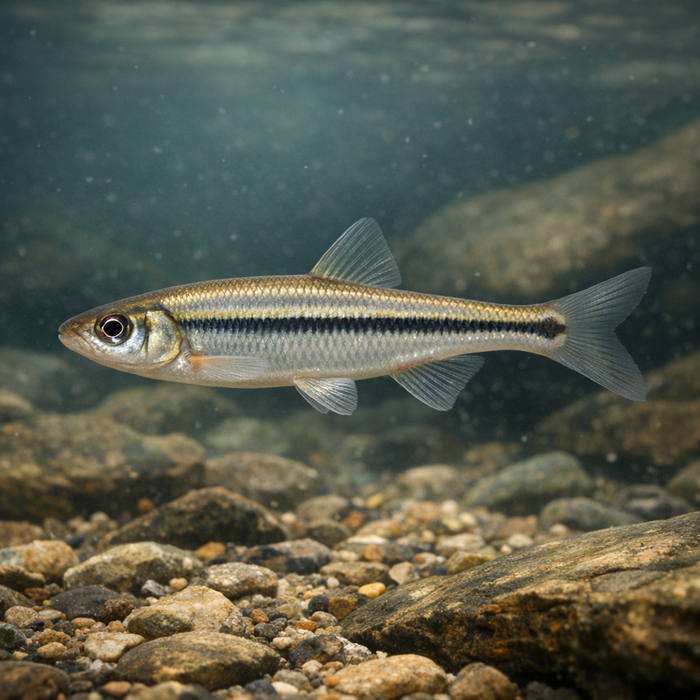
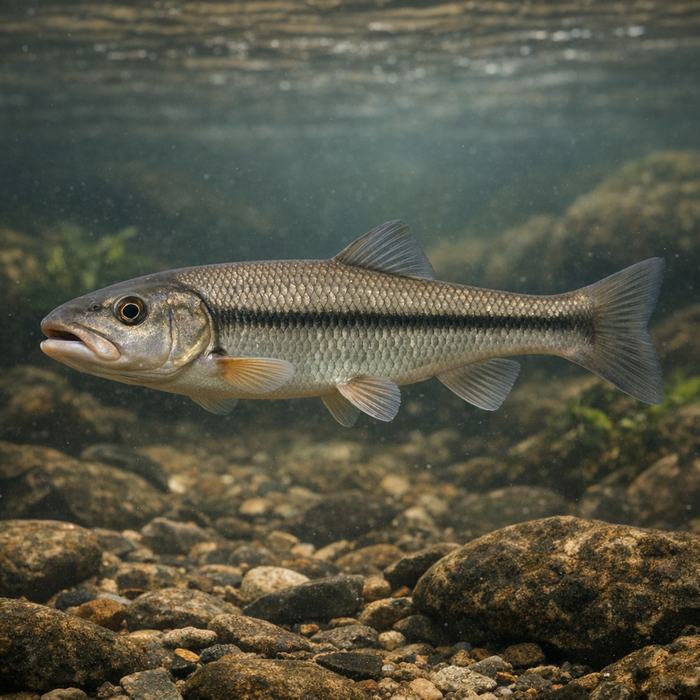
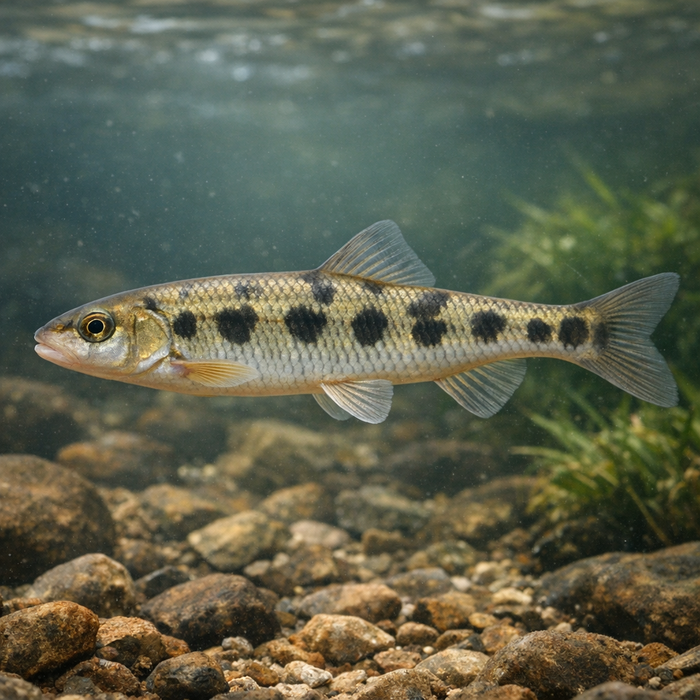
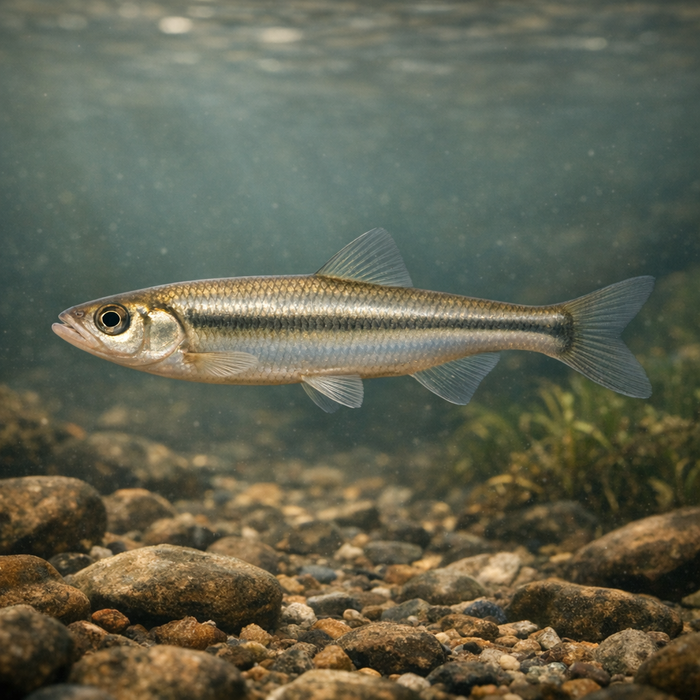
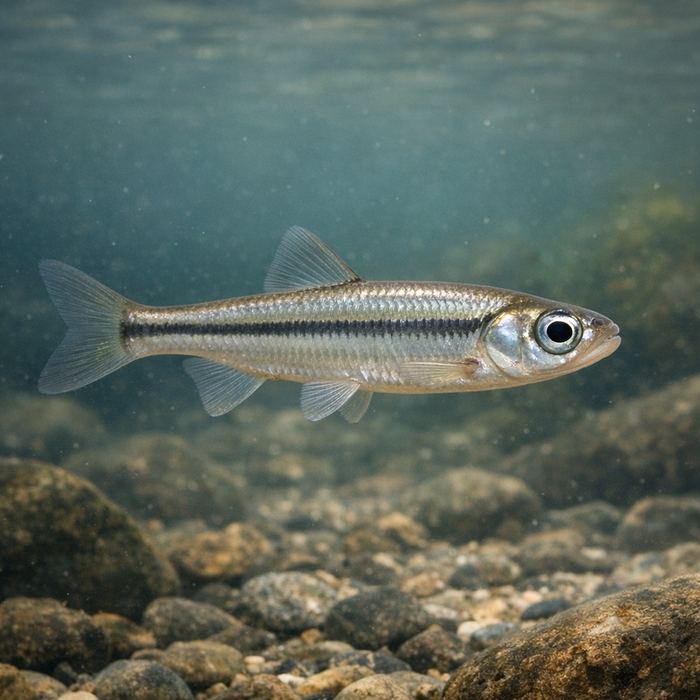
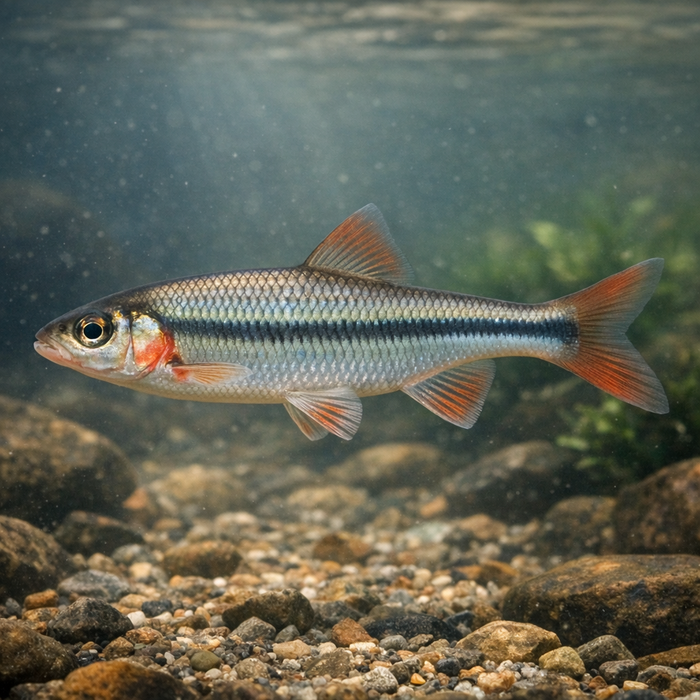
Stargazing Minnow (Phenacobius uranops): A Bold, Memorable Hook LineIntroductionThe stargazing minnow is proof that small fish can have big personality. This tiny riffle rocket stares upward like it's waiting on a meteor, then vacuums bugs out of gravel with a mouth that means business. If you're into microfishing, stream biology, or just love weirdly specialized fish, this one delivers. Consider this your quick-hit guide to real-world Stargazing minnow facts with zero fluff.What Makes the Stargazing minnow Unique?Two features set it apart. First, those high-set, skyward eyes that inspired both its common name and the species name uranops, meaning sky-eyed. Second, a subterminal, sucker-ish mouth that sifts sand and spits pebbles while the good stuff slides down the hatch. That odd combo lets the stargazing minnow watch for threats above while feeding below, a neat survival hack in fast water.Habitat & Global RangeThe stargazing minnow is a freshwater stream specialist. Picture clear to lightly stained creeks with steady current, gravel to small-cobble bottoms, and defined riffle-run sequences. It's a fish of the American heartland, especially interior highland and foothill streams where clean substrate and oxygen-rich flow are the norm. Pools hold them in winter and high water, but classic riffles are where this species looks happiest. If you're searching "Stargazing minnow habitat," start with shallow runs, knee-deep or less, with pea gravel, scattered cobble, and honest current.Behavior & TemperamentSchooling keeps these fish safe and efficient. They'll draft behind stones, rock-hop in bursts, and settle into micro-eddies like it's NASCAR. Despite the size, they're not clueless; a shadow or sloppy cast sends them zipping. Feeding is mostly a bottom game: quick dips to hoover insect larvae, detritus sorting, and then a fast reset into position. During spawning season, males sport faint nuptial tubercles and push into brisker riffles to scatter eggs over clean stones.Ecological ImportanceThe stargazing minnow is an energy translator. It turns aquatic insects and organic bits into calories that fuel everything bigger, from smallmouth bass to wading birds. By sifting sand and spitting grit, it also keeps fine sediments moving, subtly cleaning interstitial spaces where macroinvertebrates live. Healthy minnow populations usually mean intact flow, oxygen, and substrate-plain-English biomarkers of a stream that's doing things right.Conservation & Environmental PressuresThis species thrives in moving, well-oxygenated water with minimal silt. Siltation from poor land use, channelization, and low-flow summers can hammer it. Add nutrient spikes, summer heat, or toxic runoff, and you quickly lose the riffle community it depends on. While many populations remain stable, localized declines happen fast when gravel chokes with fines. Keeping riparian buffers intact, managing stormwater, and protecting natural hydrographs aren't just feel-good ideas-they're how you keep riffles alive.The FishyAF TakeThe stargazing minnow won't peel drag or win tournaments, but it's a connoisseur's fish. It rewards stealth, precision, and an eye for current seams the width of your boot print. If you want bragging rights, put away the hero shots and bring a wetted measuring board. Catch one clean in a glass-clear riffle, and you'll understand why micro heads chase these little weirdos. For quick-hit Stargazing minnow facts: skyward eyes, gravel vacuums, riffle life-small package, tuned to the flow.