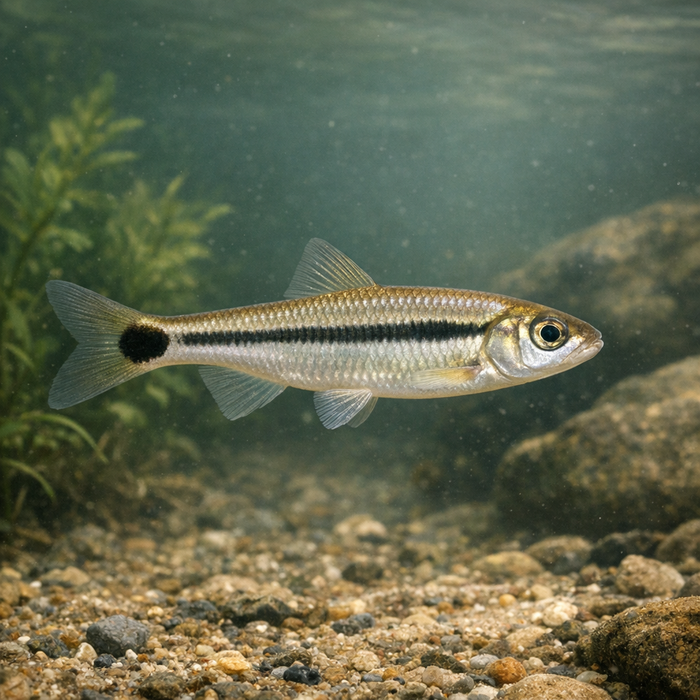
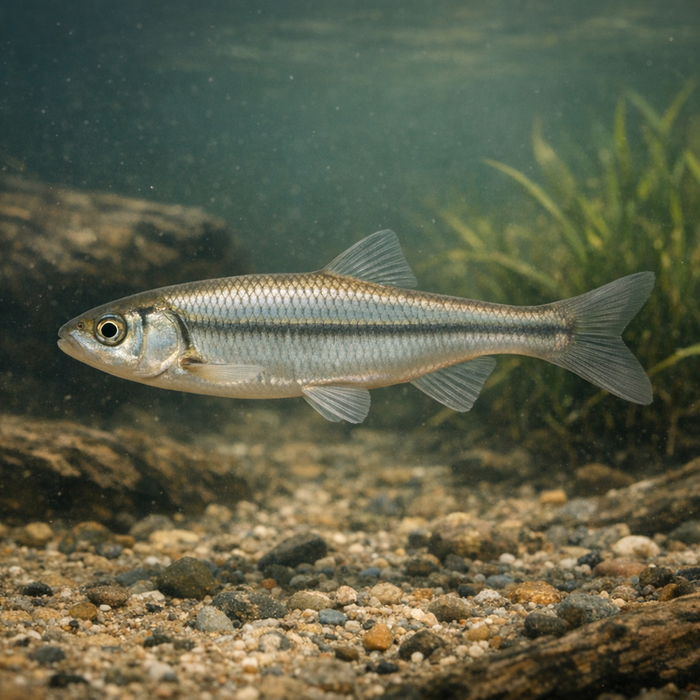
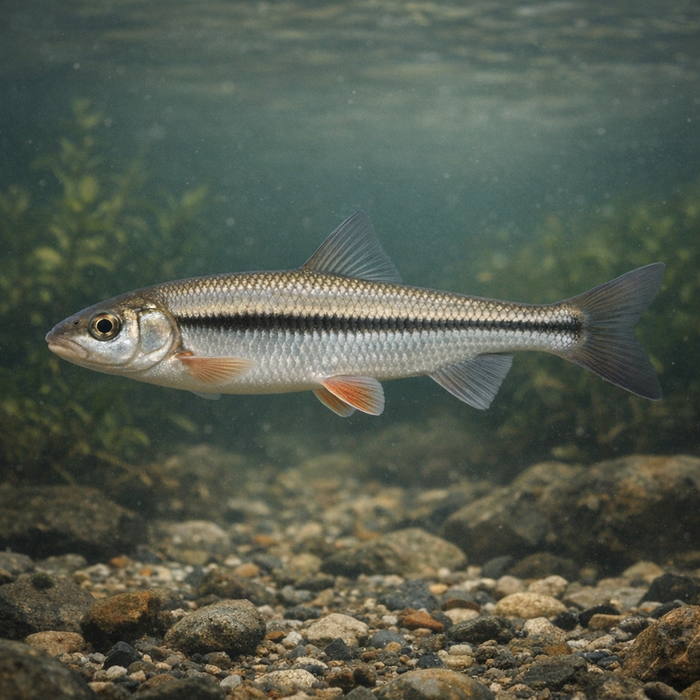
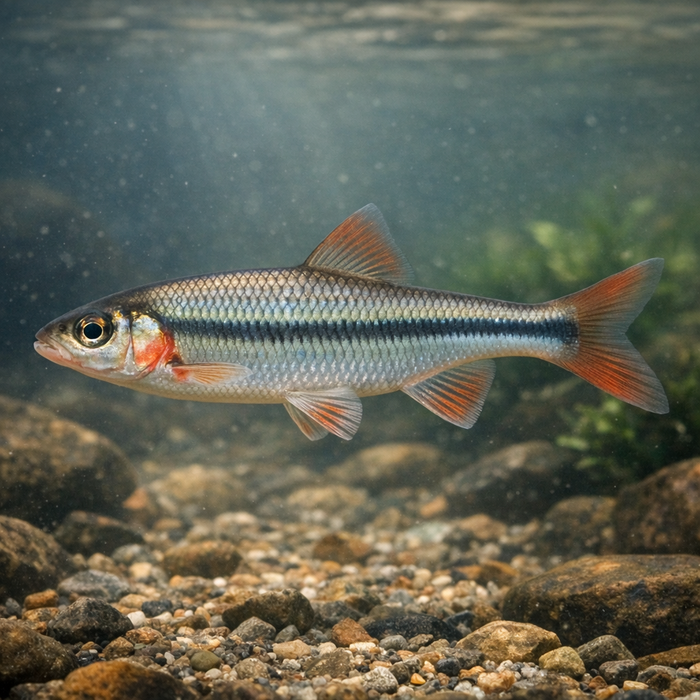
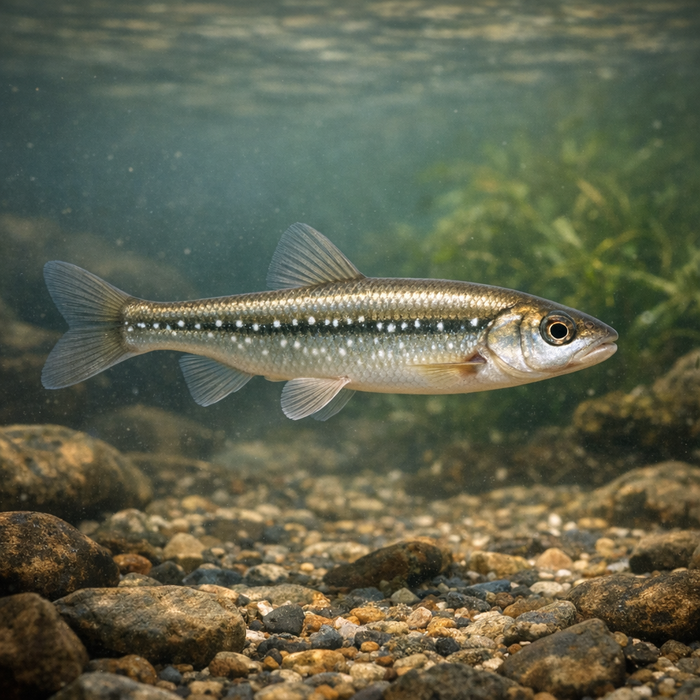
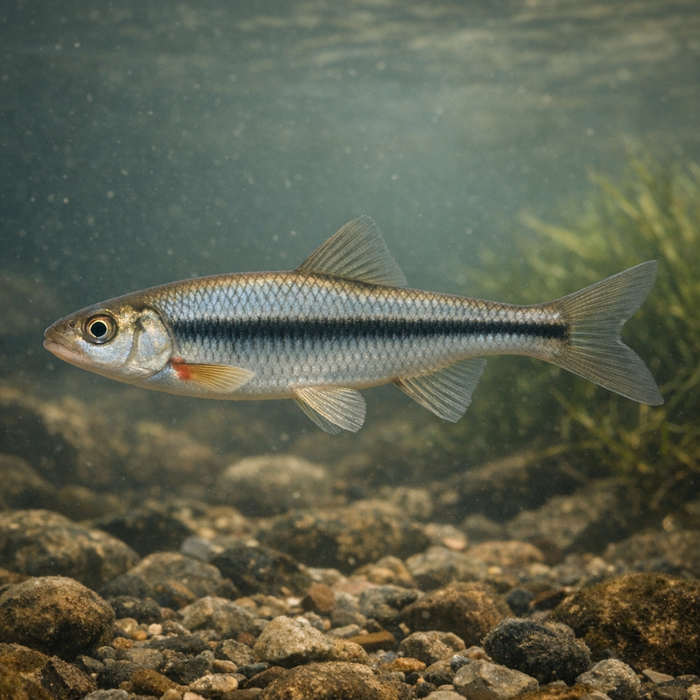
Taillight Shiner (Notropis maculatus): A Bold, Memorable Hook LineIntroductionThe Taillight shiner is proof that not all worthy fish need shoulders and sharp teeth. This tiny cyprinid lights up weedy shallows with a ruby flicker on its tail, herds up like a glitter storm, and rewards anyone who can scale their tackle to hummingbird precision. If you're here for Taillight shiner facts or trying to decode Taillight shiner habitat, you're in the right place. Small fish, big personality.What Makes the Taillight shiner Unique?Start with the namesake: during the breeding season, males glow red at the base of the tail, a signal flare that looks absurdly bright on a mostly translucent body. That caudal spot and shimmer make quick IDs possible even when they're swirling with other minnows. They're also microfishing catnip. Targeting Taillight shiner reliably forces you to think small: size 24-30 hooks, threadlike tippets, and a drift so gentle it would fool a mayfly. It's like picking a lock with a piece of hair.Habitat & Global RangeThe Taillight shiner is a creature of the southeastern coastal plain. Picture blackwater creeks stained like tea, swampy sloughs lined with maidencane and lily pads, and tannin-rich oxbows off slow rivers. That's prime Taillight shiner habitat. They favor calm margins and submerged vegetation where current softens and plankton hangs. While solidly freshwater, they tolerate a touch of brackish push in tidal creeks, especially near the Gulf and lower Atlantic drainages. From the Carolinas through Florida and around to Texas, they thread through floodplain backwaters and roadside ditches that most anglers blow past without a glance.Behavior & TemperamentSchooling is their default insurance policy. Dozens to hundreds pack together, pivoting as one around grass edges and fallen branches. They're midwater pickers more than bottom grubbers, nipping zooplankton and tiny insects with delicate, rapid strikes. Spawning heats up as water warms, and that's when the "taillights" flip on. Adhesive eggs get dusted onto plants, and then it's every fry for themselves. Predators include anything with a mouth big enough, so vigilance is the rule. They're twitchy, light-sensitive, and spook fast when wakes slap the bank or a shadow passes overhead.Ecological ImportanceUndersized doesn't mean unimportant. The Taillight shiner is a transfer station for energy, bundling microscopic prey into snack-size packets for larger fish, wading birds, and watersnakes. Their schooling pressure also shapes plankton dynamics in still coves. Healthy, weedy backwaters are good for Taillight shiners and, by extension, good for bass, sunfish, and everything up the chain that profits from abundant bait-sized forage. When this minnow thrives, the system's base is usually in working order.Conservation & Environmental PressuresOfficially, the species sits in the comfort zone: populations are broadly stable across a wide footprint. But that doesn't mean bulletproof. They're attached to clean, vegetated shallows, which makes them vulnerable to ditch dredging, wetland fill, siltation, herbicide overspray, and extended drought or dewatering. Nutrient spikes that crash water clarity, or repeated stormwater pulses, can thin schools. Brackish tolerance helps in tidal creeks, but chronic salinity rise or habitat conversion to hardened banks does not.The FishyAF TakeThe Taillight shiner is the gateway drug to microfishing patience. If you only chase fish that bend rods like crowbars, skip it. But if you like puzzles, this little neon-tailed phantom will rewire your brain. You'll start scanning ditch mouths, reading grass seams, and tying knots so small you question your life choices. And then the float twitches, a wisp of silver tilts, and you land a fish that could wear a wedding ring as a hula hoop. That's satisfaction, distilled. Hunt a few and you'll never dismiss the quiet water along the road again. The taillight glow means you're exactly where you should be.