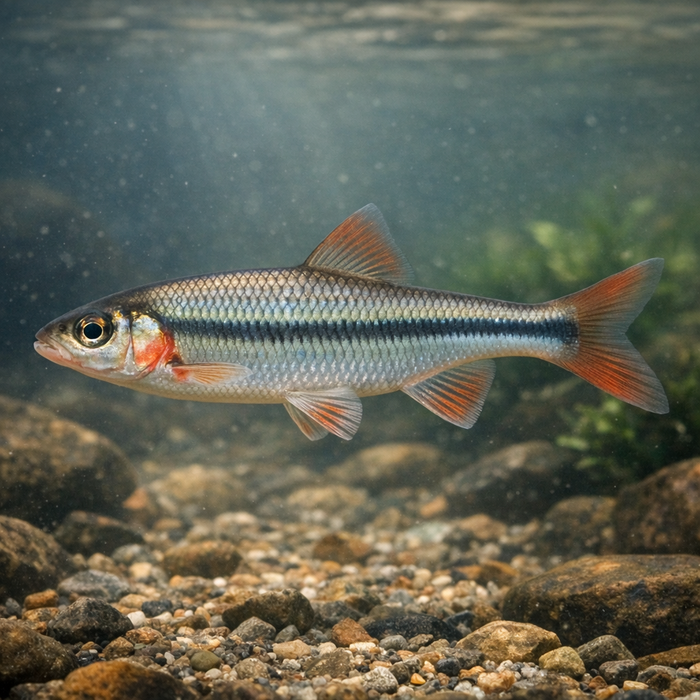
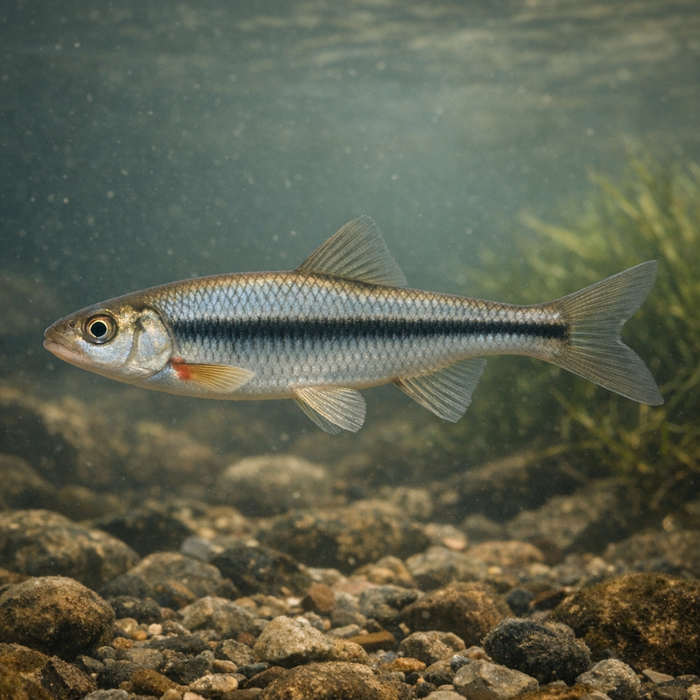
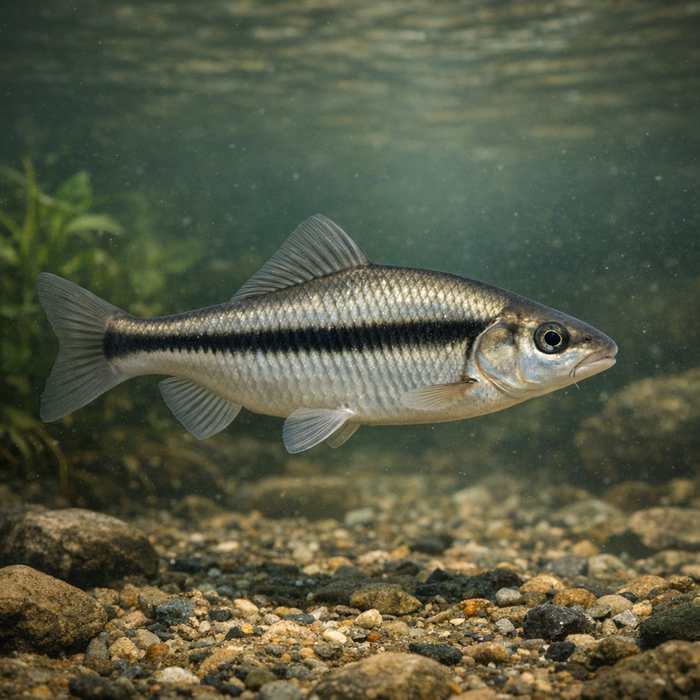
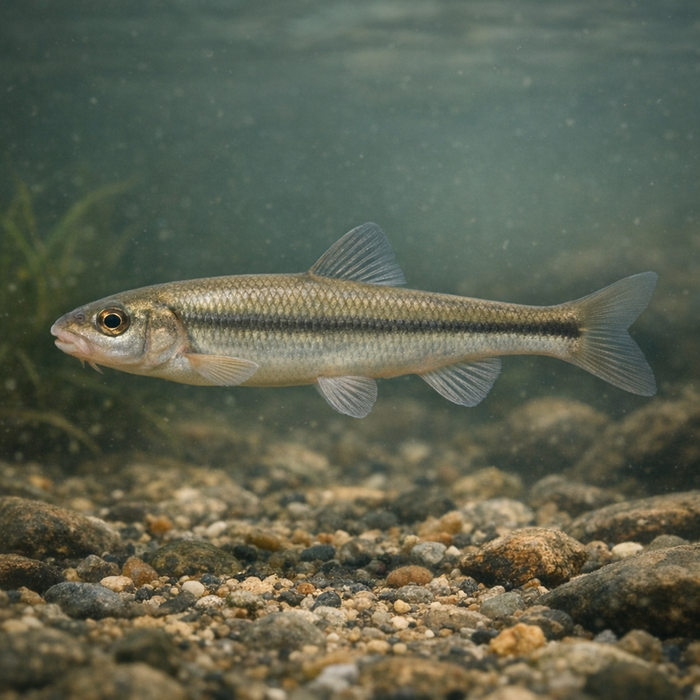
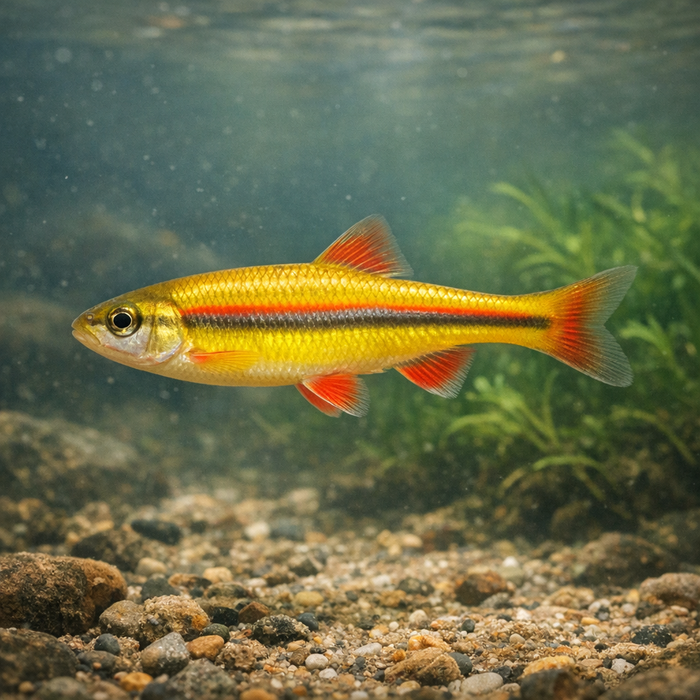
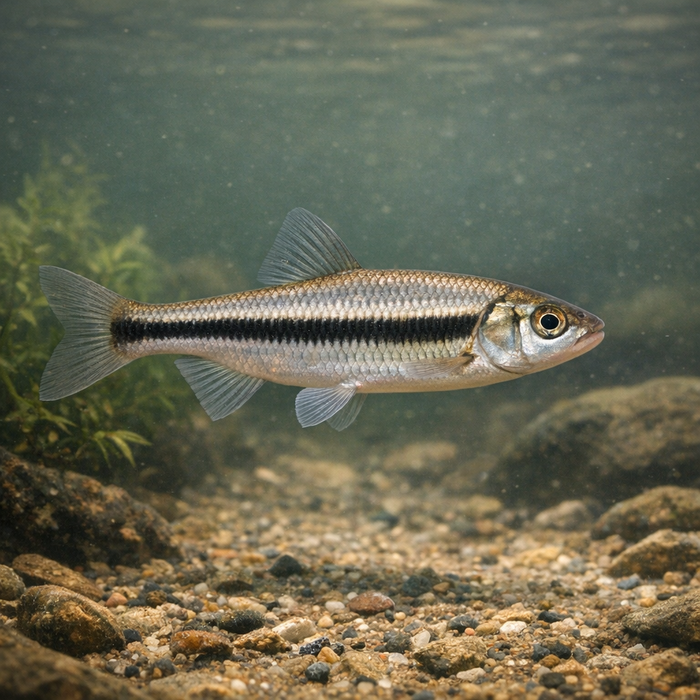
Thicklip Chub (Cyprinella labrosa): A Bold, Memorable Hook LineIntroductionThe thicklip chub is the scrappy little riffle rat of the Carolina Piedmont. It is small, fast, and full of personality, with lips built like a suction-cup tool for stuffing eggs into rock cracks. Most anglers overlook it. Micro anglers absolutely don't. If you want a native fish that punches above its weight and lives where the water talks, you want the thicklip chub.What Makes the Thicklip chub Unique?Two things jump out immediately: those fat, rubbery lips and the crevice-spawning routine. During the spring show, breeding males light up with metallic blues and develop sandpapery breeding tubercles. Then they wedge eggs deep into tiny cracks where bigger mouths can't reach. That strategy, plus tight schooling in current, makes the thicklip chub a high-speed specialist in broken water. Its proportions scream stream fish: torpedo body, quick tail, and a face built for pressing into rough rock.Habitat & Global RangeThe thicklip chub is a Southeastern native that thrives in clear, rocky streams with decent gradient, riffles, and runs. Think coarse gravel, cobble, and boulders with oxygen-rich flow. It prefers the Piedmont zone, cruising the midwater of riffles and the heads of pools. If you're scouting thicklip chub habitat, look for bubbly, chattering water and seams that funnel insects. This is not a pond-edge cruiser. It is a current junkie. Thicklip chub habitat overlaps with other native minnows and darters that share the same riffle culture, which is a big reason micro anglers love these creeks. You can cover a short stretch and meet a whole cast of characters.Behavior & TemperamentThe thicklip chub schools tight, then explodes and re-forms like a murmuration when spooked. It feeds in the drift and reacts to tiny offerings that tumble naturally. In the spawn window, males get bold and hold crevices, but outside that, they are opportunistic-quick hits, then back to the school. They will nip micro flies, insect imitations, and small baits with sharp, telegraphed taps. Hook sets need to be crisp and gentle. They are not freight trains, but on 2-pound line and a size 18 hook, every head shake counts.Ecological ImportanceThe thicklip chub is a native link between the stream's insect engine and larger predators. It converts drifting invertebrates into bite-sized packets for bass, sunfish, and wading birds. Its crevice-spawning strategy also turns stable rock faces into micro-nurseries that other riffle fish sometimes exploit. When you see healthy, flashing schools of thicklip chub, you are looking at a creek that still breathes well. That alone is one of the better thicklip chub facts you can carry-this fish is a water-quality tell.Conservation & Environmental PressuresLike many small stream specialists, the thicklip chub suffers when sediment fills riffles, when storm surges rip out banks, or when summer flows trickle to a crawl. Silted crevices mean fewer safe egg sites. Warm, stagnant water invites trouble. Culverts, poorly designed road crossings, and urban runoff fragment these fish into isolated pockets. They do not need a wilderness setting to do well, but they do need clean gravel, good flow, and intact access between riffles, runs, and pools.The FishyAF TakeThe thicklip chub is proof that fun fishing lives in your backyard creek if you bring the right mindset. You are not trophy hunting. You are skill hunting. Drift control, stealth, micro hooks, and quick hands matter. It is the perfect excuse to slow-walk a riffle with a 2-weight or flick a split-shot and worm under an overhanging root. If you want thicklip chub habitat in two words: clean current. Get that right and the rest follows. For anglers who love native fish and fast water, the thicklip chub is a tiny masterclass with a big grin.