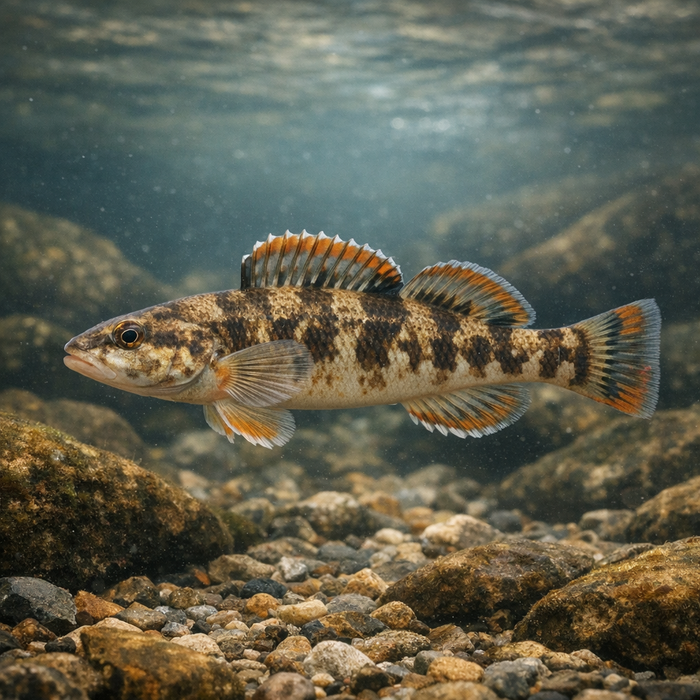
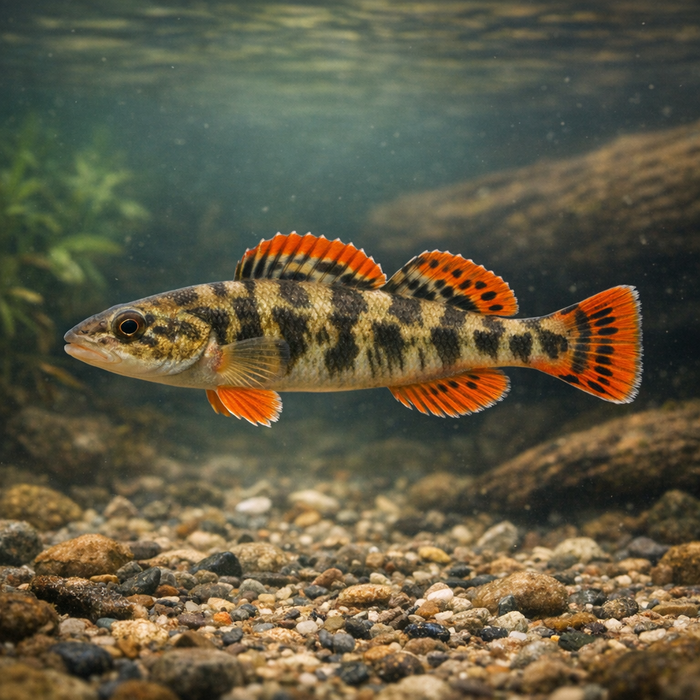
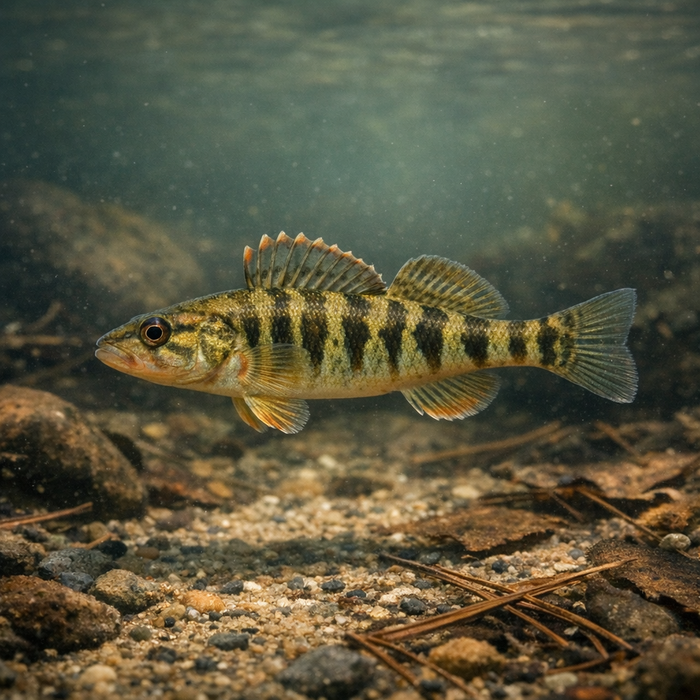
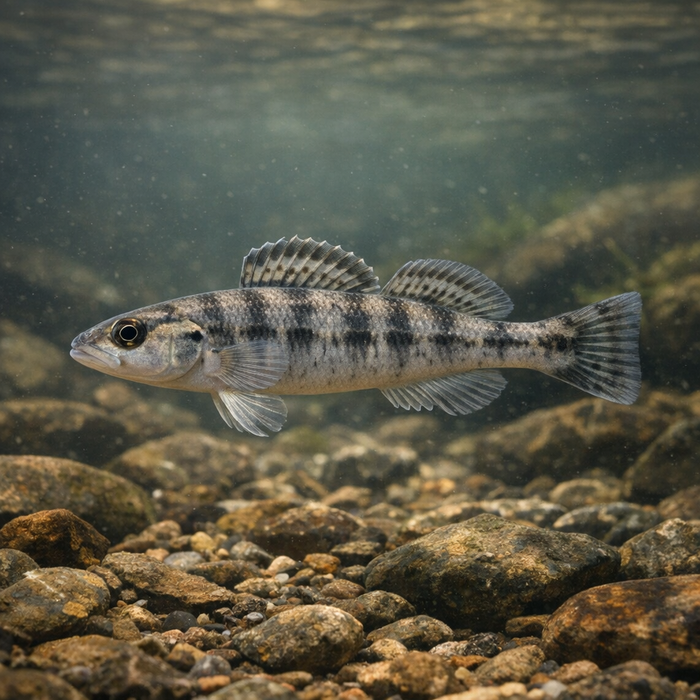
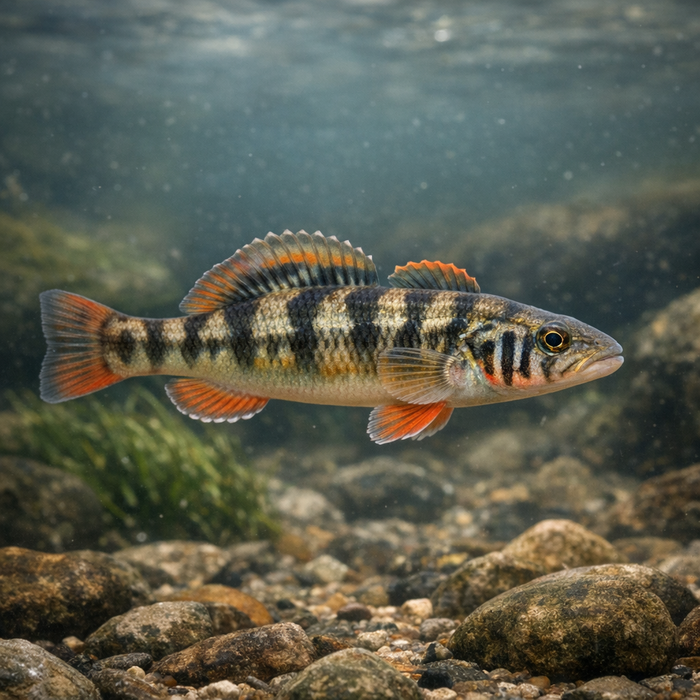
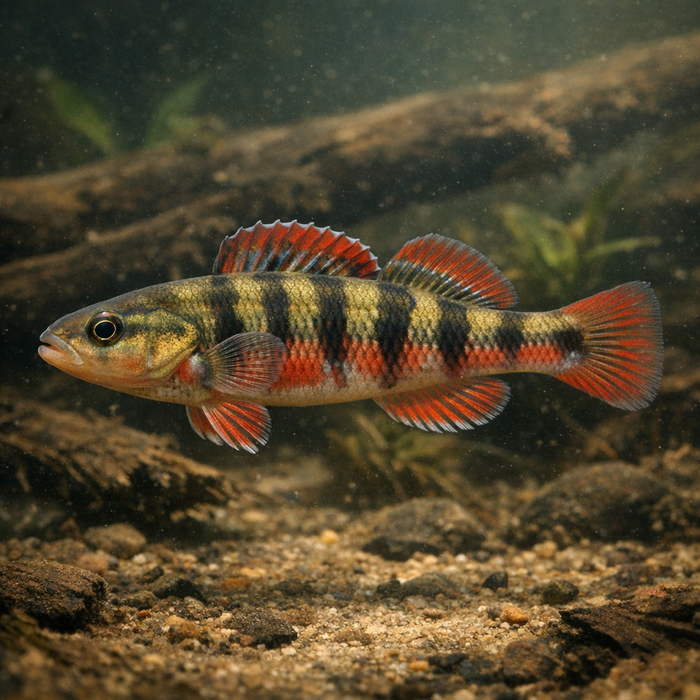
Alabama darter (Etheostoma ramseyi): Micro muscle with a nitro throttle.IntroductionThe Alabama darter is the kind of fish you only notice after you learn how to look. Its two inches of attitude, glued to gravel and flicking between stones like a wind-up toy. For micro anglers and creek explorers, the Alabama darter is proof that small water holds big intrigue. Its quick, colorful in season, and tuned to fast current with purpose-built anatomy that laughs at turbulence. If youre chasing Alabama darter facts or scouting Alabama darter habitat, pull your waders and your patience. Youll need both.What Makes the Alabama darter Unique?First, the Alabama darter ditches the buoyancy crutch. With a reduced swim bladder, it stays parked on the bottom instead of popping around midwater, letting it own riffles that toss other fish like laundry. Second, its a short-life sprinter. Most fish wrap their life cycle in under two years, which means high energy, quick growth, and get-it-done spawning windows. Third, in spring the males light up with rusty-orange fin edges and sharper bars, a seasonal paint job that changes the entire vibe of a shallow run. Those three traits make the Alabama darter a specialist built for speed, stealth, and seasonal flash.Habitat & Global RangeThe Alabama darter is a Mobile Basin story: clear creeks, rocky runs, and chattery riffles that slice through the Gulf Coastal Plain. Picture knee-deep water, pea gravel to cobble, and pockets of flow where food drifts like a conveyor belt. Thats Alabama darter habitat in a nutshell. Depth is modest, current is everything, and the substrate matters more than the width of the stream. You wont be glassing open pools; youll be kneeling beside fast seams and looking for movement tucked between stones. Regional distribution is tight compared to wide-roaming sportfish, which is why locating healthy riffles beats covering miles of bland channel.Behavior & TemperamentThe Alabama darter is a bottom percher by design. Itll hold in micro-eddies the size of your palm, launch a snap-attack on a drifting nymph, then drop back into the gravel pattern like a cloaked fighter. Aggression is situational: up close and personal in spring, cautious and cryptic once pressure or bright sun piles on. They dart, freeze, and reposition constantly, a rhythm that makes sight-fishing fun and frustrating in the same minute. Fighting power? Its more about the hookset than the brawl. Land one and youre celebrating stealth and precision, not drag-screaming chaos.Ecological ImportanceTiny doesnt mean trivial. The Alabama darter is a gears-and-springs fish for shallow stream ecosystems. Its a blur that converts aquatic insects into percid biomass, fueling larger predators and keeping riffle invertebrates honest. Because darters sort habitat by flow and gravel size, theyre also small-scale barometers of stream health. When silt chokes cobble or stormwater spikes flows into chocolate milk, these fish blink out locally long before a catfish even notices. Keeping Alabama darter creeks clean means the entire riffle assembly line runs smoother.Conservation & Environmental PressuresWhile the Alabama darter isnt an everyday headline species, its world is fragile. Fine sediment, bank erosion, poorly managed road crossings, and low-flow summers can kneecap a riffle-dependent fish fast. Add suburban sprawl and its death by a thousand cuts. The fix isnt dramatic: riparian shading, stormwater control, and leaving enough clean gravel to keep eggs oxygenated go a long way. If youre microfishing, wet your hands, keep them submerged during photos, and release immediately. With a short lifespan and specific needs, every adult season counts.The FishyAF TakeThe Alabama darter is the anti-trophy trophy. No grip-and-grin. No digital scale. Just a creek, a current seam, and a fish that makes you earn a photograph. It forces you to slow down, read water at ankle depth, and fish like a heron instead of a linebacker. If your idea of fishing skill is measured only in pounds, skip it. But if precision, stealth, and ecosystem sleuthing sound like a good Saturday, the Alabama darter delivers. Get low, look hard, and appreciate that the toughest part is convincing yourself something this small can be this cool. Six inches of river tells the whole story, and the Alabama darter writes it in fast-forward.