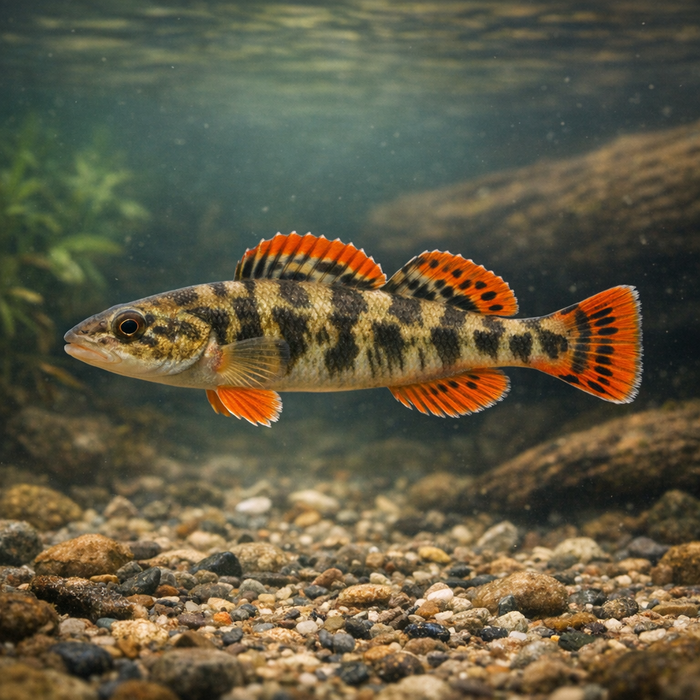
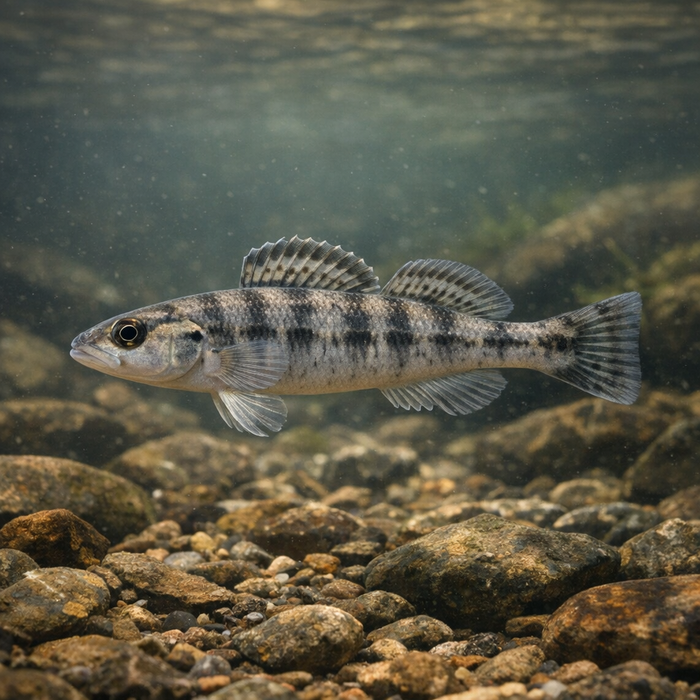
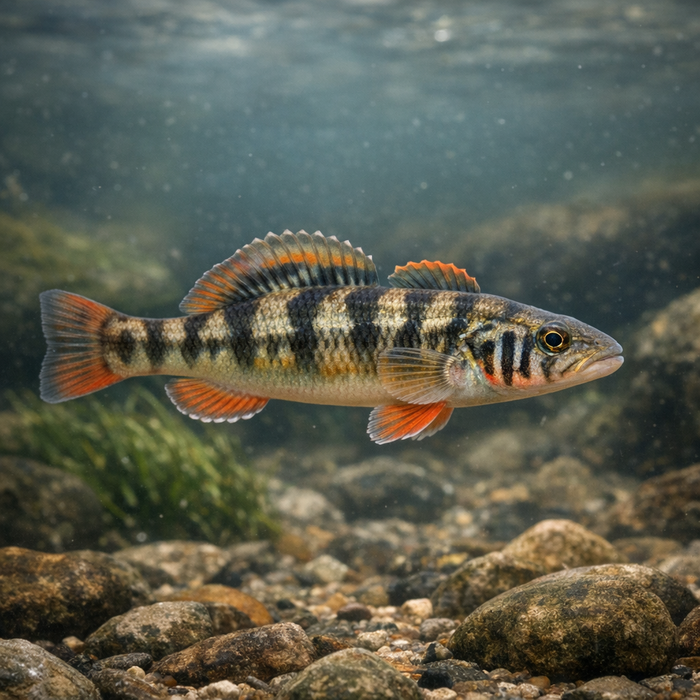
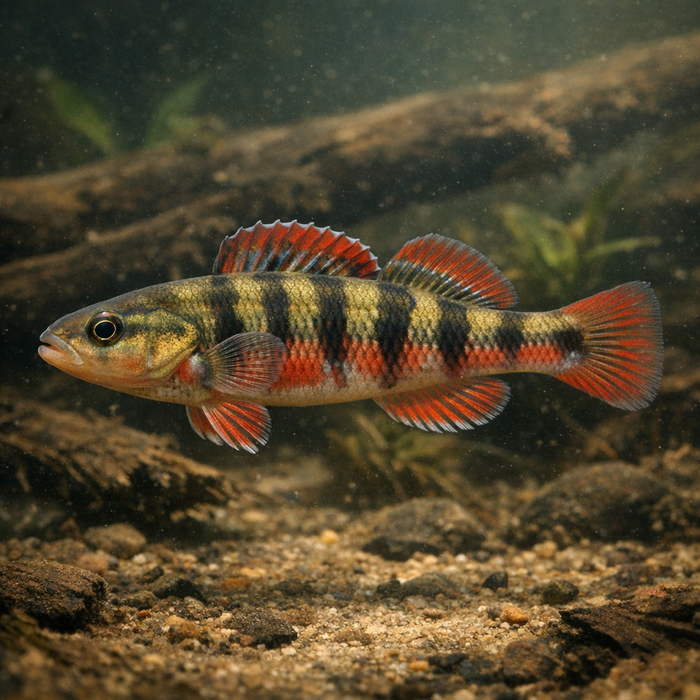
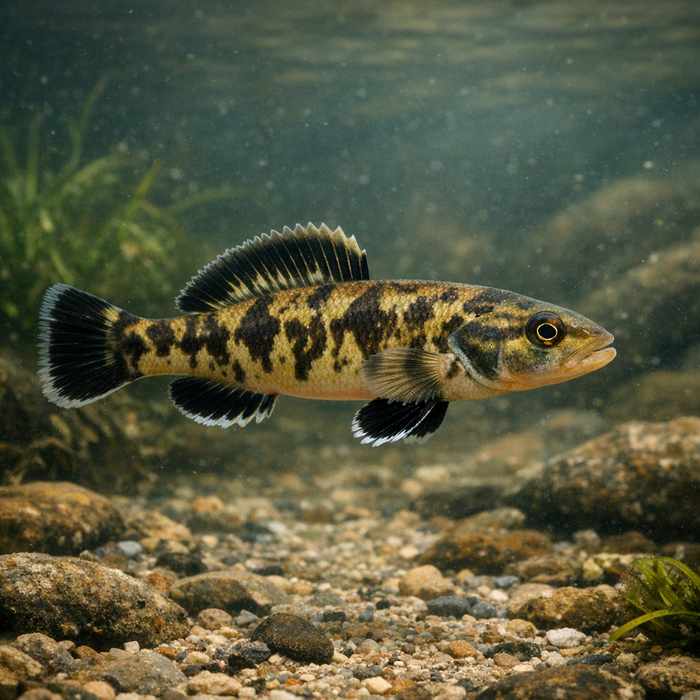
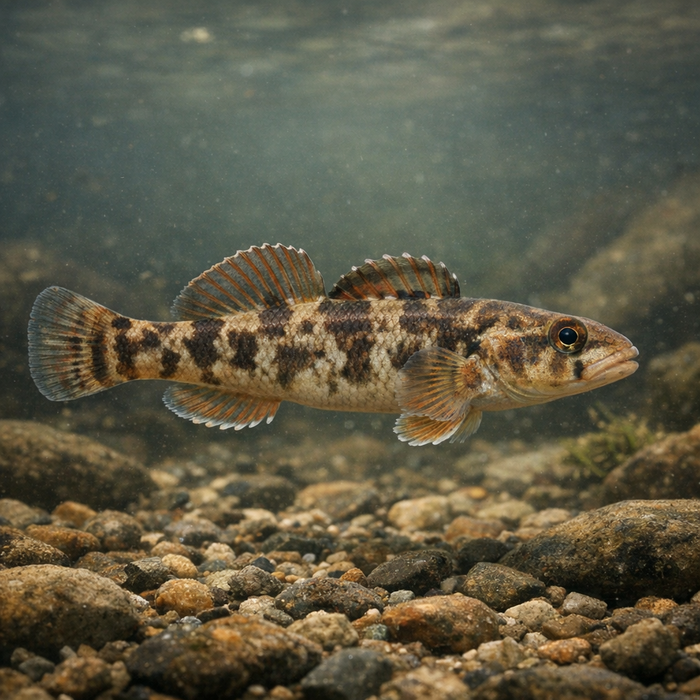
Pinewoods Darter (Etheostoma mariae): A Bold, Memorable Hook LineIntroductionThe Pinewoods darter is proof that small doesn't mean boring. This palm-sized bottom sprinter spends its life rocketing between pale sand and leaf litter in tea-colored coastal plain creeks. Blink and you'll miss the move. Look closer and you'll find a fish purpose-built for life in current seams as narrow as a boot print. For anglers chasing micro milestones or simply curious about what fuels their favorite rivers, the Pinewoods darter is a compact masterclass in stealth, speed, and survival.What Makes the Pinewoods darter Unique?Two things jump out immediately: movement and minimalism. The Pinewoods darter runs a low-profile chassis with a reduced swim bladder, hugging bottom like it's on rails. That design lets it explode a few inches, stop on a dime, then vanish against sand and shadow. Second, it's hyper-local. The Pinewoods darter is a coastal-plain specialist tied to pine-forest drainages with tannin-stained water and clean sand runs. That narrow niche makes it a bucket-list microfish and a favorite for "Pinewoods darter facts" seekers who love the weird and precise.Habitat & Global RangeIf you're scrolling for Pinewoods darter habitat, think blackwater creeks draped in pine and cypress. The water is the color of sweet tea, the bottom is mostly sand with patches of gravel, and woody debris breaks the flow into microcurrents. These fish hold in inches to a couple feet of water, often near undercut banks, submerged roots, and leaf packs where drifting insects gather. Their known range sits in the southeastern U.S. coastal plain, especially Gulf-facing systems where longleaf pine and wiregrass frame the floodplains. That habitat mix is the whole story: clean sand, steady but modest current, and tannins that mute light and hide silhouettes.Behavior & TemperamentThe Pinewoods darter is a short-burst ambusher. It perches, eyes up, then launches at invertebrates on a tight, bottom-hugging track. Males stake tiny territories in spring, often no bigger than a kitchen mat, and spar with quick shoves and flares. Schooling isn't really their thing; loose clusters form around the best feeding lanes but break apart fast under pressure. They're daylight-active, most consistent when flows are stable and visibility isn't blasted by recent floods. Spawning is a spring affair, with eggs tucked under stones or wood and guarded by the male like a bouncer.Ecological ImportanceThe Pinewoods darter is the creek's quality-control inspector. It converts drifting insect life into fish flesh, passes that energy up the chain, and telegraphs habitat health with its presence. Lose the clean sand, clog the leaf packs with silt, or flatten the flow, and darters vanish. Their pickiness makes them a high-resolution readout of stream condition that bass and sunfish simply can't match. When Pinewoods darters are common, the riffles are working, the insects are hatching, and the broader fish community is in a good place.Conservation & Environmental PressuresThe biggest threats are subtle: sand-smothering runoff, channelization that erases microstructure, and water withdrawals that turn riffles into stagnant backwaters. Add in road-crossing culverts that bottleneck movement and sudden flood pulses from hardscapes, and you've got a fish that can wink out of a reach without anyone noticing. While the Pinewoods darter isn't a headline species, its habitat is fragile. Protecting forested buffers, maintaining natural flow variation, and keeping bottom sediments clean do more for this fish than any hatchery could.The FishyAF TakeThe Pinewoods darter is not a grip-and-grin hero. It's a magnifying-glass fish, the kind that rewards patience, kneeling, and watching a single square yard of current until the pattern clicks. As a microfishing target, it's spicy: tiny hook precision, stealth casts, immediate release. As a barometer for stream health, it's priceless. If you're chasing new species, grab the micro gear and aim for those tea-stained sand runs. You'll add Pinewoods darter to your list, learn a ton about flow and structure, and probably spot another dozen species you've been walking past for years.