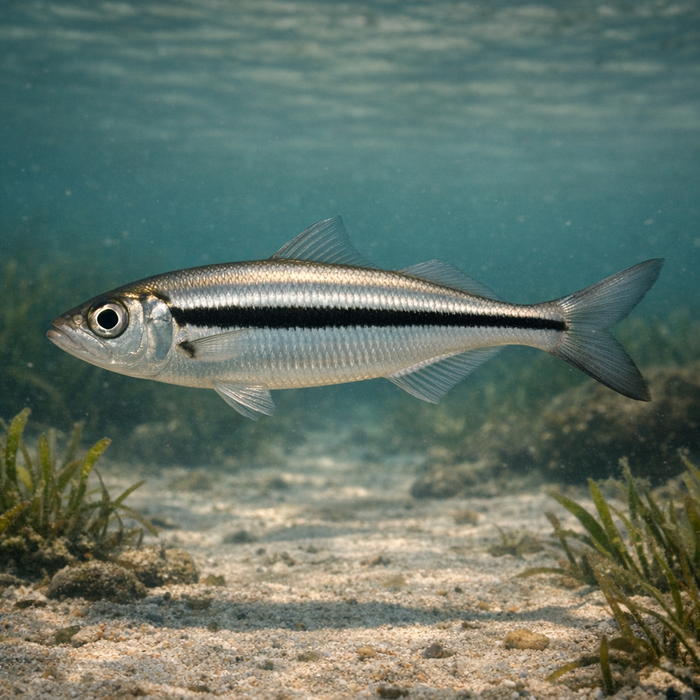
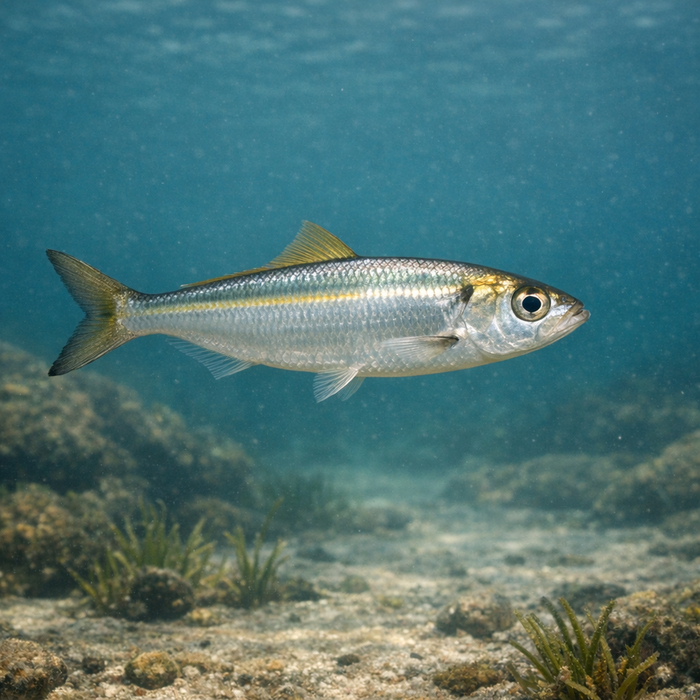
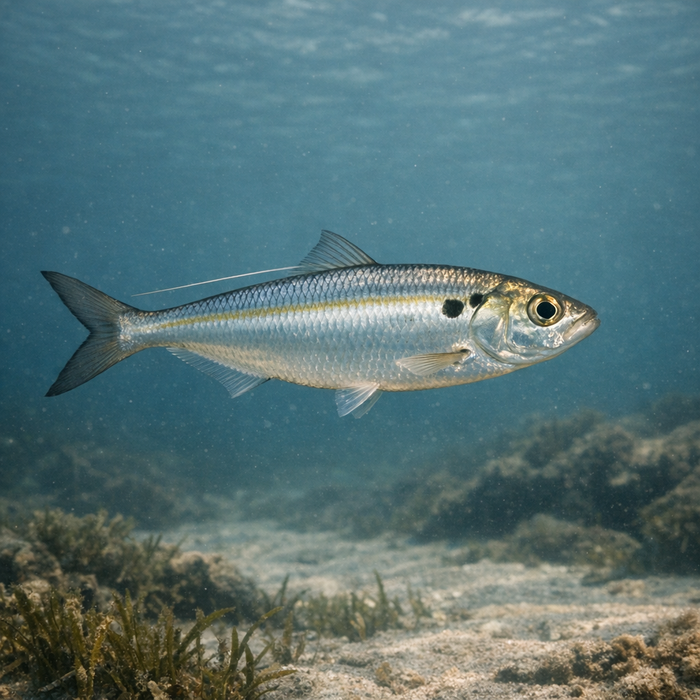
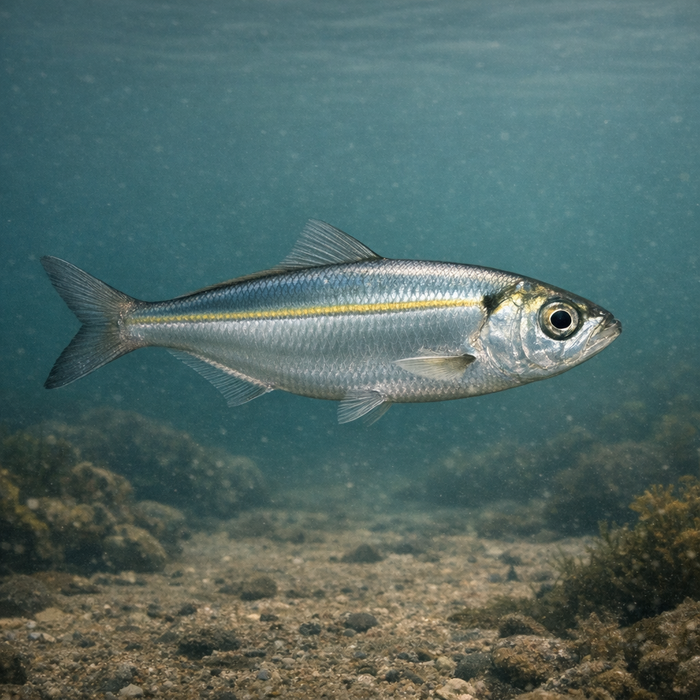
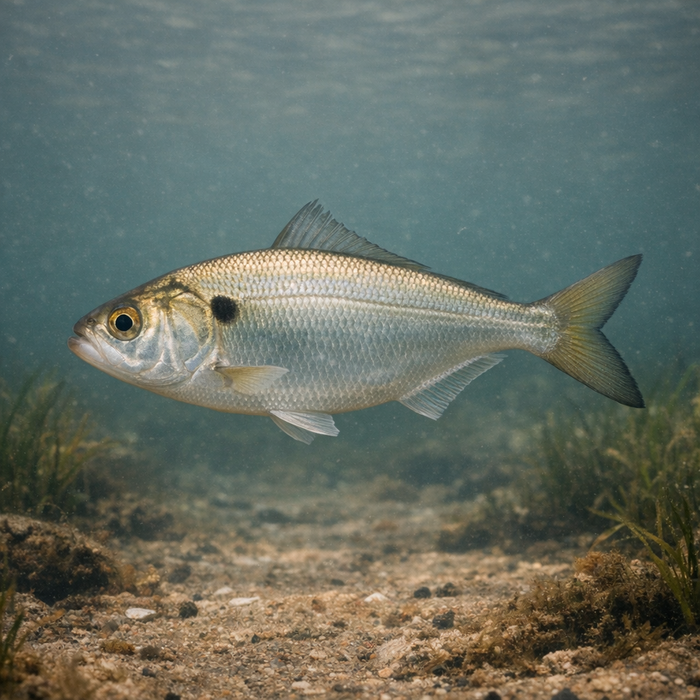
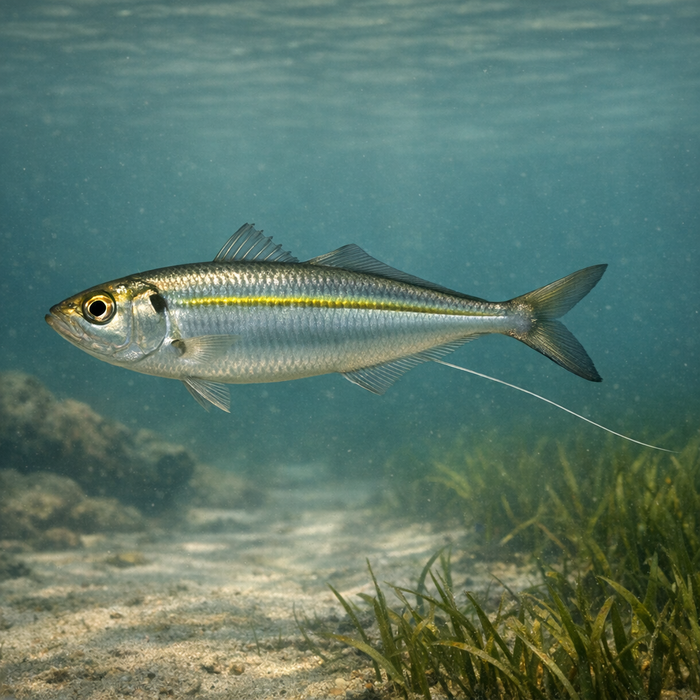
Atlantic herring (Clupea harengus): A Bold, Memorable Hook LineIntroductionThink of the Atlantic herring as the ocean's glittering fuel tank. Tiny, silver, and everywhere at the right time, they move like living mercury and turn predators feral. Most anglers meet them on sabiki rigs and under pier lights, not on magazine covers, but without Atlantic herring, the party offshore goes dead. This is the fish that props up ecosystems, economies, and your striped bass bite.What Makes the Atlantic herring Unique?First: sound. Atlantic herring literally communicate using FRTs, fast repetitive ticks made with air from the swim bladder. It's an honest-to-goodness fish fart that helps schools coordinate in the dark. Second: that chrome cloak. The silver sheen is made of guanine crystals that reflect polarized light and make herring vanish in open water. Third: versatility. They can switch from filter-feeding clouds of plankton to pecking individual prey in seconds, chewing through huge energy stores and building bodies rich in oil. These aren't just baitfish; they're a precision-built forage engine.Habitat & Global RangeAtlantic herring roam the North Atlantic, hugging temperate coastal and continental shelf zones on both sides of the ocean. If you dig into Atlantic herring habitat, you find a rhythm of nearshore in cold months and offshore when waters warm, with tightly timed migrations to traditional spawning grounds. They form absurdly dense schools, often miles across, pulsing around tide lines, harbor mouths, and current seams. Spawning happens over gravel and coarse substrates where adhesive eggs blanket the bottom like glittery sand. After hatching, transparent larvae ride currents along the shelf until they fatten up.Behavior & TemperamentSchooling is everything. The Atlantic herring's survival strategy is numbers and choreography, each fish reading neighbors and water pressure like an instrument panel. They're not brawlers; they're timing and motion. Low light pops the switch. At night, under pier or boat lights, they lift toward the surface, flashing and snapping at tiny prey. They also hear remarkably well, including ultrasound, a trick that probably helps them avoid the echolocation of hungry whales. Hook one and you'll feel more tremble than tug, but put five on a sabiki and it gets chaotic, fast.Ecological ImportanceIf you crave Atlantic herring facts that matter, start with this: countless predators are built on their calories. Striped bass, bluefin tuna, cod, haddock, porpoises, and seabirds all cash checks from herring schools. When the herring run fizzles, predator condition and recruitment often sag. Commercially, they've been called silver darlings for centuries. Smoked, salted, kippered, pickled, and fried, they carried Northern Europe through winters and still anchor bait supplies for lobster, halibut, and groundfish fleets.Conservation & Environmental PressuresGlobally, the species is stable, but that headline hides messy footnotes. Individual stocks rise and fall with spawning success, environmental shifts, and fishing pressure. Warming currents can scramble timing between plankton blooms and larval herring, reducing survival. Heavy commercial demand for bait and reduction fisheries adds risk when recruitment is weak. Smart management treats Atlantic herring like a big deal: monitor spawning biomass, protect key grounds, and cut pressure when year-classes stumble.The FishyAF TakeAnglers love to underrate Atlantic herring because they're small and easy on light tackle. That's a mistake. This fish is the needle that threads your season, the reason blitzes happen, and the single best bait on a cold, windy night when stripers or giant cod suddenly wake up. Learn the migration, watch the lights and tide lines, and you'll read the ocean better. Master the herring, and everything else follows.