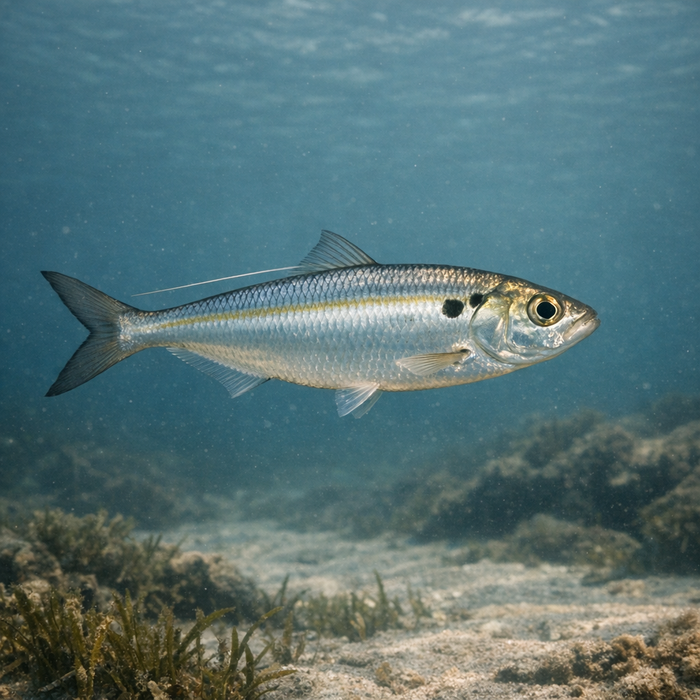
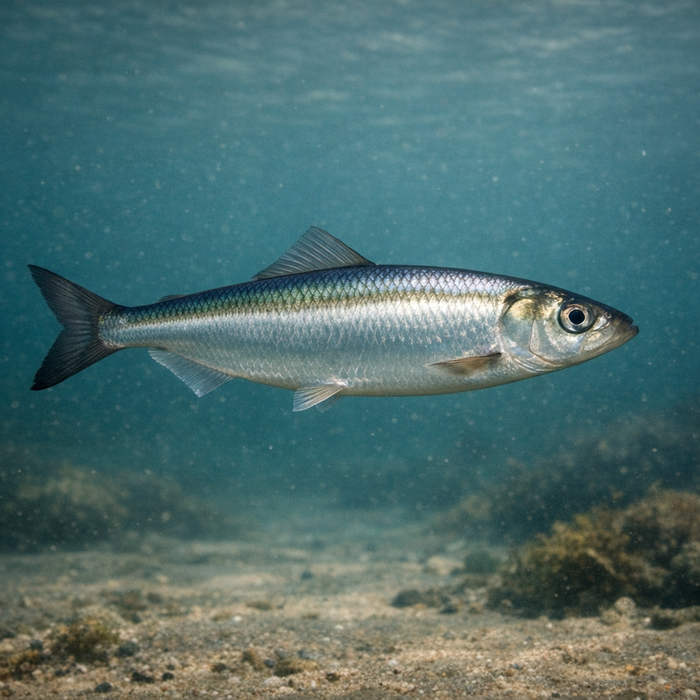
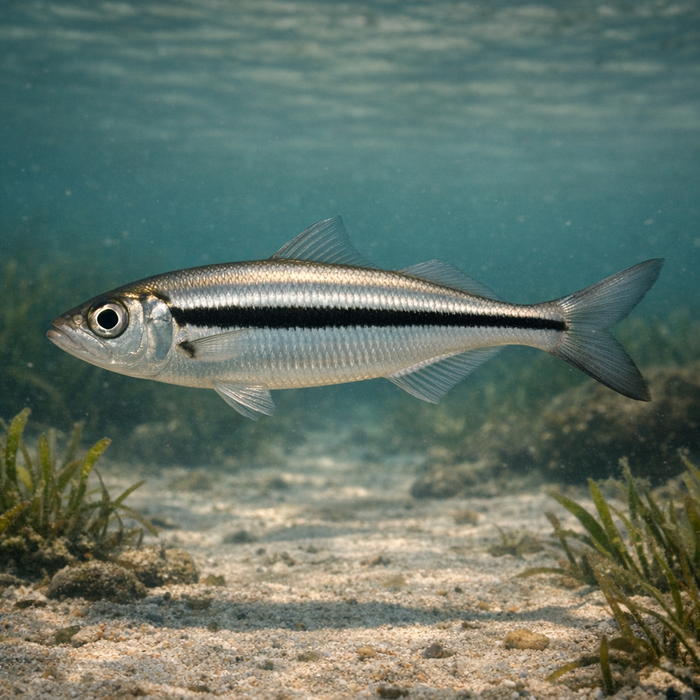
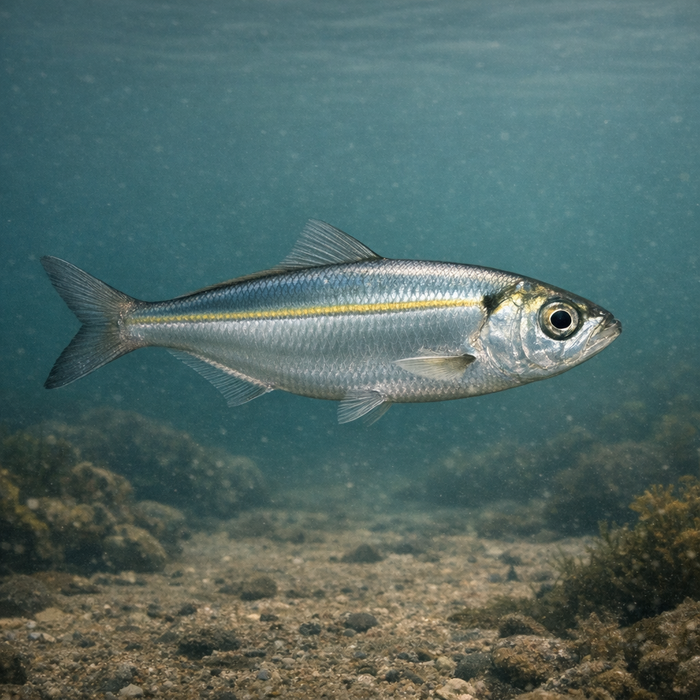
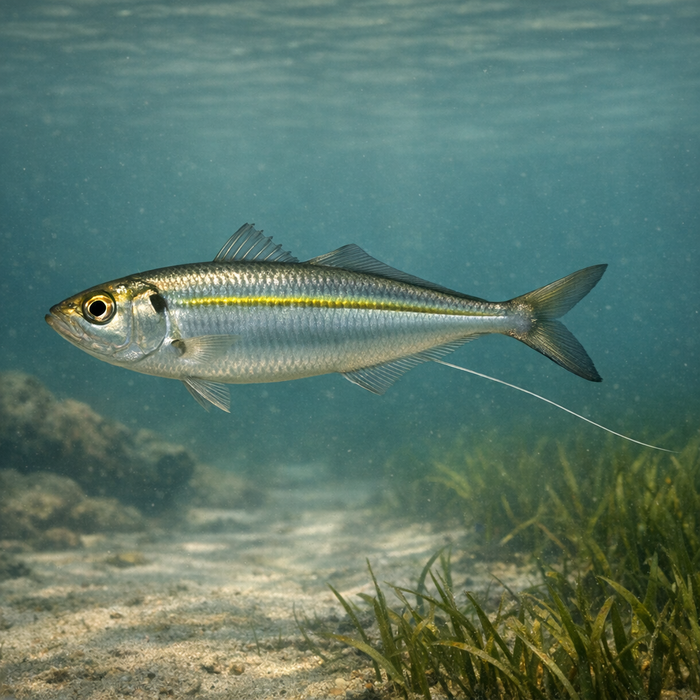
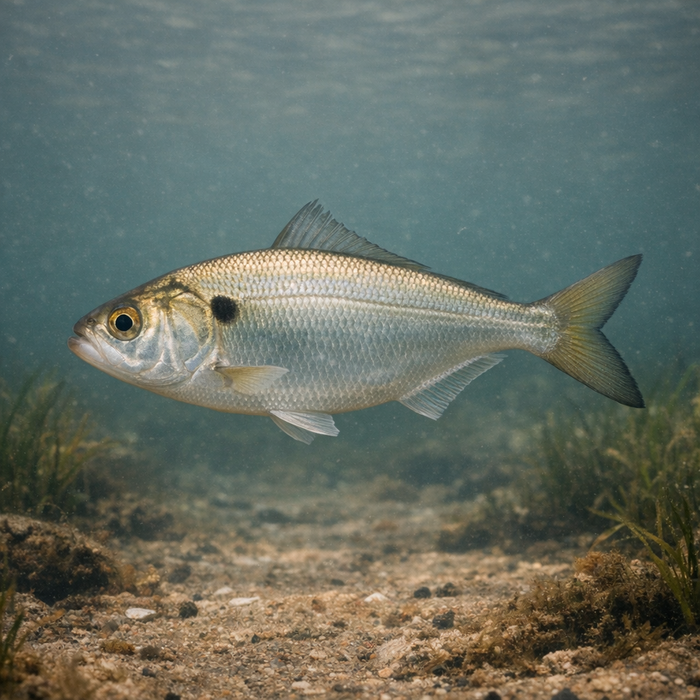
Brazilian Sardinella (Sardinella brasiliensis): The schooling silver rocket that fuels half the coastIntroductionThe Brazilian sardinella is the silver pulse of much of the Southwest Atlantic. One minute the water is empty; the next it's blinking with synchronized flashes as tight packs jitter under the surface. For anglers, they're bait gold and a quick confidence boost. For everything bigger, they're lunch. Either way, when Brazilian sardinella show, the ocean wakes up.What Makes the Brazilian sardinella Unique?First, efficiency. This fish turns booming plankton into oily muscle with ruthless speed, growing to hand size in under a year when conditions pop. Second, synchronicity. Brazilian sardinella move like a single shimmering organism, pivoting in split-second unison that makes predators miss more than they hit. Third, resilience by numbers. Schools can flood beaches, jetties, and bay mouths so thick you hear the water fizz with life. If you want Brazilian sardinella facts that matter to anglers: they're fast, they're dense, and they trigger predators like a switch.Habitat & Global RangeThink warm, nutrient-tipped coastal water along northern and eastern South America into the southern Caribbean. Classic Brazilian sardinella habitat includes nearshore currents, bay mouths, harbor edges, and the first couple miles off the beach-often right where the swell stacks bait against piers and jetties. Upwelling zones like Cabo Frio are legendary; a sudden plankton bloom can flip a slow shoreline into a conveyor belt of silver. They ride the Brazil Current, pulse with rainy-season nutrient shifts, and sit shallow enough that shore casters, pier rats, and skiff anglers all get a shot.Behavior & TemperamentBrazilian sardinella are jittery prey specialists. Schooling is their superpower, and it shows. One shadow overhead and the whole mass pinwheels, shedding scales like confetti to blur a predator's aim. They're midwater operators with a habit of kissing the surface at dawn and dusk, especially around gentle current seams. Hooked fish fight fast and light, more vibration than tug-of-war, but doubles and triples happen the second a sabiki drops into a hungry pack. They'll slash micro-jigs on the fall, inhale tiny shrimp bits, and track chum dust like it's a neon sign.Ecological ImportanceCall them bait if you like, but Brazilian sardinella are the energy brokers of the coast. They convert plankton into concentrated calories that fuel mackerel, jacks, tunas, billfish juveniles, dolphins, and seabirds. When their schools stack near beaches, predators line up like a drive-thru. Commercial fleets know it, artisanal netters know it, and every inshore angler who's ever watched a boil erupt knows it. Remove the Brazilian sardinella and the whole mid-trophic food web wobbles.Conservation & Environmental PressuresThey live fast and turnover quickly, which helps them rebound, but they're not invincible. Purse-seine pressure, variable recruitment tied to temperature and rainfall, and the on-again-off-again nature of coastal upwelling all move the needle. Warm-water anomalies can mute plankton blooms; strong years launch massive cohorts. Pollution in enclosed bays can pinch nursery areas. Management usually centers on commercial effort and seasonal protection of spawning pulses. For recreational anglers, the key is simple: take what you'll use, handle cleanly, and keep a light footprint around frenzied schools.The FishyAF TakeYou measure coastal health by how often you bump into Brazilian sardinella. When they're thick, everything else shows. They're the quickest win you'll have all week-fast to find, easier to hook, and absolutely deadly as live bait. Want practical Brazilian sardinella habitat advice? Start at the pier lights at dawn, drift a tiny sabiki through the flicker line, and watch your livewell turn into a predator magnet. If you chase trophies, you owe this fish a thank-you note. If you're new, it's the perfect first high-five with the ocean: simple, shiny, and alive with potential.