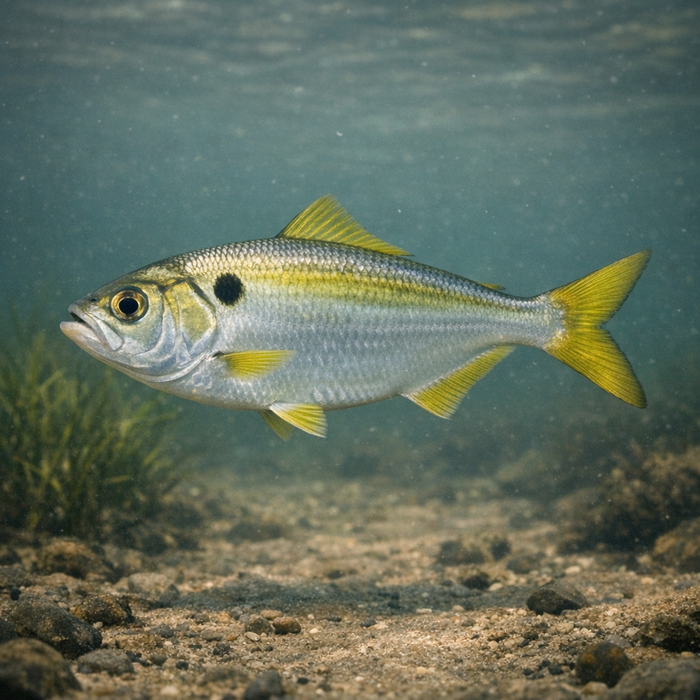
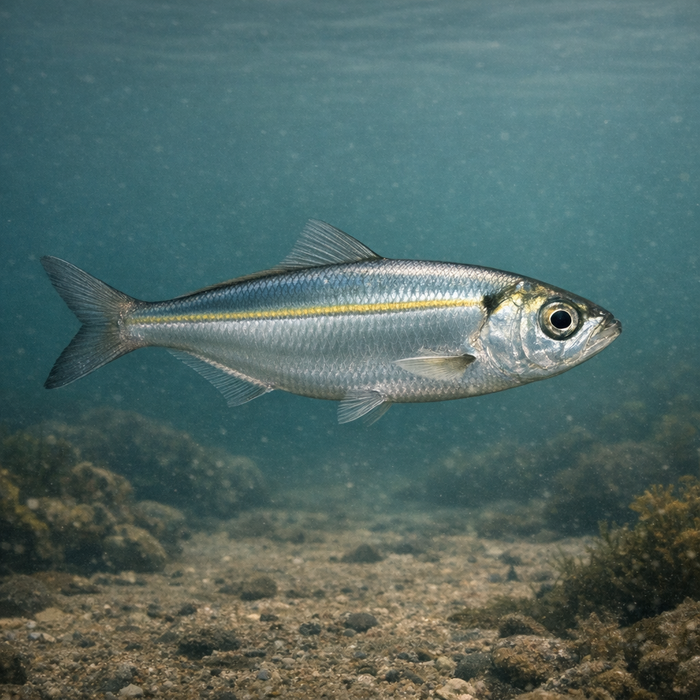
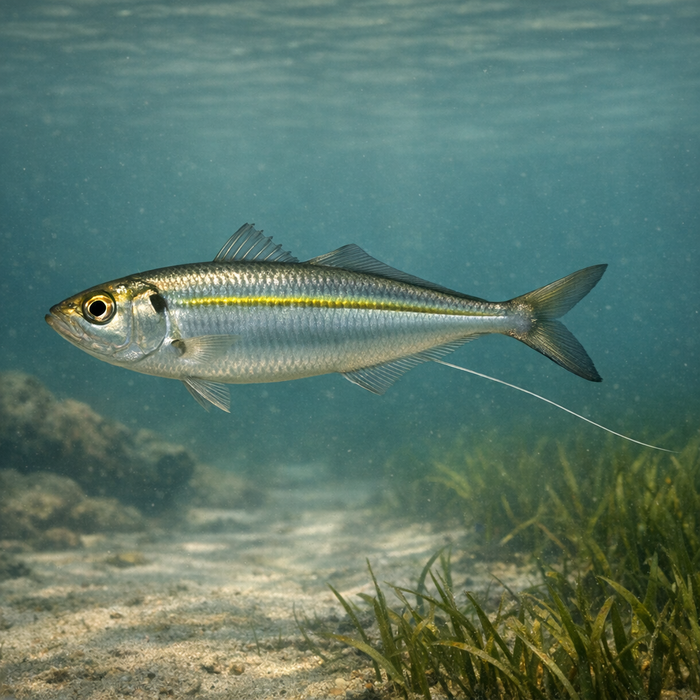
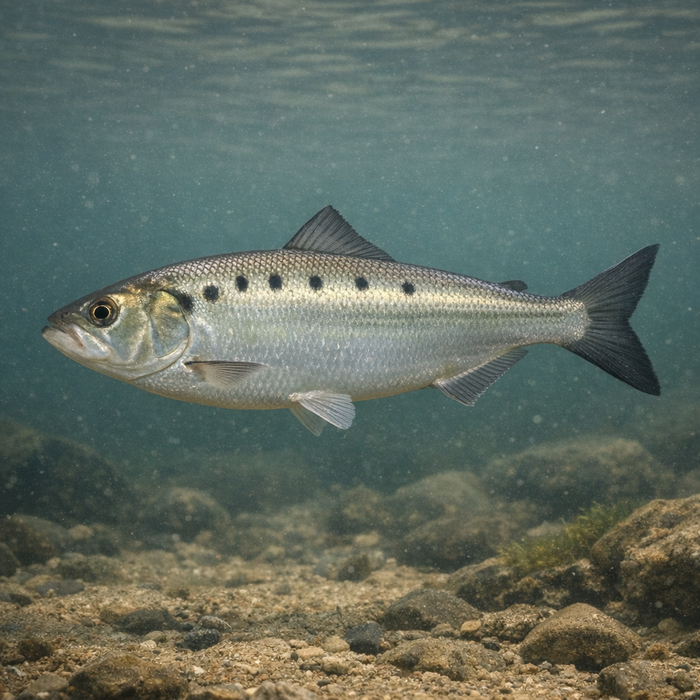
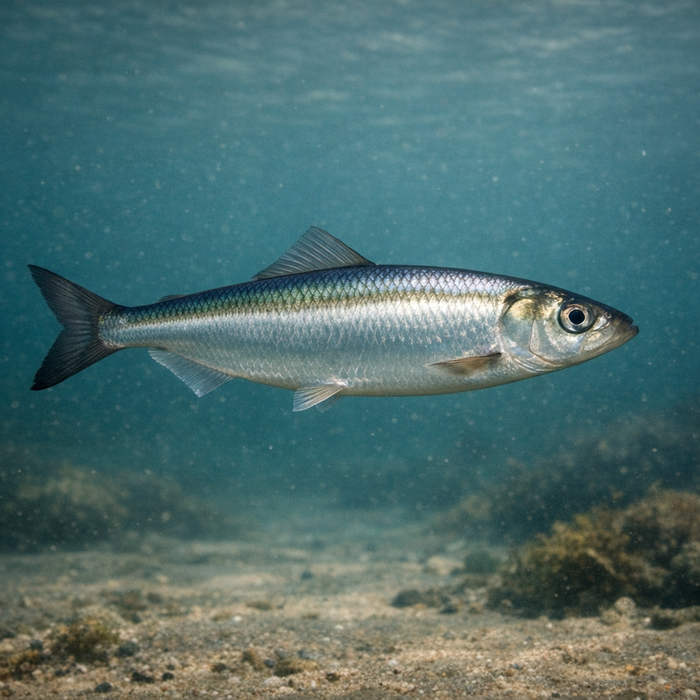
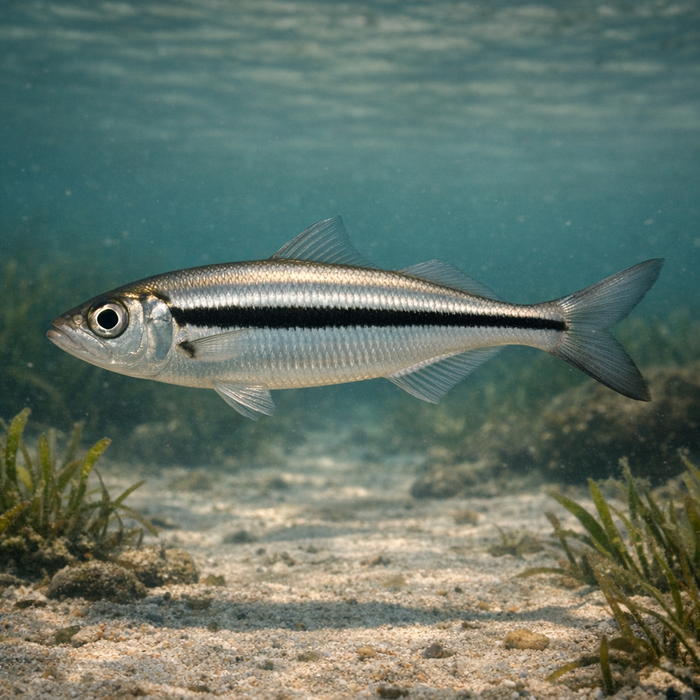
Finescale Menhaden (Brevoortia gunteri): The Gulf's silver plankton vacuum and every predator's favorite snack.IntroductionThe finescale menhaden is the buzzing neon sign that tells predators dinner is open. Flashy, oily, and endlessly schooling, it is the small baitfish that fuels big moments. For anglers, it is more currency than quarry: you do not brag about catching them, you brag with them, because everything with teeth wants a bite. Still, this little workhorse deserves its own spotlight, and there are plenty of finescale menhaden facts worth knowing if you fish the Gulf.What Makes the Finescale menhaden Unique?First, scale texture and size. As the name hints, this species wears ultra-fine scales that slough off like confetti when handled. Second, it runs on a high-efficiency filtration system. Menhaden rake the water with a dense comb of gill rakers, sieving microscopic plankton while cruising near the surface. Third, the finescale menhaden tops out smaller than its Gulf menhaden cousin, usually under 10 inches, which shapes how predators use them and how anglers catch them.Habitat & Global RangeIf you are talking finescale menhaden habitat, think Gulf Coast estuaries with a Texas accent. From bay systems like Galveston, Matagorda, and Corpus Christi to the Laguna Madre, these bait balls set up in turbid, nutrient-rich water and roam windblown shorelines, channel edges, and passes. The species follows a familiar clupeid rhythm: spawning occurs offshore during cooler months, and larvae ride tides into bays to grow. As water warms, schools spread across shallow basins and nearshore surf, often tight to current seams or the leeward side of points.Behavior & TemperamentThis fish is pure schooling instinct. Thousands move as one, dimpling the surface with rhythmic flips while filtering. Spook the front of the pack and the whole blob rolls, silver sides flashing like a strobe. They are not fighters on rod and reel and rarely bite traditional offerings, but they are highly visible. Birds give them away, slicks give them away, and the steady tap of surface dimples gives them away. A cast net is the default, while micro sabiki rigs will pick a few when they push tight to structure or ride a tide line.Ecological ImportanceThe finescale menhaden is a plankton-to-predator translator. It converts microscopic drift into fuel for redfish, speckled trout, tarpon, mackerel, jacks, and pelicans. That filtration also helps clear suspended particles and move nutrients through the system. Take away the bait balls and the whole inshore show looks flat. If you wanted a single species to represent "forage," this one stands tall, or at least swims fast, for the Gulf.Conservation & Environmental PressuresReduction fisheries in the Gulf primarily target other menhaden species, but finescale schools mix with them and face many of the same pressures indirectly. Habitat fragmentation, shoreline hardening, freshwater flow changes, and seasonal hypoxia all hit small clupeids hard. When oxygen drops, menhaden are often the first to float. The good news: current assessments list finescale menhaden as Least Concern, and most recreational harvest is small-scale bait netting. Smart management of water quality and estuary flow matters more to this species than fancy regulations.The FishyAF TakeThe finescale menhaden is not glamorous, but it is essential. If you chase redfish, trout, or tarpon, you already chase these baits, whether you admit it or not. Learn to read the birds, wind lanes, and those nervous, glittering slicks, and you will find predators stacked behind the schools. Call it the Gulf's silver stitch: it holds the pattern together. File this under practical knowledge, not trivia, and keep it handy the next time you need an edge on the flats. That is the real Finescale menhaden habitat and behavior advantage-know the bait, catch the beast.