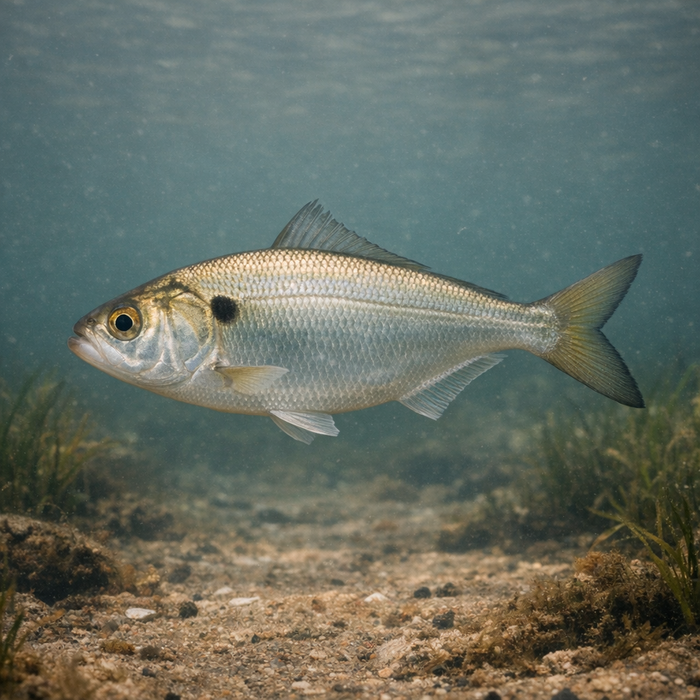
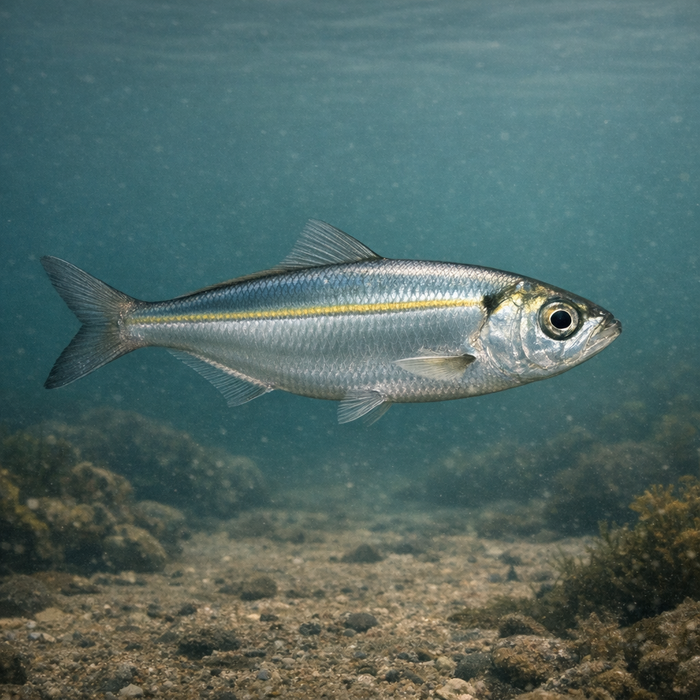
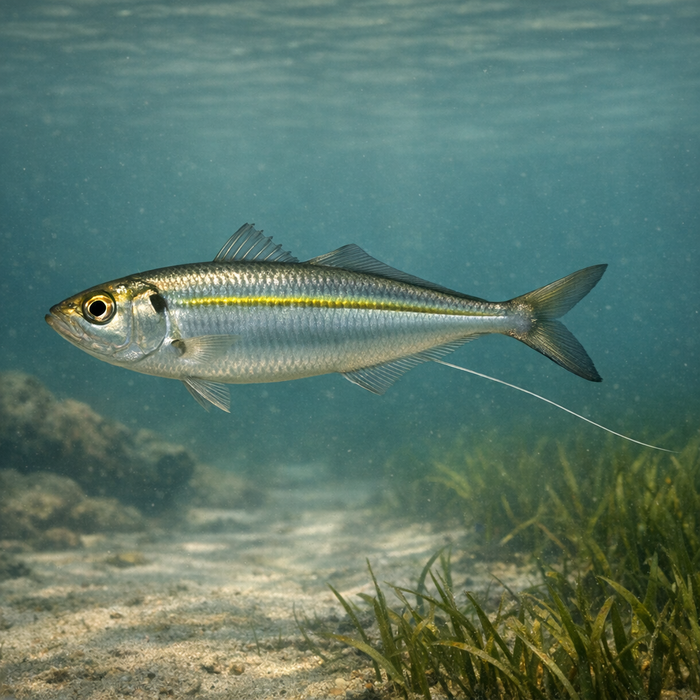
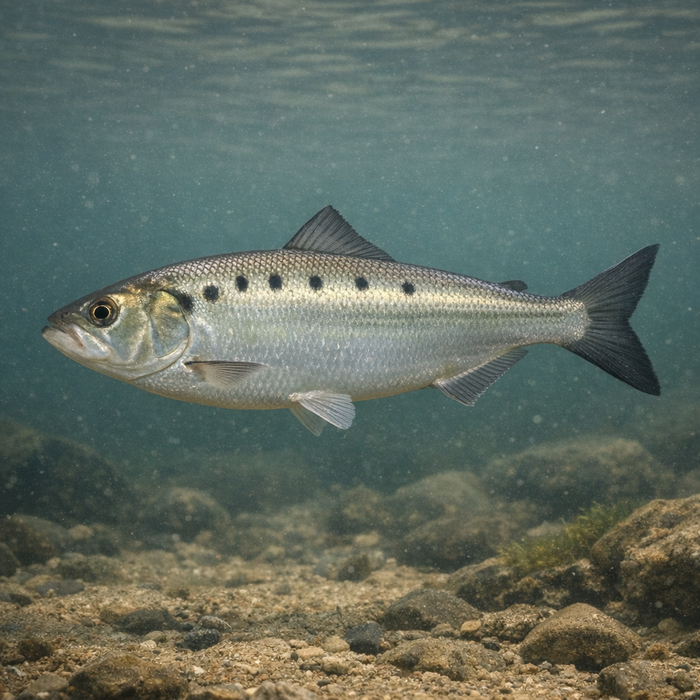
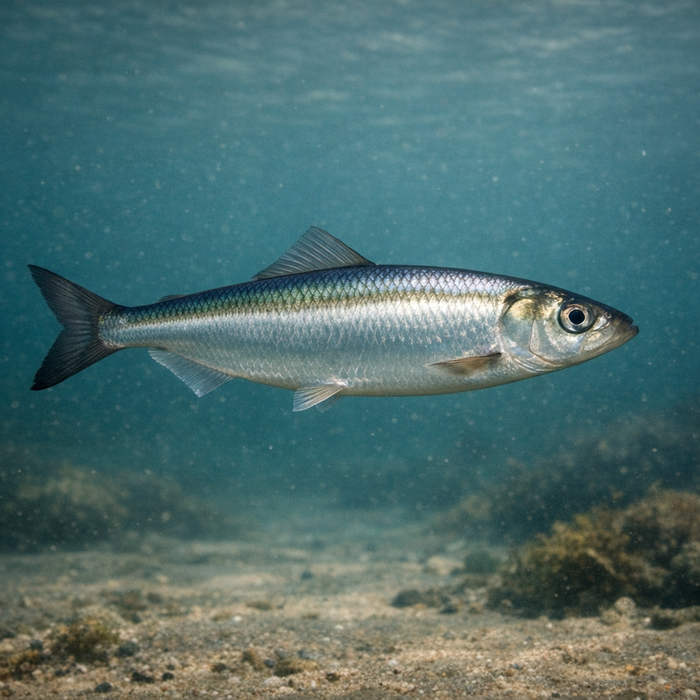
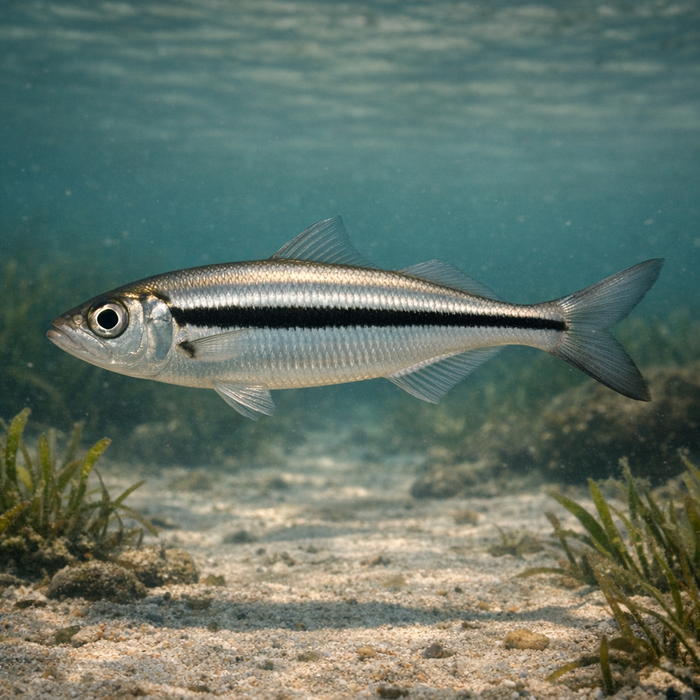
Yellowfin menhaden (Brevoortia smithi): The bright-finned bait bomb that supercharges every inshore food chain.IntroductionThe yellowfin menhaden is the little fish that makes big things happen. Pods shimmer across inlets and beaches, flipping and flashing like a storm of dimes. Toss a net and your livewell explodes; ignore them and watch tarpon, jacks, and kings steal the show. If you need quick Yellowfin menhaden facts or want a deeper dive into Yellowfin menhaden habitat, this is your crash course on the Southeast's lemon-finned fuel source.What Makes the Yellowfin menhaden Unique?Start with the look: a classic bunker profile with bright yellow pelvic and anal fins that shout their identity even from a moving skiff. They sport a bold shoulder spot and a deep, laterally compressed body built for tight schooling. Their hardware sets them apart too. With dense, comb-like gill rakers, yellowfin menhaden are industrial filter units, straining plankton by the mouthful. They're absurdly oily, which is why predators go feral around a bait ball and why a chopped pogy can perfume a tide line half a mile downcurrent.Habitat & Global RangeThe yellowfin menhaden lives where the water moves and the tide writes the schedule. Think brackish creeks, estuaries, sounds, and open surf lanes hugging the Southeast and parts of Florida's Gulf coast. They pile into inlets when the tide's running, graze plankton along rips, and flood marsh edges on flood tides. Winter pushes adults offshore to spawn, while spring sweeps clouds of larvae back into bays and rivers. In summer, you'll see tight schools cruising along beaches at first light, broadcasting themselves with constant surface flips that savvy anglers can spot from a long way out.Behavior & TemperamentSchooling is the whole strategy. Yellowfin menhaden move in dense packs that wheel, pulse, and flash like a single nervous organism. They're not fighters on rod and reel; their power lies in numbers and motion. When oxygen dips, they surface-gulp in frantic unison. When predators crash the party, the school tightens into a bait ball, bursting open only to close ranks again. They ride currents, favor low-clarity water, and live close to the surface where their filtration is most efficient and escape routes are visible.Ecological ImportanceThis species is a keystone conveyor belt, ferrying microscopic productivity up the food chain. Yellowfin menhaden devour plankton, lock it into oily flesh, then hand-deliver it to apex predators. Tarpon, redfish, king mackerel, cobia, sharks, and pelicans all cash the menhaden check. Their sheer biomass stabilizes coastal ecosystems, and their filter-feeding can help moderate plankton blooms. Commercially, they're reduced into meal and oil or sold as top-shelf live bait. Anglers know the drill: find the pogies, find the party.Conservation & Environmental PressuresWhile yellowfin menhaden aren't typically poster children for collapse, they live beneath the shadows of water quality and extraction. Hypoxia events can drive mass surface-gulping and localized die-offs. Estuary development squeezes nursery habitat. Commercial pressure ebbs and flows with demand for fish meal and oil. Management usually centers on the broader menhaden complex, biomass targets, and bycatch controls. For the average angler, the biggest risk isn't whether the species vanishes overnight; it's whether local bays keep producing those thick, easy bait pods summer after summer.The FishyAF TakeYellowfin menhaden are the small, oily hinge on which big memories swing. You won't brag about catching one, but you'll definitely brag about what ate it. Master this bait and you shortcut the entire inshore learning curve. Watch the tide, watch the birds, and read the surface like a scrolling ticker. When the yellow fins flash and the water smells like fish oil and salt, you're already halfway to the bite. The rest is timing and a clean throw. That's the real magic of the yellowfin menhaden: it turns average days into highlight reels without asking for credit.