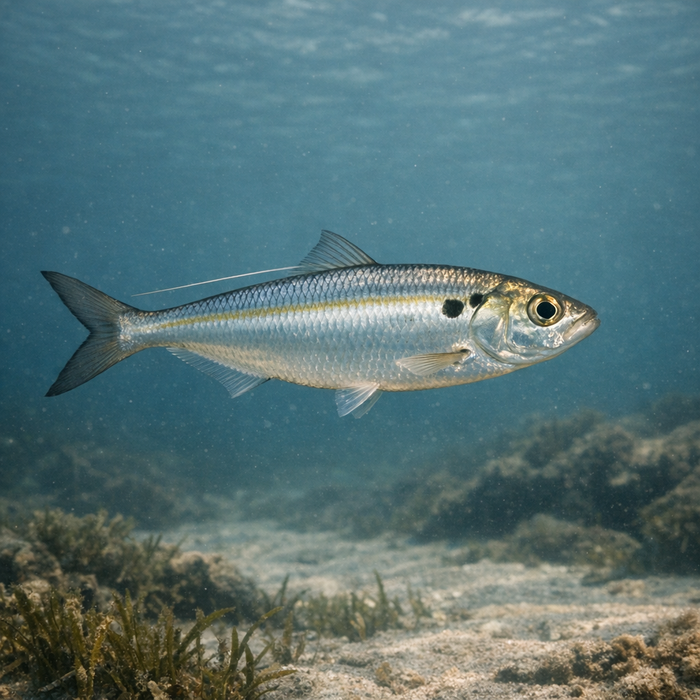
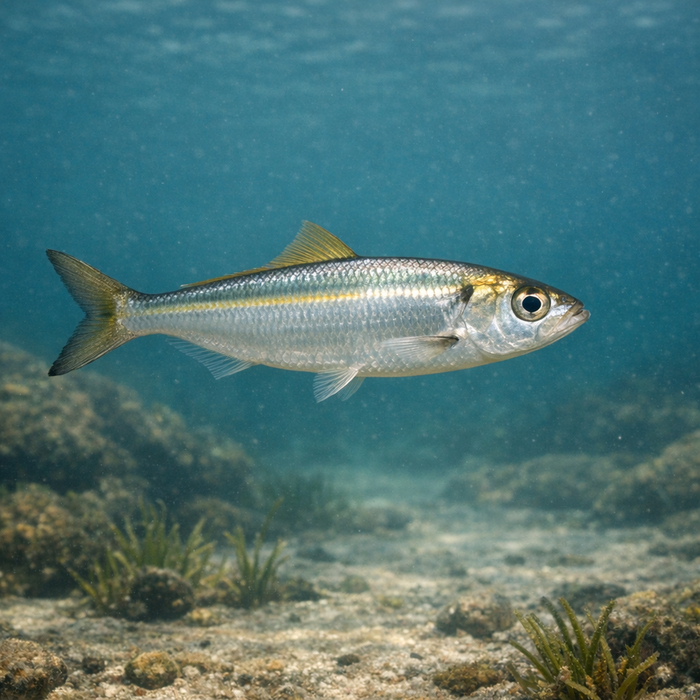
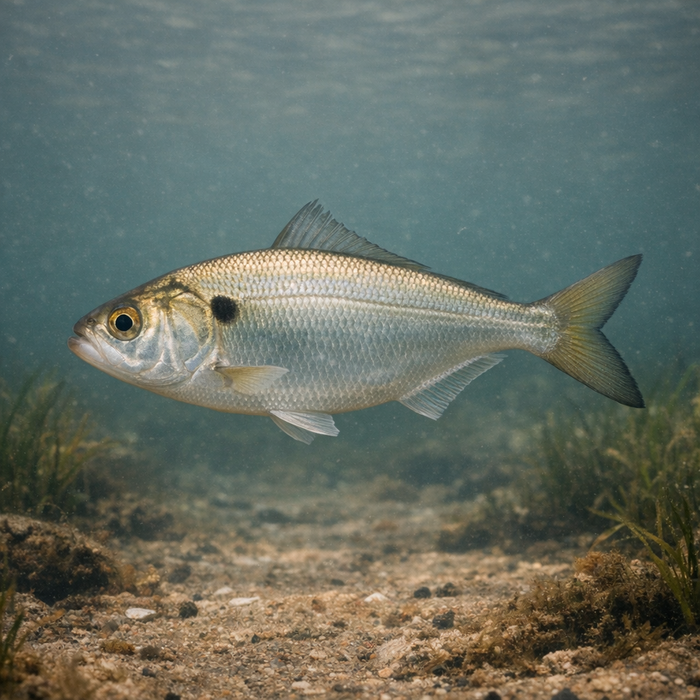
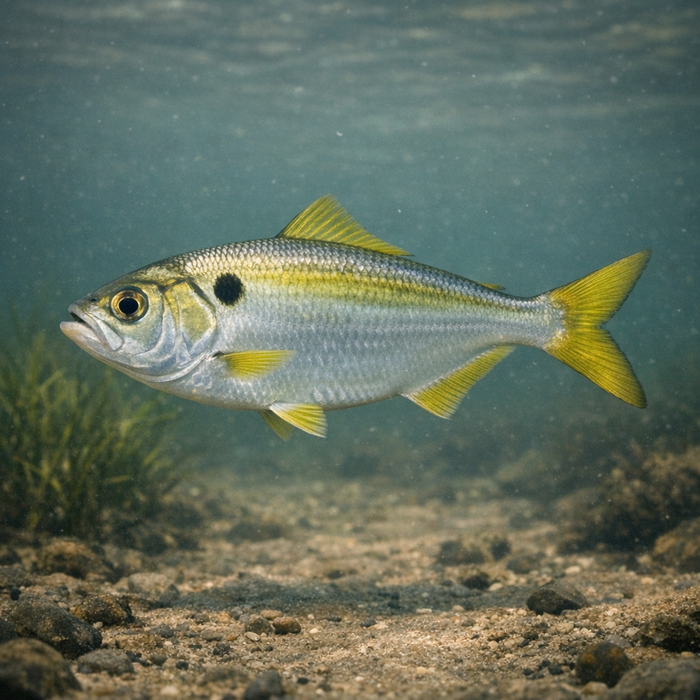
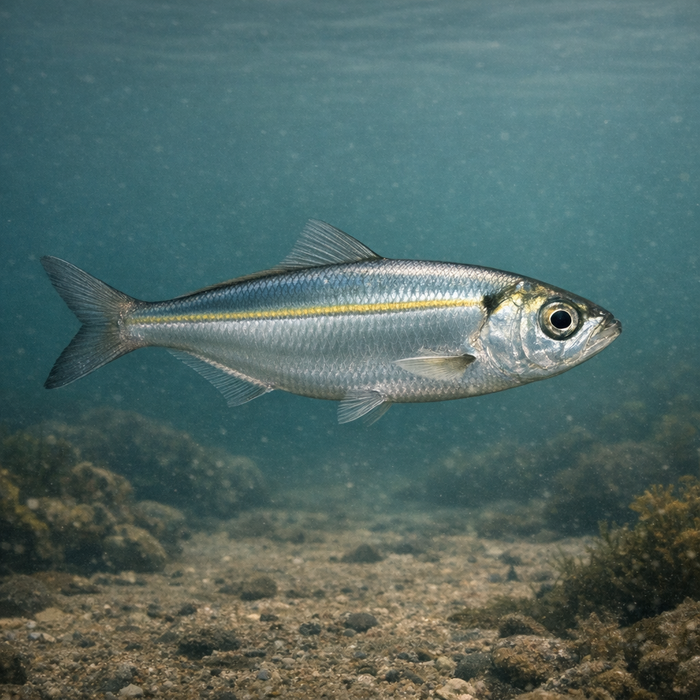
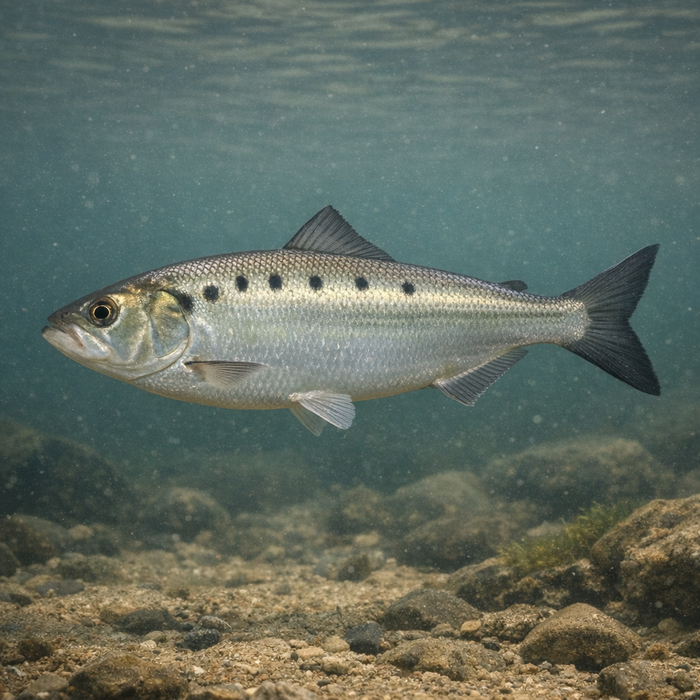
Pacific Thread Herring (Opisthonema libertate): Silver confetti with a built-in party streamerIntroductionThe Pacific thread herring is the fish you meet before you meet the fish. It's the livewell filler, the bird-chasing glitter cloud, and the silver spark that flips an ordinary morning into a wide-open bite. One minute it's a shimmer on a current seam, the next it's raining scales and hope. If you're building a game plan for inshore and nearshore predators, the Pacific thread herring is step one.What Makes the Pacific thread herring Unique?Start with the namesake thread: the last dorsal fin ray grows into a trailing filament that looks like it was styled by a prankster. Add a dark shoulder spot and a slab of bright, easily shed scales and you've got instant visual ID. Under lights or sun, schools throw synchronized flashes that ripple like a crowd wave. Unlike pushy predators, the Pacific thread herring is a plankton-sifter with ultra-fine gill rakers, built to vacuum tiny life from moving water. It's a small package with elite schooling instincts and serious survival tricks.Habitat & Global RangeCall this one a coastal specialist. The Pacific thread herring works warm, productive edges from southern California through Mexico, Central America, and down to Peru. Think harbor mouths, surf lines, inside bays, tidal channels, and upwelling zones where food stacks and current does the heavy lifting. It's classic Pacific thread herring habitat: moving water, bait-bird drama, and easy exits to open water. Seasonal pulses and water temperature swings push them inshore or nudge them along the coast, but they're happiest where current concentrates plankton and the lights, birds, and boats create a floating buffet line.Behavior & TemperamentThe Pacific thread herring is a team sport. It schools tight, wheels fast, and uses confusion as a shield. When predators crash the scene, they skip and spray across chop like thrown pebbles. At night they orbit pier lights and marina lamps, cycling through tight donuts as plankton stacks. Bite signals come as machine-gun taps on sabikis, not knockout punches. They're sight-driven, current-loving, surface-biased roamers that treat structure as optional and moving water as mandatory. If you're cataloging Pacific thread herring facts, file this: feed windows spike with current, low light, and any scenario that herds the tiny stuff.Ecological ImportanceEverything eats them. Roosterfish, jacks, dorado, tunas, amberjack, snappers, seabirds, sea lions, you name it. The Pacific thread herring converts ocean plankton into rocket fuel for the predators anglers chase. They're a keystone link in coastal food webs, greasing the gears of the entire nearshore machine. Their short lifespans and rapid reproduction help them rebound from natural swings, and their silvery schools are the loudest dinner bell in the bay.Conservation & Environmental PressuresCommercial nets, coastal development, and sketchy water quality all matter. When bays lose oxygen, when runoff spikes turbidity the wrong way, or when warm-water events scramble plankton timing, this species wears it fast. Purse seines targeting mixed small pelagics can lean on schools, though regional management varies. The good news is their life history is built for volatility. The caution is that boom-bust cycles get nastier when multiple stressors stack. Clean bays, smart net rules, and watchful monitoring keep the silver factory humming.The FishyAF TakeThe Pacific thread herring is the unsung MVP of the eastern Pacific. You want drama on top? Start with these. You want fast limits on the headliners? Start with these. If you fish the coast and ignore this little plankton vacuum, you're skipping the opening act that makes the headliner possible. Learn the current, watch the birds, bring sabikis and a livewell, and respect the school. Do that, and the rest of your day usually takes care of itself. That's the Pacific thread herring in a nutshell: tiny fish, big consequences, ridiculous amounts of fun.