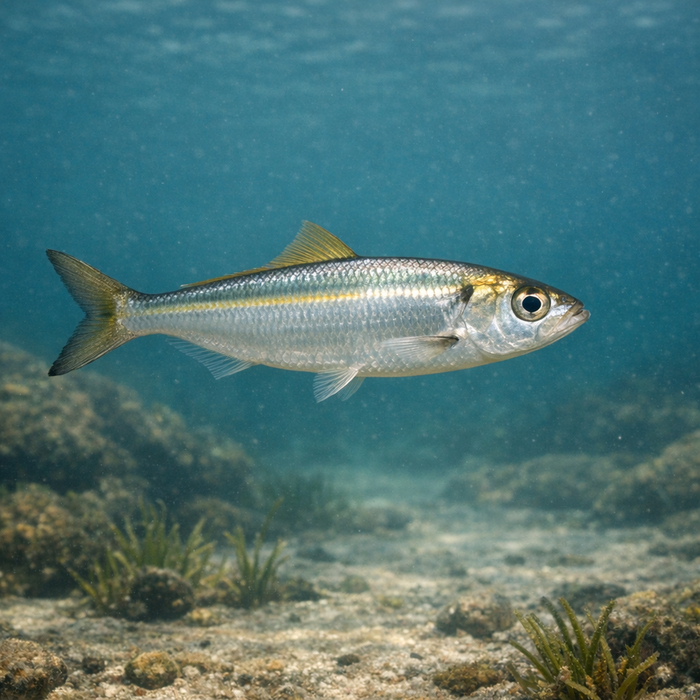
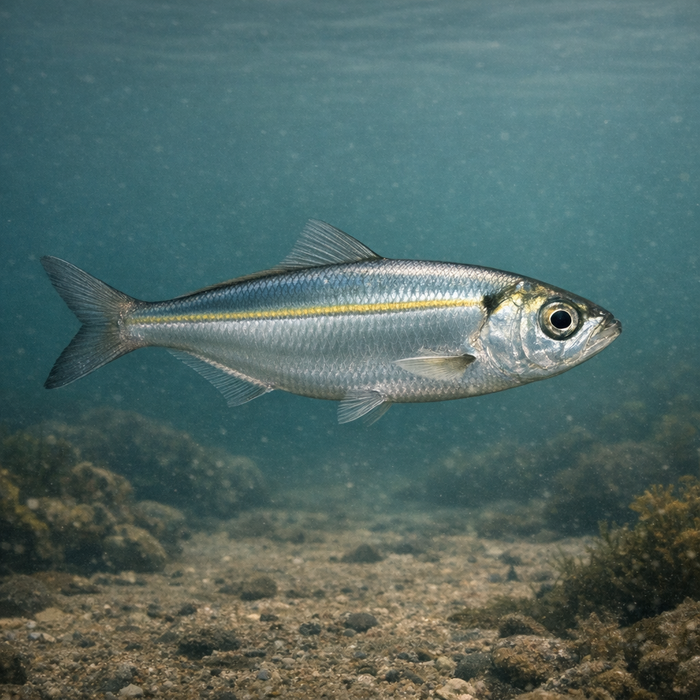
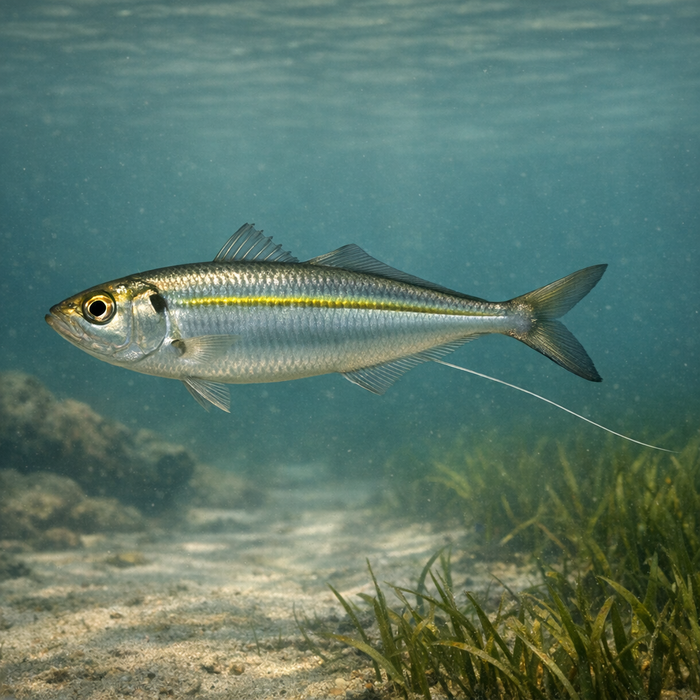
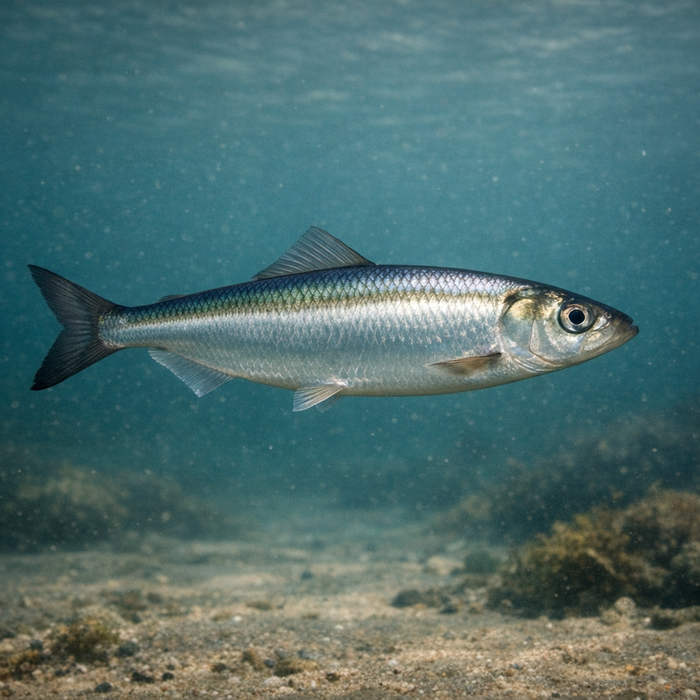
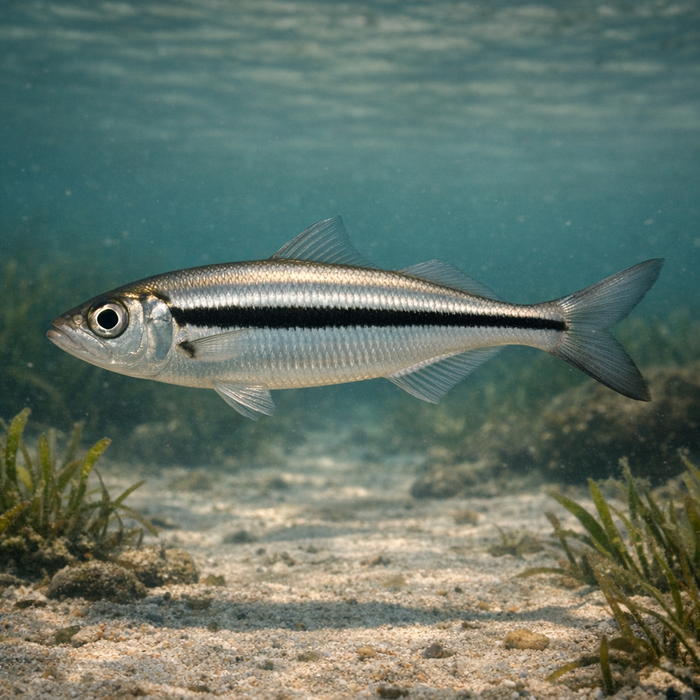
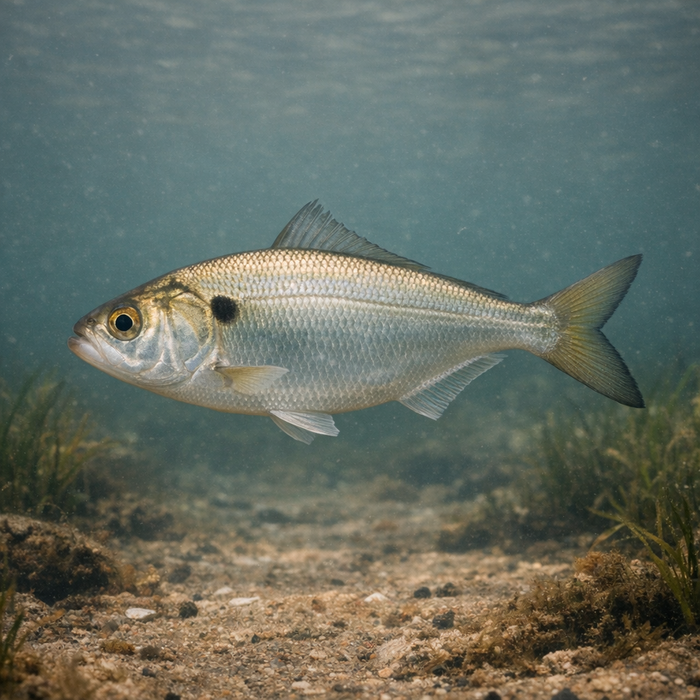
Middling Thread Herring (Opisthonema medirastre): A Bold, Memorable Hook LineIntroductionThe middling thread herring is proof that not every star needs a trophy mount. This silver bullet powers entire fisheries from the beach lip to the blue water, fuels epic surface feeds, and fills countless livewells. Call it bait if you want, but the whole food chain salutes when these things show up.What Makes the Middling thread herring Unique?Start with the namesake thread: an elongated last dorsal ray that trails behind like a streamer. On young fish it can outstretch the tail, flashing in tight turns and broadcasting the school's direction. Pair that with the telltale dark shoulder spot and a belly lined with sharp scutes, and you've got a quick ID even when sardines and anchovies crash the same buffet. The middling thread herring is built to vacuum plankton with absurdly fine gill rakers while still darting like a tiny torpedo. It's a specialist feeder that moves like a sprinter.Habitat & Global RangeIf you're hunting middling thread herring habitat, think warm eastern Pacific shorelines. Bays, harbors, river plumes, and gentle surf zones set the stage, with schools roaming the top few feet of the water column. They tighten over color changes, plankton slicks, and light current edges. Seasonal pulses ride productivity and temperature swings, with bigger, thicker fish often shadowing upwelling lines. This is the kind of bait that turns a quiet marina into a popping, bird-laced scene at daybreak. For anglers mapping Middling thread herring facts, remember: it's a coastal player that thrives where water moves and food concentrates.Behavior & TemperamentSchooling is the headline. Ten fish become ten thousand in a blink, and the mass acts like one brain. At the surface, they dimple and flash, then vanish on a pinwheel turn when a shadow looms. They're not brute fighters, but they're twitchy to the core. Daylight often pushes them deeper or tighter, while low light stretches the school into a spray of nervous individuals. Birds are your tattletales: frigates and boobies bomb their panic lines like it's a buffet.Ecological ImportanceThis species is premium rocket fuel for predators. Roosterfish, jacks, dorado, sails, even inshore snappers run hotter when thread herrings are in the mix. They convert plankton into oily, high-calorie meat the next link up truly craves. Lose the middling thread herring and you dim the whole inshore show. It's that simple. Their eggs and larvae also stuff the diets of smaller plankton grazers, spreading the energy around like a silver stimulus check.Conservation & Environmental PressuresGood news: the middling thread herring is generally resilient, with fast growth, repeat spawning, and massive schools. But resilience doesn't mean invincible. Coastal water quality, abrupt temperature swings, and concentrated netting around nursery bays can knock them around. Mislabeling among similar Opisthonema species muddies management. Keep the bays clean, keep the currents breathing, and this fish pays the ecosystem back with interest.The FishyAF TakeRespect the bait. The middling thread herring may be small, but it's a headline act dressed in silver. When they flood a shoreline, predators switch from moody to maniac. For anglers, that's your green light. Learn the water where they roam, let birds be your whisper network, and treat every handful like a stack of winning chips. This isn't trivia; it's the heartbeat of the inshore game.