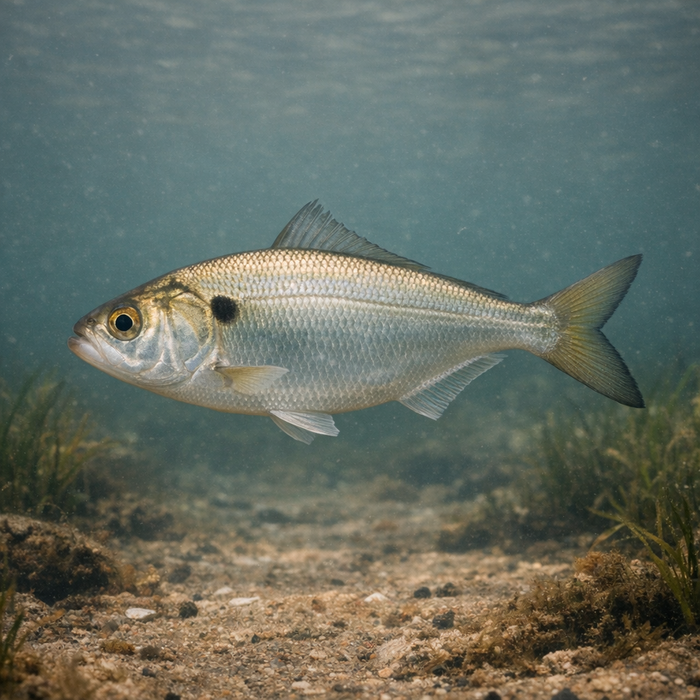
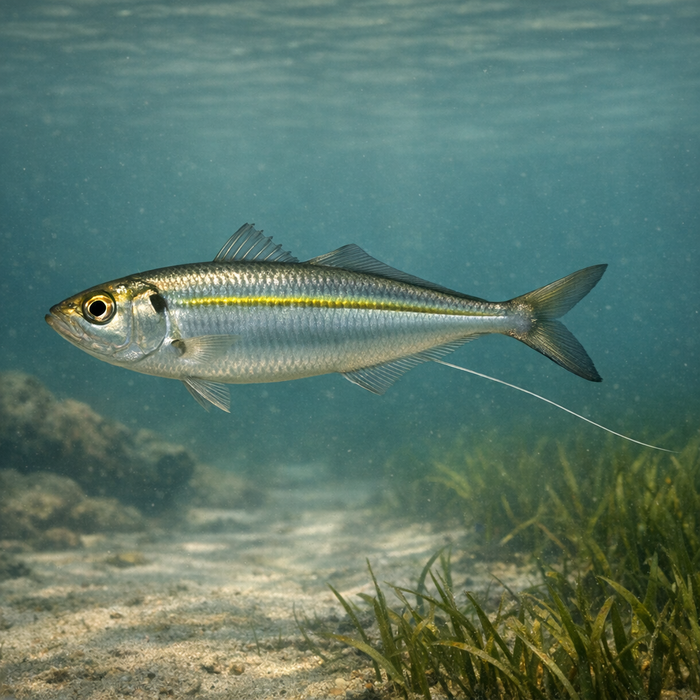
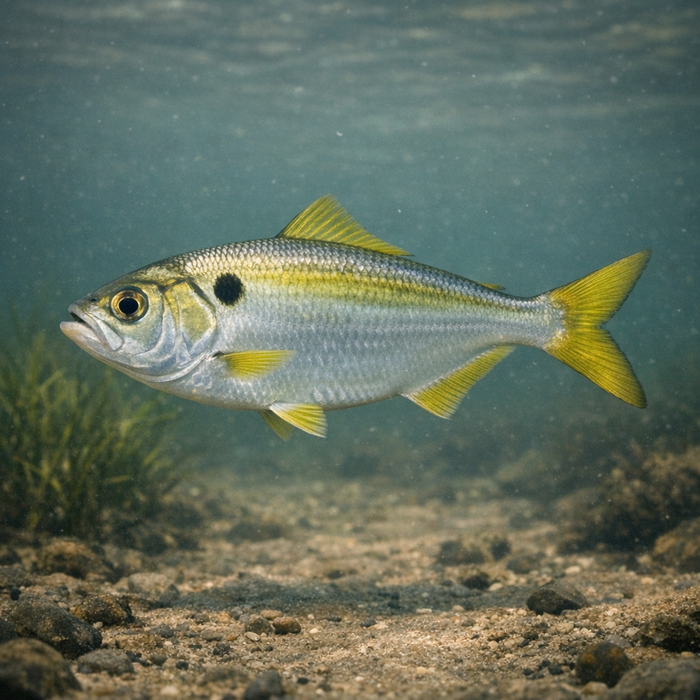
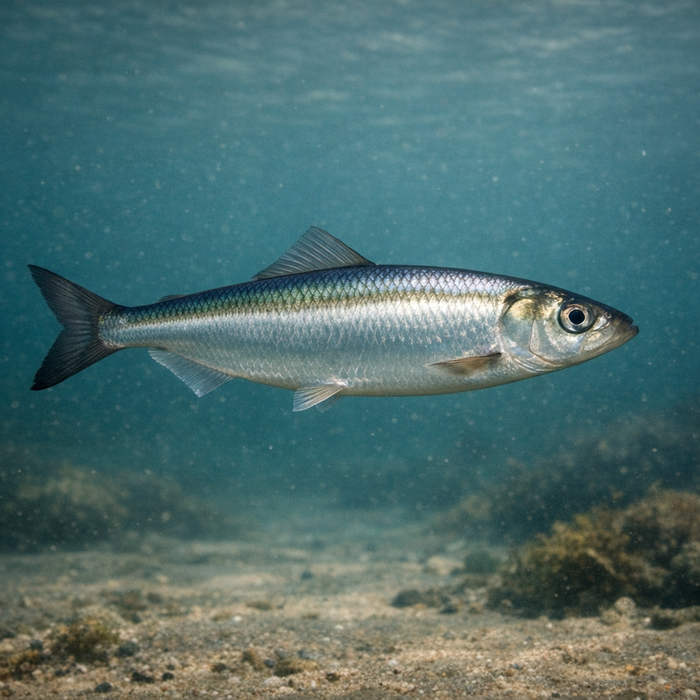
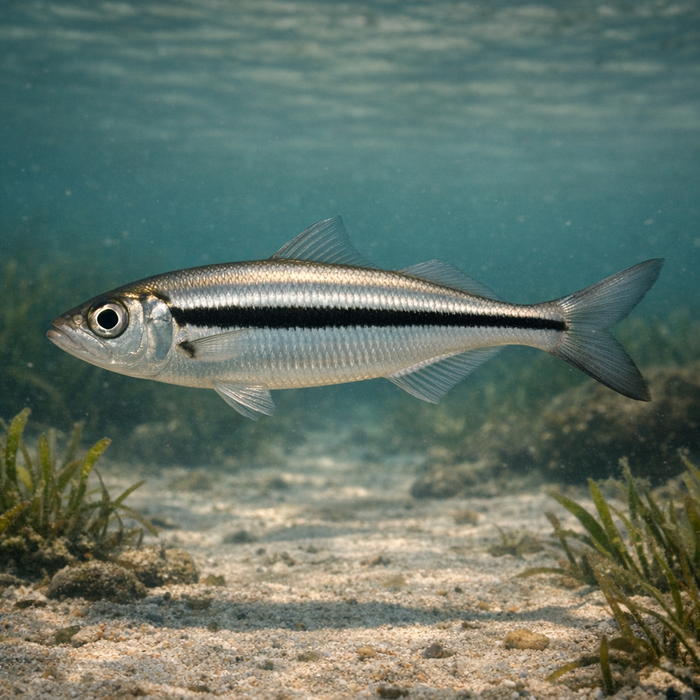
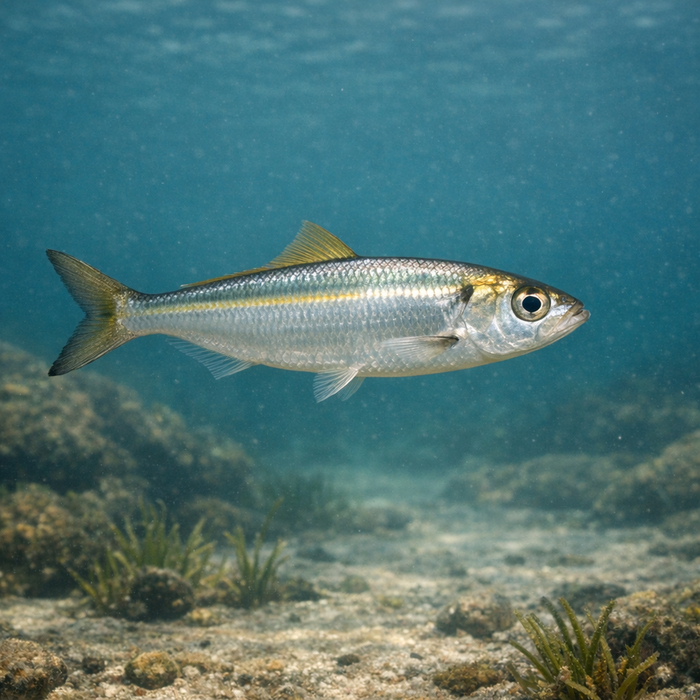
American shad (Alosa sapidissima): The silver torpedo that turns rivers electric every spring.IntroductionWhen the American shad shows up, sleepy river towns turn into pop-up festivals of bent rods and happy chaos. These chrome bullets surf the spring current, stacking in seams and tailraces, lighting up light tackle and five-weights like they were invented just for it. If you're browsing for American shad facts or scouting American shad habitat, here's your guide to the fish that made dart boxes and spoon wallets a thing.What Makes the American shad Unique?First, the vibe. American shad is a herring with a cult following, a fish that barely eats in freshwater yet smashes bright, tiny offerings out of reflex. Second, the engine. Their fight-to-size ratio is ridiculous, thanks to a deep body, big forked tail, and a constant battle with current. Third, the journey. Anadromous and laser-locked to scent, they navigate back to natal rivers with GPS-level precision. When you hook one, it feels like somebody tied a kite to a river rocket.Habitat & Global RangeAmerican shad split their lives between ocean roaming and freshwater spawning. Along the Atlantic coast from the Southeast through the Northeast, they pulse into estuaries, then surge upriver, often stacking below dams, fish ladders, and narrow chutes. They were transplanted to the West Coast in the 19th century and spread quickly into the Sacramento-San Joaquin and Columbia systems, proving they're marathoners as well as survivalists. Typical American shad habitat includes big tidal rivers, bays, and lower mainstems dotted with current breaks: eddies, wing dams, and long, even glides. In these places they travel midwater more than tight to structure, rolling near the surface or flashing deeper depending on light and flow.Behavior & TemperamentThey move in schools and run on a schedule only partly translated by anglers: daylight shifts, current pulses, and subtle temperature nudges. In freshwater, feeding takes a back seat to migration, yet they still lash out at small, flashy intruders. Hook one and expect surging runs, pop-off theatrics from soft mouths, and a constant need to keep a tight line. They're not cagey like trout or monstrous like stripers; they're rhythmic. Get the angle, depth, and speed dialed in, and you'll hit that magical window where every few casts finds chrome.Ecological ImportanceAmerican shad are nutrient shuttles. They bulk up in the ocean on zooplankton and small prey, then import that energy upriver to spawn. When they die after spawning, especially in southern systems, they feed everything from crayfish to ospreys. Surviving northern fish repeat the cycle, supporting river food webs year after year. Their spring migration has also shaped local culture, from community fish counts to traditional shad bakes that anchor entire seasons.Conservation & Environmental PressuresDams are the classic villain here, fragmenting habitat and bottlenecking historic runs. Fish passage has helped some rivers, but timing and flow management matter. Water quality, warming trends, and bycatch in mixed-stock ocean fisheries add layers of uncertainty. Many states now tweak seasons, implement catch-and-release stretches, or close certain tributaries entirely to protect fragile stocks. Monitoring and adaptive management have brought some runs back to life, but recovery isn't uniform. The fish is tough. The system needs to meet it halfway.The FishyAF TakeThe American shad is the people's migratory fish: accessible, seasonal, and seriously fun when you crack the code. It rewards timing, not just talent. Show up when the water hits the sweet spot, fish the seam like you mean it, and let a bright dart swing just right. You'll feel that thump, watch silver cartwheel, and remember why this fish turned darts and tiny spoons into springtime essentials. For a few feverish weeks, the river is a conveyor belt of possibility, and the American shad is the ticket that keeps paying.