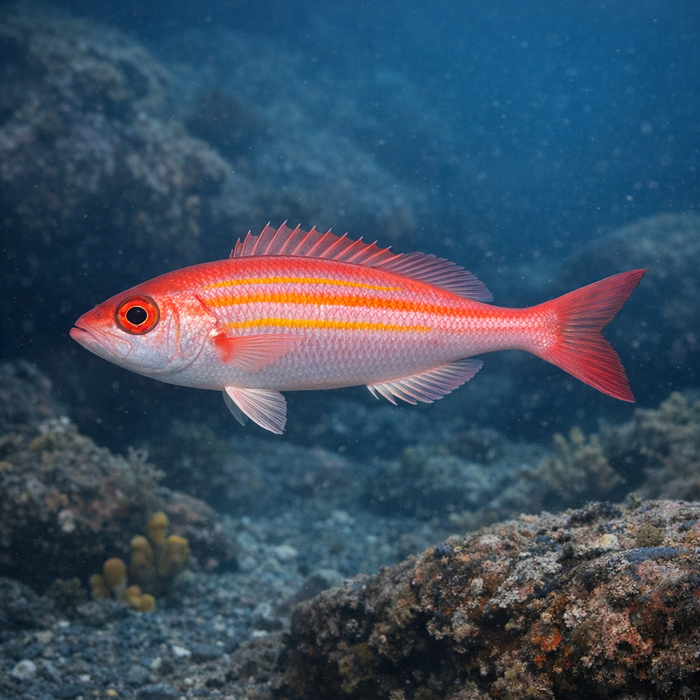
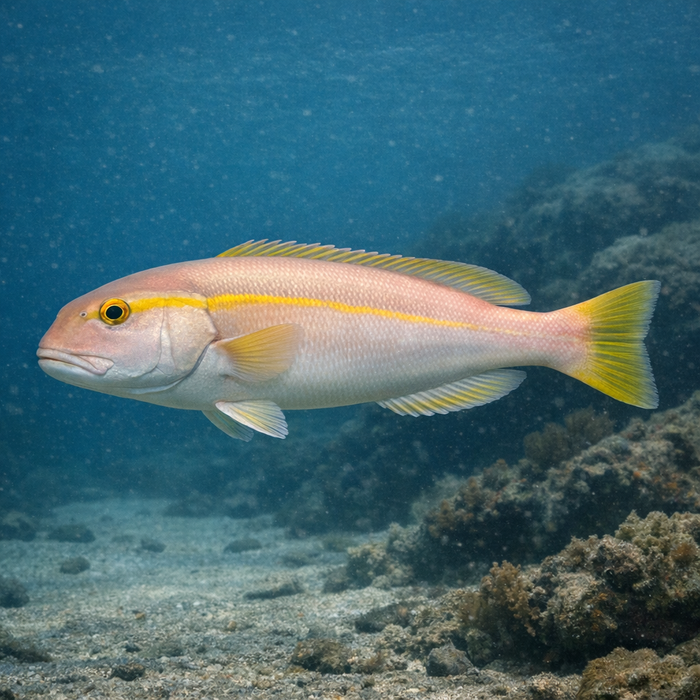
Atlantic rubyfish (Erythrocles monodi): A Bold, Memorable Hook LineIntroductionThe Atlantic rubyfish is the quiet overachiever of the deep. Not a flashy billfish, not a headline snapper, but a crimson phantom that stacks above continental slopes and seamount edges where the lights are forever dim. If your idea of fun is sending rigs into the dark and letting the sounder narrate the mystery, this fish speaks your language. It's a deepwater specialist with good meat, reliable schooling habits, and enough quirks to keep data nerds and deckhands equally entertained.What Makes the Atlantic rubyfish Unique?First, the color. That lipstick red isn't vanity; it's tactical camouflage. At depth, red wavelengths vanish, so the Atlantic rubyfish basically wears an invisibility cloak. Second, the build. Erythrocles monodi has a streamlined, torpedo body with a strongly forked tail, built for roaming between bait clouds just off the bottom. Third, the behavior. These fish stack in tight, midwater ribbons over hard breaks, showing up beautifully on a decent sounder. It's a rare combination: pelagic tendencies, slope loyalty, and schooling predictability.Habitat & Global RangeIf you're chasing Atlantic rubyfish habitat, think deep continental slopes, offshore banks, and the flanks of seamounts. They cruise anywhere from upper to mid slope depths, often hovering off bottom rather than rooting in it. Picture hard substrate, scattered bait, steady current, and you're in the right neighborhood. The species occurs across parts of the Atlantic, but practical access is spotty. That's not because they're scarce; it's because most anglers don't fish where they live. Long run, heavy lead, technical sounder work. You won't luck into many from a pier. For searchers collecting Atlantic rubyfish facts, the biggest clue is your chart: steep contour lines near deep water are the bullseye.Behavior & TemperamentThe Atlantic rubyfish is a schooling predator with a taste for tiny fishes and crustaceans. It's not a brutal head-shaker like an amberjack, but it pulls with steady, honest weight and a few dogged surges. The bite can feel like machine-gun taps that load into pressure as the school lights up. They follow current edges and bait layers, tracking conditions more than structure once they're on station. While they're not especially leader-shy, they respond to clean presentations and the right cadence, especially with slow-pitch jigs. When the feed is on, double and triple headers are very possible on multi-hook chicken rigs.Ecological ImportanceAtlantic rubyfish plays a mid-trophic role in deep pelagic-benthic coupling. They move energy from micronekton and small forage to larger predators cruising the slope. Their habits make them sentinels for changing offshore conditions. Shifts in current, oxygen, or temperature layers nudging deeper can reorganize schools and feeding windows. If you watch this species over time, you're effectively taking the pulse of the slope.Conservation & Environmental PressuresThere's not a panic headline here, but there is a caution sign. Deep-slope complexes face pressure from bottom-contact gear and from the growing popularity of deep-dropping. Species-level data for Erythrocles monodi can be thin, and catches are sometimes lumped as generic "rubyfish." That fuzziness blurs trend lines. Add in slow growth compared to shallow shelf species and you've got a fish that deserves measured harvest and honest reporting. It's hard to manage what you barely see.The FishyAF TakeThe Atlantic rubyfish is the blue-collar gem of the deep. It won't dump your spool, but it will fill your cooler if you find the ribbon and stay on it. It is pure sounder fishing: find the line, drop the glow, feel the taps, stack the deck. For anglers who love the chess match of current, angle, and cadence, this fish is a must-do. For everyone else, it's still a great reason to learn the slope. Call it a gateway species to the deep-drop universe: approachable, tasty, and just mysterious enough to make you stare at your screen a little longer.