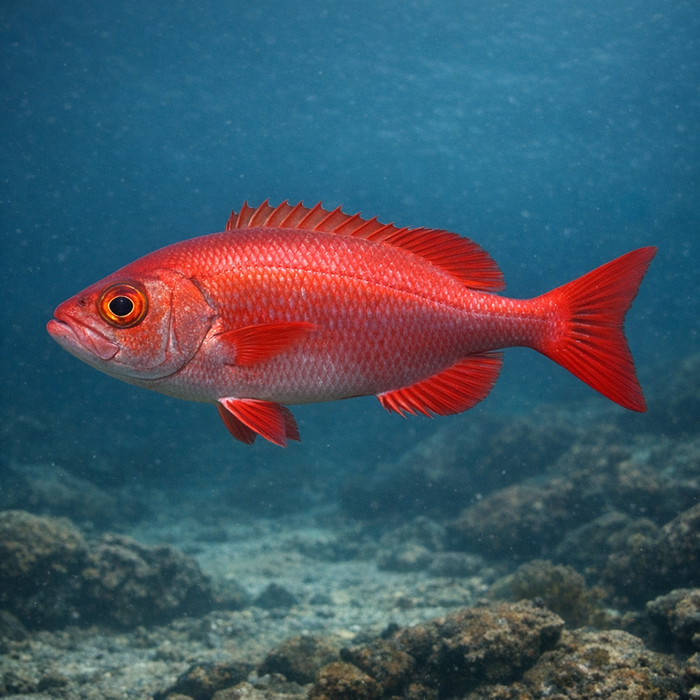
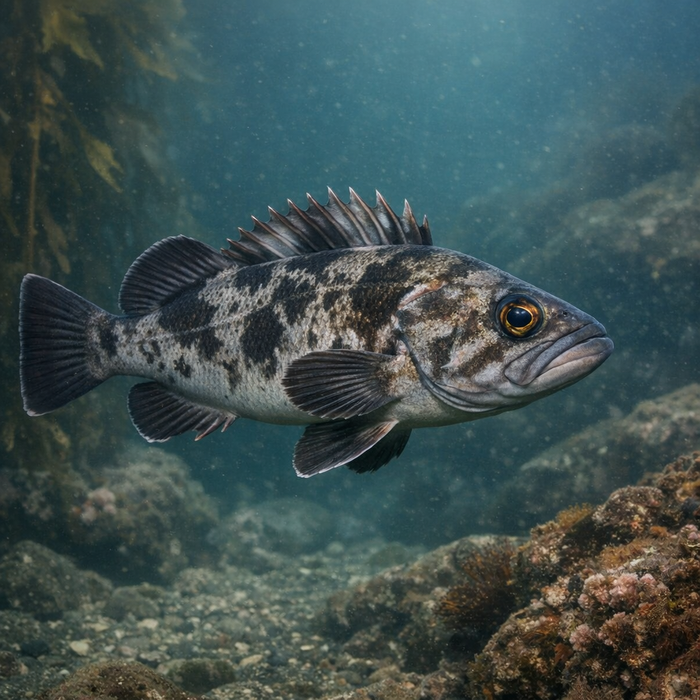
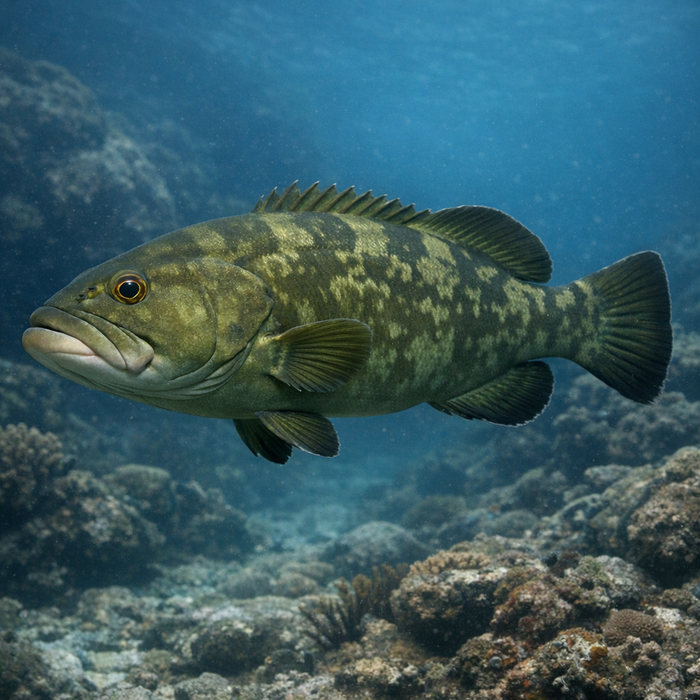
Insular Bunquelovely (Symphysanodon octoactinus): Deep-Slope Color That DisappearsIntroductionThe insular bunquelovely is the red ghost of the island drop-off, a compact deep-slope hunter that punches above its weight on a jig and vanishes in blue water as if cloaked. You won't mistake a good one: big midnight eyes, copper-red sides, and a tail built for sudden dashes along the brink. It isn't a dockside celebrity, but for anglers who chase the edge where reef meets abyss, this fish is a welcome, weirdly elegant regular. Consider this your fast-track to real insular bunquelovely facts without the textbook yawn.What Makes the Insular bunquelovely Unique?For starters, its color trick is genius. Red light barely penetrates deep water, so that flashy red body reads as jet-black below, turning the insular bunquelovely into stealth mode with zero effort. Those outsized eyes aren't for show either. Symphysanodon octoactinus runs a low-light operating system, tracking motion and shimmer where the sun fades. Finally, it's a slope specialist. Lots of fish use reefs; this one prefers the brink, hanging where current grinds over terraces, shelves, and the island wall. It's a small fish with a big sense of place.Habitat & Global RangeIf you're mapping insular bunquelovely habitat, draw a line around tropical and subtropical islands and then trace the steep parts. Outer reef slopes, shelf breaks, ledges, and drop-offs form its home lanes. Think 300 to 1,500 feet, give or take, depending on water clarity and current. It's not a continental shelf wanderer so much as an island-slope regular. That's the headline for any quick search on insular bunquelovely habitat: insular edges and deep structure are the magnets. You'll see it staged just off bottom or cruising the midlayer above live coral terraces, especially where bait stacks in a tide-swept seam.Behavior & TemperamentThe insular bunquelovely doesn't chase miles; it ambushes moments. Expect short, decisive bursts rather than long track meets. It often runs in loose packs, not tight schools, and works vertical layers depending on flow. Peak windows line up with current changes and low light. Hits on jigs feel honest and sudden, a clean thunk followed by a stubborn spiral on the way up. It's not a back-breaking fight, but at 800 feet with heavy metal, you'll notice every head shake.Ecological ImportanceCall it a mid-level predator with a deepwater address. The insular bunquelovely trims small fishes and crustaceans that ride slope currents, passing that energy to bigger reef and pelagic hunters. Its red camouflage and big eyes are textbook deep-reef solutions, forging a living link between bright coral shallows and the darker blue below. Pull on that thread and you're tugging a whole slope food web, from plankton drifts to visiting tunas.Conservation & Environmental PressuresThere's not much splashy data here. Deep-reef communities are under-sampled, and the insular bunquelovely is no exception. Still, the pressures are familiar: habitat damage from unmanaged bottom contact, warming and acidification reshuffling slope communities, and localized overharvest where deep dropping becomes the hot ticket. Barotrauma adds another layer. Even small fish may not survive quick rides to the surface if released poorly. A light footprint and smart handling go a long way in places where science is still catching up.The FishyAF TakeThe insular bunquelovely is the definition of quietly cool. It's not a trophy wall beast, it won't spool you, and it won't star in your vacation shirt. But if you're wired for edges, for currents that talk and sonar that whispers, this fish fits the obsession. It's honest on a jig, likes the same slopes that hold bigger glory, and delivers that deepwater mystery vibe in a compact, copper package. Catch one and you'll start noticing the terrace lines and bait wisps you used to motor past. That's a win in our book.