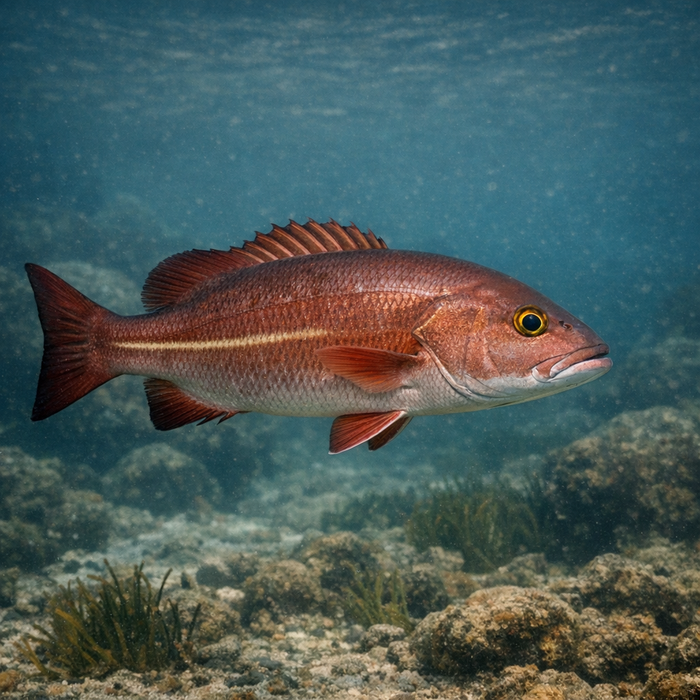
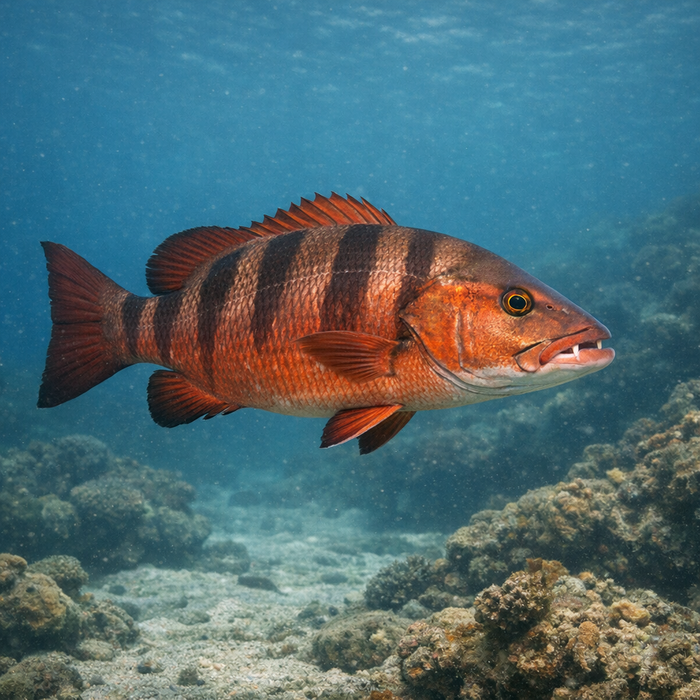
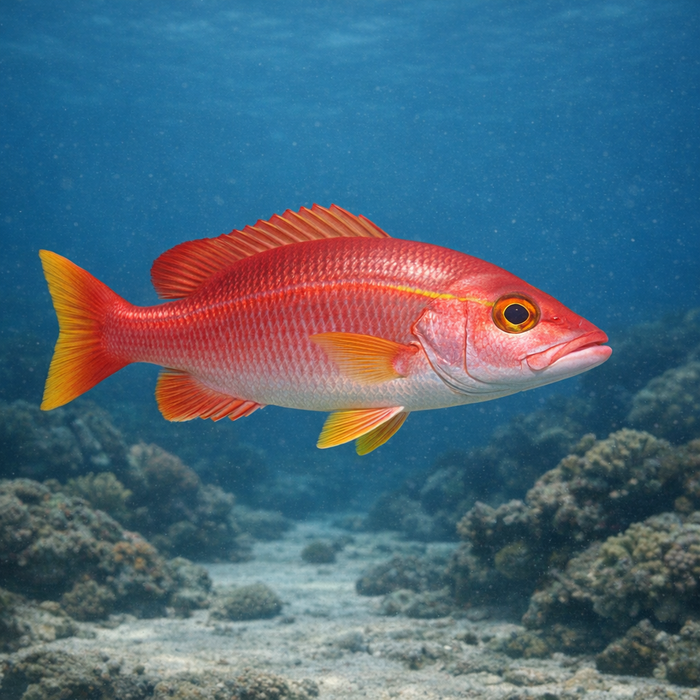
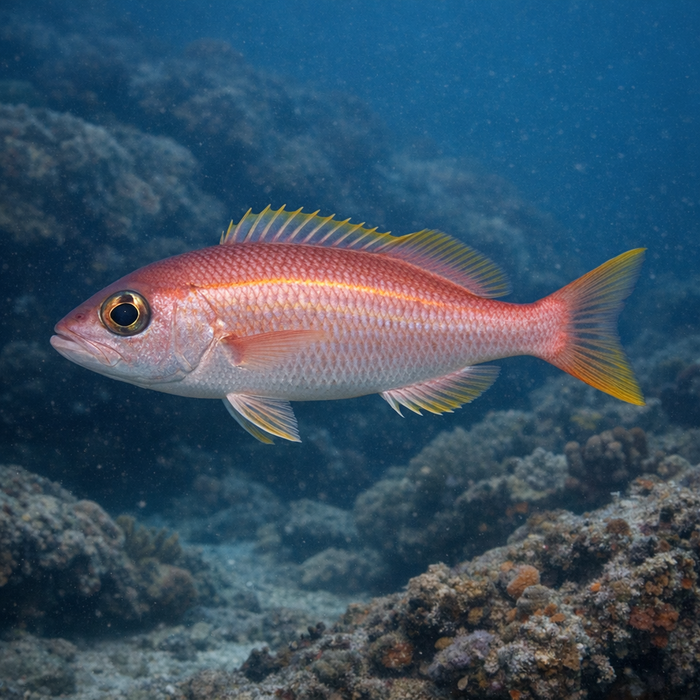
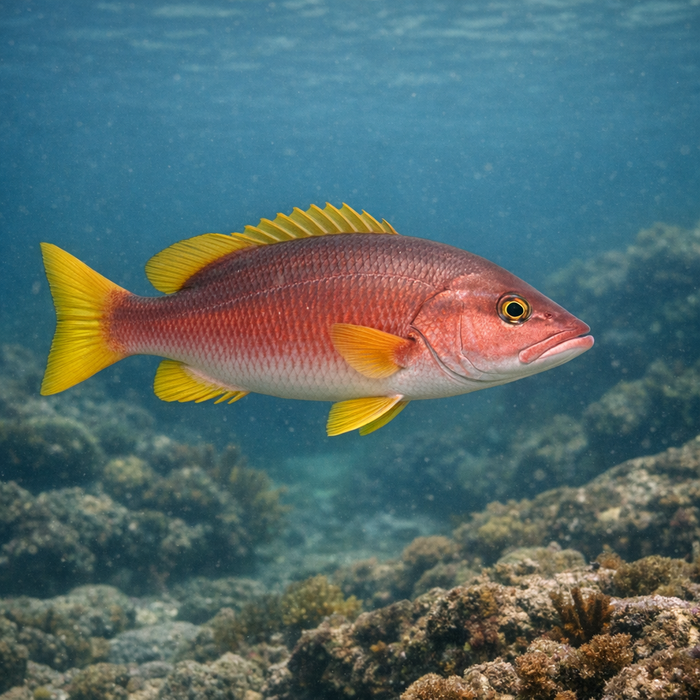
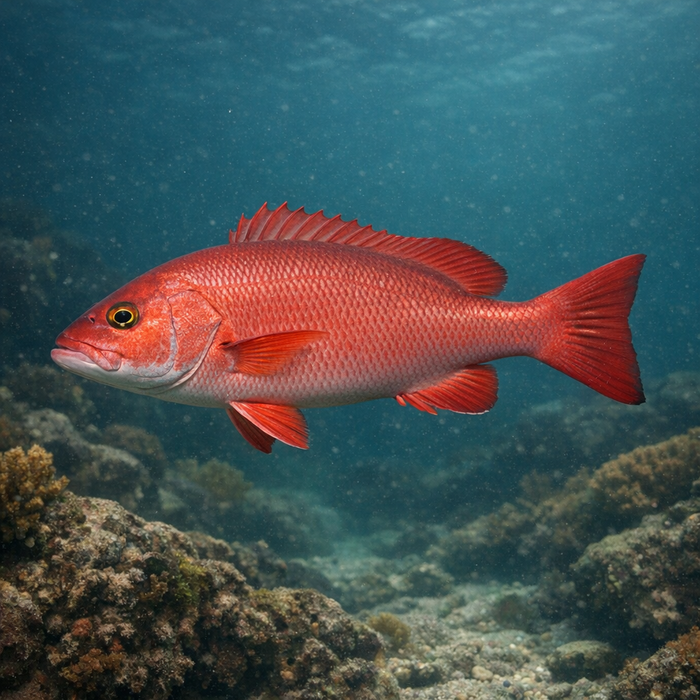
Small toothed jobfish (aphareus furca): Fork-Tailed Snapper With A Need For SpeedIntroductionThe small toothed jobfish is the snapper family's sprinter. Sleek body, jet-forked tail, and a punchy attitude that loves current. It's not the biggest lutjanid on the block, but it punishes bad knots and slow drags with blistering first runs off steep reef edges. If you're working drop-offs and pinnacles in the Indo-Pacific, this fish is the silver flash that waxes your jig midwater and tries to saw you off in five seconds flat.What Makes the Small toothed jobfish Unique?Start with the tail. That deep, crescent-shaped fork isn't decoration; it's a hydrodynamic get-out-of-jail card built for acceleration. Most snappers lean on brute torque. The small toothed jobfish blends torque with speed, darting off ledges and charging into blue water. Then there's the namesake dentistry. Compared to many snapper cousins, the teeth are relatively small, yet this fish hits like a hammer because it relies on powerful suction and a vise-like bite. Finally, its comfort zone spans bottom and midwater along steep terrain. It's a slope ghost, not just a rock-hugger.Habitat & Global RangeIf you're plotting small toothed jobfish habitat, draw a line around tropical Indo-Pacific reefs, then circle the outer edges. It thrives on drop-offs, island slopes, and pinnacles where current funnels bait. Depth-wise, think from sport-diver limits down to well past recreational free dive range; 100 to 500 feet is very fair territory. You'll contact them around the Indian Ocean atolls, Southeast Asian archipelagos, and the broader Pacific Islands, a classic map for anyone chasing deep-reef variety. When anglers ask for Small toothed jobfish habitat, we say: find flow plus relief and you're in the right neighborhood.Behavior & TemperamentThe small toothed jobfish is an ambush sprinter with roaming tendencies. It doesn't loaf on the sand; it ghost-walks along breaks, then detonates when bait stacks on the edge. Low light and strong current switch it on. Hook one and you'll feel that tail do work: quick dump to the reef, then wide arcs midwater. Singles and small packs are typical. Wariness is moderate, but noisy hardware or clumsy presentations in clear water can turn them off. Still, if a good slope is firing, they'll chew with confidence.Ecological ImportanceAs a mid- to upper-tier predator, the small toothed jobfish helps shape life on the ledge. It trims midwater bait schools, pressures reef visitors riding the currents, and shuffles energy between benthic and pelagic zones. That forked-tail lifestyle means it isn't locked to a single micro-habitat. It can boom-and-zoom between bottom and blue, tracking seasonal or daily bait movements and keeping prey honest across the slope. Healthy numbers hint at balanced current, structure, and forage.Conservation & Environmental PressuresThis species carries a broad Indo-Pacific distribution and doesn't anchor entire coastal economies the way some groupers or tunas do, which helps. Still, deep-reef species face familiar threats: localized overfishing, gear that hammers complex structure, and sporadic ciguatera concerns that influence harvest behavior. Add warming seas and shifting current patterns, and the buffet line at the ledge can get rearranged. The small toothed jobfish seems resilient overall, but it benefits from slot limits, gear selectivity, and reef-friendly practices.The FishyAF TakeIf you like clean hits and fast answers, the small toothed jobfish is your species. It's the no-drama cousin of the big gnarly reef thugs: eats decisively, brawls hard, and either wins quick or rides home in the cooler. For anglers hunting Small toothed jobfish facts, remember that tail explains everything: acceleration to the edge, acceleration off your line, acceleration back to structure. You don't need a PhD to target them, just current, contour, and something that looks alive. Simple formula, savage results. We'll take that all day.