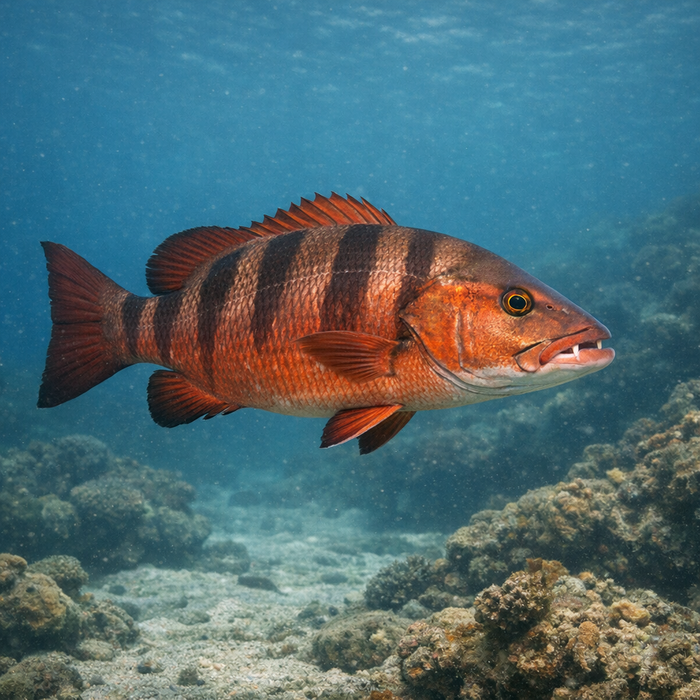
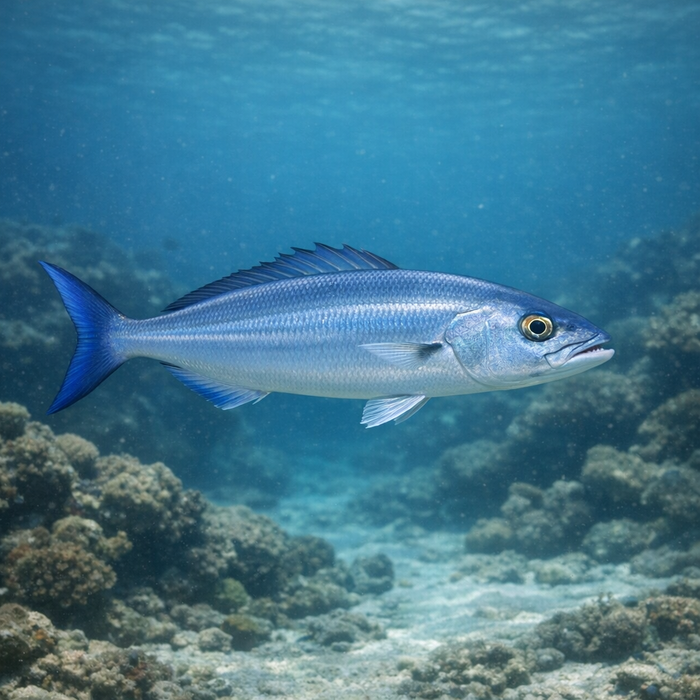
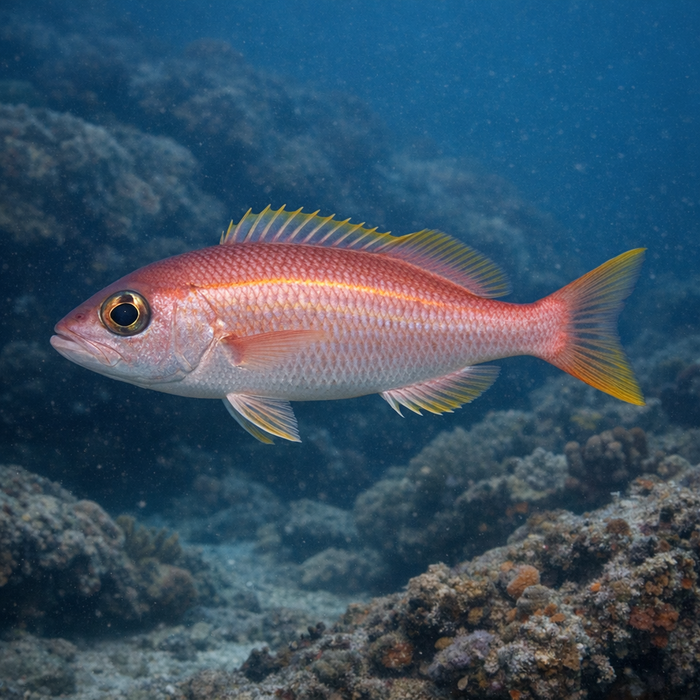
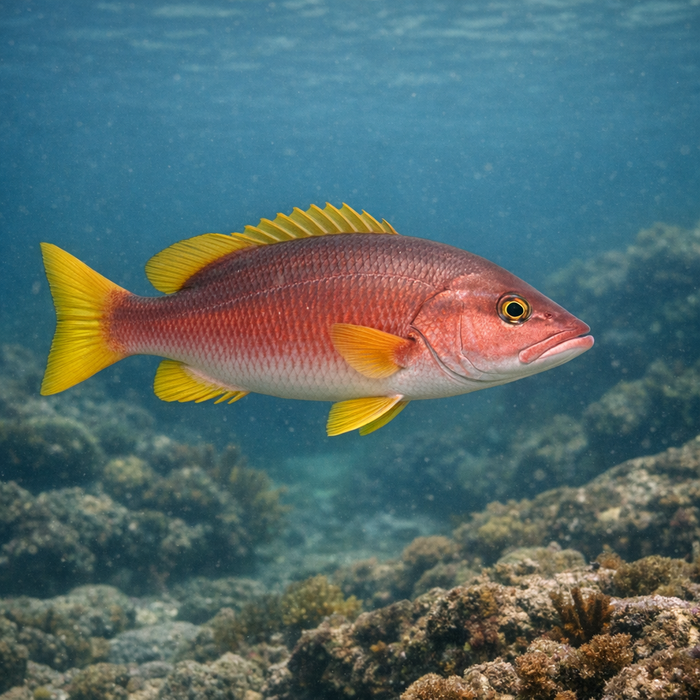
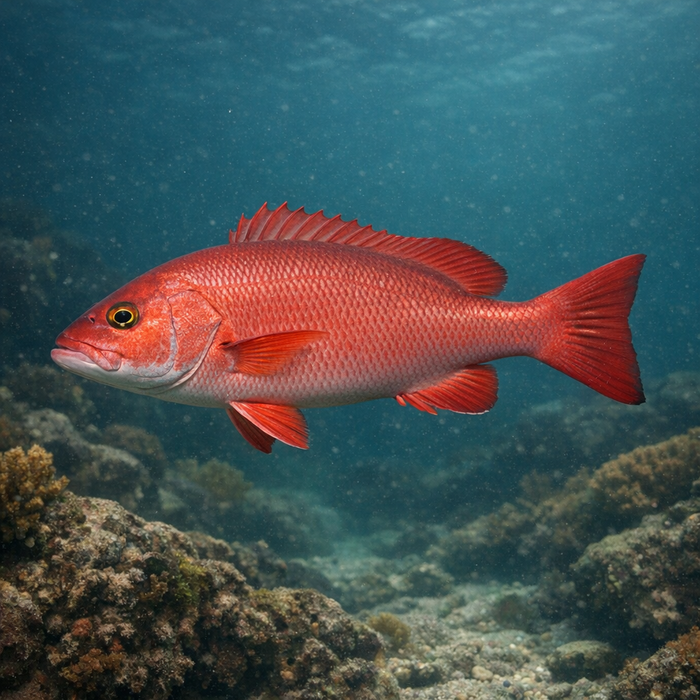
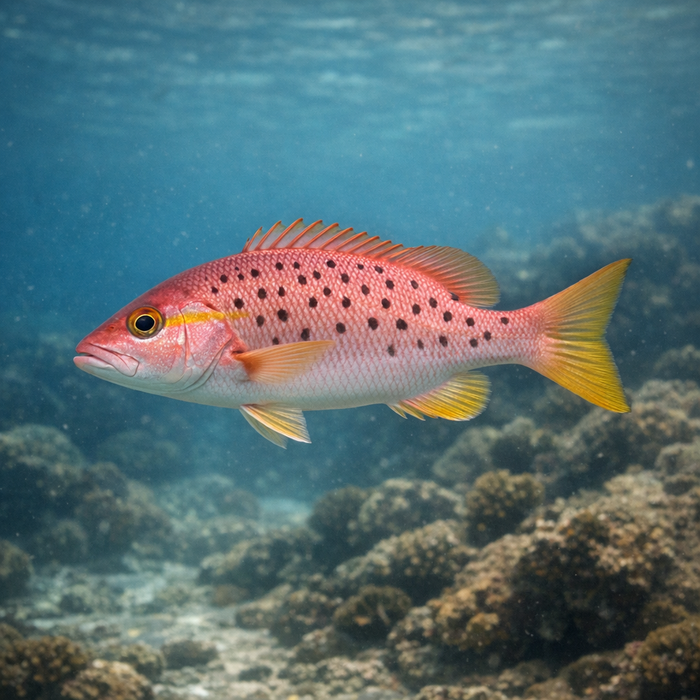
Mullet Snapper (Lutjanus aratus): Fast, Schooling Muscle With A Mean StreakIntroductionMeet the offshore snapper that doesn't play by bottom-hugger rules. The mullet snapper runs in high, tight packs over blue water edges, detonates bait balls like a jack, and still hits like the family bulldozer you expect from a snapper. Hook one near an island pinnacle and you'll learn the first commandment fast: turn its head or donate your jig.What Makes the Mullet snapper Unique?Two traits separate this fish from a pile of reef cousins. First, it's built to roam the water column. That deeply forked tail and streamlined body let mullet snapper school midwater, rush the surface, then drop back to 100 feet in a blink. Second, their color mood ring is dramatic. Fired up, they flash copper and gunmetal, then fade to steely gray after the party. That roaming, color-shifting pattern makes them feel more pelagic than typical snappers, and that's a big part of the appeal.Habitat & Global RangeThink Eastern Pacific: Mexico's southern Baja and Gulf of California down through Central America to Peru, with stars born around offshore sanctuaries like the Galápagos, Cocos, Coiba, and Malpelo. Mullet snapper habitat is classic rock-meets-current: island shelves, volcanic pinnacles, ridge lines, and sharp drop-offs brushed by moving water. They often school well off the bottom, especially where bait stacks along thermoclines or current seams. If you're scanning for structure, find the place where blue water rams into rock and you've got the theater for mullet snapper facts to unfold.Behavior & TemperamentThey're social predators with an on-off switch. One minute they ghost the sonar; the next, a storm of bronze torpedoes erupts through sardines, jigs get freight-trained, and every drag onboard starts singing. Mullet snapper can be wary in glassy conditions, but current wakes them up and compresses feeding windows. Hooked fish pull hard in horizontal bursts, then try to freight their way back to rock. Good luck prying a veteran away without stout drag and a low rod angle.Ecological ImportanceAs mid-level predators, mullet snapper shuttle energy from schooling forage to the reef community. They help keep bait populations pulsing and responsive, shaping when and where other predators feed. Around remote islands, their schooling often overlaps with sharks and trevally, creating stacked food webs where timing matters. Keep the current and the bait right, and everything lights up together.Conservation & Environmental PressuresThis species supports regional food fisheries and catches tourist pressure near island hotspots. The big risk isn't that they're fragile; it's that aggregating, midwater behavior makes them easy to target when conditions align. Local protections matter. Marine reserves like Cocos, Coiba, and Galápagos create safe zones where larger age classes persist. Outside protected areas, mixed-gear pressure and reef degradation can thin out quality fish over time. Responsible harvest and release practices keep those roving schools healthy.The FishyAF TakeThe mullet snapper is a rule-breaker in snapper clothing. Treat it like a reef donkey and you'll miss half the show. It's a current junkie, a midwater sprinter, and a structure bully. Bring jigs and live baits, watch the water move, and be ready for violent, brief windows. When it's on, it's outrageous. When it's off, keep scanning edges and trust the ocean's conveyor belt. For anglers chasing something that blurs the line between reef and pelagic, this fish is pure trouble in the best possible way.