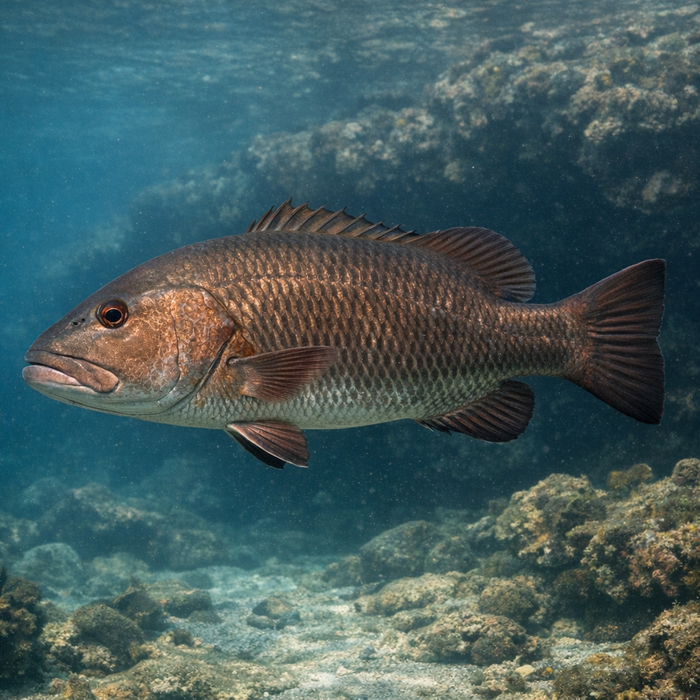
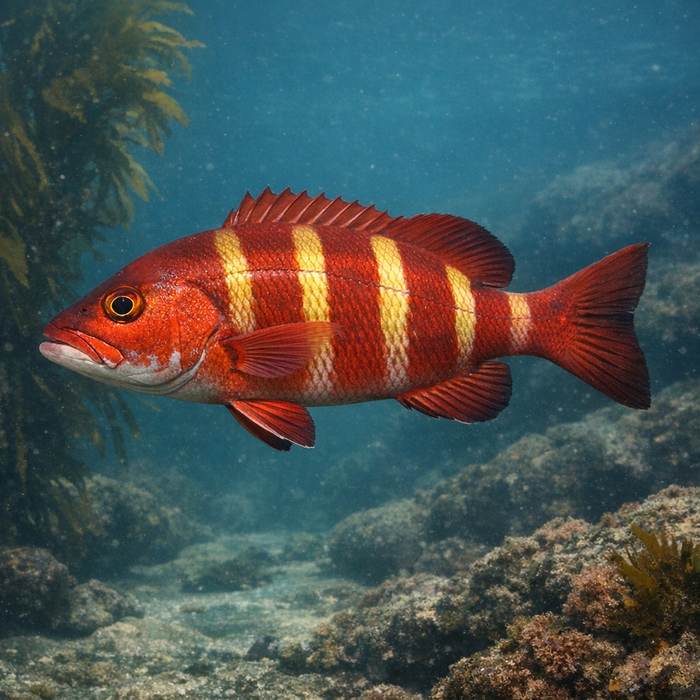
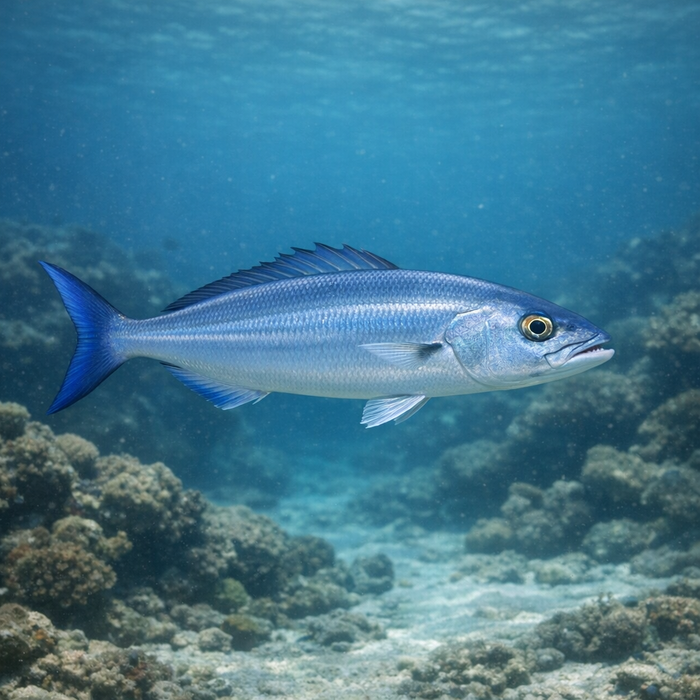
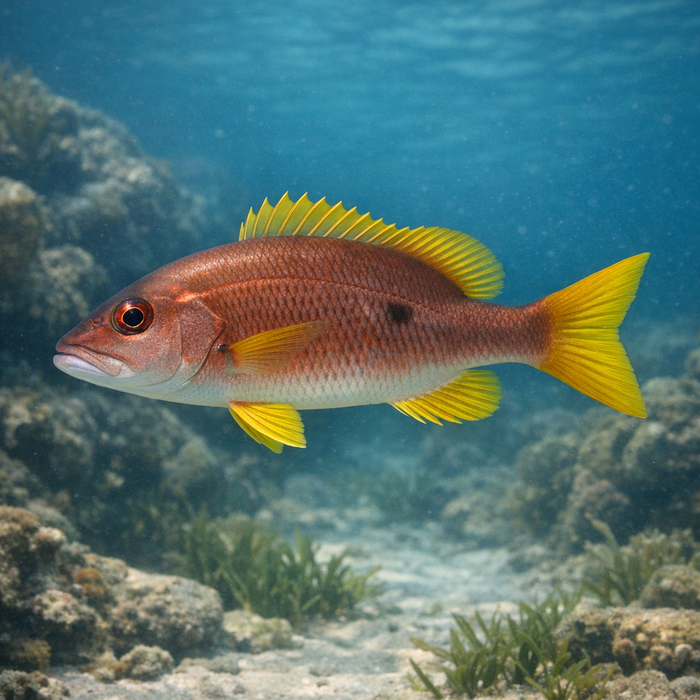
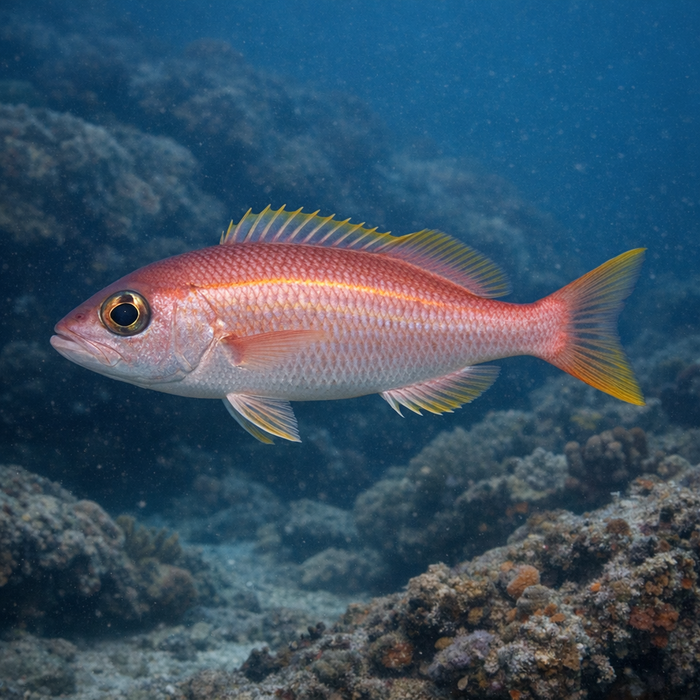
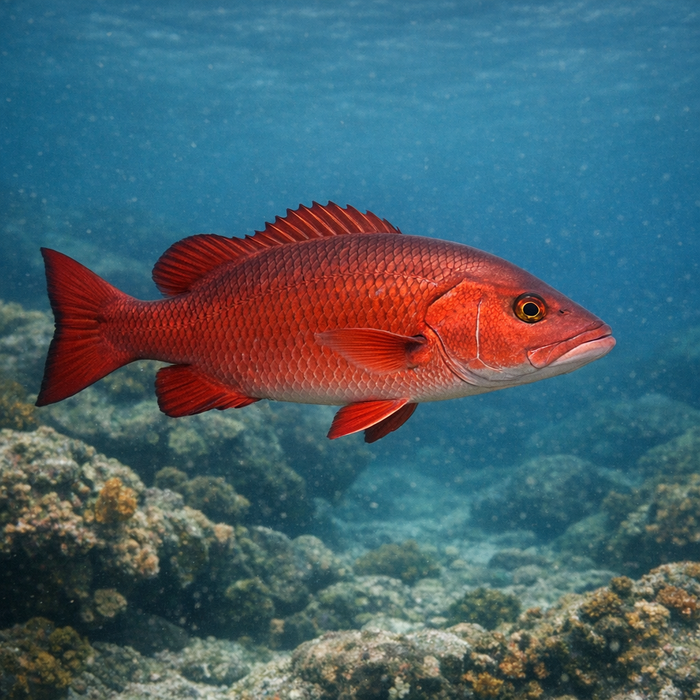
Silk Snapper (Lutjanus vivanus): Deep-Color Bruiser From The LedgeIntroductionIf you like your fish hard-hitting, neon-eyed, and straight out of the abyss, the silk snapper is your kind of trouble. This deep-reef specialist packs a mean headshake and a reputation for showing up where daylight and bottom meet. It's the red you hunt when your drop rig carries a bowling ball instead of a sinker, and when "one more drift" usually means one more sore arm. Welcome to real-deal silk snapper habitat.What Makes the Silk snapper Unique?Two traits jump out: the eyes and the sheen. That bright yellow iris isn't there for looks; it's tuned for low light, helping the fish track bait hundreds of feet down. Then there's the namesake "silky" appearance. Ultra-fine, overlapping scales catch light in a way that gives the fish a satin, almost brushed-metal finish. Add a sleeker profile than hulking reef cousins and you've got a snapper built for midwater ambushes and quick returns to the ledge. Many anglers first meet the silk snapper when a "red snapper" from the deep turns out to be leaner, with gold eyes staring back.Habitat & Global RangeThe silk snapper works the western Atlantic's edge game: the continental shelf break, steep coral slopes, rocky ledges, and the flanks of big blue holes. Think 200 to 700 feet for consistent action, with fish holding near bottom or suspending 20 to 60 feet up in the water column when bait pushes off structure. You'll meet them from the Southeast and Gulf Coast to the Bahamas, the broader Caribbean, and down toward northern South America. Wrecks and rugged live-bottom get attention, but classic natural ledges are the bread and butter. Current is part of the program here; where the edge funnels life, silk snapper stack. File this under Silk snapper facts: they love the lane where structure and flow do business.Behavior & TemperamentSilk snapper operate in schools, sometimes tight, sometimes smeared across a contour line like a crimson weather front. They're confident biters when baits hover just off the bottom and will absolutely climb to meet a glowing jig that hangs in place during a good drift. Expect authoritative thumps, a few savage headshakes, and a determined, piston-like pull rather than long blistering runs. They'll roam to intercept bait clouds in the midwater, then drop to the ledge to reset. Windows spike around current changes and during soft light, though deep-water fish will feed all day if the conditions are tidy.Ecological ImportanceA mid-level predator in deep-reef systems, the silk snapper helps regulate small fishes and squid that cycle across reef edges. In turn, larger groupers and pelagics sip from silk snapper schools whenever they make a misstep. Their tendency to school over reliable structure makes them a key connector between benthic and pelagic energy, shuttling calories up and down the slope. For coastal communities, they're also part of a culturally important deep-reef catch that includes queen and vermilion snapper, supporting small-boat fisheries across the region.Conservation & Environmental PressuresSilk snapper aren't fragile flowers, but they do live relatively long and grow steadily rather than explosively. That means localized overfishing can bite hard. As electric reels and braided line brought deep-dropping into more cockpits, pressure increased over specific ledges and banks. Add barotrauma from rapid ascents and you've got a species that benefits from smart handling and selective harvest. They're generally listed as Least Concern, but management varies by country and even by island. Habitat damage from heavy gear, plus occasional ciguatera concerns in some areas, add wrinkles. Descending devices, circle hooks, and disciplined bag choices go a long way toward keeping the edge healthy.The FishyAF TakeThe silk snapper is the red that makes you earn it. It's not complicated, just honest: find the edge, line up the drift, keep your bait riding clean, and brace for that deep thud. You want a fish that looks like royalty on ice and tastes like it paid extra for flavor? This is it. Among Silk snapper facts worth remembering: if your rig spins or drags, they'll snub you. Keep it straight, keep it tight, and the silk snapper will make your day feel like you discovered a new shade of red at 500 feet.