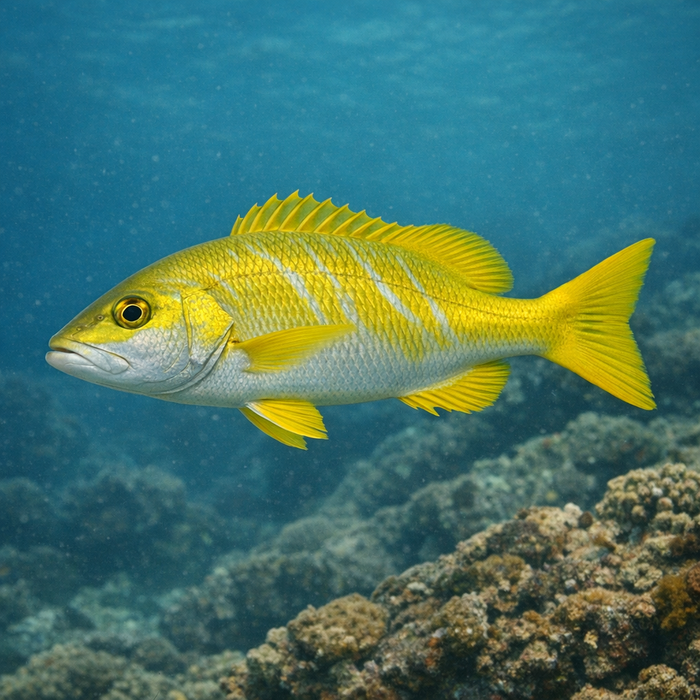
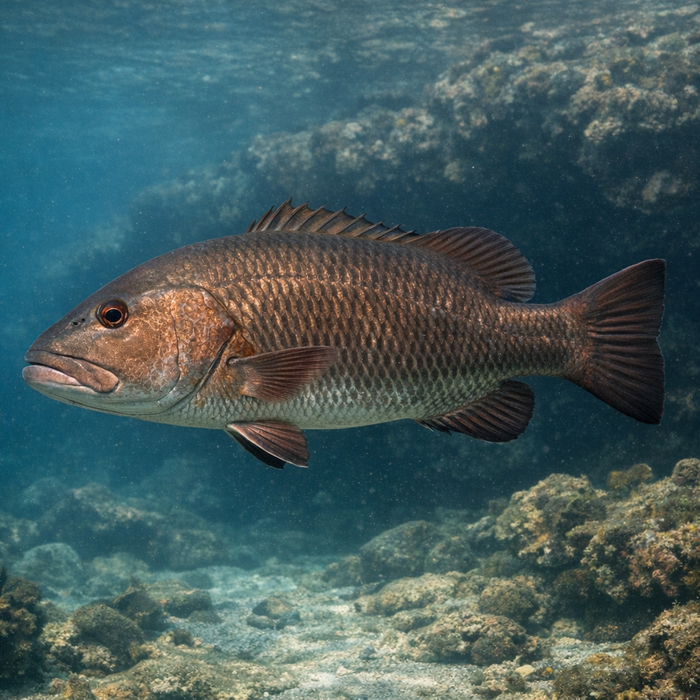
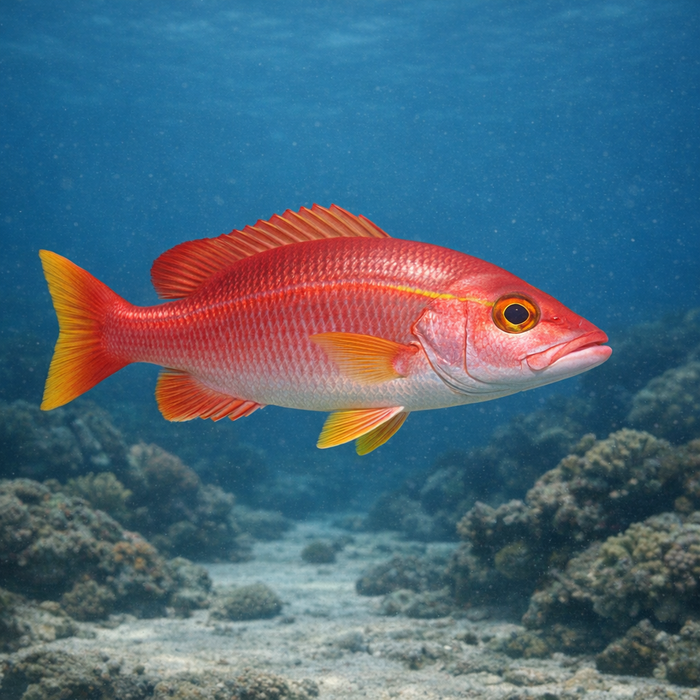
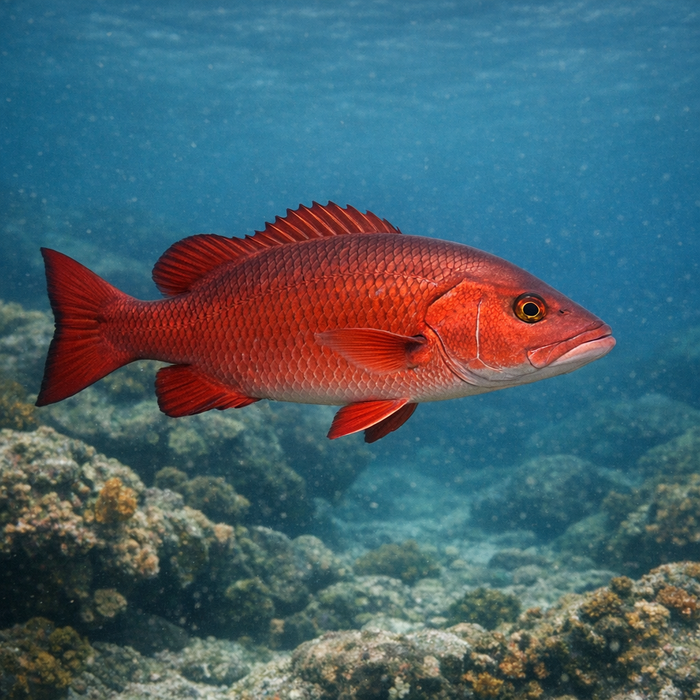
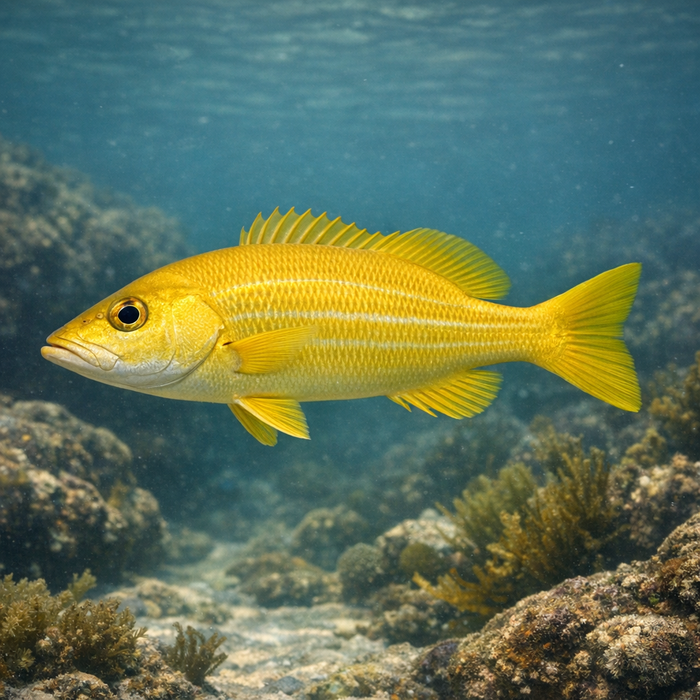
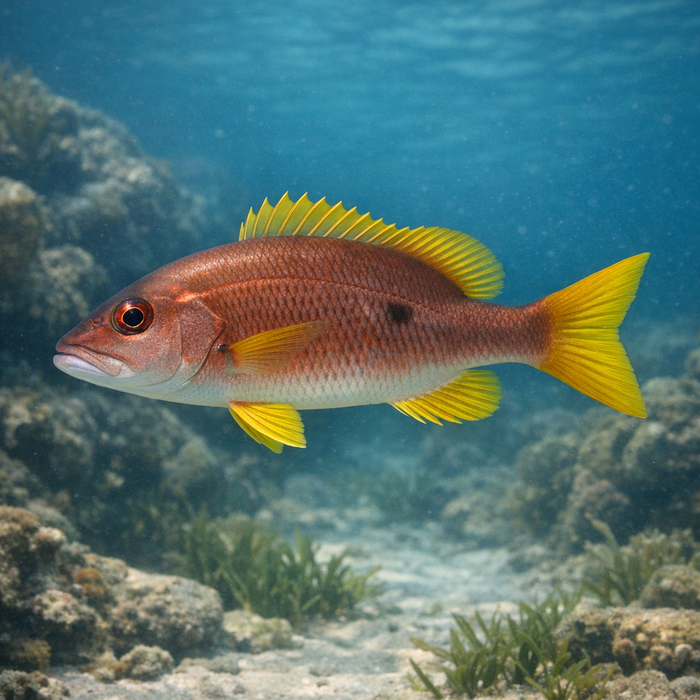
Mexican barred snapper (hoplopagrus guentherii): Surf-crashing ambusher with bars, fangs, and a bulldozer attitudeIntroductionThe Mexican barred snapper is the reef thug you swear you hooked and then instantly lost to the rocks. Heavy bars, heavier shoulders, and canine teeth meant for cracking and tearing, it hunts where the ocean gets loud: surge channels, cave mouths, and frothy headlands. If you like quiet, glassy flats, this isn't your fish. If you like whitewater, barnacles, and busted leaders, welcome to the clubhouse.What Makes the Mexican barred snapper Unique?Two things jump out. First, it's a one-species show: Hoplopagrus guentherii stands alone in its genus. That's rare, and it hints at a very specific evolutionary lane. Second, this snapper's build and behavior lean more "reef-brawler" than polite ambusher. Thick body, stout spines, and those long canines visible even with the mouth closed. It's tuned for tight quarters, quick bursts, and hard leverage against current. The bars aren't just style points either; juveniles wear sharp zebra stripes that fade and bronze with age, a visual trick that breaks up their outline around rocks and caves.Habitat & Global RangeWhen anglers talk Mexican barred snapper habitat, they mean rock. Picture knuckled lava shelves, boulder gardens, cliff bases, and reef ledges swept by waves. The species ranges along the tropical Eastern Pacific, from the southern Gulf of California down through Central America and into South America, with solid showings around offshore islands like the Galápagos and other Eastern Tropical Pacific hotspots. Depth-wise, think shallow to moderate: anywhere from surf-zone pockets down to mid-reef ledges. Daytime fish tend to pin themselves to structure, often deep in holes. At dusk and into the night they push out and patrol the whitewater margins.Behavior & TemperamentThis fish is cautious and mean at the same time. Cautious in that it won't tolerate sloppy presentations when the sun's high and the water's clear. Mean in that, once it decides to eat, it trucks straight back into the nearest crack like it's late for work. Most action sparks during low light: dawn, dusk, or full night. Surge seems to flip a switch; moving water knocks prey loose and covers the snapper's approach. They're not pelagic roamers, nor are they schooling types. A few quality fish may share a complex of caves, but they're structure-anchored homebodies.Ecological ImportanceThe Mexican barred snapper is a mid-to-upper reef predator, keeping smaller fishes, cephalopods, and crustaceans in check. That predation pressure shapes who hides where and when on crowded reefs. Their preference for caves and ledges also makes them part of that cryptic, crevice-dweller community: think moray eels, lobsters, and nocturnal crabs. Where the surge pounds hardest, this snapper converts wave energy into calories, pulsing between shelter and ambush lanes as conditions change.Conservation & Environmental PressuresAs a regional specialty, it's not a global headliner, but it does face the usual reef problems: localized overfishing, habitat degradation, and warming-driven shifts in prey and oxygen. Because Mexican barred snapper favor inshore rock and island reefs, they run into spearfishing and artisanal netting more than offshore fleets. Protected areas around islands help, but the fish's cave-hugging lifestyle means even small amounts of direct pressure can push the bigger models deeper or nocturnal-only.The FishyAF TakeThe Mexican barred snapper is the East Pacific's no-nonsense heavy. If your idea of fun is testing knots against lava and praying the fish turns before your leader melts, this is your species. If you want something polite and photogenic at noon, keep walking. File this under Mexican barred snapper facts: it's monotypic, it's nasty strong in short bursts, and it loves real estate with teeth. Respect that, fish smart in the surge, and you'll earn one of the region's most satisfying reef checks. You wanted a fight; here it is.