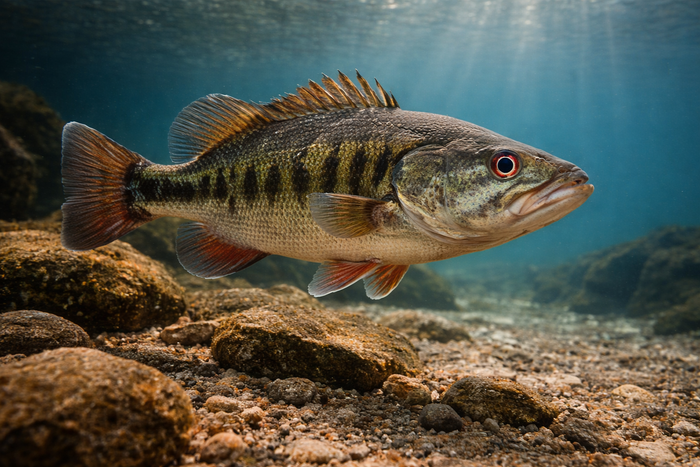
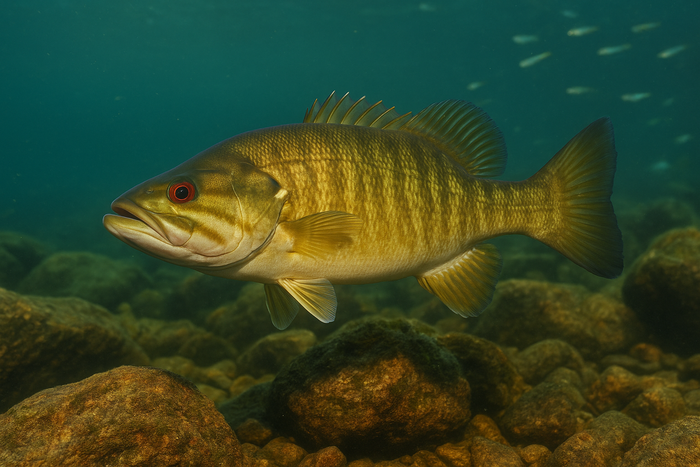
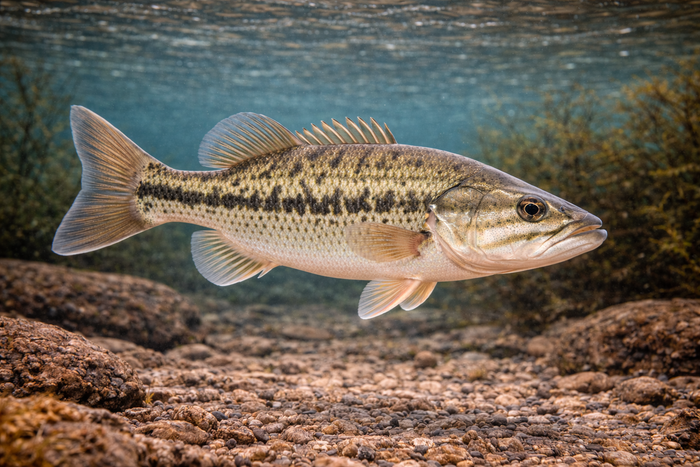
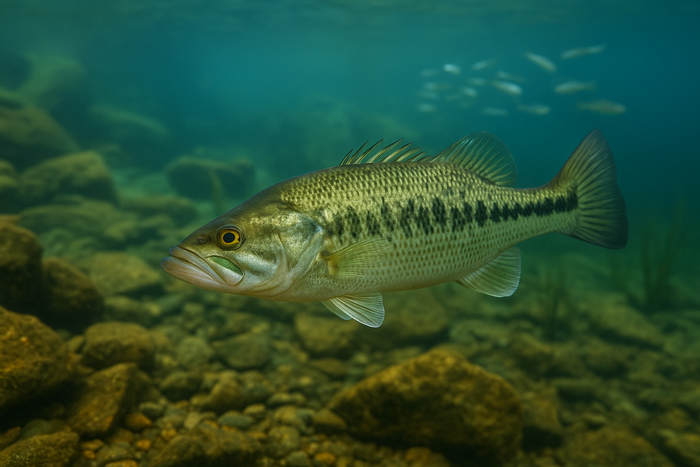
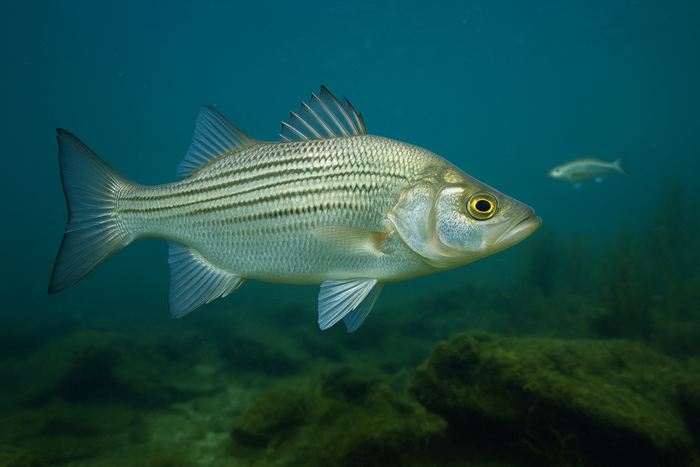
Australian Bass (Percalates novemaculeatus): Small Water, Hard Hits, and a Mandatory Trip to Salt
A shaded bank, a half-submerged branch, and one accurate cast: Australian Bass fishing can make a very small patch of water feel enormous. These native predators bring aggressive strikes and vigorous fights to eastern Australia's rivers and stocked lakes. They are not giant fish, but that hardly matters when the cover is close and your margin for error is measured in inches. This is light-tackle fishing with consequences, not simply casting until something happens.
The familiar catch is roughly 30–40 centimetres long, with many fish around a kilogram. Bigger specimens exist, particularly in productive impoundments, but size alone misses the attraction. The combination of intimate water, precise presentation, and a strong fish makes this species worth learning properly.
What Makes the Australian Bass Unique?
First, Australian Bass live mainly in freshwater but move downstream into brackish estuaries to reproduce. Biologists call this catadromy. Anglers can call it the reason a healthy river needs more than a collection of attractive pools. Adults require access to spawning water, and young fish subsequently move into freshwater habitat. A barrier between those places can interrupt the whole arrangement.
Second, these fish can be remarkably long-lived. Research has recorded individuals reaching 47 years, making a modest-looking bass potentially older than the person holding it. That changes the meaning of a good fish: you may be looking at decades of survival, not merely a successful season of feeding.
Third, females grow larger than males. The sexes also use river systems differently, with females more commonly occupying upstream freshwater reaches and males tending to remain lower down. The river does not distribute its fish evenly, and understanding that is more useful than treating every pool as interchangeable.
Habitat & Global Range
Natural Australian Bass habitat lies in eastern Australia's coastal drainages, extending from southern Queensland through New South Wales into eastern Victoria. Rivers, streams, lakes, floodplain waters, and estuaries all feature in their life history. Stocking has also established important recreational fisheries in impoundments, expanding the places where anglers can encounter them. This is an Australian native, not an American black bass wearing a different postcode.
In rivers, look at the habitat before admiring the scenery. Overhanging vegetation, fallen timber, aquatic plants, and rocky pools provide useful shelter. In lakes, weed beds, points, standing timber, and deeper structure can all hold fish. Winter impoundment schools may occupy deeper water around old river channels and drop-offs. There is no universal productive depth; season and the particular water matter.
Behavior & Temperament
Australian Bass are general-purpose carnivores rather than specialists with one permanently preferred meal. Fish, crustaceans, and insects feature in their diet, and freshwater individuals also take insects falling onto the surface. That makes a surface imitation biologically sensible, not just a lure designed to entertain the person retrieving it.
Low-light periods are particularly useful fishing windows. Warm-season dawn and dusk sessions can bring fish into shallower lake margins, while cooler conditions often shift the search deeper. On the line, their strength makes balanced tackle worthwhile. Accurate casting and controlled pressure matter more than arriving with the largest lure collection in the car park.
Ecological Importance
As predators, Australian Bass connect several food sources within river and estuary food webs. They consume aquatic animals and terrestrial insects entering the water, while their migratory life history connects freshwater reaches with estuarine nursery and spawning habitat. Protecting the species therefore means protecting linked environments, not only whichever stretch happens to produce the best fishing photographs.
Successful recruitment is not necessarily an annual certainty. Research in southern populations has linked strong year classes with suitable high flows and spring temperatures. A river containing adult fish can still be struggling to produce replacements. That is an uncomfortable but important distinction: today's catch does not automatically prove tomorrow's population is secure.
Conservation & Environmental Pressures
The species is assessed as Least Concern, but local populations face real pressures. Dams and weirs can restrict access to habitat, while river regulation can interfere with spawning cues. Research in southern systems also identifies risks associated with declining rainfall, warming conditions, and insufficient suitable flows. A broad conservation category is not permission to ignore a damaged catchment.
Stocked fisheries offer valuable angling opportunities, but they do not replace functioning wild rivers. Respect spawning protections, verify local rules, and minimise handling when releasing fish. Deep hooking and capture from deep water create additional release concerns, so your responsibility starts before the fish reaches the net.
The FishyAF Take
Australian Bass deserve better than being judged against bigger fish. They turn accurate casts, good timing, and thoughtful tackle into memorable fishing. The best part is not proving you own the right equipment; it is putting a presentation where it belongs and dealing with what happens next.
Keep the ego small, respect the river, and let the fish supply the attitude. A bass does not need trophy dimensions to make your afternoon.