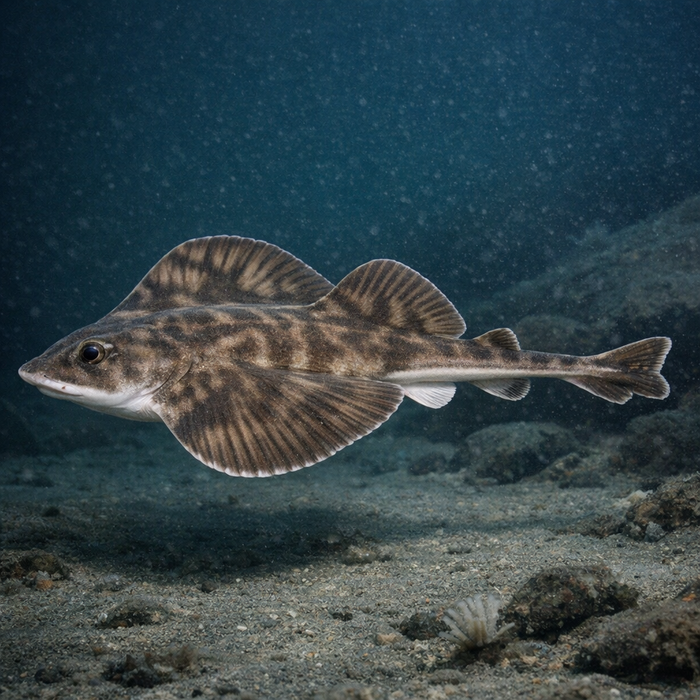
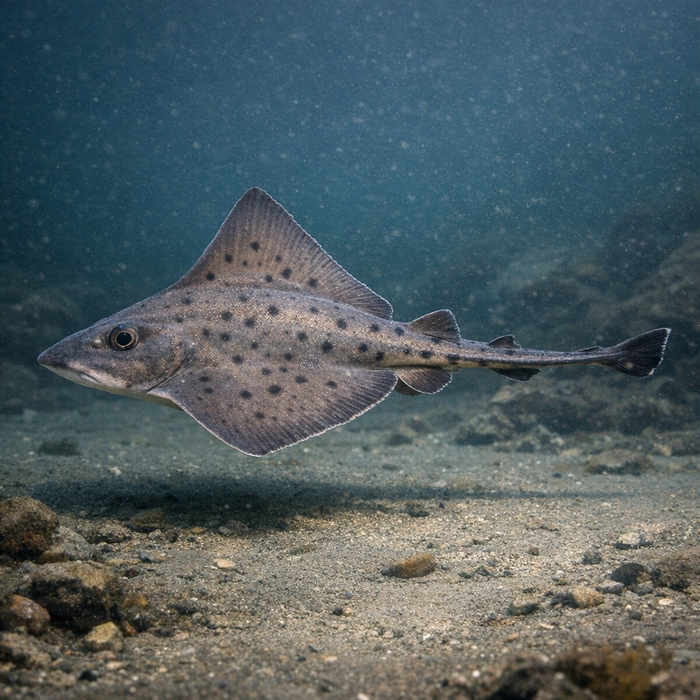
Barbedwire-tailed skate (Notoraja martinezi): A Bold, Memorable Hook LineIntroductionThe barbedwire-tailed skate looks like someone welded thorns onto a flying doormat and dropped it on the continental slope. This is a deepwater specialist that lives where sunlight is gossip and mud rules. For anglers who push offshore and send baits down the elevator shaft, the barbedwire-tailed skate is a prickly surprise: armored tail, sandpaper back, mysterious habits, and a vibe that screams handle with care.What Makes the Barbedwire-tailed skate Unique?First, that tail. In low light, the alternating thorn rows trace a jagged pattern that honestly resembles rusty barbed wire. It isn't decoration. Those thorns deter anything foolish enough to mouth the business end. Second, as a softnose skate, its rostrum is more flexible than the rigid snouts you see on many shallow-water relatives. That subtle bend pairs with a dense field of electroreceptors, helping the barbedwire-tailed skate vacuum up clues from the seafloor. Third, the overall package is compact and tough. You won't mistake it for a manta; this is a slope crawler built to endure pressure, silt, and long quiet hours on bottom.Habitat & Global RangeWhen anglers talk Barbedwire-tailed skate habitat, they're talking edge country. Think outer shelf breaks and the upper-to-mid continental slope, where soft sediments and scattered rubble hold invertebrates. We're in serious depth: hundreds to a few thousand feet, depending on the region and currents. The light is weak, the temperatures are stable, and oxygen can be patchy. That combination shapes everything it does. The species isn't a coastal pier catch; you meet it via long drops and heavy sinkers, often beyond day-boat range unless the slope is close to shore.Behavior & TemperamentThe barbedwire-tailed skate plays the stealth game. It buries, waits, and ambushes. Spiracles behind the eyes pump water while the mouth hovers over the menu: crustaceans, small benthic fishes, and whatever tasty critters wander into range. It won't blitz a bait like a tuna. Expect tentative taps and weight rather than fireworks. Once pinned, it doggedly hugs the bottom and rides the lift upward, occasionally shaking those tail thorns like a medieval mace. Solitary by nature, it doesn't pack into big schools, but where the mud and current are right, you might pick off a few in a zone.Ecological ImportanceSkates like Notoraja martinezi stitch together deep-slope food webs. They pressure-check populations of crustaceans and small fishes, while serving as prey for large sharks and other apex denizens. Their egg cases, those tough little mermaid's purses with horned tips, help anchor the next generation in sediments that shift more than you'd think. They're part predator, part nutrient recycler, and full-time resident of a frontier most anglers never see.Conservation & Environmental PressuresDeepwater species benefit from distance, but not immunity. Bottom trawls and longlines working the slope can tangle this skate as bycatch. Because documentation is sparse and lookalikes exist, it's easy for data on the barbedwire-tailed skate to get lumped into generic skate categories. If managers can't separate species, protection gets fuzzy. Add in slow growth typical of deep dwellers and you've got a fish that deserves a light touch. Smart handling, quick releases when not being kept legally, and simple onboard photos can make a difference for both science and sustainability.The FishyAF TakeThe barbedwire-tailed skate is a quiet trophy. Not big, not flashy, but undeniably cool. It's a fish that rewards patience, planning, and a weird sense of humor about reeling up a living manhole cover from the abyss. If you're collecting slope species or just love deepwater curveballs, this one delivers. Pack squid strips, a tough leader, and a plan for the spines. Snap a clean ID shot, whisper a thank-you to the dark, and send it sliding home. File this under Barbedwire-tailed skate facts you actually care about: it's thorny, stubborn, and absolutely worth the drop.