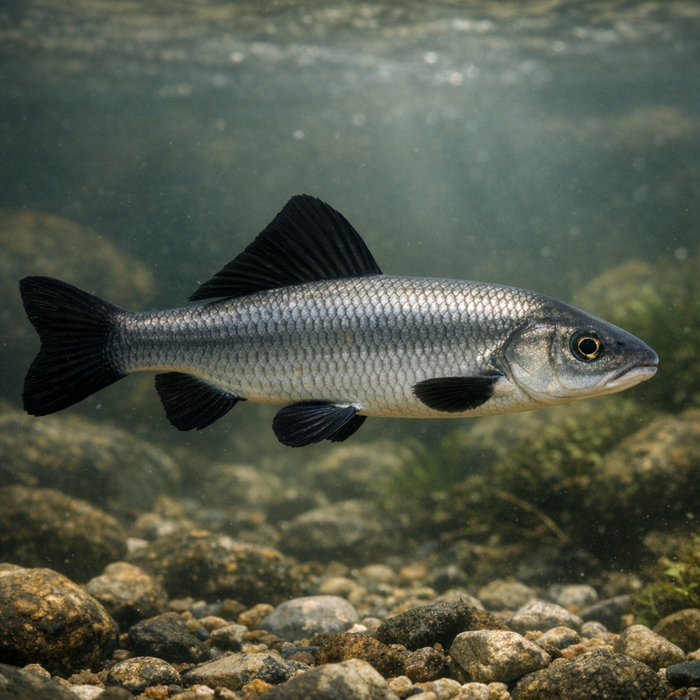
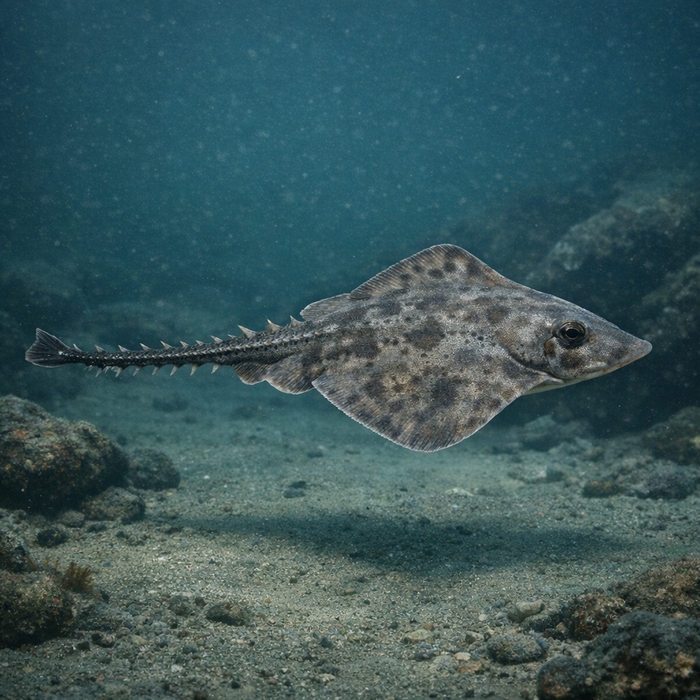
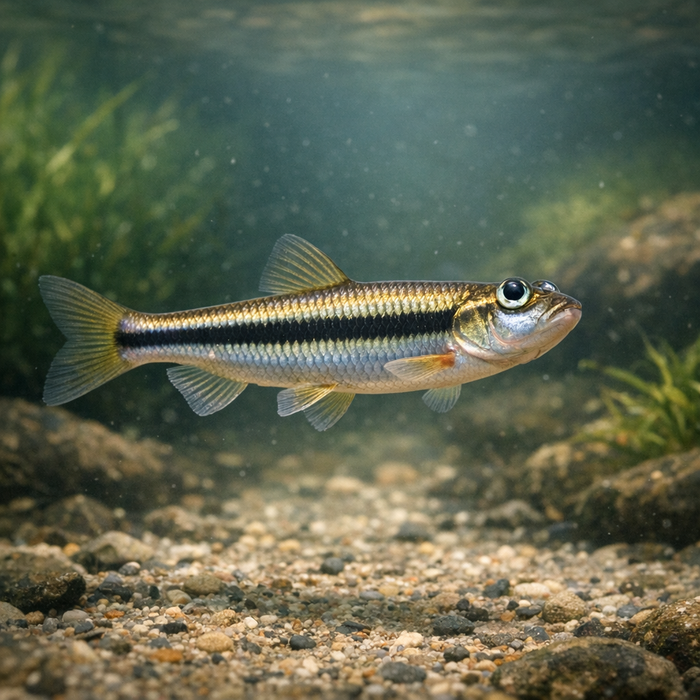
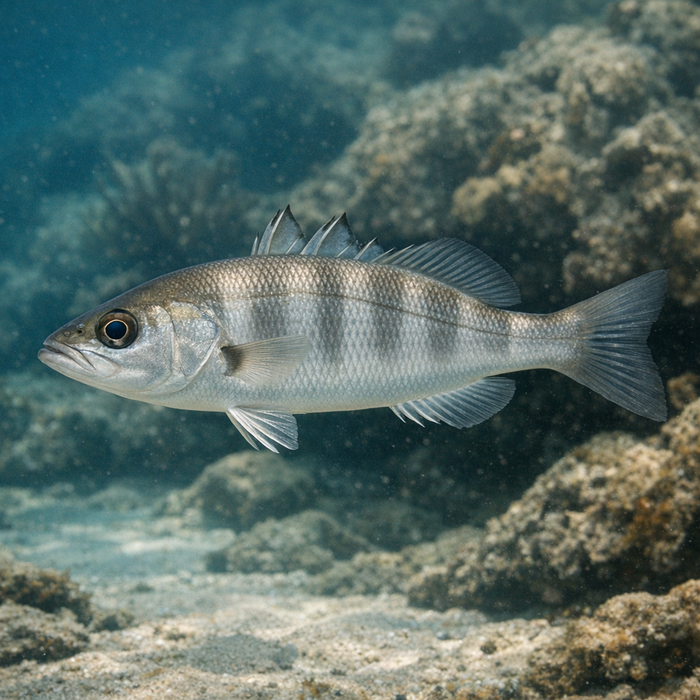
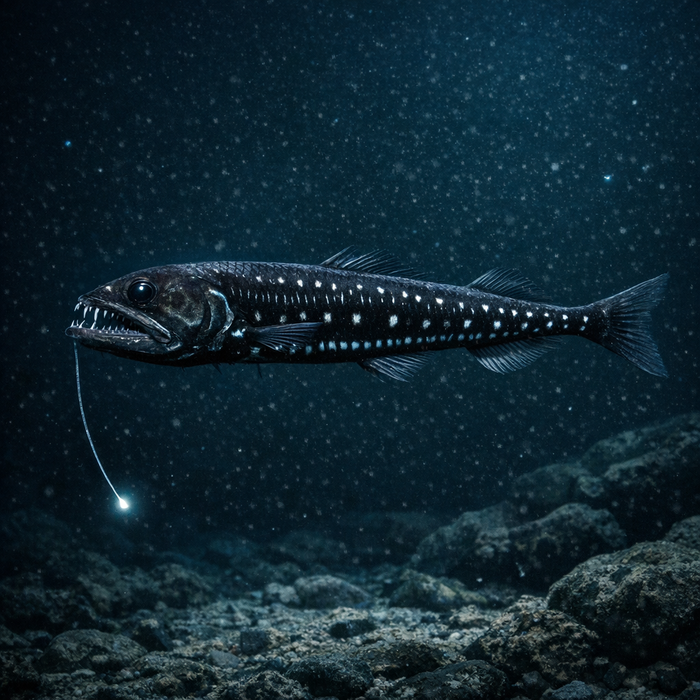
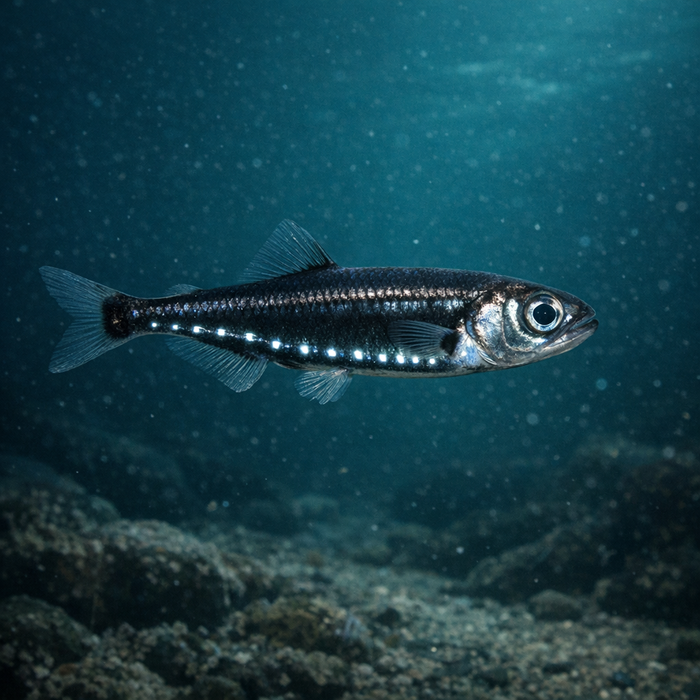
Pacific Blackchin (Scopelengys tristis): A Bold, Memorable Hook LineIntroductionThe Pacific blackchin is the oddball you meet 800 feet down who shows up uninvited to your swordfish party. Slender, big-eyed, and all business, this mesopelagic hunter rides the elevator of the deep scattering layer and smashes tiny fish and squid in the dark. If you fish canyons and seamounts long enough, a Pacific blackchin will eventually thwack your deep-drop rig and make you ask, what on earth is this thing? Welcome to the twilight zone. If you came here hunting Pacific blackchin facts or want a quick feel for Pacific blackchin habitat, you're in the right place.What Makes the Pacific blackchin Unique?Start with the namesake chin. That inky patch under the lower jaw is signature, a stealth upgrade against the faint glow trickling from above. The eyes are oversized and built for gathering scraps of light, with reflective layers that give them an otherworldly gleam in a headlamp beam. The body is long and blade-thin, teeth like needles folding inward to hang onto slippery midwater prey. The Pacific blackchin isn't big, but everything about it is optimized for the dim, high-pressure world between sun and abyss.Habitat & Global RangeThis fish is a mesopelagic specialist, haunting the blue desert well off the continental shelf. The classic Pacific blackchin habitat includes canyon rims, slope breaks, offshore banks, and the water masses surrounding seamounts and island drop-offs. It layers up where bait stacks: along thermoclines, around the deep scattering layer, and near convergences where currents squeeze life together. It's a Pacific creature, and your realistic encounters come off the West Coast, Alaska's outer reaches, and Hawaii's steep bluewater edges. Boat required, patience mandatory.Behavior & TemperamentThe Pacific blackchin is not spooky in the trout-stream sense. It is opportunistic, tuned to vibration, flash, and the chaos of migrating bait. Nights are prime as the whole midwater food web rises toward shallower darkness. These fish are roamers more than structure huggers, loosely aggregating around bait columns. Hook one and it won't peel 200 yards of drag; the fight is more fluttering resistance than fireworks. The challenge isn't brawl, it's contact: getting your gear in the right band of water at the right time.Ecological ImportanceThink of the Pacific blackchin as the courier between small plankton-eaters and apex predators. It chews on bite-sized midwater life and then becomes bite-sized for tunas, billfish, and deep-diving sharks. That handoff is crucial. Its migrations help move energy vertically through the water column, connecting surface productivity with the deep. It's not famous, but it's a necessary cog in an enormous, pulsing machine.Conservation & Environmental PressuresThere's no red-carpet conservation storyline here, which is part of the problem. Deepwater species like the Pacific blackchin fly under the radar. They're seldom targeted, but they do show up in bycatch and research nets, and they are affected by big-picture shifts: warming layers, changing oxygen minimum zones, and altered current patterns. Those background changes can move bait and scramble timing, which is everything for a midwater hunter. Data is sparse, designations are usually bland or blank, and that means mindful harvest and good reporting matter when one hits the deck.The FishyAF TakeThe Pacific blackchin is the quiet flex in your logbook. Nobody charters a trip just for it, and yet when one materializes on a deep-drop rig, you've sampled a weird, beautiful slice of ocean most anglers never touch. It's proof you put baits and jigs into the right band of the water column at the right time. Keep a small squid strip handy, run clean leaders, and watch the sounder for that fat midwater fuzz. You're not wrestling celebrities here. You're shaking hands with the twilight.