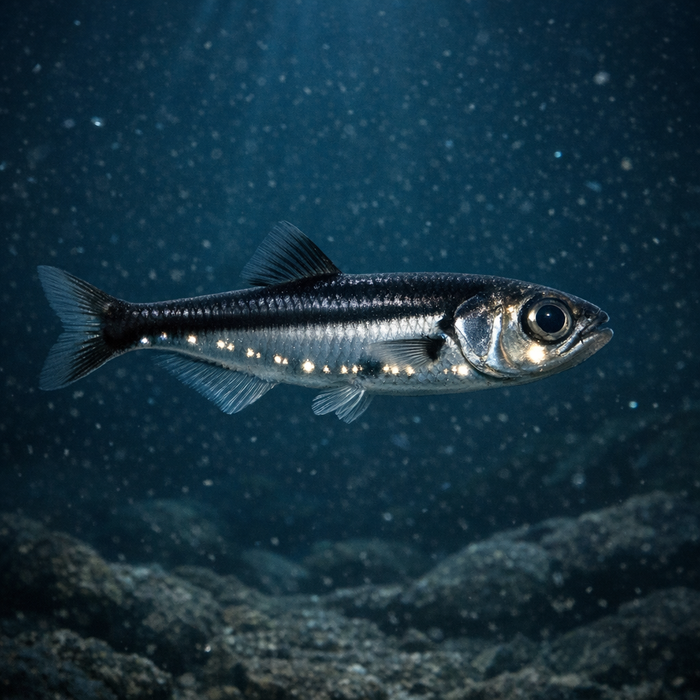
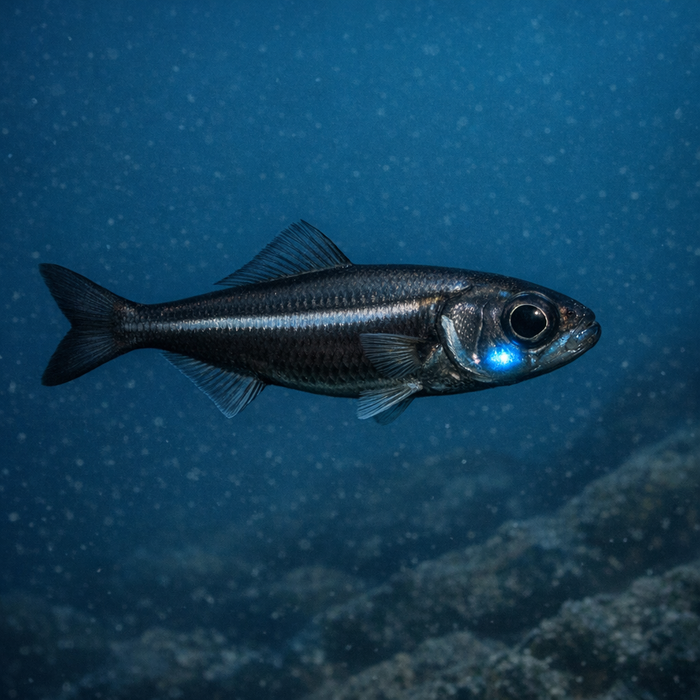
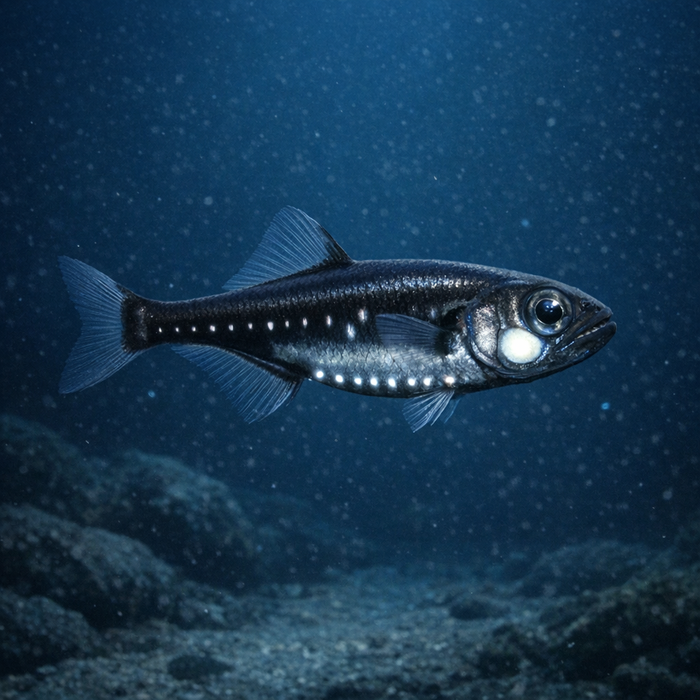
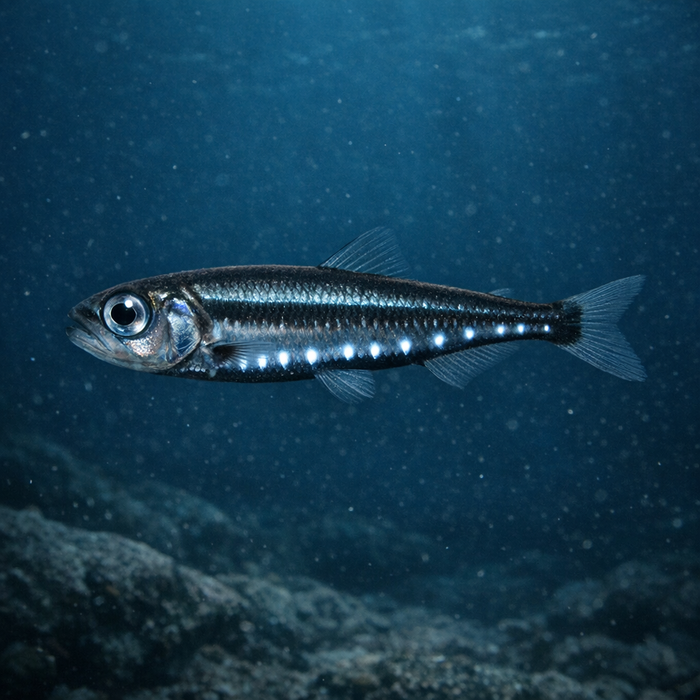
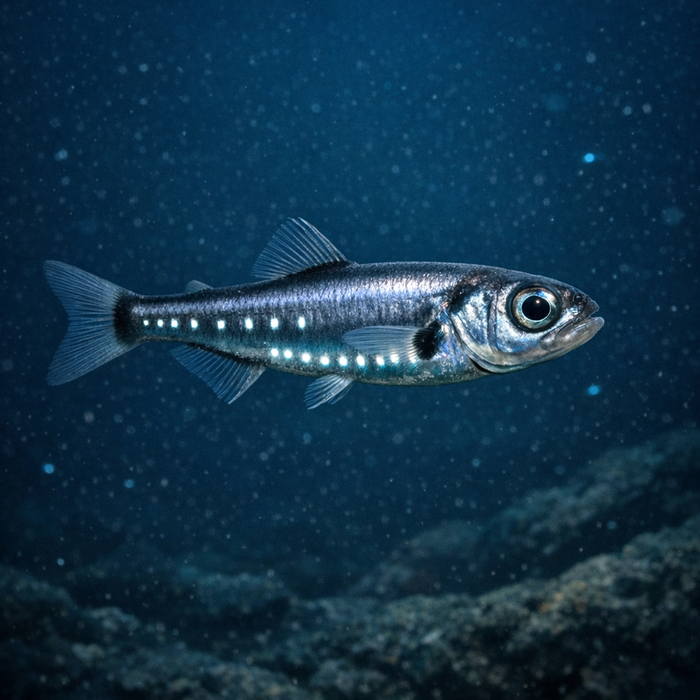
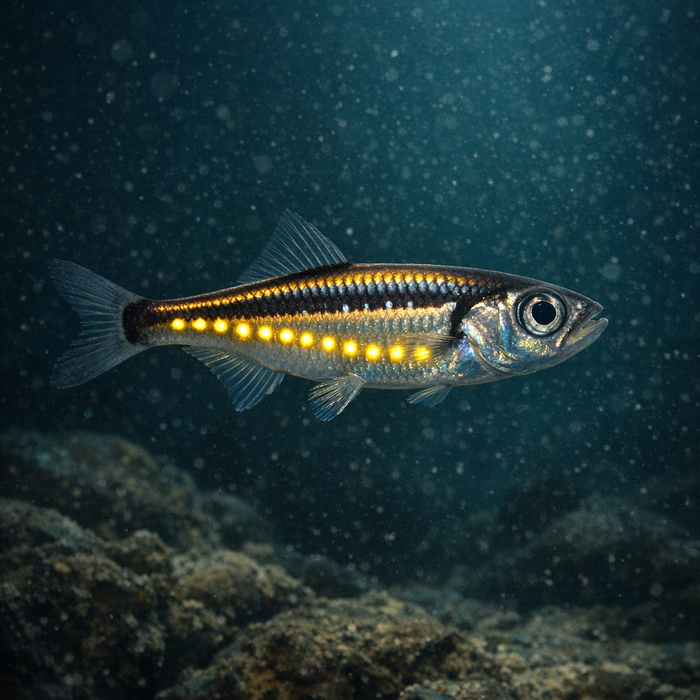
Glacier Lantern Fish (Benthosema glaciale): The tiny headlamp of the North Atlantic's night shift.IntroductionThe glacier lantern fish is the pocket-sized engine behind a whole lot of ocean drama. It doesn't crash topwater plugs or peel drag, but every night this little lightshow rides the elevator from the deep and fuels an entire food web. If you've heard rumors about the ocean's "deep scattering layer" looking like a false bottom on sonar, you're brushing up against Glacier lantern fish facts that matter. This fish is small, plentiful, and strangely powerful.What Makes the Glacier lantern fish Unique?Two things: bioluminescence and a commute that would break most humans. The glacier lantern fish carries rows of photophores that create species-specific light patterns, like a personal barcode in the dark. Then, as the sun fades, it heads upward from hundreds of meters deep to graze the night buffet, retreating before sunrise. That daily migration is one of the largest animal movements on Earth, and this fish is a headliner.Habitat & Global RangeThink cold, dim, and open. Glacier lantern fish habitat centers on the mesopelagic zone of the North Atlantic and subarctic seas, with forays into adjacent basins and deep fjords. By day they hold deep, often 200-1,000 meters down. At night, they ride into the upper layers, especially over shelf breaks, slopes, and offshore canyons. They're midwater nomads, not structure huggers, and water in the 2-8°C ballpark is their comfort zone.Behavior & TemperamentThey don't "fight," they flicker. The glacier lantern fish schools tight and times its feeding to low-light windows. Those photophores aren't just for show; their arrangement helps individuals recognize their own kind and may confuse predators with flashes and counter-illumination. Expect vertical migrations keyed to light levels, moon phase, and plankton blooms. When things get loud or bright, they sink like a stone. Subtle is survival.Ecological ImportanceFor something barely longer than your pinky, this fish moves heavyweight biomass. Cod, salmon, tunas, seabirds, and even whales pay attention to lanternfish movements. The glacier lantern fish links deep production to surface predators, turning tiny crustaceans into calories that matter. Scientists even use their ear stones to reconstruct ocean conditions, which is like carrying a micro black box from the mesopelagic.Conservation & Environmental PressuresCurrently listed as Least Concern, the glacier lantern fish isn't waving a red flag. But climate shifts that reorganize plankton timing and ocean temperature will shuffle this deck in real time. Expanding light pollution from offshore operations, noise, and changing current patterns can tweak their nightly routine. Industrial interest in "mesopelagic fisheries" also pops up from time to time; any large-scale harvest would require careful, ecosystem-first evaluation.The FishyAF TakeNo, the glacier lantern fish won't smoke your drag or pose next to a beach buggy. But if you geek out on the machinery of the sea, it's absolute catnip. This fish is the quiet middleman that makes big predators possible. Want actionable Glacier lantern fish habitat intel? Hunt deep, cold, and dark, then let the night bring them to you. It's not glamorous, but it is one hell of a story swimming just beneath your feet.