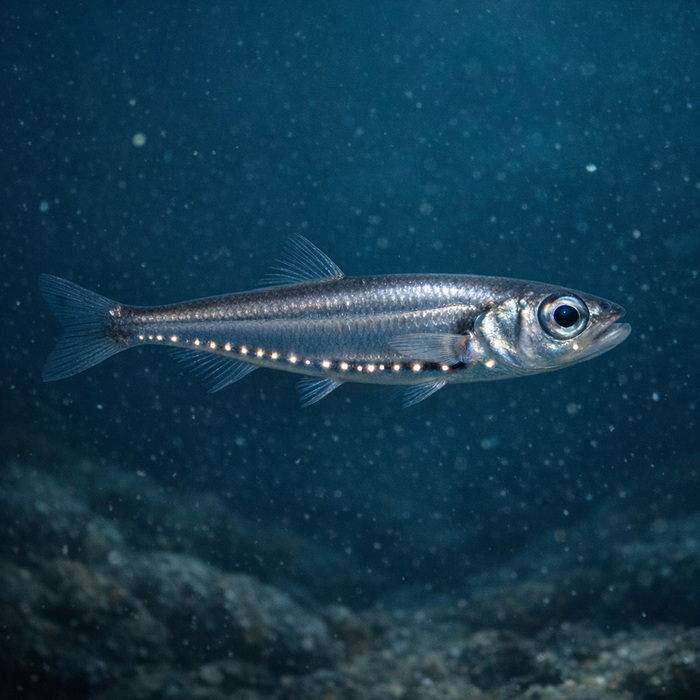
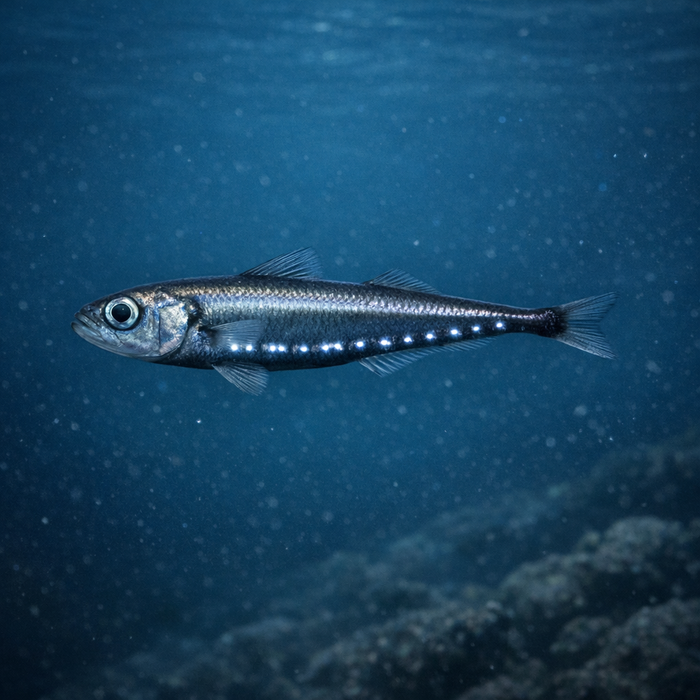
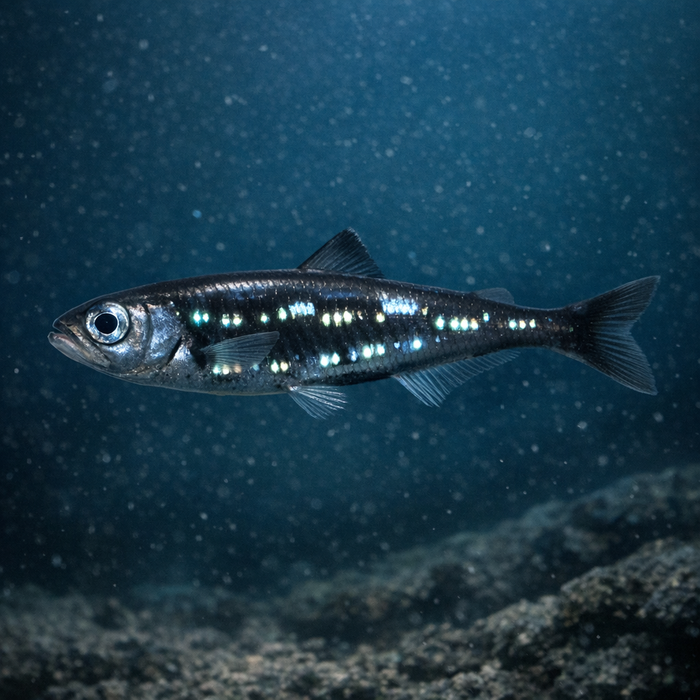
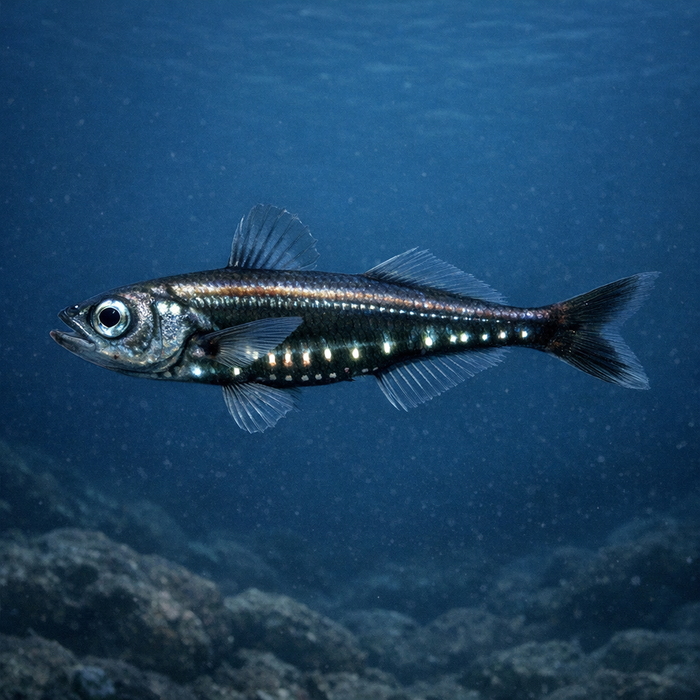
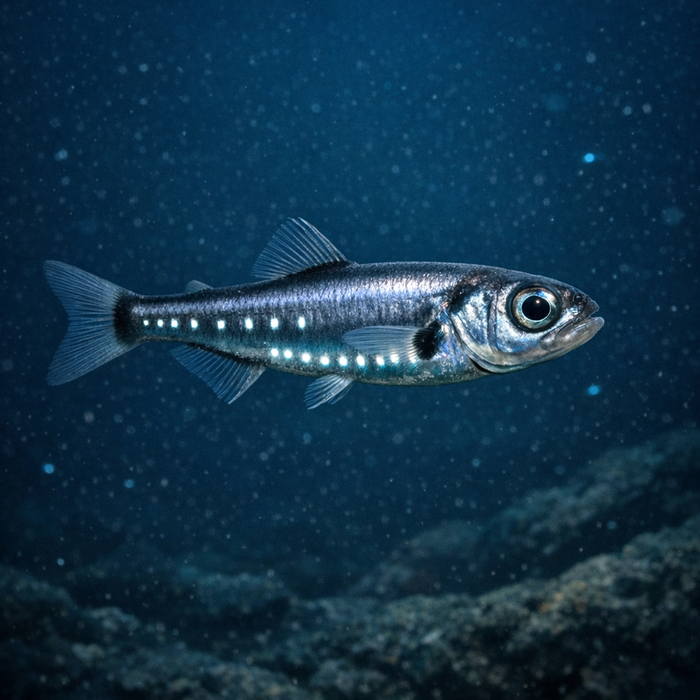
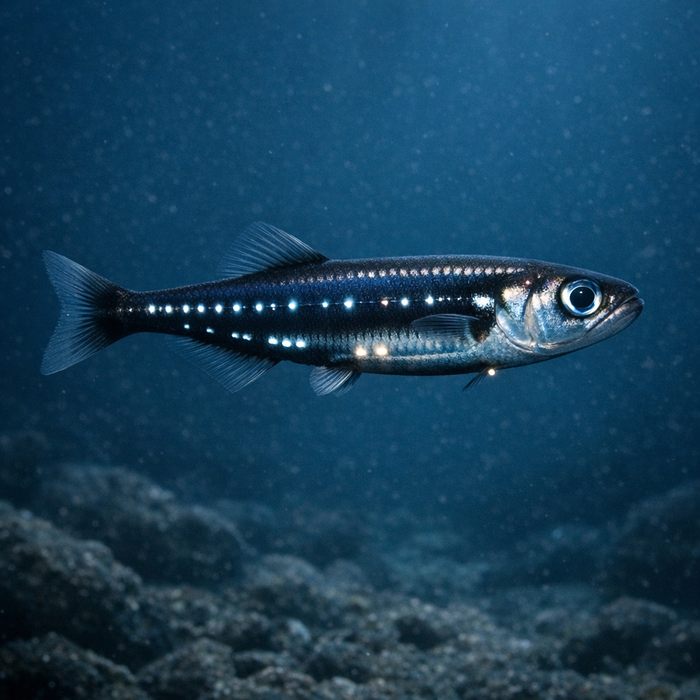
Golden Lanternfish (Myctophum aurolaternatum): A Bold, Memorable Hook LineIntroductionSmall body, big ocean job. The golden lanternfish is the pint-sized engine of night life offshore, rocketing up from the black to feast under cover of darkness, then vanishing by dawn. Anglers rarely target it, but if you fish deep blue water at night, its glowing signature is shaping the party. Here are the Golden lanternfish facts you actually care about, minus the lab coat.What Makes the Golden lanternfish Unique?First, the light show. Golden lanternfish carry arranged patches of bioluminescent organs called photophores that act like built-in glow sticks. Those patterns aren't random; they're species-specific, which helps scientists ID Myctophum aurolaternatum the way you'd spot a familiar constellations. Second, the daily commute is absurd. These fish sprint hundreds to thousands of feet up and down the water column, timing their moves with fading and returning light. Third, the namesake golden tone: a warm sheen along the photophore lines gives this lanternfish a subtle gilded look under the right light.Habitat & Global RangeIf the term deep scattering layer has ever lit up your sonar like a fake seafloor, you've seen the neighborhood. Golden lanternfish live in the mesopelagic zone offshore, usually 600 to 3,000 feet by day, then push toward the surface after dusk. Think open ocean, not reefs or coastlines. Their eggs are buoyant, drifting wide gyres that spread the species globally in tropical and subtropical belts. If you want a quick Golden lanternfish habitat snapshot: deep, dark, roaming, and forever on the move.Behavior & TemperamentThey're schoolers and roamers, not structure huggers. At night, they form shimmering clouds that respond to light, current, and plankton blooms. The golden lanternfish is no brawler; hooked on a micro-sabiki, it's more paper-fragile than pugilistic. But the bioluminescence game is elite. They use counter-illumination to match faint downwelling light, erasing their silhouette to predators patrolling below. Communication likely includes patterned flashes that vary by sex and maturity.Ecological ImportanceThis is where the little fish flex. Golden lanternfish load the offshore food web with calories, thanks to wax ester-rich muscle that's basically ocean jet fuel. Tuna, billfish, squid, dolphins, beaked whales, and seabirds all cash in. Their nightly migrations shuttle nutrients vertically and laterally across entire basins. Remove lanternfishes and the bluewater pyramid crumbles from the base up. It's not hype; it's the backbone of pelagic life.Conservation & Environmental PressuresLanternfishes overall are crazy abundant, and the golden lanternfish isn't an obvious conservation headline. That said, mesopelagic commercialization and bycatch in midwater trawls are growing topics. Light pollution, warming surface layers, and shifting oxygen minimum zones could disturb the delicate choreography of nightly migrations. The species is often listed as not evaluated, which means watchful curiosity is smarter than panic. Keep an eye on that.The FishyAF TakeThe golden lanternfish won't smoke drags or fill a cooler. But it's the reason your predators have the gas to perform. Want to geek out? Drop big lights over abyssal water, send down a micro-sabiki, and meet the glow-in-the-dark bait that fuels the ocean's horsepower. You won't mount it, but you might rethink what matters offshore. The golden lanternfish is small, shiny, and absolutely central-quietly running the night shift while the headliners get the press.