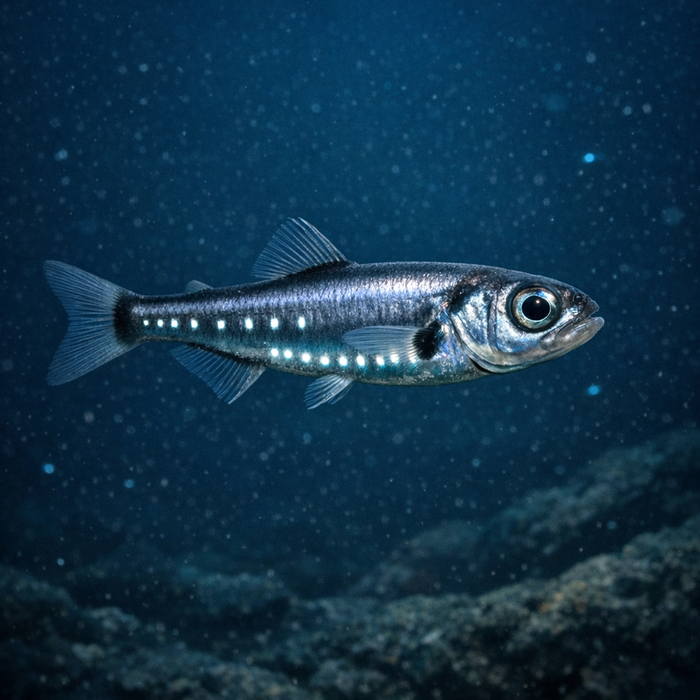
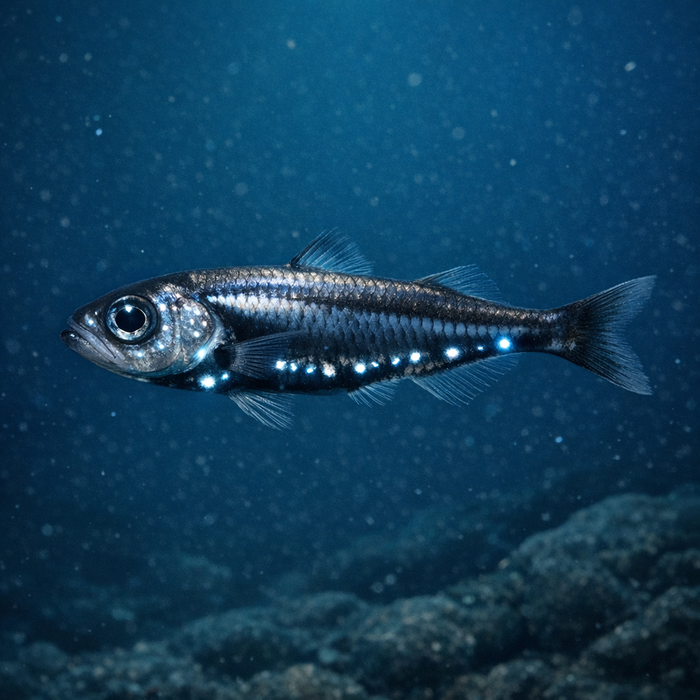
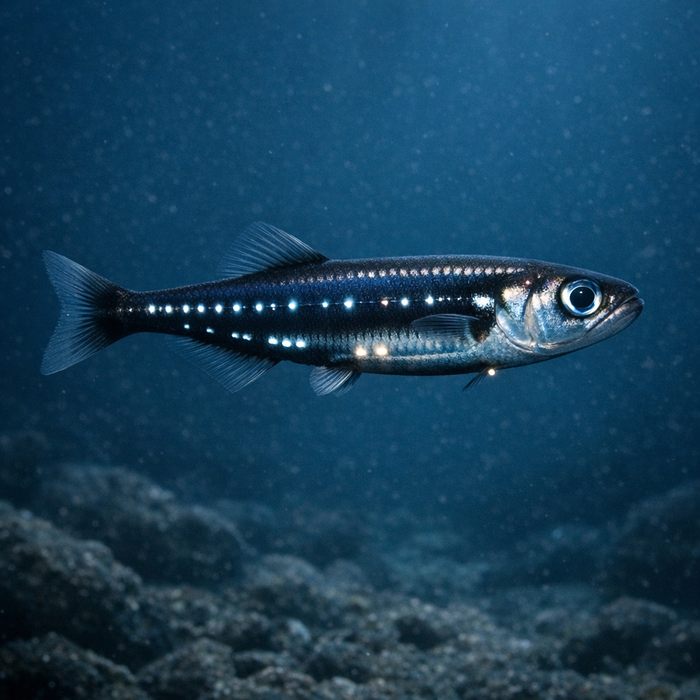
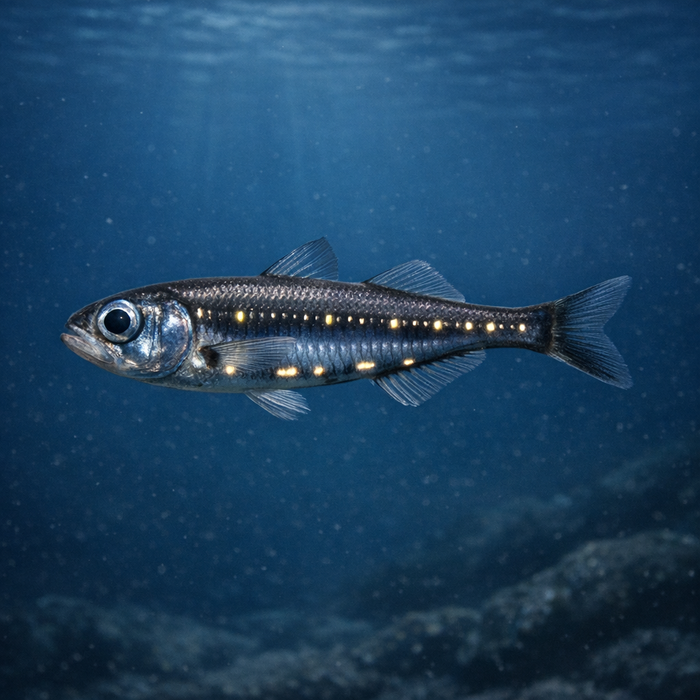
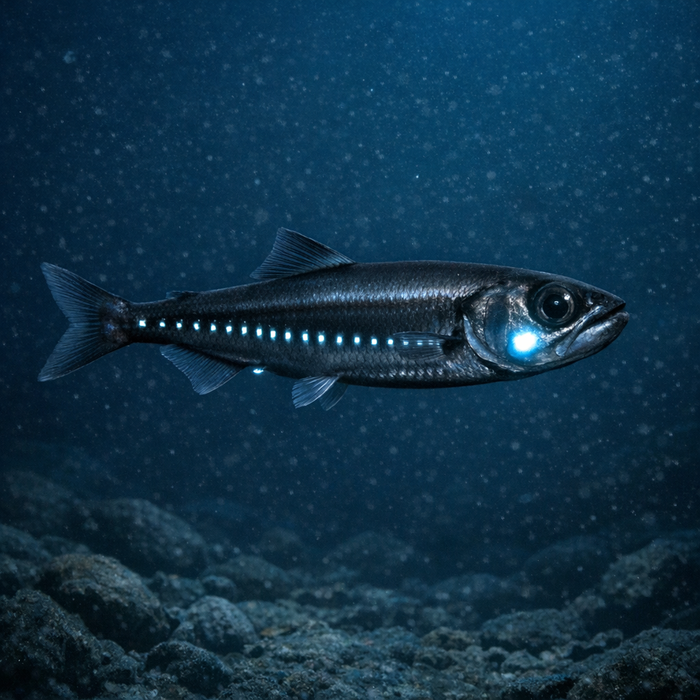
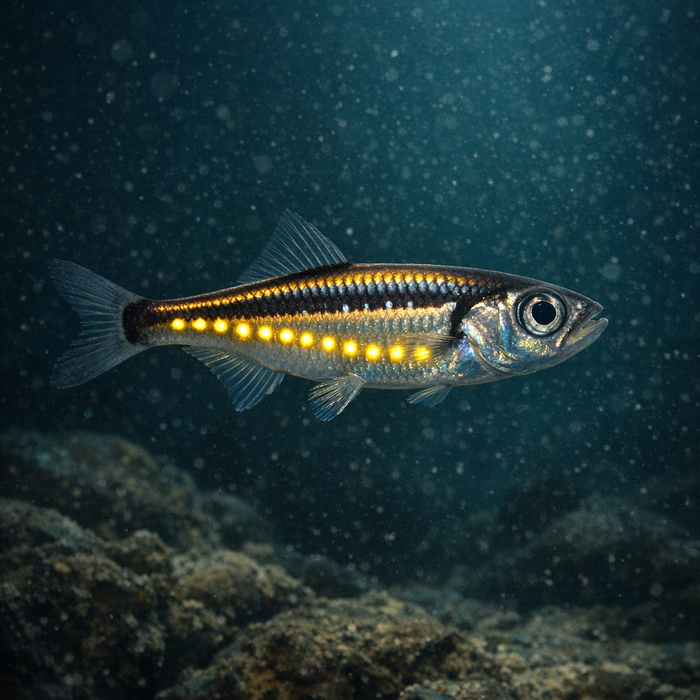
Bigfin Lanternfish (Symbolophorus californiensis): Tiny Lights, Massive RoleIntroductionBlink, and you'll miss it. The bigfin lanternfish is a pocket-sized midwater ninja that lights up the night and feeds half the ocean's headliners. It's not a classic sportfish, but it's absolutely sportfish fuel. If you chase tuna, marlin, or swordfish, you're already living in this lantern's shadow. These little cruisers power the biggest migration on Earth and turn sonar screens into star maps.What Makes the Bigfin Lanternfish Unique?Start with the name: bigfin. Those oversized pectorals act like wings, helping this lanternfish brake, pivot, and hover in the inky water column. Then there's the glow. Photophores along the belly and flanks don't just sparkle; they're tactical. The fish uses counter-illumination to erase its own shadow from predators below, a stealth move that would make a fighter pilot jealous. Finally, the bigfin lanternfish schools in layers so dense they create the famed deep scattering layer, a living cloud that confused early sonar operators into thinking they'd found the seafloor.Habitat & Global RangeIf you're Googling bigfin lanternfish habitat, think mesopelagic highways. By day, they hang deep, usually hundreds of meters down, tucked into the twilight zone. At night, they ride the elevator toward the surface to graze, sometimes pushing within easy range of deck lights over offshore banks and canyons. They're a Pacific specialist, common through the California Current and out around the central Pacific, but satellite currents and seamounts shape their nightly commute more than coastlines do.Behavior & TemperamentThe bigfin lanternfish is all about timing and teamwork. It joins vast, synchronized schools that rise after dusk and sink before dawn, neatly dodging daytime predators. Aggression isn't the move here; efficiency is. They pace the buffet line in short bursts, using those big fins to angle, hover, and strike tiny prey with minimal energy. The result is a fish that fits neatly on a sabiki hook but can ghost an entire fleet when the layer slides deeper.Ecological ImportanceYou want real bigfin lanternfish facts? Here's the headline: biomass. Myctophids are some of the most abundant vertebrates on the planet, and this species is a keystone snack. Albacore, bigeye, swordfish, mahi, billfish, even marine mammals cash in on nightly lanternfish chow lines. The fish also shuttles carbon into the deep by feeding shallow and pooping deep, a not-so-glamorous service that helps lock away atmospheric carbon.Conservation & Environmental PressuresNobody is chartering trips to fill coolers with bigfin lanternfish, but pressure isn't zero. Expanding light pollution offshore can shift behavior. Warming surface layers can change where and when they rise. And industrial nets that sweep midwater at night hoover up lanternfish biomass alongside squids and other micronekton. For now, conservation listings sit in the "not evaluated" neighborhood, but healthy midwater communities prop up the pelagic trophies anglers actually chase.The FishyAF TakeThe bigfin lanternfish is not on your bucket list, but it's behind every open-water flex on your Instagram. It's the flashlight in the tuna pantry, the shimmer behind a swordfish's swagger. If you find yourself offshore at midnight with sabikis and bright lights, you might meet the glow squad personally. Respect the small stuff. Without these tiny lights doing the midnight commute, the big show doesn't happen.