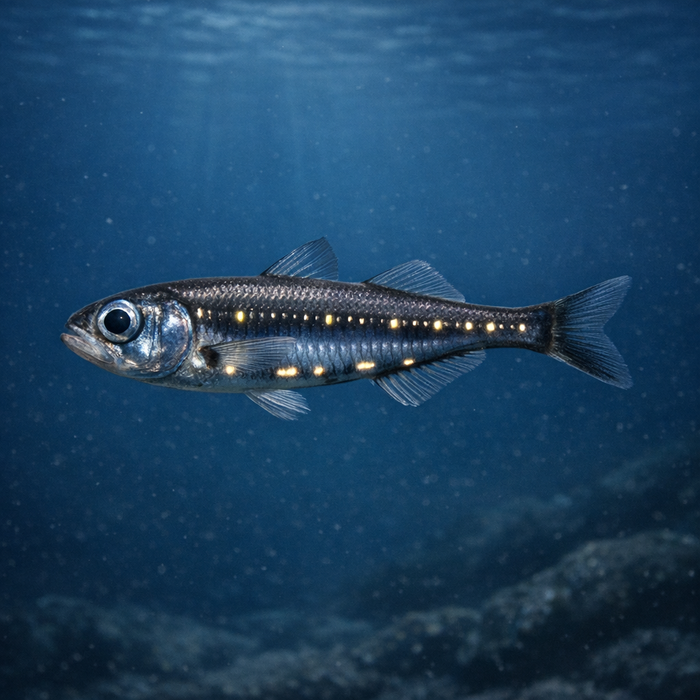
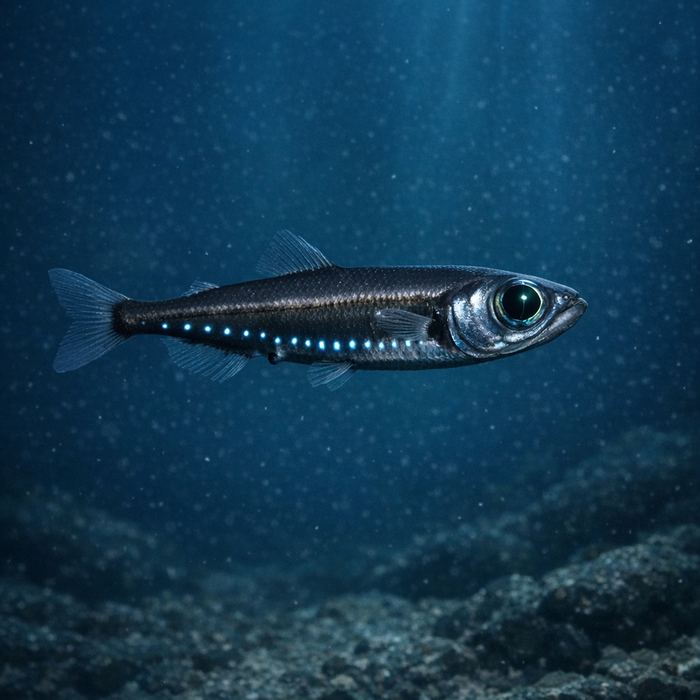
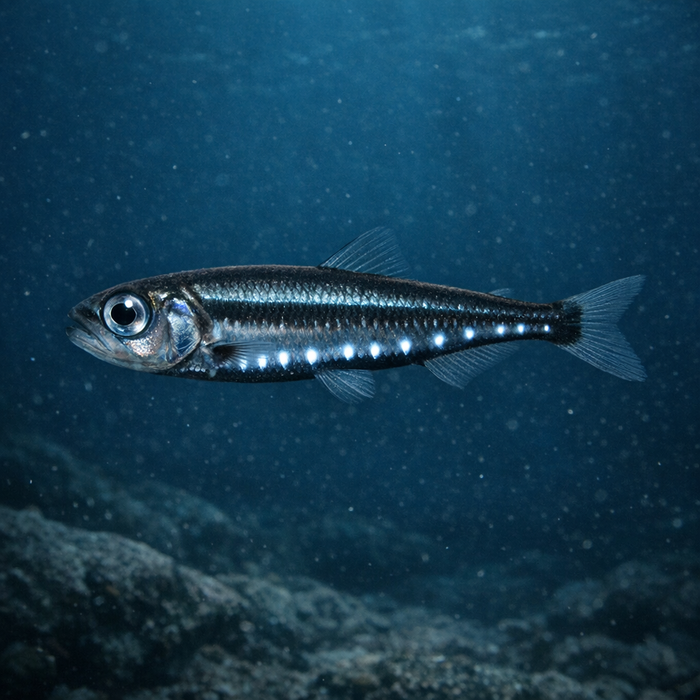
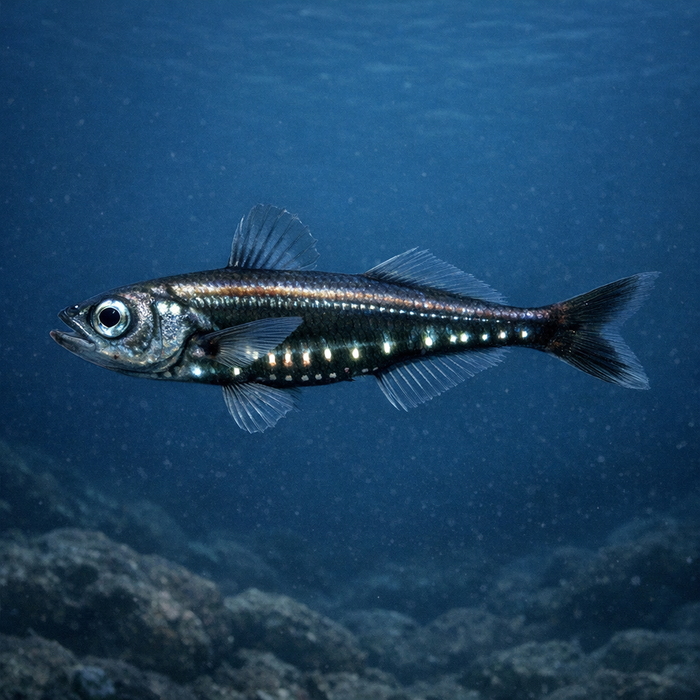
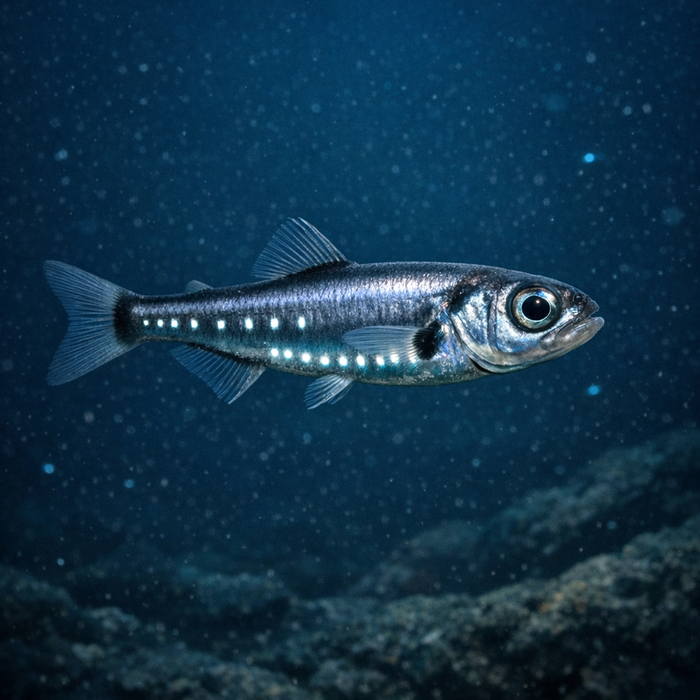
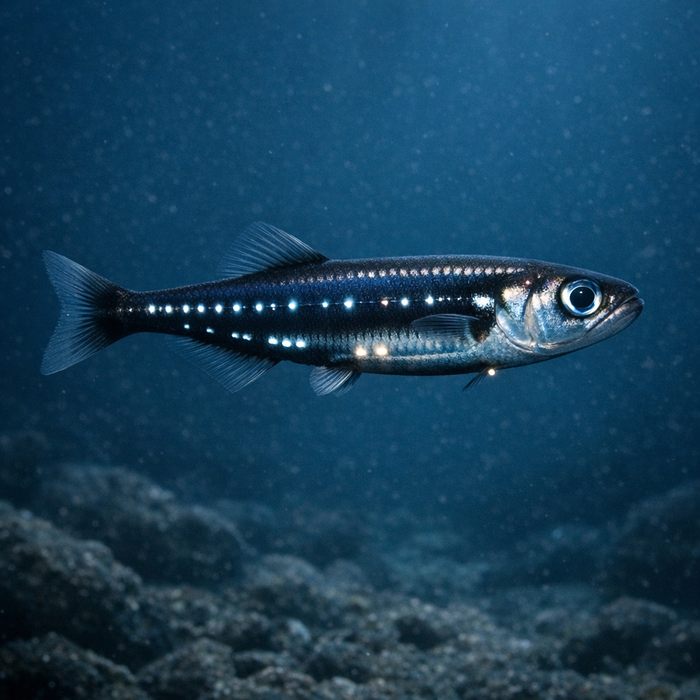
Giant lampfish (Parvilux ingens): A Bold, Memorable Hook LineIntroductionThe giant lampfish is the glowing confetti of the deep sea, tiny but everywhere, sneaking through the ocean's midnight zone on a nightly commute. Blink and you miss it. Flip on a deck light offshore and the water comes alive with flickers; that shimmering blink? That might be Parvilux ingens doing its hush‑hush business. If you want real giant lampfish facts, you start by accepting their world: dark, deep, and decisively not your average weekend fishery.What Makes the Giant lampfish Unique?First, bioluminescence. Giant lampfish run rows of photophores that throw a soft blue‑green glow, matching moonlit water to disappear from hungry eyes below. It's stealth tech baked into skin. Second, the commute. These fish stage one of Earth's largest daily migrations by headcount, rising hundreds of meters each night to feed and dropping back down by dawn. Third, efficiency. For their size, giant lampfish pack serious calories, turning plankton and tiny prey into rocket fuel for tuna, swords, and squid. They're small, but they drive big ocean engines.Habitat & Global RangeGiant lampfish habitat is squarely mesopelagic: the deep scattering layers that sonar paints like a moving cloud. By day, figure 600 to 1000 meters; by night, they lift to 50 to 300 meters, especially around current edges, weak thermoclines, and faint surface glow. They are broadly oceanic and don't care about coastlines unless currents shove them landward. Think gyres, transition zones, offshore banks, and seamount halos. If you're chasing pelagics in the blue desert, you're already hovering over their commute lane.Behavior & TemperamentGiant lampfish school like it's a safety plan because it is. The group pulse confuses predators and concentrates feeding. They aren't brawlers. Hook one on micro gear and it's more wobble than war. But their behavior is tactical brilliance: counterillumination to erase shadows, vertical shuttles to ride safe light levels, and timing keyed to darkness and plankton blooms. They'll drift under your lights, hover, and dart at dust‑mote prey like a featherweight boxer working jabs.Ecological ImportanceHere's the big story hiding in a small fish: biomass. Lanternfishes, including the giant lampfish, likely rank among the most abundant vertebrates on the planet. They're a conveyor belt moving energy from the surface into the deep and back again, one nightly shuttle at a time. Squid gorge on them. Billfish and tunas cash them for speed. Even whales take a cut. If you've ever watched a marlin blitz bait in the black, there's a fair chance giant lampfish were in the mix below, quietly linking the chain.Conservation & Environmental PressuresYou won't see commercial fleets chasing giant lampfish with hook and line, but the species doesn't live in a vacuum. Climate shifts that tweak plankton communities ripple straight into their pantry. Oxygen‑minimum zones change the vertical lanes they use. Broad pelagic light pollution can scramble their night game. And while deep pelagic harvest is limited in most places, expanding midwater trawls for forage fish could put pressure on lampfish communities if not managed carefully. The data for Parvilux ingens specifically are lighter than we'd like, but the caution flag is simple: protect the engine, not just the hood ornament.The FishyAF TakeThe giant lampfish won't smoke your drag or headline your tournament. But if you want to understand the offshore puzzle, you pay attention to the pieces that glow. Fish around FADs, rigs, or seamounts at night and your sonar's fuzzy layer is the dinner bell, not noise. That's where giant lampfish run, and where the heavy hitters set their table. As a target, they're novelty; as intel, they're gold. Want more tuna? Read the scatter layer like a map, match the small stuff, and respect the commute. That's the real giant lampfish habitat hack hiding in plain, bioluminescent sight.