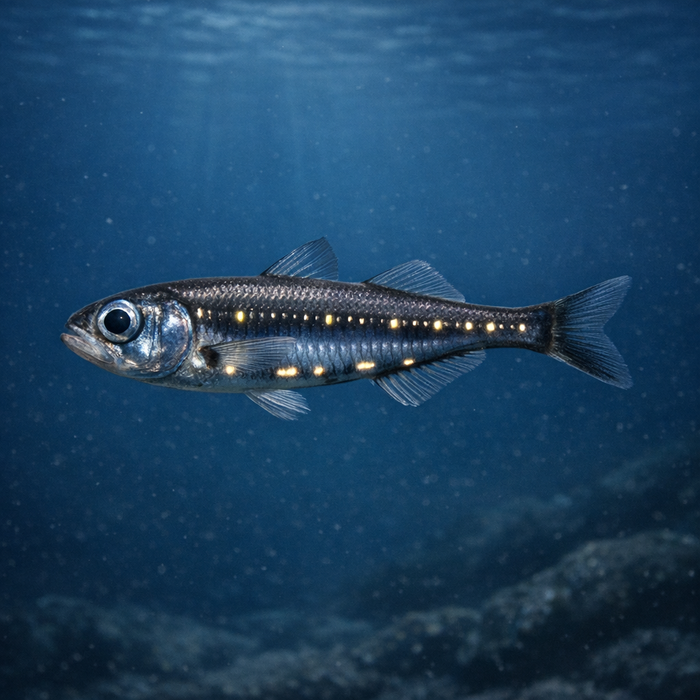
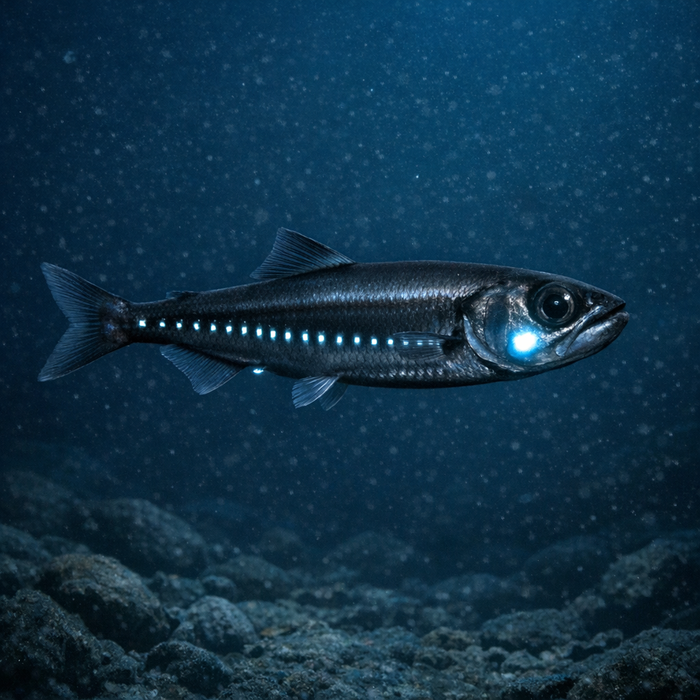
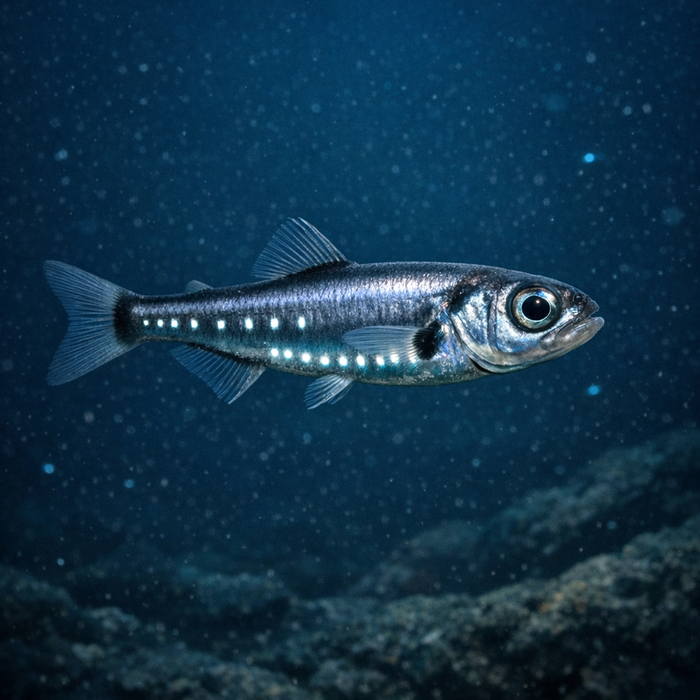
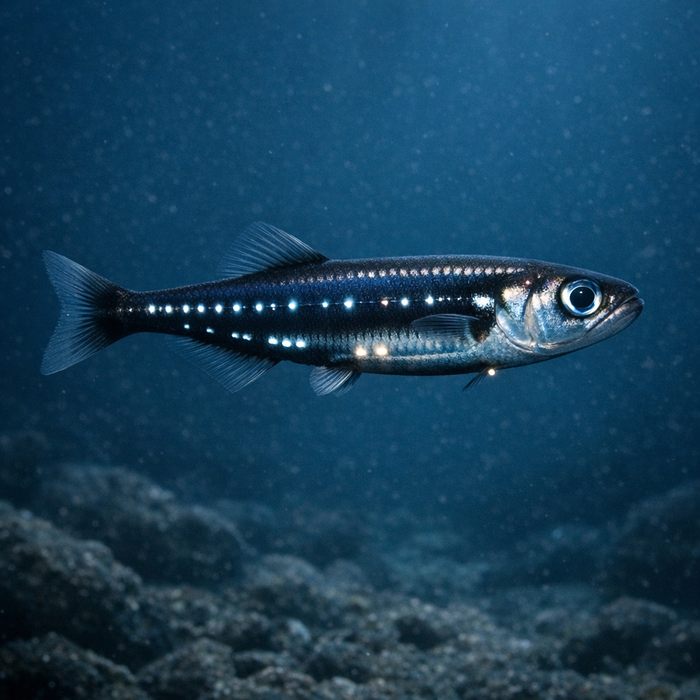
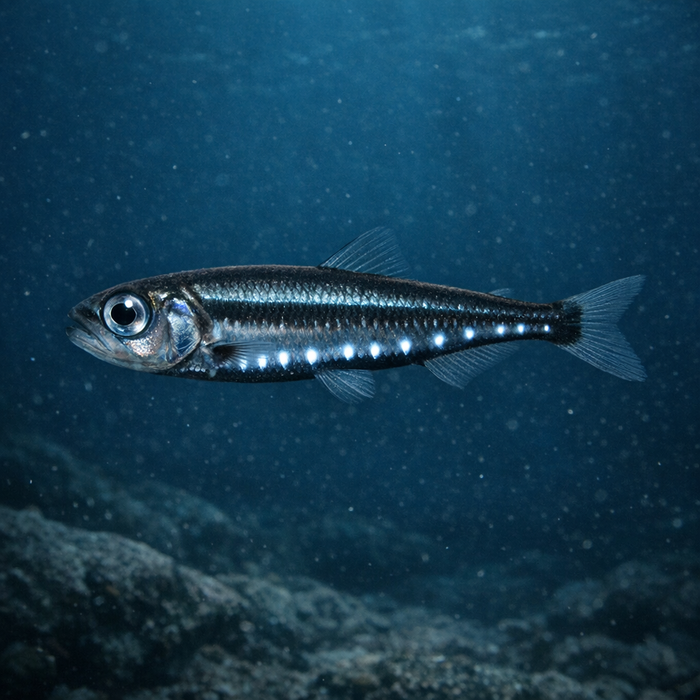
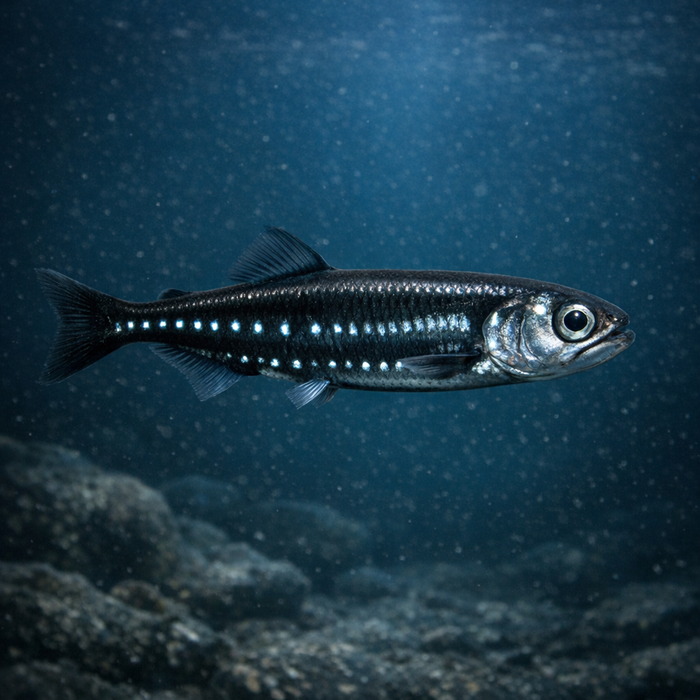
Popeye Lampfish (Bolinichthys longipes): A Bold, Memorable Hook LineIntroductionThe popeye lampfish is proof that big ocean drama comes in pocket sizes. This tiny lanternfish spends its days deep, then rides the planet's nightly elevator into the dark midwater buffet. You won't see it plastered on tackle-shop posters, but if you want freaky-cool ocean science with a side of angling challenge, few fish deliver like the popeye lampfish.What Makes the Popeye Lampfish Unique?Three things. First, the eyes. Those saucer-like peepers earn the "popeye" tag and are tuned for dim, blue light from above. Second, bioluminescent photophores map the body like runway lights, helping with camouflage, communication, and possibly mate recognition. Third, the commute. The popeye lampfish joins the deep scattering layer, marching hundreds of meters up after dark and plunging back down by day. That vertical miles-per-day lifestyle would humble most gym rats.Habitat & Global RangeIf you're searching for Popeye lampfish habitat, think big water without borders. This species is an oceanic drifter in the mesopelagic zone, usually well off the continental shelf. By day, it holds deep in cold, low-light layers; by night, it rises into slightly warmer, food-rich midwaters. The species is widely distributed across open oceans, where currents, productivity, and temperature bands set the scene far more than coastline shape. You're interacting with a member of one of Earth's most abundant vertebrate guilds. If lanternfish are ocean currency, the popeye lampfish is small change that buys a lot of ecological action.Behavior & TemperamentDon't expect smash attacks or thumping headshakes. The popeye lampfish is a micro-predator with a stealth playbook: feed in the shadows, hide in plain sight through counterillumination, and move in schools that confuse sonar and predators alike. Its photophores likely match the downwelling light above, erasing its outline when something with teeth looks up. At night it becomes more active and accessible to lights, ships, and the occasional angler running micro rigs in very deep water.Ecological ImportanceHere's where the Popeye lampfish facts get impressive. Lanternfish, including this species, are nutrient elevators. Their nightly migrations move carbon and energy up and down the water column, linking deep and shallow ecosystems. They're staple prey for everything from tuna and billfish to squid, whales, and seabirds. Otoliths from lanternfish show up in predator stomachs across the globe, telling travel stories of open-ocean food webs. The species may be small, but the ecological footprint is massive.Conservation & Environmental PressuresThe popeye lampfish hasn't been the focus of mainstream fishery pressure, and many myctophids get stamped Not Evaluated for conservation status. That said, deep ocean changes are coming fast. Warming layers, shifting oxygen minima, and altered plankton communities can scramble the timing and efficiency of vertical migrations. Light pollution from expanding fleets may change behavior locally. If anyone ever targets lanternfish for large-scale harvest, it could rattle entire pelagic food webs. For now, its biggest risks are environmental, not angling.The FishyAF TakeThe popeye lampfish is the ocean's after-hours hustler. It isn't a hero of the scale or grill, and nobody's mounting one over the fireplace. But if your fishing brain likes weird, technical, and oddly beautiful, this fish is your late-night text. Use lights over abyssal water, tiny gear, and a patient drift. Treat any encounter like a rare backstage pass to the deep scattering layer. The fun of the popeye lampfish isn't in the fight. It's in the flex of finding it at all - and knowing you just high-fived one of the ocean's most important commuters.