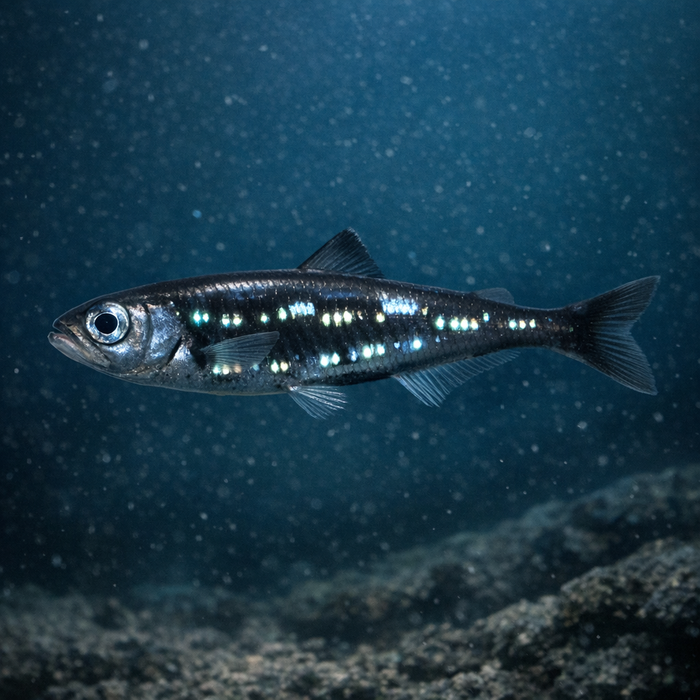
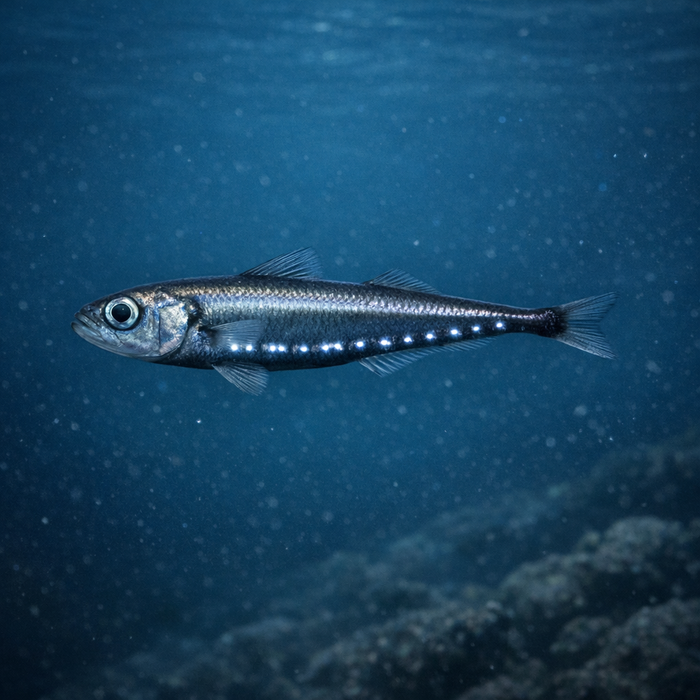
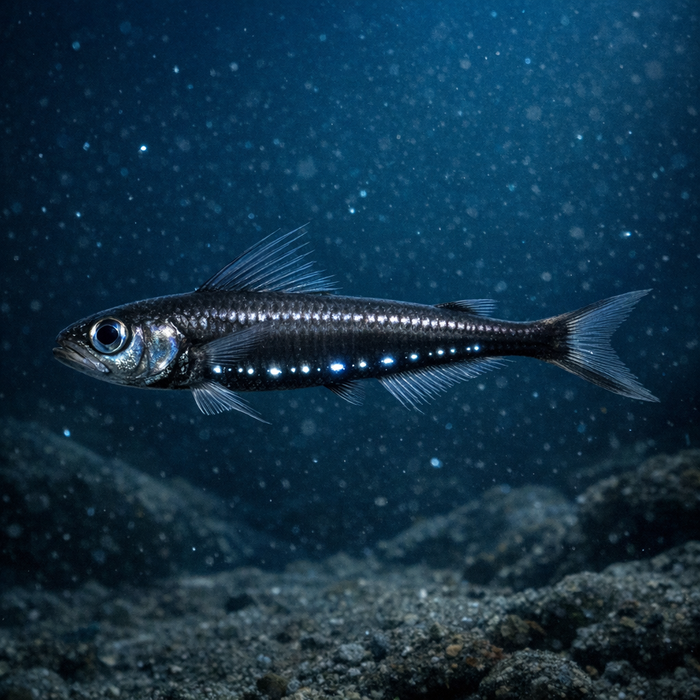
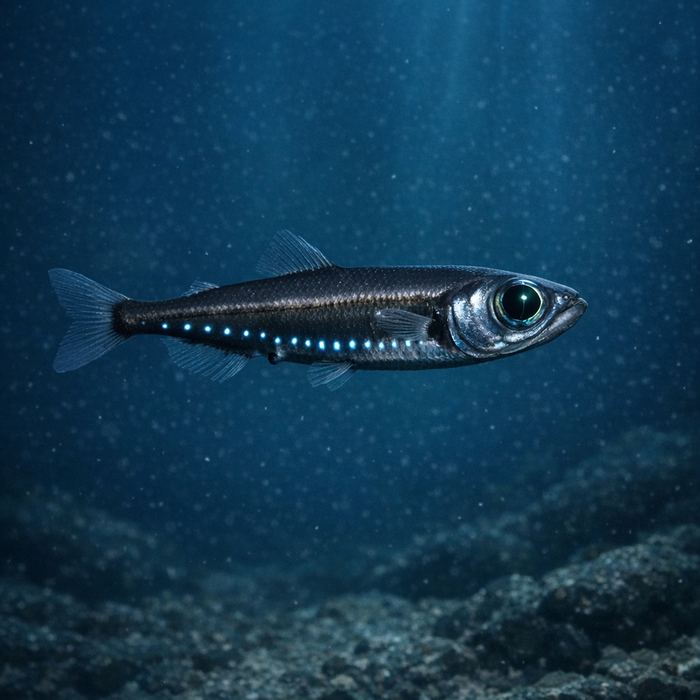
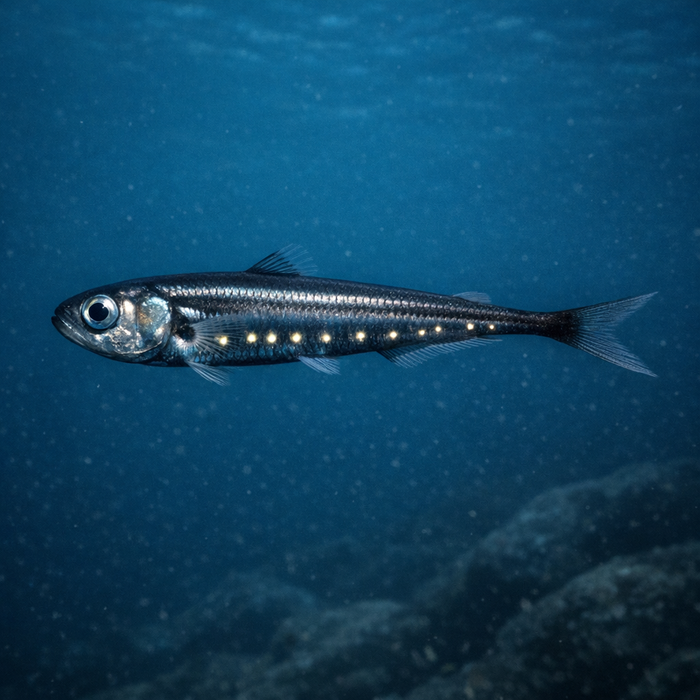
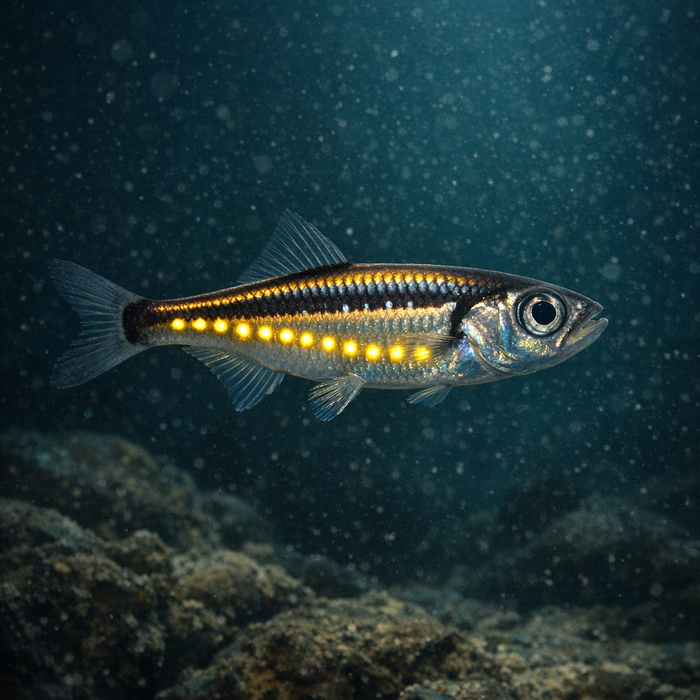
Mexican Lampfish (Triphoturus mexicanus): Pocket-Sized Glowstick From The Night ShiftIntroductionMeet the Mexican lampfish, the flashlight in a fish suit that spends its days deep and its nights creeping toward the surface. This is not a typical sportfish, but it is a heavyweight player in the open ocean food web. If you've ever wondered what keeps tunas, billfish, and dolphins well-fed at night, this little glow bug has a big hand in it. Consider this your crash course in Mexican lampfish facts, behavior, and why they matter more than their tiny size suggests.What Makes the Mexican lampfish Unique?Start with the headlights. The Mexican lampfish is lined with photophores, tiny light organs it uses for counter-illumination. It literally matches the downwelling light so predators looking up see nothing but starry water. Second, it participates in one of the planet's largest animal migrations: every evening, countless lampfish rise hundreds of meters to feed, then sink back before dawn. Third, Mexican lampfish pack serious ecological punch. Despite being only a few inches long, they occur in dense schools that function like conveyor belts for carbon and energy in the open ocean.Habitat & Global RangeWhen you think Mexican lampfish habitat, think bluewater. This species works the mesopelagic zone offshore in the eastern Pacific, operating mainly deep by day and sliding shallower at night. It thrives along productive current systems and upwelling zones that stack krill and other plankton. You won't see them cruising reefs or shorelines. Most angler encounters happen incidentally, often under boat lights in the Southern California Bight, Baja California, the Gulf of California, and farther down the Central and South American coasts.Behavior & TemperamentThe Mexican lampfish is more commuter than fighter. It schools tightly, tracks plankton layers, and eats small crustaceans and micro-nekton after dark. The photophores are not for party tricks. They're camouflage, perfectly tuned to erase the fish's silhouette to stalking predators below. During the day it goes low profile in deeper, darker water. At night, especially around strong artificial light, it can swarm in glittering blizzards that look like living stars.Ecological ImportanceHere's the big secret: this tiny fish helps run the open ocean. Mexican lampfish feed an army of predators, transferring the energy of plankton into tuna-grade calories. Meanwhile, their daily vertical migrations shuttle carbon toward the deep sea as they feed shallow and digest deeper, nudging the ocean's biological pump. When scientists talk about the deep scattering layer that confuses sonar, these fish are a major reason that layer exists at all.Conservation & Environmental PressuresMexican lampfish aren't a mainstream commercial target, and they're generally listed as not evaluated rather than threatened. Still, they live in a world shaped by currents, temperature, and oxygen. Ocean warming and low-oxygen zones can shift their vertical neighborhood. Large-scale light pollution at sea could also disrupt their night routine. They're abundant now, but like all mesopelagics, they dance to the climate's music.The FishyAF TakeYou won't book a charter "for lampfish," and you won't brag about the fight. But the Mexican lampfish is the midnight snack fueling a lot of your favorite offshore trophies. It's a master of stealth with a dashboard of built-in LEDs and a commuter schedule that would shame a city bus. If you're the type who loves understanding the machine behind the mayhem, this species is catnip. Mexican lampfish habitat is vast, their role massive, and their glow game elite. Tiny fish, huge story. That's our kind of weird.