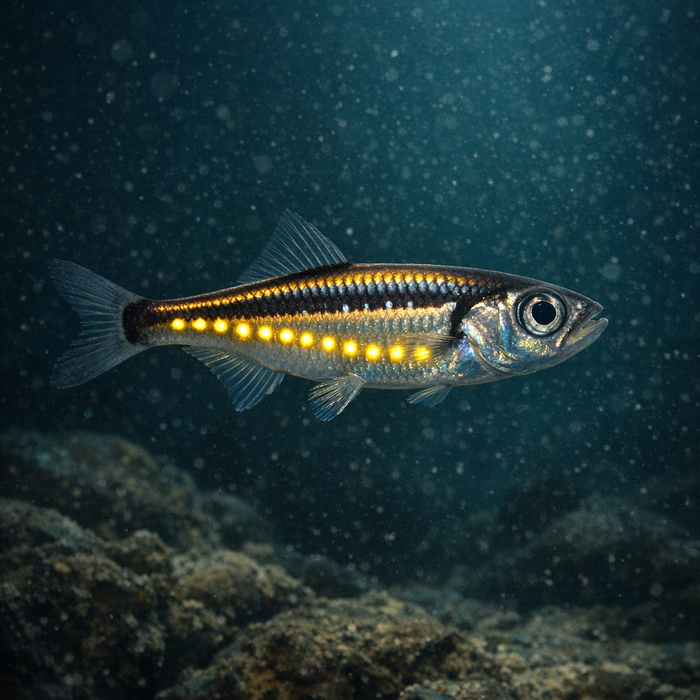
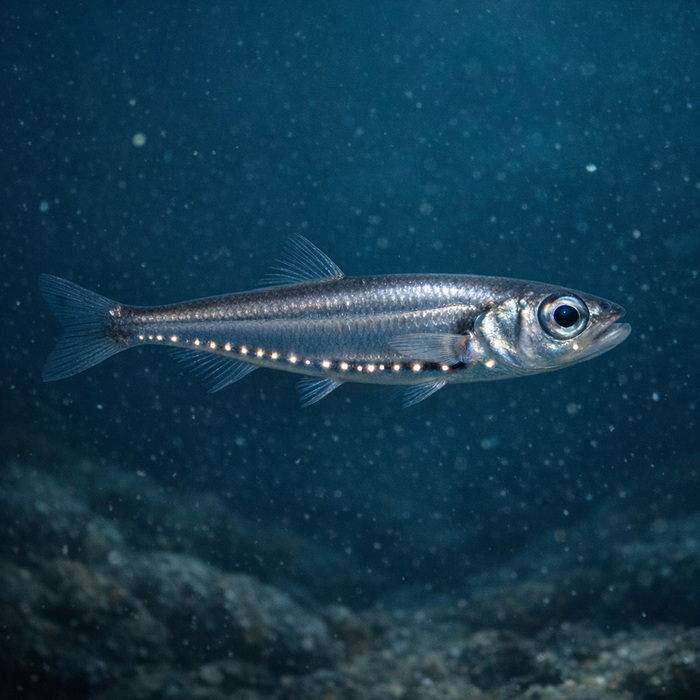
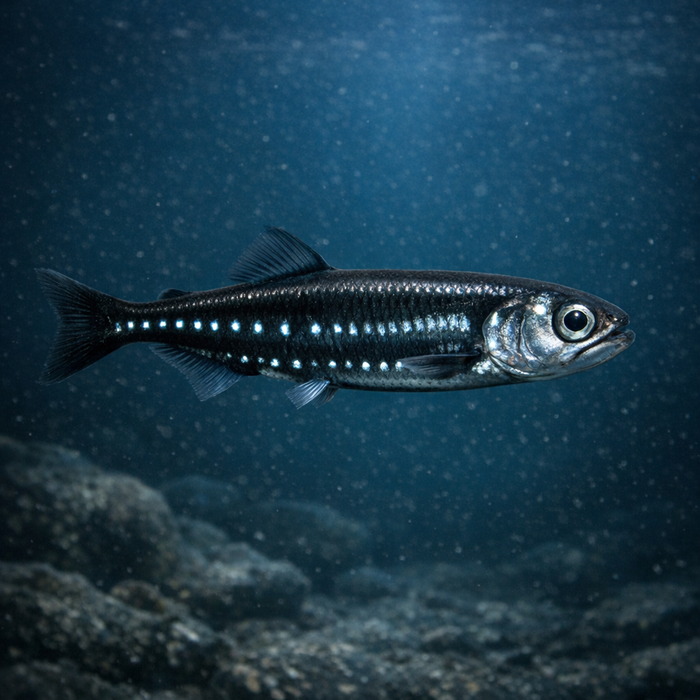
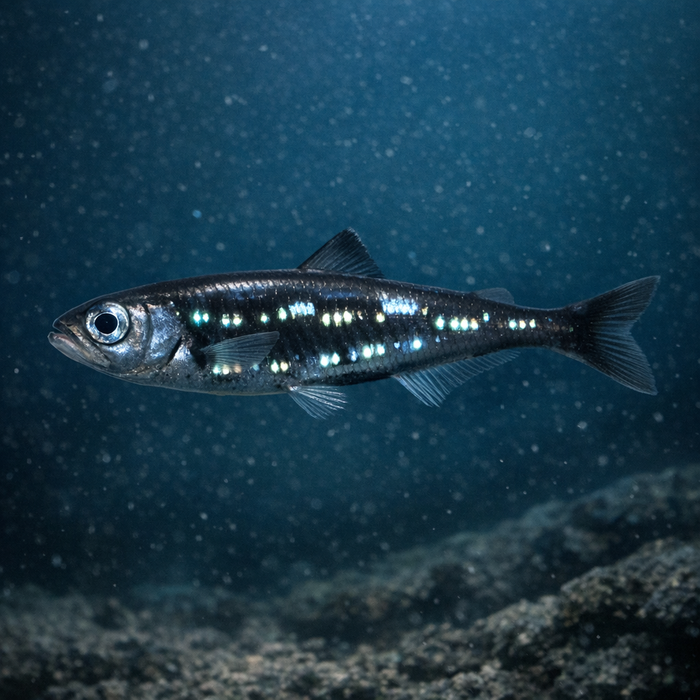
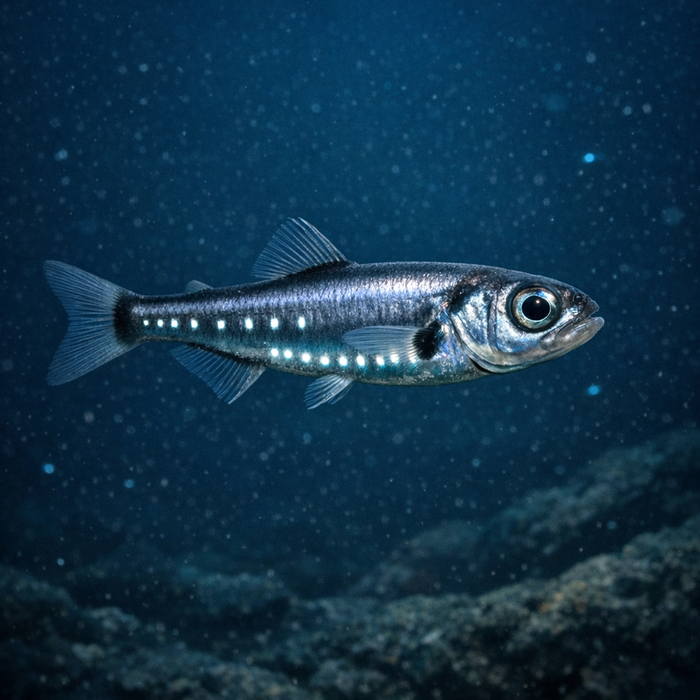
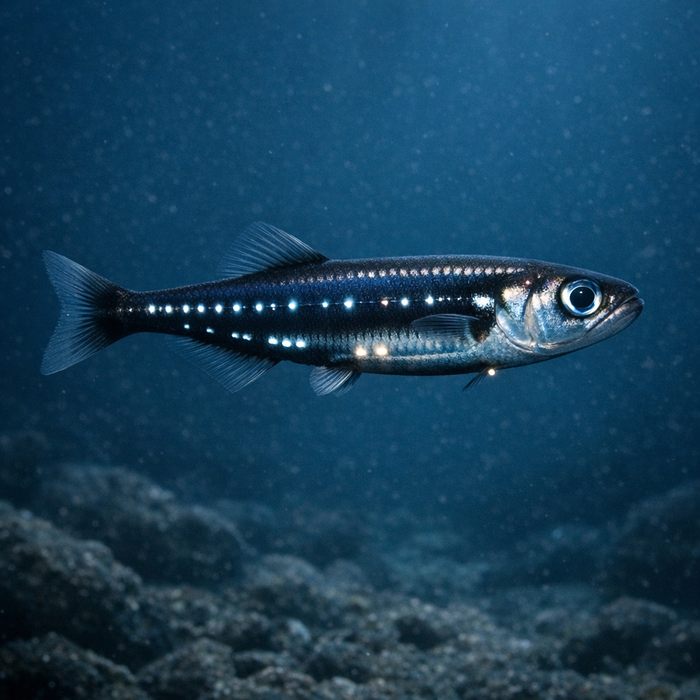
Slimtail Lampfish (Lampanyctus parvicauda): A Bold, Memorable Hook LineIntroductionIf you've stared at your sounder offshore and watched a mysterious "false bottom" rise after sunset, you've brushed against the world of the slimtail lampfish. This pint-sized lantern in scales runs the night shift of the open ocean, riding a vertical elevator between pitch-black depths and the surface buffet. It isn't a conventional target for anglers, but it's a heavyweight player in the ocean's food web and a sneak preview of the deep's neon nightlife.What Makes the Slimtail lampfish Unique?Start with the name: parvicauda translates to small tail, and the slimtail lampfish wears it literally with a skinny caudal peduncle. That sleek aft section, plus a torpedo body, helps it cruise midwater with minimal drag. Then there's the light show. Arranged photophores along its belly and flanks glow in distinct patterns used for species ID and counter-illumination. In a place where sunlight dies fast, this fish speaks in flashes. Finally, it's a dedicated commuter. Each evening, vast schools surge hundreds of meters upward to feed, then retreat before dawn. That daily migration is massive enough to bend sonar and define entire layers of the ocean's acoustic landscape.Habitat & Global RangeWant Slimtail lampfish habitat in one line? Mesopelagic open ocean sums it up. The species spends daylight deep in the midwater darkness, well off the bottom, far from shore. After dark, it creeps upward into the upper mesopelagic and sometimes shallower, especially around floating structure, ships, and FADs where lights concentrate plankton. Distribution is broad across major ocean basins, which sounds convenient until you realize that "broad" also means "way the hell offshore." If you're not on the continental slope or beyond, you're likely too shallow for the party.Behavior & TemperamentThis is not a brawler. The slimtail lampfish survives by schooling hard, migrating on schedule, and vanishing into the glow. It eats tiny crustaceans and other planktonic snacks, darting more than charging. Aggression is low, spook factor is moderate, and the bite window opens wide after sunset. Around bright lights, they'll stage in tight balls and occasionally nip at micro jigs or sabiki flies meant for bait collection. Handle with care if you do connect; these are delicate, tissue-paper fish.Ecological ImportanceHere's where Slimtail lampfish facts get downright epic. Lanternfishes collectively move staggering biomass every night, towing carbon from surface waters to the deep with every meal and every migration. That shuttle service underpins pelagic food webs and props up predators from squid to tunas to beaked whales. The slimtail lampfish is small, but it scales into significance through numbers and rhythm. Its bioluminescence isn't just for show either; those lights grease the survival gears, confounding predators below and guiding mates in the dark.Conservation & Environmental PressuresDirect fishing pressure is basically nil. The real risks are big-picture: warming seas shifting depth zones, expanding oxygen minimum layers squeezing livable space, and altered plankton communities changing the dinner menu. Midwater trawling in some regions can incidentally remove lanternfish biomass, though this species isn't a standard target. Data isn't perfect, but most indicators suggest resilience driven by short lives and broad ranges. Still, tweak the night and the elevator schedule changes.The FishyAF TakeThe slimtail lampfish won't rip drag or fill a cooler, but it will bend your brain. It's a poster child for how the ocean really works: vast, vertical, nocturnal, and glowing. If you're the kind of angler who likes collecting weird stamps in your fish passport, rig ultra-light, bring a bright light, and crash the scattering layer. You might not write home about size, but you'll absolutely brag about the scene. That's the Slimtail lampfish habitat, the show, and the vibe: tiny fish, huge story, and a bioluminescent wink from the deep.