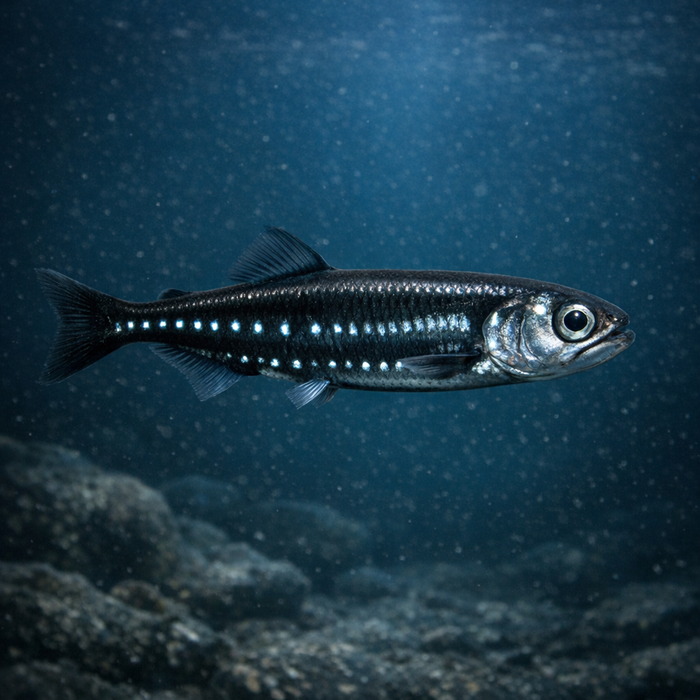
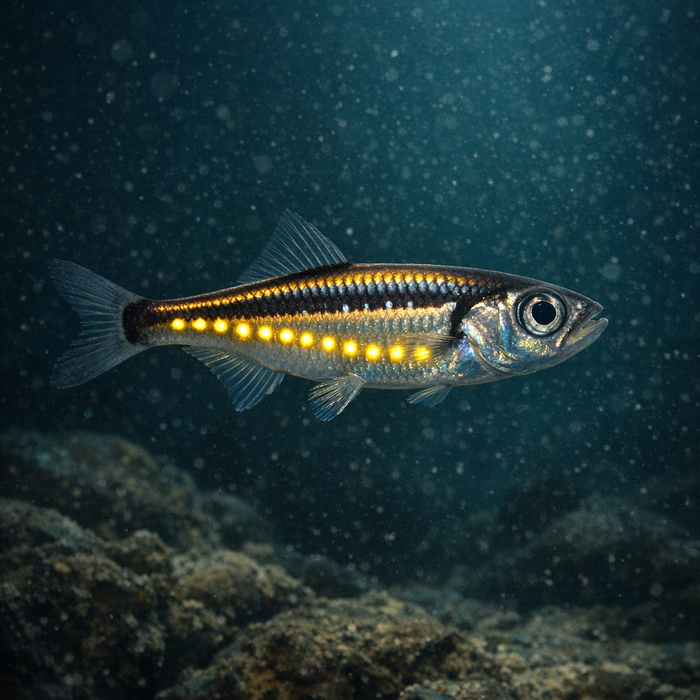
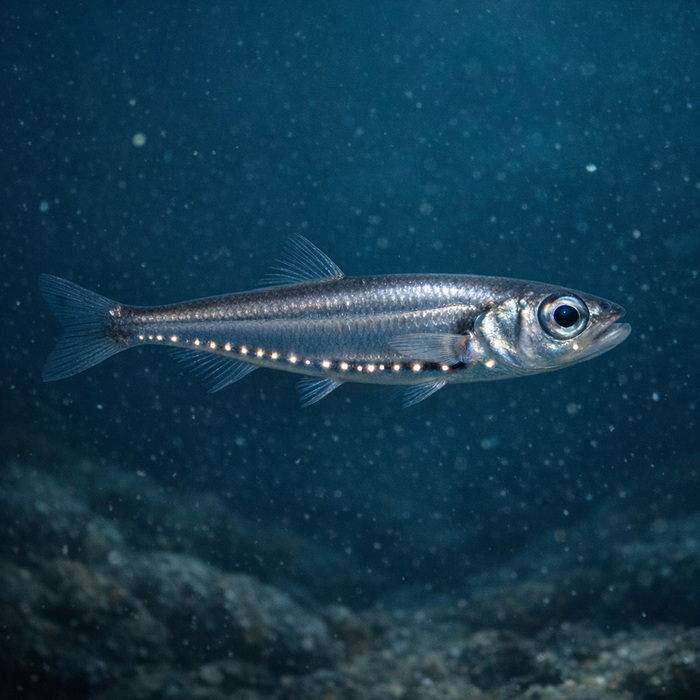
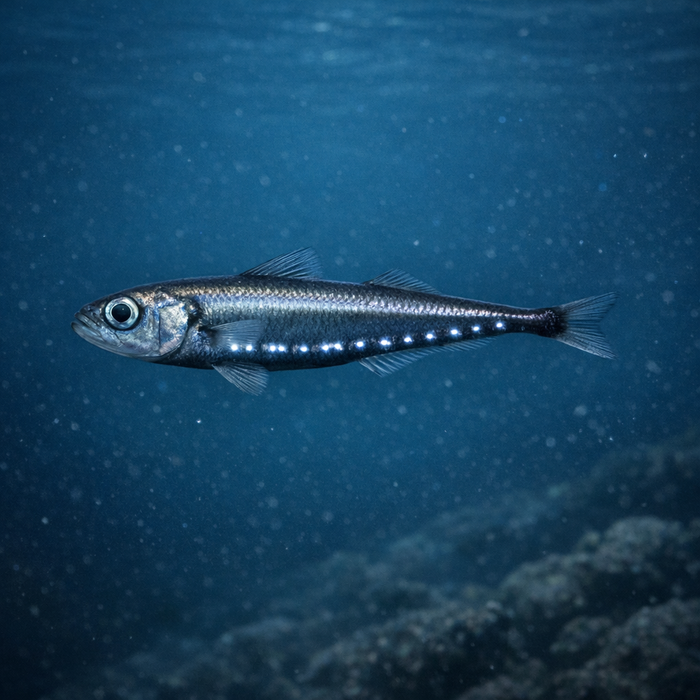
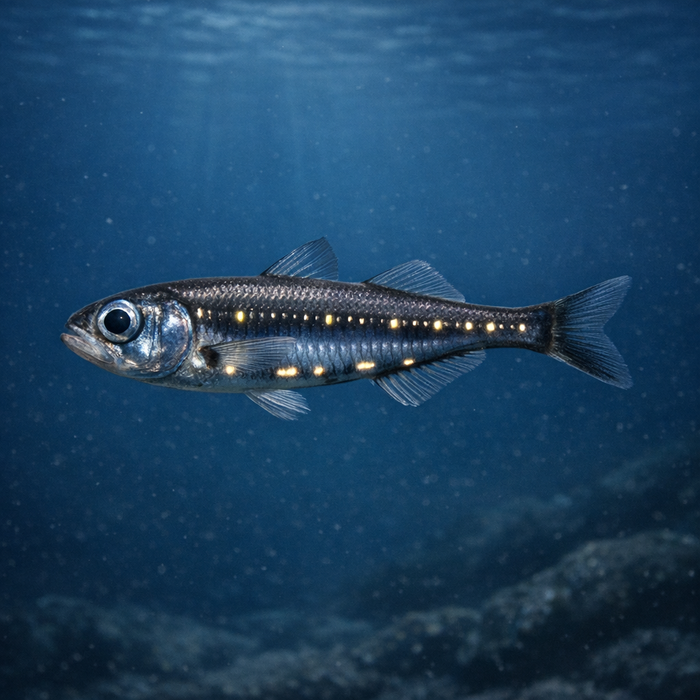
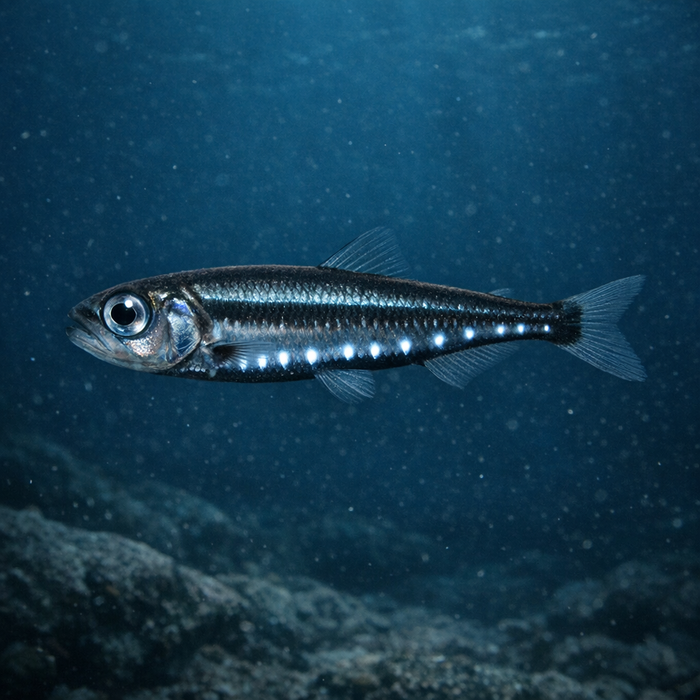
Patchwork Lampfish (Notoscopelus resplendens): A Bold, Memorable Hook LineIntroductionThe patchwork lampfish is the little glowstick that secretly runs the night shift of the ocean. You won't cast a topwater and see it blow up. You won't post with it across your shoulders. But when darkness drops on bluewater, this bioluminescent drifter flips on the lights and becomes the buffet line for everything fast, toothy, and famous. If you're chasing Patchwork lampfish facts or wondering about Patchwork lampfish habitat, you're really looking into the wiring of the open ocean.What Makes the Patchwork lampfish Unique?Two superpowers. First, counter-illumination. It projects a soft blue-green glow from tiny belly lanterns called photophores to erase its silhouette from predators below. It's stealth mode in living pixels. Second, it rides the biggest commute on Earth. Each evening, patchwork lampfish ascend from hundreds of meters deep to the surface layer, then retreat before dawn. This daily migration moves nutrients and carbon like a conveyor belt, powered by fins the size of thimbles. Add in oversized eyes tuned to twilight wavelengths and you've got a fish built for the dim and dangerous.Habitat & Global RangeThe patchwork lampfish is a mesopelagic generalist with a passport. It roams tropical and subtropical belts of the Atlantic, Pacific, and Indian Oceans, often stacked in layers over deep basins and seamounts. You won't see it browsing a reef; it rides open water and darkness. By day it chills down deep, well below recreational depths. By night it pushes shallower, sometimes brushing the glow of deck lights, FADs, and oil platforms where plankton concentrates. If you're picturing Patchwork lampfish habitat, think open ocean, no structure, just miles of blue with a dim ceiling.Behavior & TemperamentThis fish schools hard. Massive aggregations drift like underwater weather systems, pulsing on sonar as glowing clouds. It isn't aggressive; it's an opportunistic snacker on copepods, krill, and micro nekton. The bite isn't a smash. It's a tick on micro hooks or a flutter tap on tiny jigs when the lights pull plankton into the party. Handling is delicate. Thin skin and small scales mean you treat it like glass if you want a photo that doesn't look like confetti.Ecological ImportanceFor predators, the patchwork lampfish is midnight fuel. Tuna, billfish, dolphins, squids, and seabirds key in on these schools, especially during the evening rise. Multiply a three-inch fish by billions and you get a biomass machine that shuttles surface carbon downward each dawn. That daily yo-yo helps lock carbon in the deep sea and stabilizes food webs that power our favorite offshore trophies. Ignore the patchwork lampfish and you're ignoring the wiring behind the marlin you do care about.Conservation & Environmental PressuresGood news first: this species is considered Least Concern, and there's no real sportfishing pressure. But the ocean changes fast. Industrial midwater trawls for lanternfish aren't common yet in many regions, though interest flickers with fishmeal demand. Warming seas, shifting currents, and oxygen declines can scramble timing and depth of nightly migrations. Even subtle changes ripple through predators that rely on consistent patchwork lampfish movements.The FishyAF TakeIf you're the angler who hunts what others overlook, the patchwork lampfish is a quirky trophy. It's not about fight or fillet. It's about deciphering the night: setting lights, reading a sounder for fuzzy clouds, and scaling your rig down to the world of eyelashes and photophores. Catch one and you've touched the power grid of the pelagic. Miss them and the open ocean still blinks on time, feeding the beasts you brag about later. Small fish, big story-classic FishyAF energy.