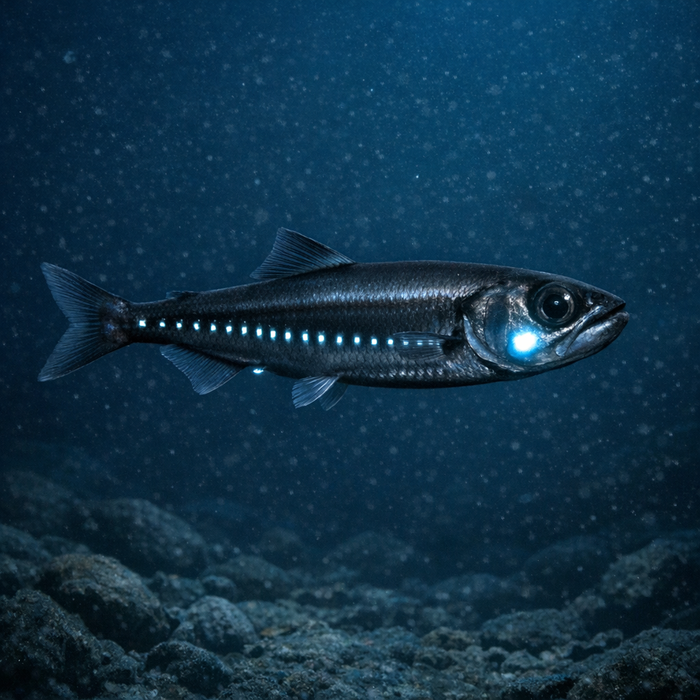
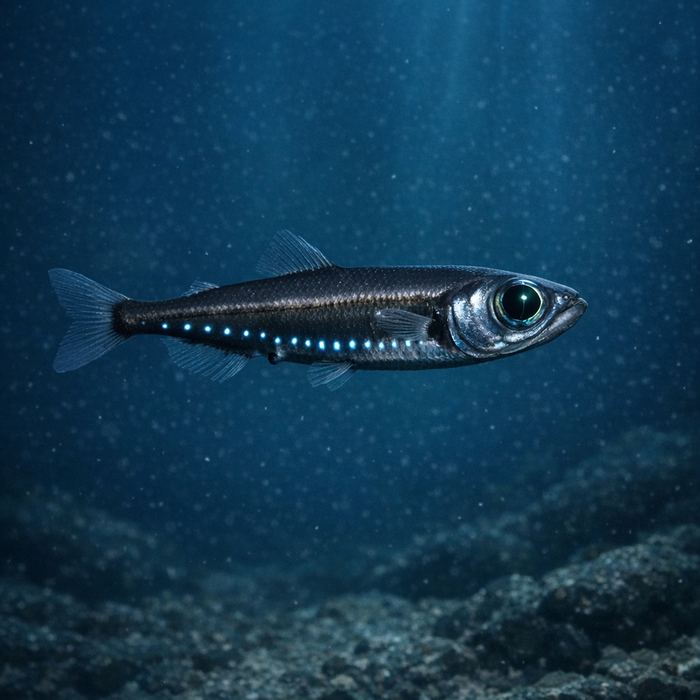
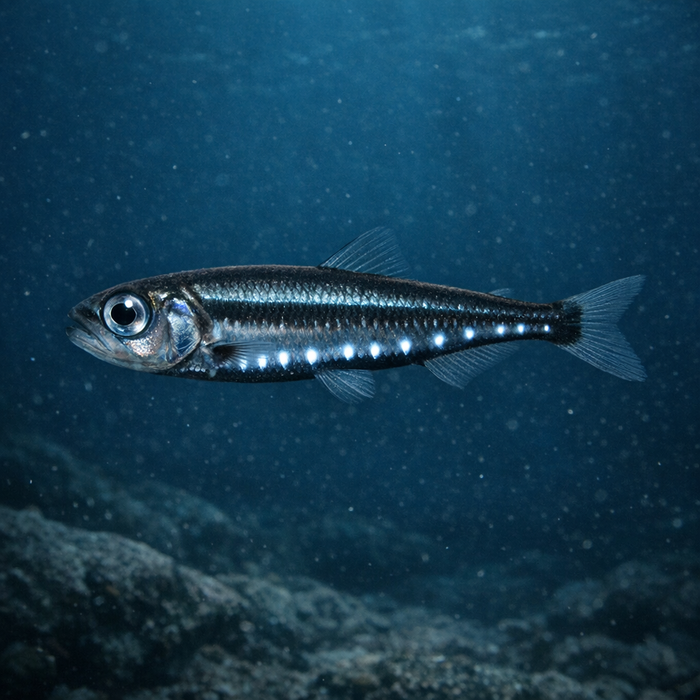
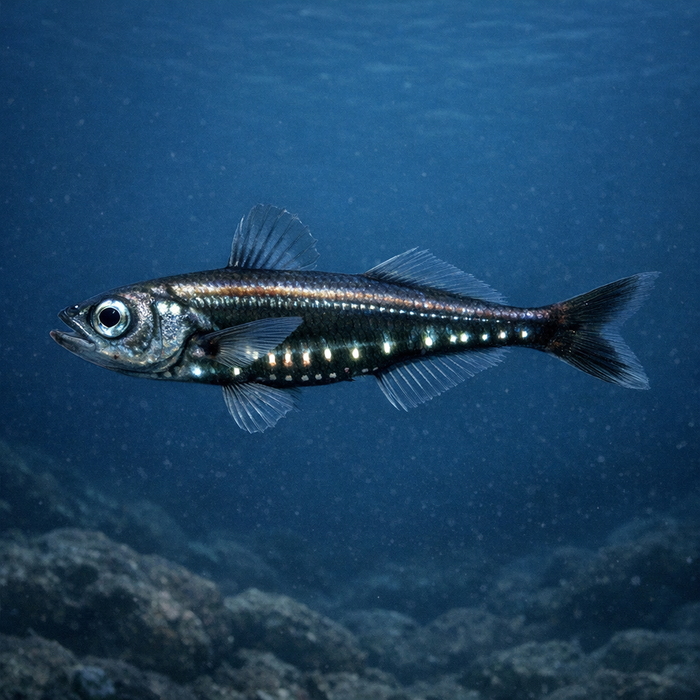
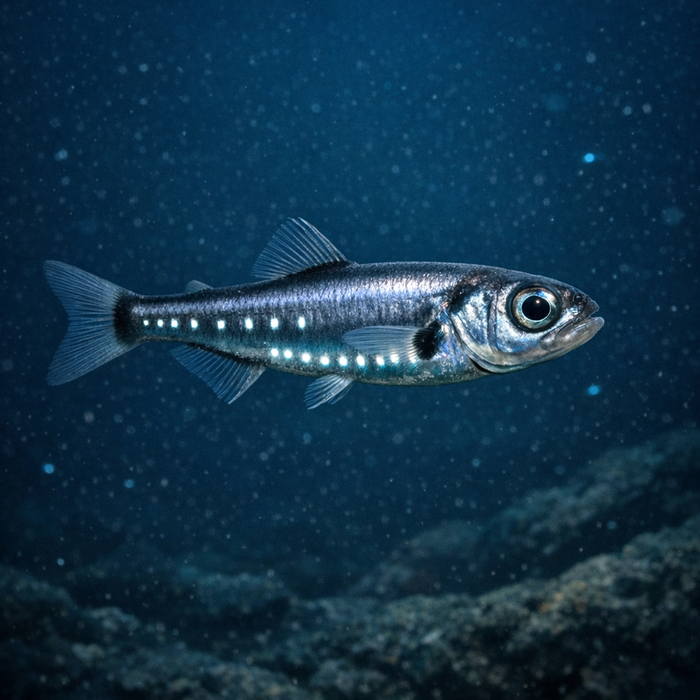
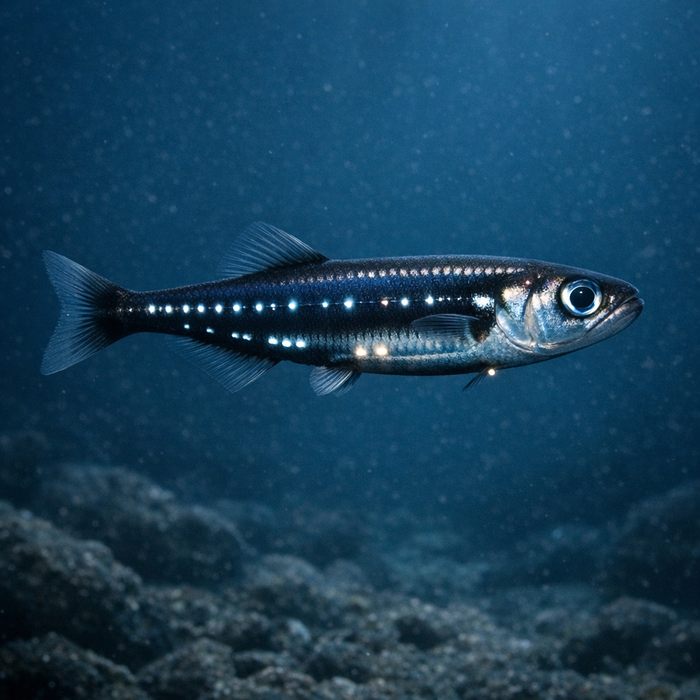
Diogenes lanternfish (Diogenichthys laternatus): A pocket-sized glow stick cruising the deep-night expressIntroductionThe Diogenes lanternfish is the kind of ocean resident you never see but everything else depends on. It's small, it glows, and it commutes vertically like a salaryman with fins. Anglers rarely chase it on purpose, but the species quietly fuels bluewater predators and the ocean's carbon engine. If you're here for real Diogenes lanternfish facts and a clean read on Diogenes lanternfish habitat, buckle up. We're going midwater.What Makes the Diogenes lanternfish Unique?For starters, bioluminescence isn't some party trick. This fish runs an onboard lighting rig called photophores that it can dial up or down to blend into moonlit water, a stealth move named counter-illumination. The pattern of those lights is precise to Diogenichthys laternatus, which lets scientists identify it like a barcode. And then there's its nightly grind: a massive vertical commute from deeper water into the upper few hundred meters after dark, joining the planet's largest daily migration. For a fish shorter than your finger, it lives big.Habitat & Global RangeThis is a textbook mesopelagic drifter, living over deep water in the open ocean. By day it holds down in the twilight zone, deeper than most recreational tackle touches. At night, the Diogenes lanternfish rises toward the surface to feed, often clustering into the deep scattering layer that shows up on sonar as a mysterious, shifting cloud. The range is broadly tropical and subtropical across multiple oceans, and you'll cross paths with its schools offshore near continental slopes, canyons, and seamounts. In plain English: if there's blue water and depth, the Diogenes lanternfish might be commuting through it after sunset.Behavior & TemperamentThe Diogenes lanternfish is a team player. It schools thick, moves constantly, and relies on darkness plus body lighting to avoid becoming an easy snack. Aggression toward baits is low; think pecks, not smashes. But put tiny offerings into the zone at night and you might witness nips as the school mills through. Hook one and the "fight" is a courtesy headshake before it rides the line like a leaf.Ecological ImportanceIf offshore predators are rock stars, lanternfish are the roadies hauling the gear. Diogenes lanternfish delivers calories to tuna, billfish, mahi, and squid that anglers obsess over. Equally huge, its daily up-and-down commute moves carbon out of surface waters, feeding the deep and storing carbon where sunlight can't reach. Midwater biology sounds abstract until you realize your favorite pelagic bite often rides on schools of these glowing snacks.Conservation & Environmental PressuresNo one is writing tearful ballads about the Diogenes lanternfish, and formal assessments are limited compared to headline species. Still, the mesopelagic realm faces growing interest from industrial fishing for fishmeal and bait. Add warming oceans shifting plankton communities and oxygen levels, and you've got real pressure on a fish that underpins open-ocean food webs. The silver lining: most recreational anglers interact with it lightly and accidentally, and offshore protected areas can buffer schools near seamounts and canyons.The FishyAF TakeThe Diogenes lanternfish is proof that tiny doesn't mean trivial. If you ever tangle with one around boat lights, celebrate the oddity and handle it gently. For bluewater fanatics, remembering what feeds the predators sharpens your game. Respect the commute, respect the glow, and thank the Diogenes lanternfish the next time a tuna rips drag. It's the unsung hinge pin of the pelagic show, and it clocks in every single night.