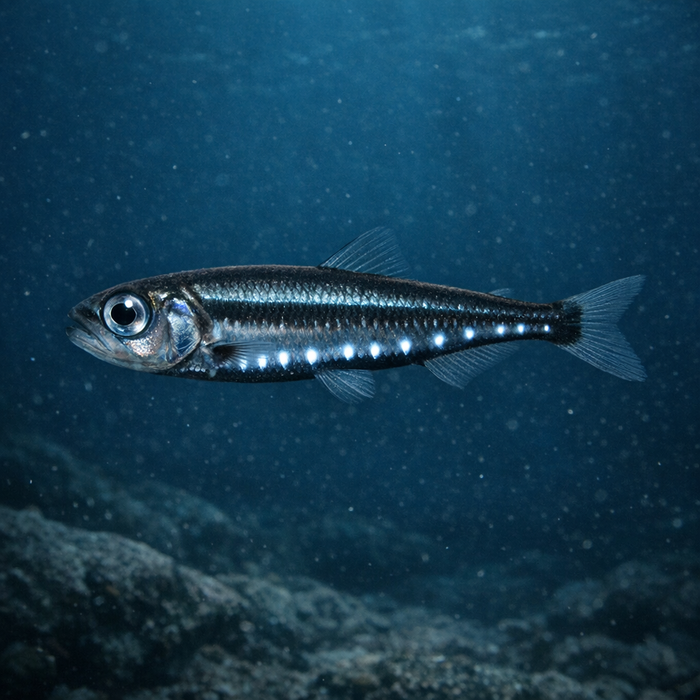
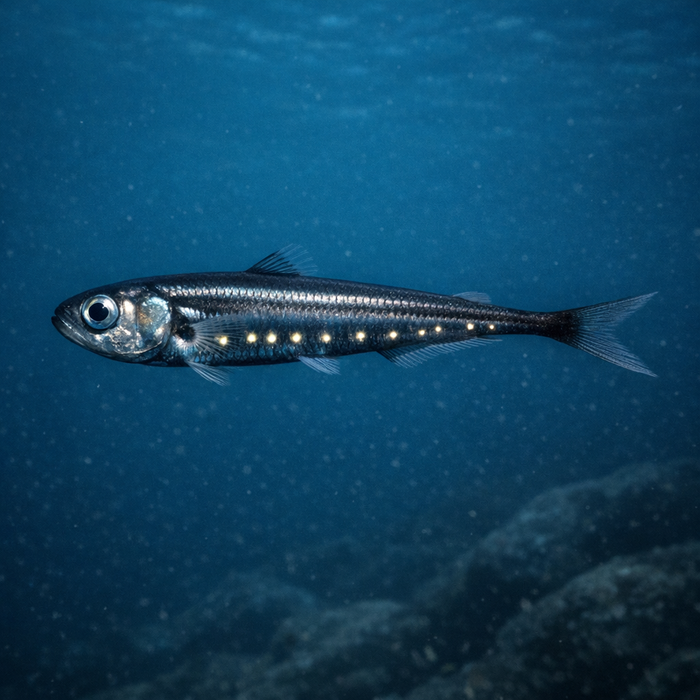
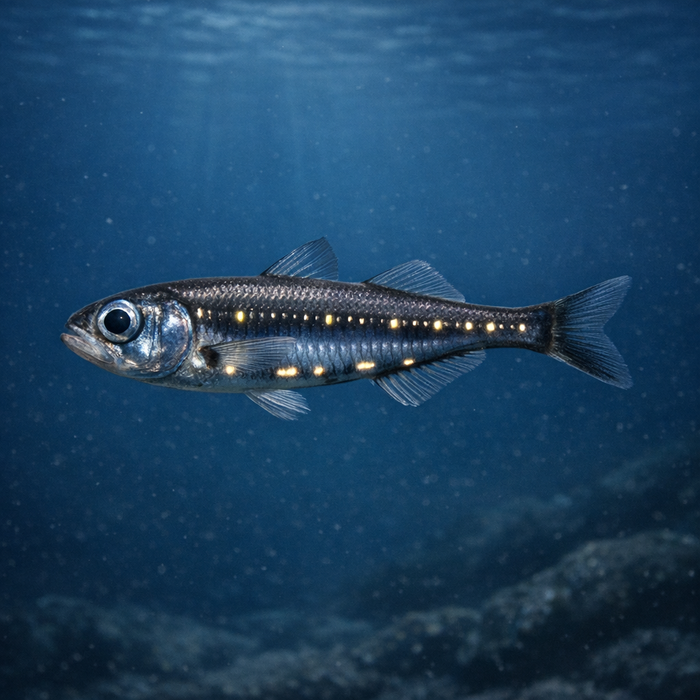
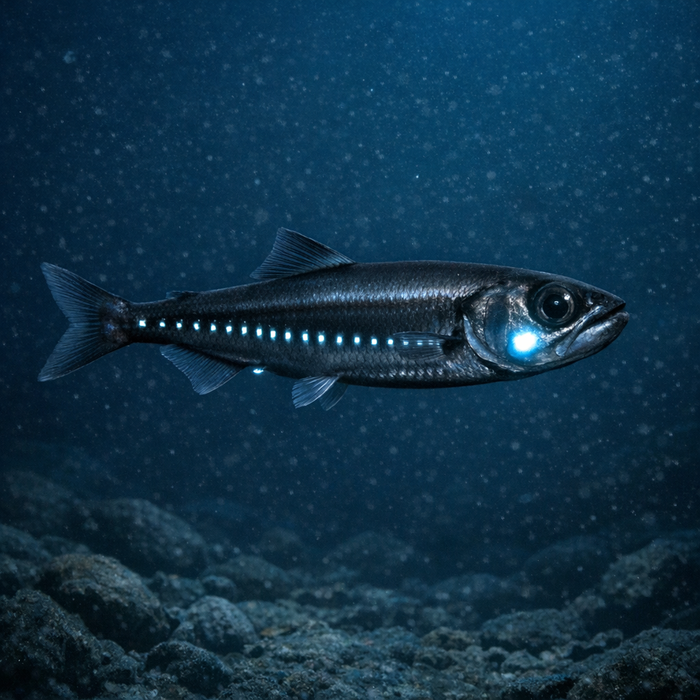
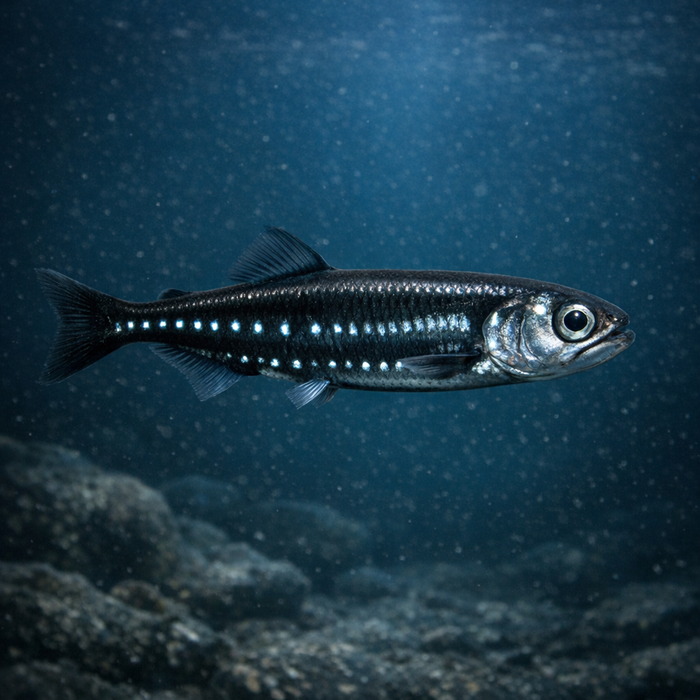
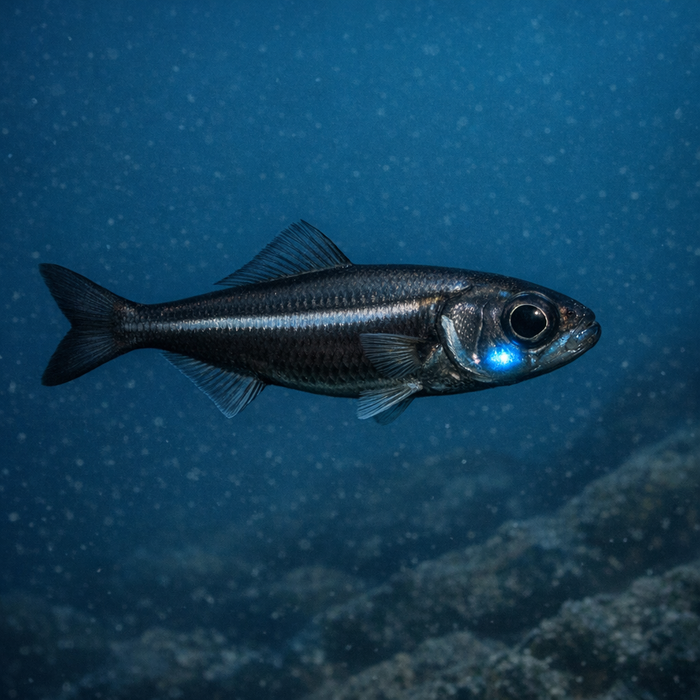
Longfin Lampfish (Lampanyctus steinbecki): The tiny nightlight of the open ocean that powers big-league food chains.IntroductionSmall, shiny, and wildly important, the longfin lampfish is the midnight commuter you've probably never seen but every ocean predator knows by heart. It's not a classic sportfish and won't spool your reel, yet this little lantern with a glowing toolkit might be the most influential baitfish you'll never cast at. Consider this your crash course in longfin lampfish facts, why they matter, and what makes this species more than plankton with a PR problem.What Makes the Longfin lampfish Unique?First, the look. True to its name, the longfin lampfish carries proportionally long pectoral fins that telegraph its identity among lanternfishes. Then there's the light show: tidy rows of photophores that trigger in the blue-green sweet spot, likely used for communication and counterillumination. It's a custom neon kit designed to erase shadows and talk quietly across the deep. Finally, that vertical commute. Each night, longfin lampfish ride the water column like an elevator, surging hundreds of meters upward to graze near the surface, then dropping back down before sunrise. That migration fuels predators from squid to tuna to billfish. A tiny fish making a very loud ecological statement.Habitat & Global RangeIf you're hunting "Longfin lampfish habitat" on a map, think mesopelagic, open-ocean water in the Eastern Pacific. They roam the blue water off the continental slope, drifting in and out with currents and upwelling plumes. The fish spend daylight deep with the scattering layers and rise toward the surface under darkness. Nearshore, they brush the influence of submarine canyons and strong current lines. Offshore, they school in vast, shifting midwater clouds you'll spot on sonar as fuzzy blankets between 200 and 1,000 meters. In short: big water, deep living, and a strict night shift.Behavior & TemperamentThe longfin lampfish is not a brawler. It's a survivor. The playbook is simple but effective: school tightly, move constantly, and hide in plain sight with counterillumination. At night, they relax the depth lock and come topside to feed, often orbiting light sources like research vessels, squid boats, or oil platforms. Bite cues are subtle, if you're even fishing for them; it's more about proximity and movement than aggression. Their photophore patterns are species-specific, a quiet language that keeps the school sorted while predators are trying to sort dinner.Ecological ImportanceUnderestimate this fish and you miss the entire open-ocean food economy. Longfin lampfish push energy up the ladder, hoovering tiny prey and becoming premium fuel for bigger predators. They thicken the deep scattering layer that lights up every serious sonar screen, and their nightly rise brings that protein payload into striking distance of everything with speed, teeth, or tentacles. Want more tuna? You want healthy lampfish pulses delivering calories to the surface party.Conservation & Environmental PressuresMost lanternfishes sit outside traditional recreational and commercial pressure, but that doesn't make them bulletproof. Climate shifts can rejigger currents, temperature bands, and oxygen layers that define where and when longfin lampfish make their commute. Industrial lighting at sea and changing plankton communities can also tweak behavior and success. There isn't a line of anglers hammering them, yet what happens to these fish echoes across the pyramid all the way to topwater explosions.The FishyAF TakeThe longfin lampfish won't headline your trophy wall, but it headlines the night shift that feeds everything you actually chase. It is finesse incarnate: specialized, subtle, and vital. Treat it like the open-ocean spark plug it is. If you're the kind of angler who reads the water beyond the strike, understanding the longfin lampfish makes you better at finding what eats it. That's the real flex-knowing the small stuff that fuels the big stuff. File this one under overlooked, indispensable, and surprisingly badass.