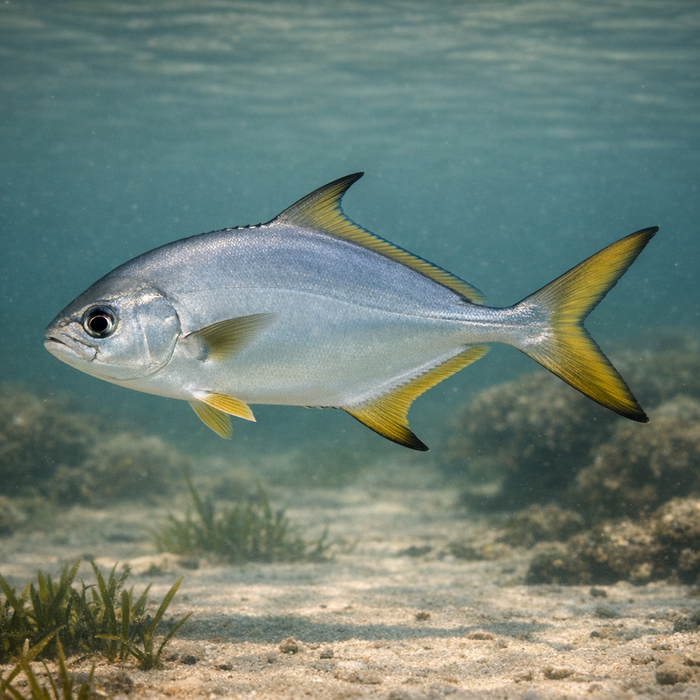
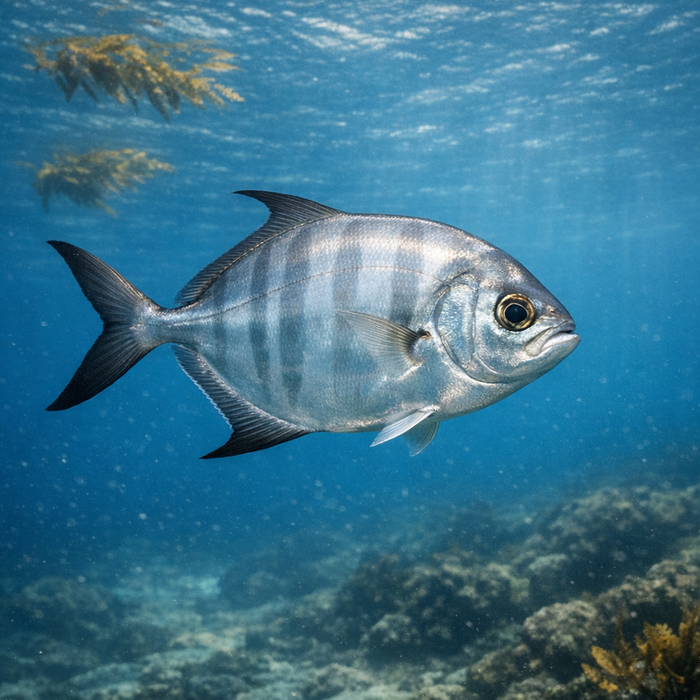
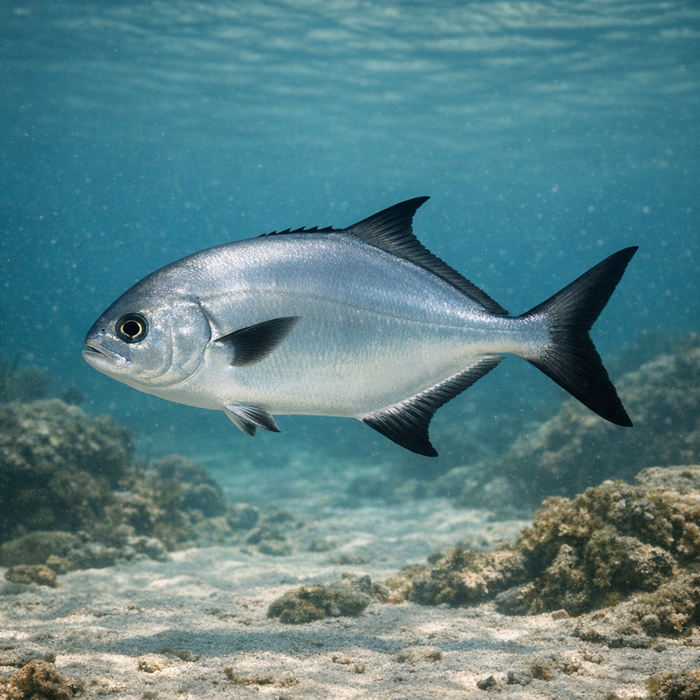
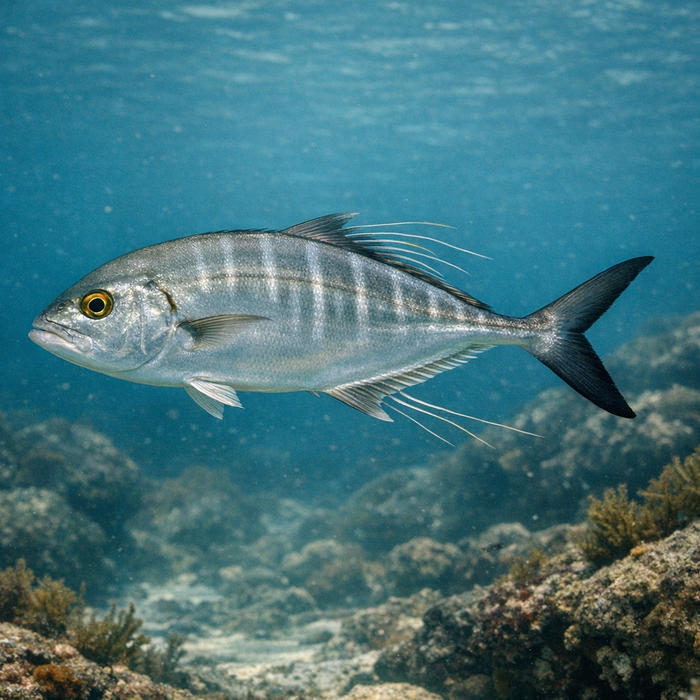
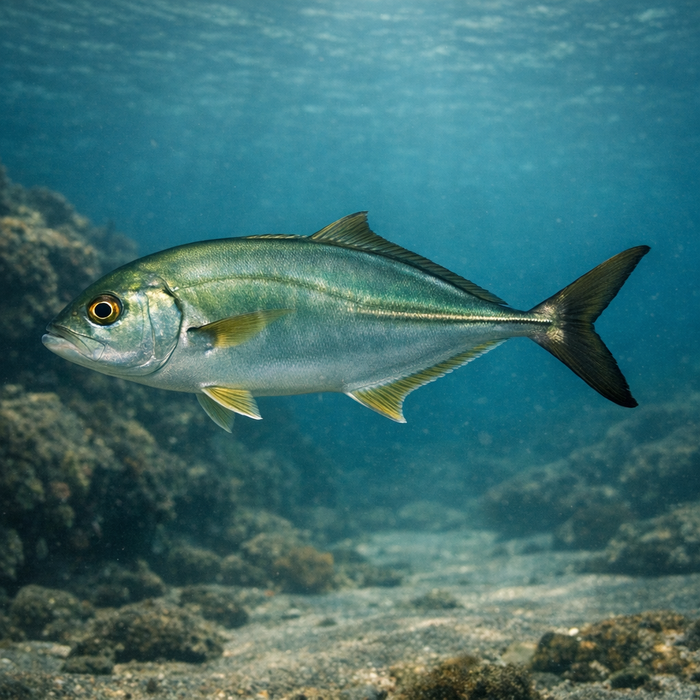
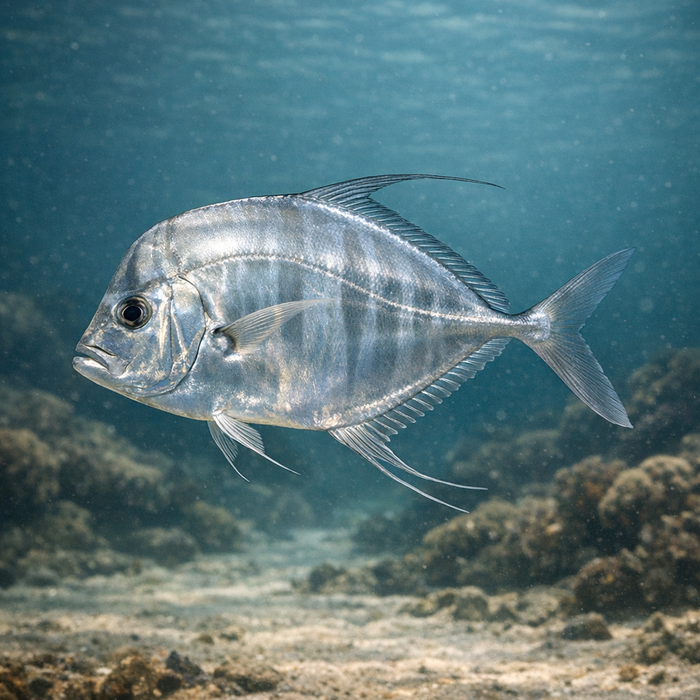
Blackblotch Pompano (Trachinotus kennedyi): A surf-sprinting silver saucer with a vanishing birthmark and a taste for turbulence.IntroductionThe blackblotch pompano is the beach-break brawler that shows up where waves chew sand into troughs and cuts. It looks like someone crossbred a chrome dinner plate with a jet fin, then painted a bold smudge on the flank for attitude. For anglers prowling Eastern Pacific shorelines, this fish means clean hits, fast runs, and quick limits when the tide turns right. If you want Blackblotch pompano facts without the yawn, start with this: it's built for surf chaos and punishes bad timing.What Makes the Blackblotch pompano Unique?First, that namesake blotch. It's a big, dark oval on the side that can fade minutes after landing, which makes ID photos matter. Second, the body plan is almost circular, with deep forks in the tail and falcate fins, purpose-built for tight turns and speed bursts through rolling whitewater. Third, it's smoother than most of its jack cousins. Where many jacks have armored tail scutes, this one goes sleeker, trading armor for agility and a more refined ride through sand-churned lanes.Habitat & Global RangeIf you're scouting Blackblotch pompano habitat, think Eastern Pacific coastlines: Baja's lee beaches, Mexican surf zones, Central American points, and into South America. It likes the nearshore game: sandy points, open beaches, and river-mouth deltas where sand crabs and other crunchy snacks stack up. Depth is usually shallow, often from ankle to a few fathoms, with occasional forays a little deeper along current seams and drop-offs. When the surf is right and bait is pinned, schools move tight, working parallel to the shoreline like silver patrol cars.Behavior & TemperamentBlackblotch pompano are efficient, opportunistic sprinters. They don't loaf around structure like grouper and they aren't cruising bluewater like tuna. Instead, they pulse along beaches with the rhythm of the tide, keying on windows when waves and current expose prey. Bites are sharp and decisive. Hook one, and it burns a fast arc before settling into dogged pulls, perfectly tuned to make light rods sing. They often travel in small packs, so a hookup can snowball into a flurry if you keep a bait or small metal in the strike lane.Ecological ImportanceThis species is a middle-gear predator in the surf engine, converting invertebrates and small fishes into calories that feed larger coastal predators. Think of them as translators between the sandy benthos and everything higher up the chain. Their habit of working dynamic edges also makes them reliable indicators: when you see blackblotch pompano push bait inshore, conditions are usually clicking for lots of surf species.Conservation & Environmental PressuresBlackblotch pompano isn't typically a headline commercial target, but beach nets, artisanal take, and casual meat runs can stack up locally. Coastal development that hardens shorelines or trashes water clarity smothers the surf-zone food web they rely on. Add warming seas and shifting upwelling, and you've got a moving target for distribution and seasonality. Formal stock assessments are thin, so smart harvest and local awareness matter more than usual.The FishyAF TakeThe blackblotch pompano is the definition of honest fishing: read the beach, hit the window, get paid. No sail-tracking electronics, no 14-rod spreads. Just a pocketful of sand crabs or a chrome spoon and the right cut on an incoming tide. It's simple until it isn't. Miss the lane by three feet, or linger through slack water, and you'll swear they vanished with the blotch. Study the seams, respect the clock, and this fish will make you look like you've got a PhD in surf. That's the real Blackblotch pompano facts playbook.