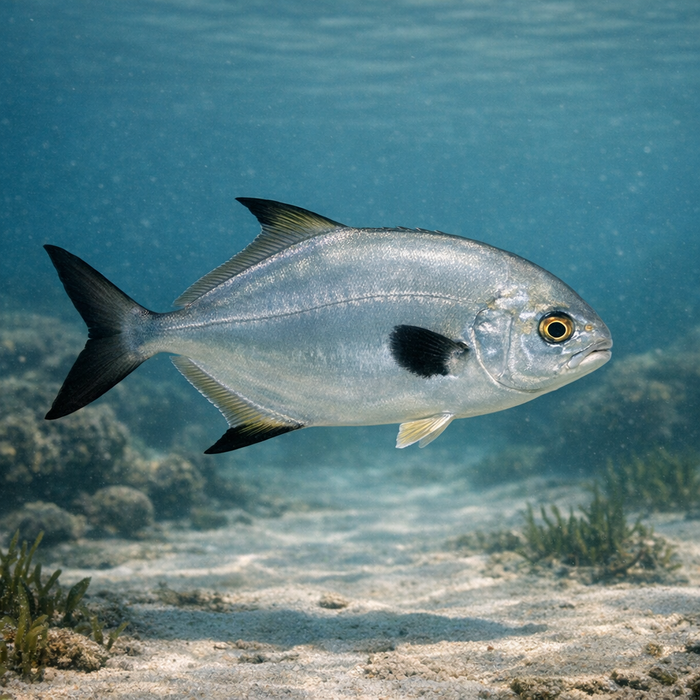
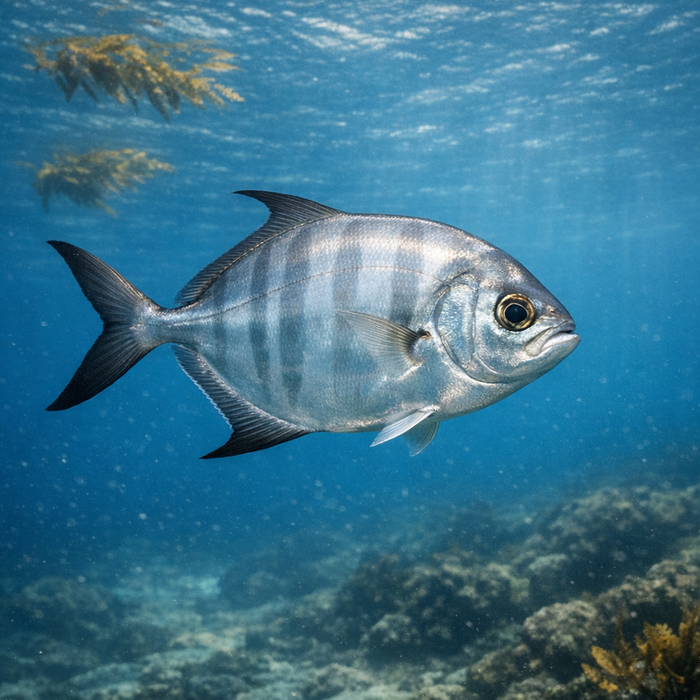
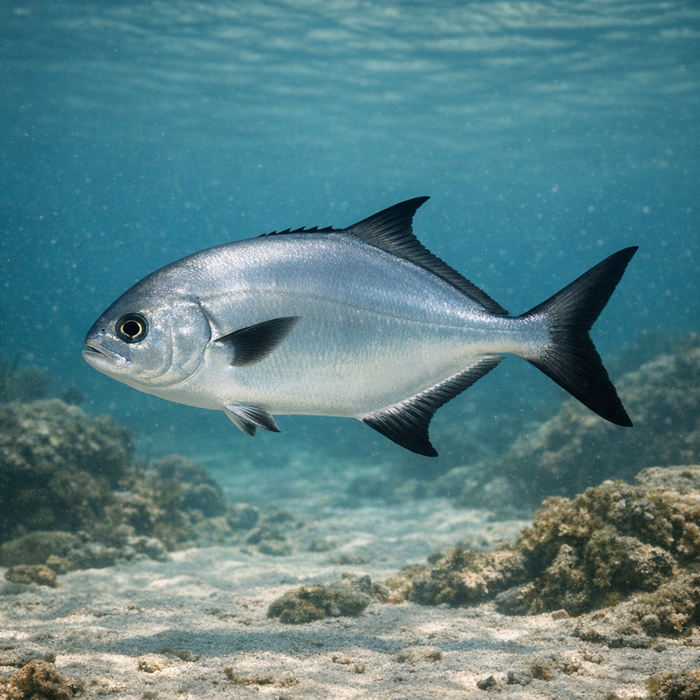
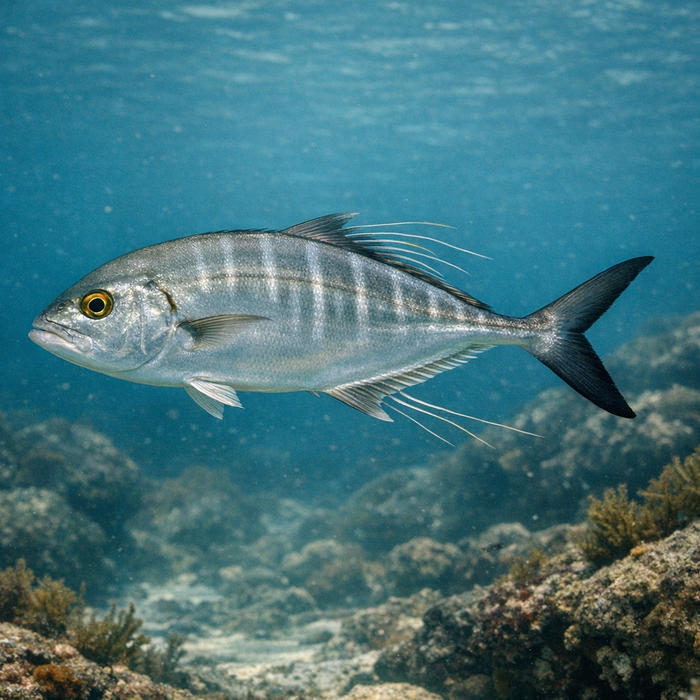
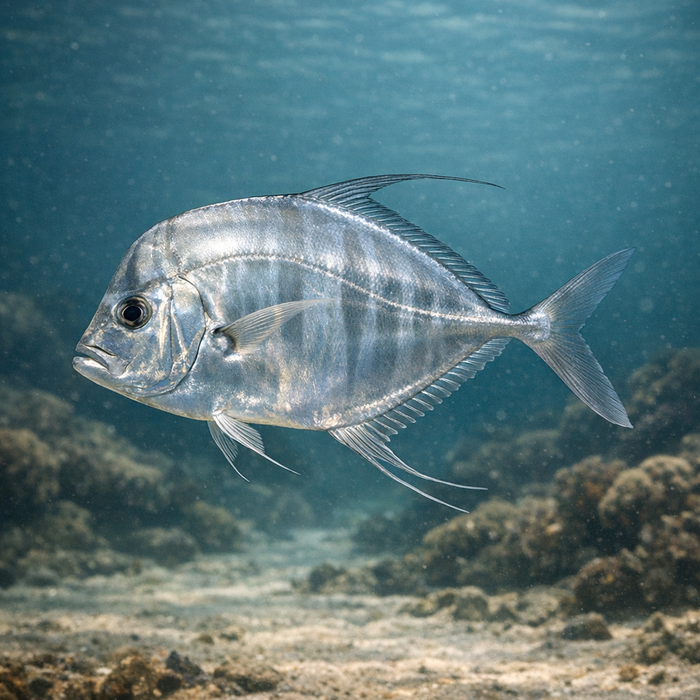
Gafftopsail Pompano (Trachinotus rhodopus): Surf-zone sprinter with a pennant on topIntroductionIf you fish beach breaks from Baja to Peru, you've met the silver ghost zipping the swash: the gafftopsail pompano. It moves fast, eats well, and vanishes like a dropped coin in foam. This is a shore-based prize that rewards anyone who can read waves and find life in the skinny water. You want Gafftopsail pompano facts and Gafftopsail pompano habitat intel that translate to bent rods? Keep reading.What Makes the Gafftopsail Pompano Unique?Start with the silhouette. Juveniles sport long, sail-like dorsal and anal fin streamers that flutter like pennants in churned water. Even adults keep that tight, deep-bodied pompano build that screams acceleration. Then there's the hardware: small front teeth up top, with crushing plates in the throat that obliterate armored snacks like sand crabs and tiny clams. Add a mirror-silver sheen that reflects beach sand and sky, and the gafftopsail pompano becomes a master of in-plain-sight camouflage right where waves detonate.Habitat & Global RangeThe gafftopsail pompano runs the Eastern Pacific, ranging from the occasional Southern California cameo south through Baja California, the Gulf of California, mainland Mexico, Central America, the Galápagos, and down into Peru. It's a surf specialist, happiest in sandy beaches with troughs, rips, and edges where food gets rolled. You'll also see them in nearshore sand flats and estuary mouths when conditions are clean and moving. Picture warm-season beach days with a steady side-current and consistent breaking sets. That scene is classic gafftopsail pompano habitat.Behavior & TemperamentThis fish is a patrol car for the shore-break. It roams fast in small packs or loose schools, timing runs to the push and pull of surf. Aggression is situational: when sand crabs pop, it's go time. Feeding windows align with tides and water clarity, and bites can ignite right in ankle-deep swash where most anglers never bother casting. The fight is classic carangid leverage: quick surge, tight circles, and stubborn torque for their size. Hook a solid gafftopsail pompano in current and you'll swear it's bigger than it measures.Ecological ImportanceThe gafftopsail pompano stitches surf energy into the food web. It taxes invertebrate populations like mole crabs and small bivalves, then pays that energy upstream to larger predators patrolling deeper edges. Its speed and mobility make it a bellwether of shoreline condition: stable sand structure, clean water, and lively benthic life bring them in; muddied runoff and dead zones push them out. When gafftopsail pompano are working the beach, you can bet the nearshore system is humming.Conservation & Environmental PressuresThis species isn't typically a headline conservation case, but it's not bulletproof. Surf ecosystems are fragile. Coastal development alters sand movement, river mouths pulse pollution after storms, and heavy harvesting of bait species can clip the food supply. Local net pressure varies by country and season. Add a warming ocean and shifting current patterns, and the dependable summer surf bite can wobble. The smart play: handle fish cleanly, respect nursery edges, and pay attention to local regulations, which can change faster than the tide chart.The FishyAF TakeThe gafftopsail pompano is the beach angler's private-stock fun. No boat, no problem. Learn to read the troughs, commit to the moving water, and match the dominant prey, and this species will make you look like a surf whisperer. It's a fish that rewards timing more than tinkering. Show up when the water greens up after a swell, when the crabs are churning, and when the rip lines are conveyor-belting food. Do that, and the gafftopsail pompano will do the rest. Put simply: it's the most satisfying silver you'll pull from the skinny stuff, and the best teacher you'll find for how the surf actually works. Consider this your pocket guide to real-deal Gafftopsail pompano facts, minus the fluff and plus the bites.