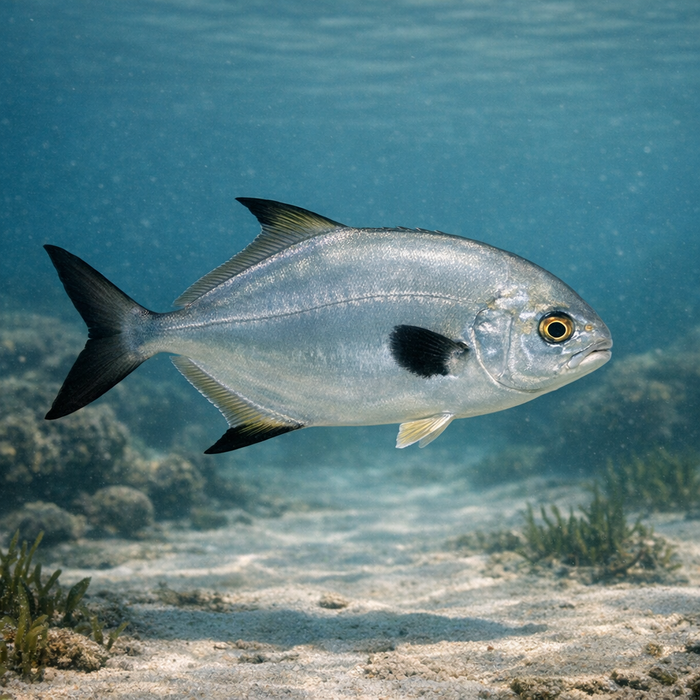
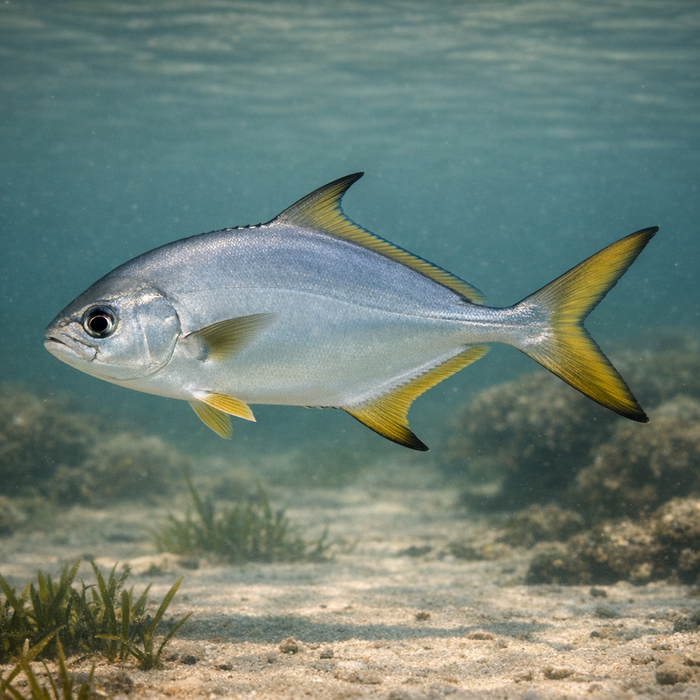
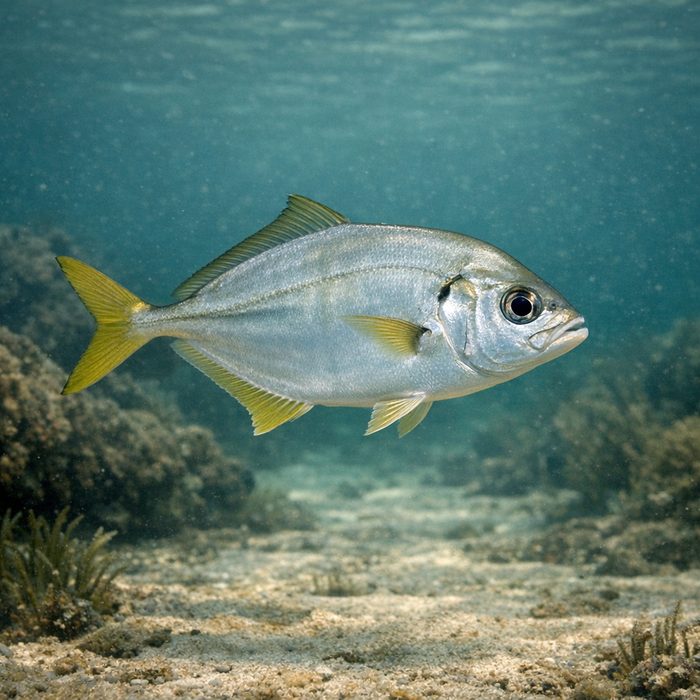
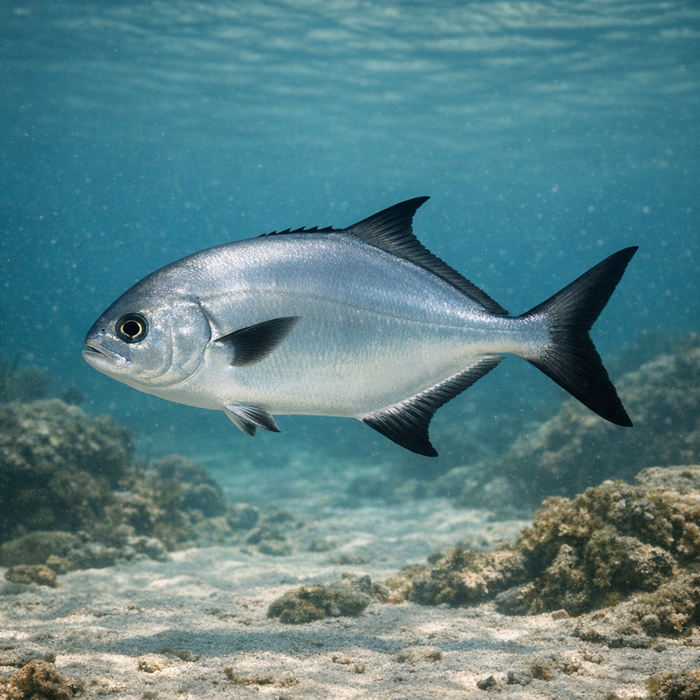
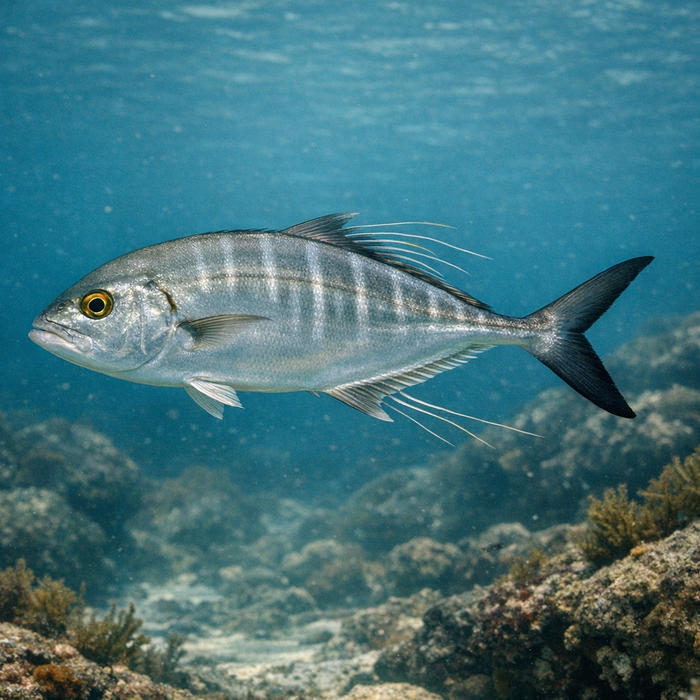
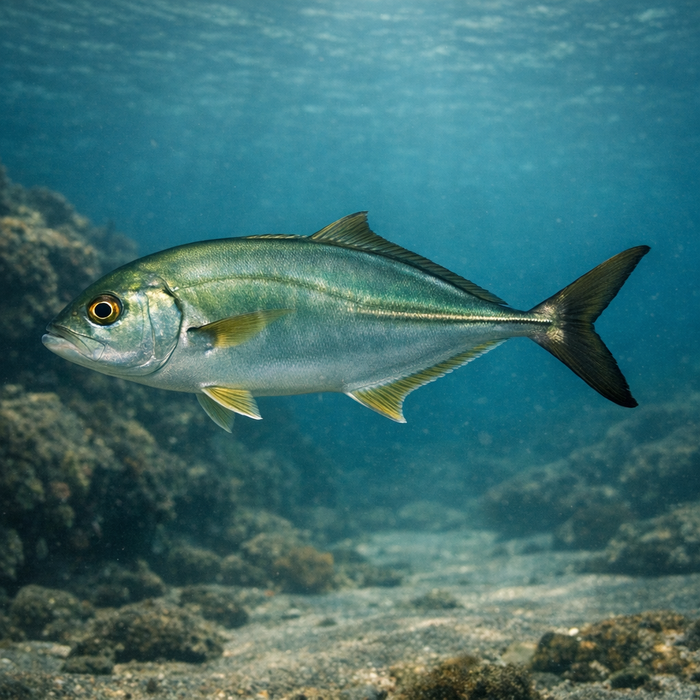
Mexican moonfish (Paraselene orstedii): A silver slip of a jack that turns sideways and vanishes.IntroductionThe Mexican moonfish looks like someone ironed a jack flat and polished it to mirror-bright. It's a coastal curveball: thin as a postcard, steep forehead, fins that steer like spoilers, and a knack for ducking hooks with delicate bites. For anglers prowling piers, breakwalls, and quiet bays in the eastern Pacific, this fish is a flashy surprise that suddenly materializes in the chum slick, glints once, and slips away.What Makes the Mexican moonfish Unique?Two design quirks define the Mexican moonfish. First, the body: deep, hyper-compressed, and almost invisible head-on. Turned sideways, it's a billboard; pivoted straight at you, it's a razor blade. Second, the mouth-jaw setup rides under a steep forehead, hinging downward to peck tiny crustaceans with surgical control. Juveniles sport long, ribbon-like fin rays that mimic drifting leaves. Adults trade those sails for sleeker control surfaces, keeping their trademark hover-and-tilt feeding style.Habitat & Global RangeIf you're hunting Mexican moonfish habitat, think warm, protected edges. They haunt sandy inshore flats, mangrove-fringed bays, marina lights, and the quieter corners of reefs where current ruffles bait but doesn't rip it away. Their range rides the eastern Pacific, notably along Mexico's west coast and through Central America down into parts of South America. They aren't an offshore target; you'll tangle with them in 3 to 60 feet, often within casting distance of shore. That said, they roam. Schools drift through pier shadows at dawn, then slide off to deeper edges once the sun pops high.Behavior & TemperamentThe Mexican moonfish is a finesse feeder with tactical swagger. Schools move like a single mirror, flashing and fading as individuals pivot to near-invisible profiles. They angle their bodies while hunting, scanning sand for shrimp and small crabs. Bites are quick, almost polite. Hooked fish dart and kite, using that big body as a planing surface, more glide than bulldog. In mixed-company bait balls, they hang beneath the chaos, capitalizing on stunned morsels kicked loose by more aggressive jacks. At night or under structure lights, they become bolder, slipping right into the glow to snipe glass minnows.Ecological ImportanceDespite their small, shiny vibe, Mexican moonfish grease the gears of inshore food webs. They convert little crustaceans and fry into mid-level protein, feeding larger predators like snapper, snook, and mackerel. Juvenile moonfish, with their leaf-mimic act, thread the line between nursery safety and open-water risk, shuttling energy from mangrove creeks out to adjacent bays. That steady shuttling stabilizes the buffet for a lot of local heavy hitters.Conservation & Environmental PressuresNo big red flags scream from the data, but data itself is thin. The Mexican moonfish rarely gets spotlighted in assessments, living in the statistical shadow of more famous jacks. The usual coastal culprits still matter: estuary development, mangrove clearing, and poor water quality. Local netting and incidental catch can bump numbers around on a small scale. Climate shifts that nudge temperature and current can reorganize their neighborhood, pushing schools earlier or later, shallower or deeper. Nothing apocalyptic in the headlines, just the steady grind of coastal change.The FishyAF TakeThis isn't a hero fish; it's a finesse puzzle with style points. The Mexican moonfish rewards the patient angler who downsizes gear, ties on a tiny jig, and actually watches the water. You'll spot that ghostly flash, the sideways tilt, the hover. Land one and you get a living chrome plate with big eyes and a smarter-than-you vibe. If you like collecting species and dialing in subtle bites, add this one to your list. For quick reference, stash these Mexican moonfish facts: shallow structure, gentle current, low light, and small presentations. Learn the Mexican moonfish habitat signature, and you'll start seeing their mirror tricks everywhere along warm, protected coastlines.