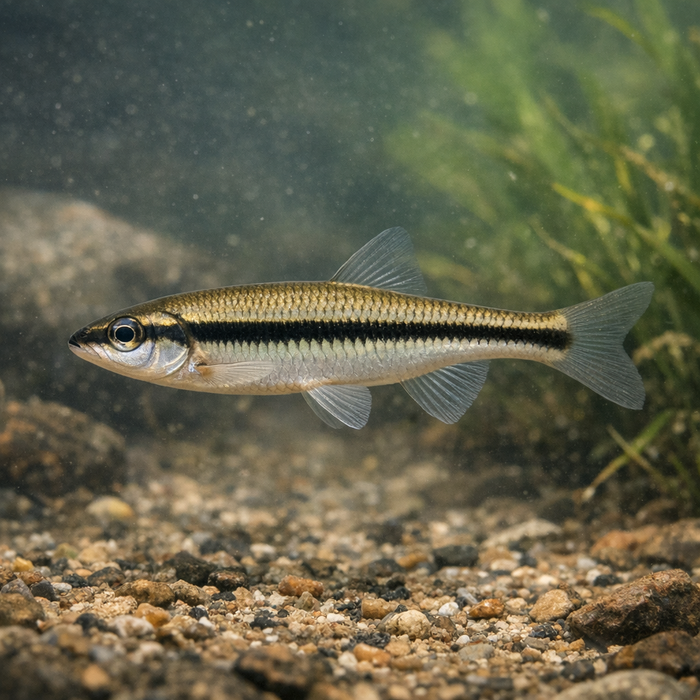
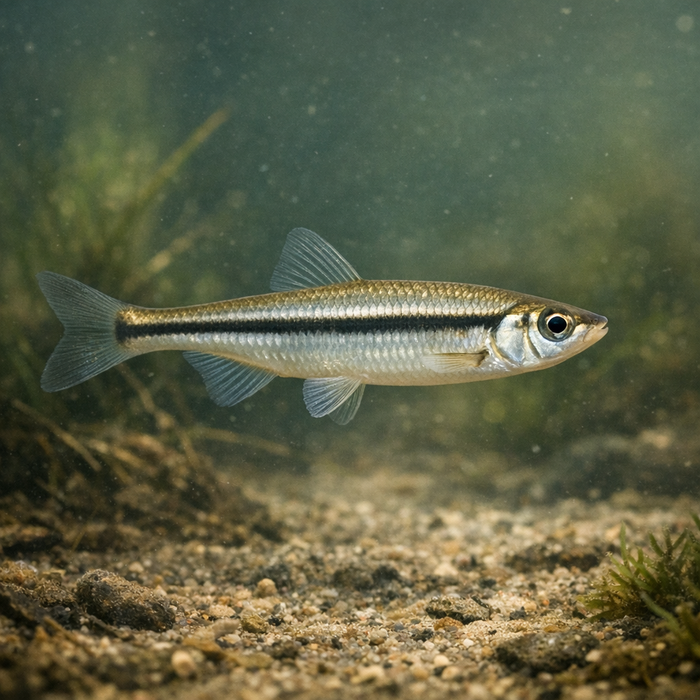
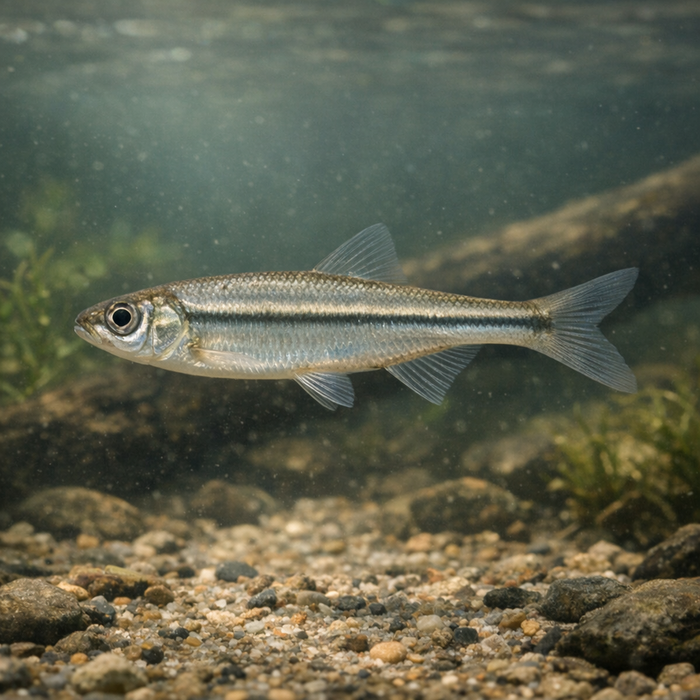
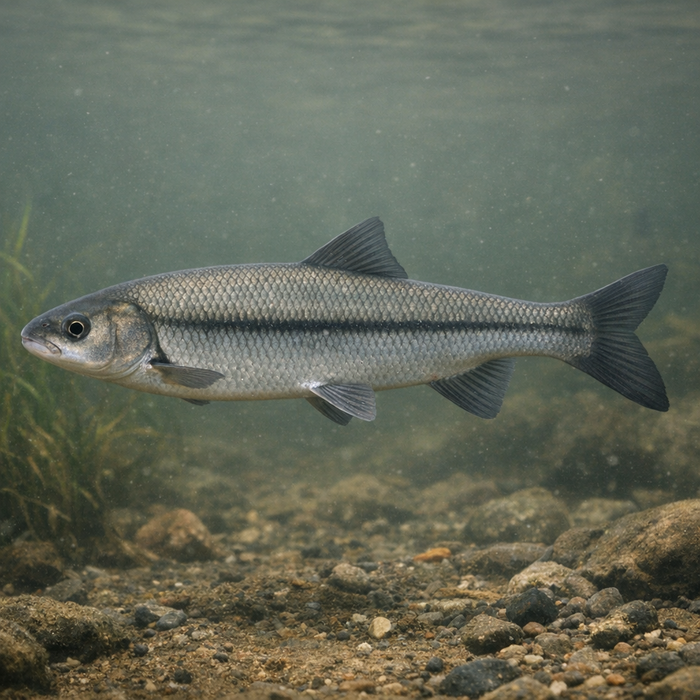
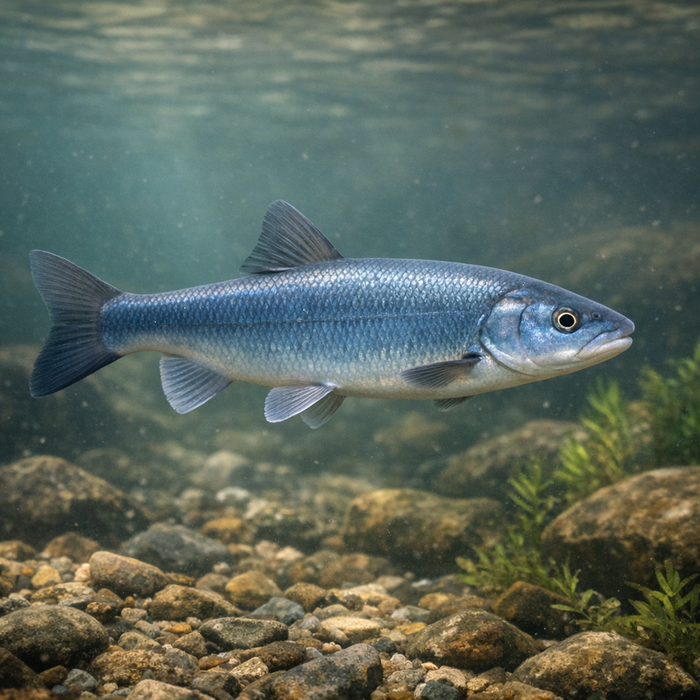
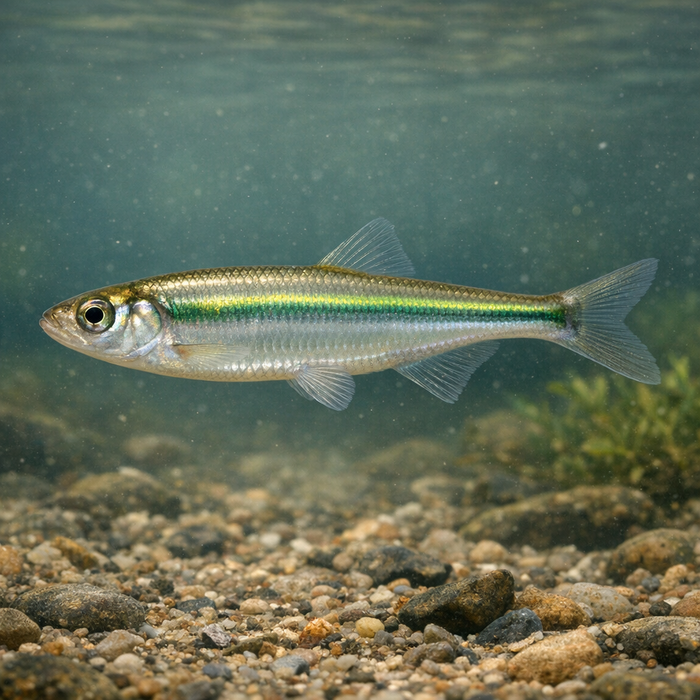
Blackchin shiner (Notropis heterodon): Tiny minnow, big attitude, rocking permanent black lipstick.IntroductionThe blackchin shiner is the microfish that looks like it rolled straight out of a punk show. That stark black chin and upper lip aren't a trick of the light. They're the signature paint job on a fish that rarely breaks three inches yet still turns heads. If you've ever scanned a crystal-clear weedbed and seen a flash of straw-gold scales over pale sand, you've probably cruised past a school of these. This writeup serves both as hard-earned angler intel and your one-stop shop for Blackchin shiner facts.What Makes the Blackchin shiner Unique?Start with the face. The species' inky chin and upper lip wrap the snout like someone traced it with a marker. That pigment runs into a dark side stripe that hooks up across the snout, a pattern that separates it from lookalikes. Males also grow rough breeding tubercles during spawning that feel like fine sandpaper. And despite the bite-sized body, they're stunning in sunlight: olive backs, chrome flanks, and that trademark black goatee.Habitat & Global RangeAsk about Blackchin shiner habitat and you'll hear a consistent theme: clean, calm, and weedy. They favor clear lakes and gentle streams with sand or fine gravel and lush vegetation. Think inside edges of pondweed beds, quiet coves off larger lakes, and backwater margins of small rivers. Regionally they anchor in the Great Lakes basin and much of the upper Midwest into the Northeast, with patchy strongholds where water clarity stays high and silt stays low. Silted, turbid, or algae-choked water? They ghost out fast.Behavior & TemperamentBlackchin shiners school tight, often by the dozens or hundreds, hovering almost motionless above pale substrate, then sliding forward with tiny fin flicks. They sip micro-invertebrates and plant bits with a subterminal mouth, so they neither bulldoze the bottom nor blitz the surface like predators. They're cautious, sensitive to shadows and heavy footsteps, and lightning-quick to spook. During late spring into early summer, males darken even more as spawning peaks in the mid-60s Fahrenheit. Eggs are broadcast over vegetation and clean substrate with zero parental care, and the whole party winds down quickly once temperatures climb.Ecological ImportanceDespite the modest size, blackchins are classic middlemen in clear-water food webs. They convert clouds of small invertebrates and plant matter into snackable protein for larger predators like bass, pike, and perch. Their sensitivity to turbidity and shoreline abuse makes them an early warning system for weedy-lake health. When blackchins vanish from a bay that once swarmed with them, the habitat usually took a hit first.Conservation & Environmental PressuresAt a broad scale, the species trends Least Concern. Zoom in, and the story can get messy. Local declines track with dredging, sediment runoff, shoreline hardening, nutrient surges, and invasive plant management gone sideways. They need sunlight plus plants, not chocolate-milk water or riprap. Because they're small and often lumped with "minnows," they can slip under the management radar until populations crater. Anglers can help by treating weedbeds as nurseries, tamping down wake in skinny backwaters, and keeping boots, nets, and buckets clean between waters.The FishyAF TakeThe blackchin shiner is the gateway drug to microfishing. You don't need a boat, just stealth, patience, and humor. Bring a tiny float, thread on a fleck of worm, and hunt that telltale ink-dipped lip along the inside weed edge. They won't rip drag, and that's not the point. This is precision fishing scaled down to chess-on-a-string. Once you spot your first squad of goateed rockets and convince one to nip, you'll get why so many obsessed anglers carry a micro box. For a fish this small, it's got an outsized vibe and a habitat story worth protecting.